Graysexuality
Gray-asexual · Gray-A · Graysexual · Grey-A · Greysexual
Added 16 Jul 2026 · Updated 22 Aug 2026
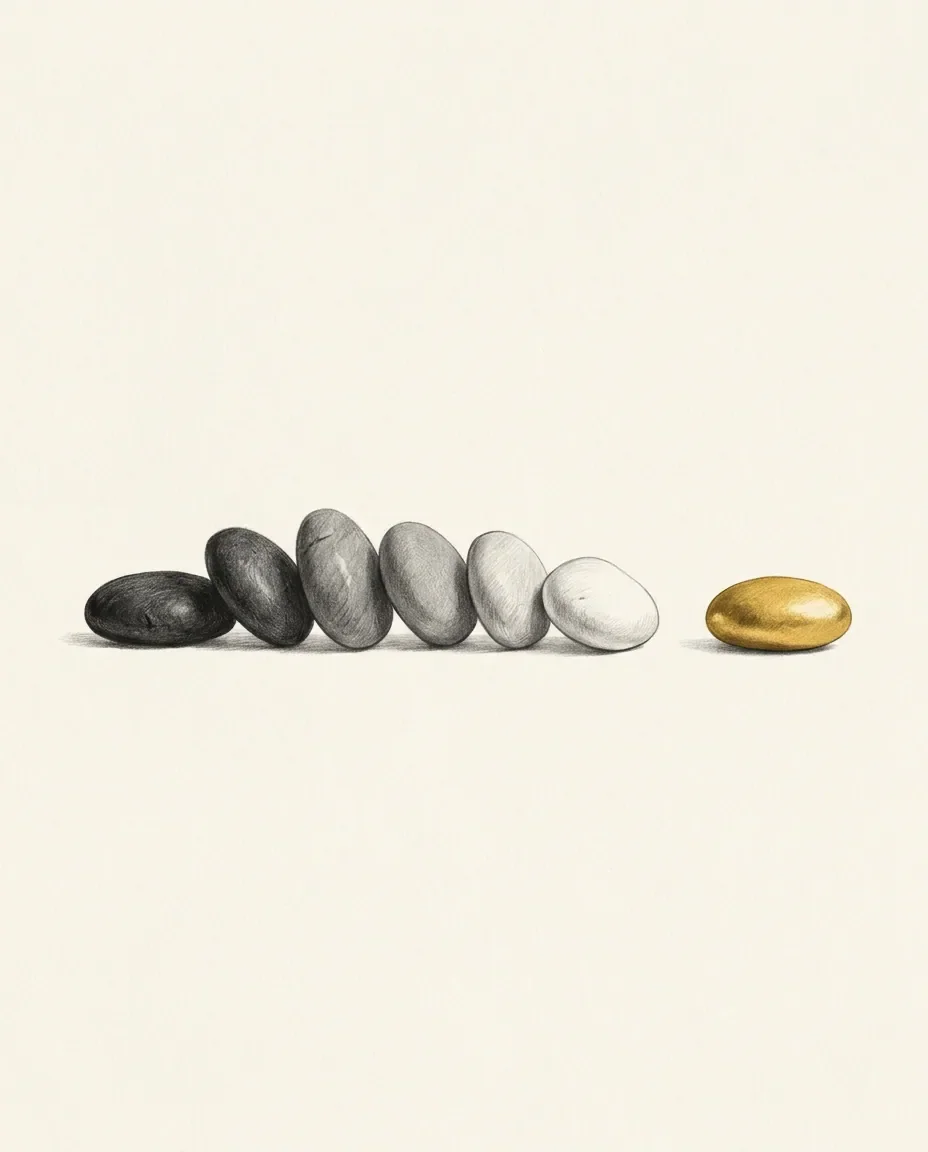
Sexual orientation on the asexual spectrum for people whose sexual attraction is infrequent, low-intensity, ambiguous, or conditional. It names the "gray area" between asexual and allosexual experience.
- Prevalence
- Rare
- Type
- Sexual orientation
- Group
- Asexual spectrum
- Romantic counterpart
- Grayromanticism
- Also known as
- Gray-asexual, Gray-A, Graysexual, Grey-A, Greysexual
- Confidence
- Low confidence
- Sources
- 8 cited
- Added
- 16 Jul 2026
- Updated
- 22 Aug 2026
Overview
Graysexuality (also gray-asexuality, gray-A) is a sexual orientation on the asexual spectrum for people who fit neither "asexual" nor "allosexual" (people who do experience sexual attraction) cleanly. It describes sexual attraction that is infrequent, low in intensity, ambiguous, or conditional: the gray area between never experiencing sexual attraction and experiencing it the way most allosexual people describe. The Human Rights Campaign defines it as "a gray area between asexuality and allosexuality," in which people "may rarely experience sexual attraction or only experience sexual attraction under certain circumstances" (HRC). The American Psychological Association's style guidance situates the term the same way, listing "demisexual (or gray-asexual or gray-A)" alongside "asexual" and "sexual" as parallel points on a spectrum defined by "the degree to which a person feels sexual and emotional attraction" (APA Style).
People who identify as graysexual may experience attraction only rarely, feel unsure whether what they experience qualifies as sexual attraction, or move between periods of feeling asexual and periods of feeling some sexual interest. AVEN, the community that popularized the term, frames Gray-A as a self-descriptive label for anyone who relates to asexuality but does not feel it is a perfect fit (AVENwiki). The category is defined by ambiguity rather than a fixed threshold, so individual accounts of what counts as graysexual vary; the label functions as a self-description, not a diagnostic category, and no major clinical body treats it as a disorder.
Demisexuality (attraction that arises only after a strong emotional bond has formed) is generally treated as one specific, well-defined identity within the broader gray-asexual umbrella rather than a synonym for it. A 2023 study comparing the two found meaningful differences in reported desire, behavior, and identity between asexual, graysexual, and demisexual respondents, treating graysexuality as the wider category and demisexuality as one recognized point within it (Copulsky & Hammack, Journal of Sex Research, 2023).
Examples
Graysexuality is the category for people the two-box model fails, so what it covers is a range of mismatches rather than one experience.
What the term covers. Sexual attraction felt only rarely; attraction faint enough that a person is unsure whether it qualifies; attraction that appears only under specific conditions; and periods of feeling asexual alternating with periods of some sexual interest. AVEN frames it as the label for anyone who relates to asexuality without feeling it is quite the right fit.
What the term does not cover. Asexuality proper describes the absence of sexual attraction, and allosexuality the ordinary presence of it. Demisexuality is generally treated as one well-defined identity inside the gray umbrella rather than a synonym for it, and fraysexuality and lithosexuality name their own specific patterns. Celibacy is a decision about behaviour. Low libido is a separate matter: desire and attraction are different things.
How the word is used. "Gray-A" was coined on AVEN's forums on 12 April 2006 by a user posting as KSpaz, for the fuzzy region of the community's classification triangle; "gray-asexual" and "graysexual" followed as synonyms, and the APA's style guidance now lists gray-asexual alongside asexual as points on a spectrum. Usage is unsettled: some treat it as a specific identity, others as an umbrella covering everything ace-spectrum short of strictly asexual.
History
Naming an intermediate zone between asexual and sexual experience predates "Gray-A" by several years. On October 27, 2003, AVEN forum members opened a thread proposing "semisexual" for people "halfway in between asexual and full-force sexual", an early attempt that did not achieve lasting adoption (AVEN forums). The terms that stuck arrived in 2006: on February 8, AVEN user sonofzeal coined "demisexual" for attraction contingent on emotional bonding, and on April 12, AVEN user KSpaz coined "Gray-A" for the "fuzzy" area of the community's classification triangle, people who related to asexuality without feeling it a perfect fit (Ace Week; AVENwiki). "Gray-asexual" and "graysexual" followed soon after as synonyms.
The phrase "asexual spectrum" entered wider use around 2011, describing the full range of identities (asexual, graysexual, demisexual, and others) that relate to and overlap with asexuality. The category was not without friction: beginning around 2013, gatekeeping against people who identified as gray-asexual or demisexual as "not asexual enough" became a visible dispute in online ace communities, a period retrospectively nicknamed the "Gray Wars." The observance now called Ace Week was itself renamed from "Asexual Awareness Week" in 2019 to better represent the breadth of ace-spectrum identities, gray-asexuality included, rather than asexuality alone (Ace Week).
Demographics & research
In the 2019 Ace Community Survey (an annual, community-run online survey that drew 10,648 responses, 10,198 of them from ace-spectrum participants), gray-asexual was the second most common self-selected label on the ace spectrum, chosen by 10.9%, behind asexual (67.9%) and just ahead of demisexual (9.5%) (Ace Community Survey 2019 Summary Report). Among those who chose the gray-asexual label, about a third (32.8%) said they identified with it "very strongly," a notably lower rate than among respondents who chose "asexual" outright (65.9%), consistent with graysexuality's looser, more provisional fit. A separate 2023 study of the same survey compared 1,698 graysexual respondents with 9,476 asexual and 1,442 demisexual respondents and found graysexual participants most often described their romantic orientation as grayromantic (distinct from the aromantic identification most common among asexual respondents), showing that sexual- and romantic-orientation labels track together within, but are separable across, asexual-spectrum groups (Copulsky & Hammack, Journal of Sex Research, 2023).
Terminology & related identities
Graysexuality sits within the broader "ace spectrum" alongside asexuality and demisexuality. Its romantic-orientation counterpart is grayromantic (grayromanticism), a comparable gray area between romantic and aromantic attraction, the orientation most commonly reported by graysexual survey respondents themselves. Related labels include demisexuality (attraction only after emotional bonding), fraysexuality (attraction that fades as emotional closeness deepens, roughly the inverse pattern), and lithosexuality (attraction felt without a wish for it to be reciprocated). Aroace describes people who are both aromantic and on the asexual spectrum. Usage is unsettled: some treat "gray-asexual" as a specific identity distinct from demisexuality, others as a broader umbrella for any ace-spectrum identity short of strictly asexual, demisexuality included. These are self-descriptive community labels, not clinical diagnoses; none implies dysfunction or requires treatment.
Common misconceptions
Because graysexuality sits close to asexuality, it inherits misconceptions the Human Rights Campaign has documented about the asexual spectrum generally. One is that these identities are simply "a phase," or that the person "hasn't met the right person yet"; HRC counters that they are valid, stable identities, not a temporary state awaiting correction (HRC). A second is that asexuality, and by extension graysexuality, is the same as celibacy; HRC distinguishes the two directly, noting celibacy "is a choice to abstain from sexual activity" while these identities describe "an intrinsic part of" a person's orientation, independent of what sexual activity they choose to have. Wikipedia's entry notes a further misconception common across the ace spectrum: that people on it "hate sex or never have sex," when sex is simply not a focal point of their attraction (Wikipedia).
Common questions
What does graysexual mean?
Experiencing sexual attraction infrequently, faintly, ambiguously or only under certain conditions: the gray area between asexual and allosexual. The Human Rights Campaign defines it as a gray area in which people may rarely experience sexual attraction, or only experience it in certain circumstances. It is a self-description, not a threshold anyone else measures.
What is the difference between graysexual and demisexual?
Breadth. Demisexuality names one specific condition: attraction only after a strong emotional bond has formed. Graysexuality covers limited attraction of any kind, including attraction with no identifiable trigger. Most sources treat demisexual as one well-defined identity within the graysexual umbrella, and a 2023 study in the Journal of Sex Research found measurable differences between the two groups in desire, behaviour and identity.
Is graysexuality a phase or a sign of not having met the right person?
No. The Human Rights Campaign addresses both claims directly, describing ace-spectrum identities as valid and stable rather than a temporary state awaiting correction. The same framing applies that applies to any orientation: it is an enduring pattern of attraction, not a waiting room. Some graysexual people do find their sense of the label shifts over time, which is not the same as it being provisional.
How common is graysexuality?
Within ace communities it is the second most common label. The 2019 Ace Community Survey drew 10,648 responses; among the 10,184 ace-spectrum respondents choosing one primary label, 10.9% chose gray-asexual, behind asexual at 67.9% and just ahead of demisexual at 9.5%. That is a self-selected community sample, not a population estimate.
Do graysexual people have sex?
Some do, some do not, and neither settles the label. Graysexuality describes attraction, not behaviour or willingness. The Human Rights Campaign distinguishes it from celibacy, which is a choice to abstain, and Wikipedia notes a common misconception that ace-spectrum people hate sex or never have it, when sex is simply not a focal point of their attraction.
What romantic orientations do graysexual people have?
Any of them, though one pattern shows up in the data. Copulsky and Hammack's 2023 analysis compared 1,698 graysexual respondents with asexual and demisexual ones and found graysexual participants most often described themselves as grayromantic, where asexual respondents most often reported aromantic identification. The two axes track together without being the same.
 AsexualitySexual orientation defined by not experiencing sexual attraction to others, distinct from celibacy, which is a behavioral choice. It exists on a spectrum that includes graysexuality and demisexuality.
 DemisexualitySexual orientation characterized by the capacity to experience sexual attraction only after forming a close emotional bond with a specific person. It does not arise from initial or immediate impressions.
 GrayromanticismA romantic orientation on the aromantic spectrum describing romantic attraction that is infrequent or conditional. It covers attraction not fully captured by either "aromantic" or "alloromantic", and is the romantic-attraction counterpart to graysexuality.
 FraysexualityA sexual orientation on the asexual spectrum in which sexual attraction is directed mainly toward strangers or new acquaintances. It fades as emotional closeness develops, and is often described as the inverse of demisexuality.
 LithosexualitySexual orientation on the asexual spectrum: attraction that a person does not want, or does not need, reciprocated. For some, the attraction itself fades once it is returned. Also called akoisexual.
 AroaceAn identity combining aromanticism and asexuality: little to no romantic attraction and little to no sexual attraction to others. The split attraction model describes the two together with a single compound label.
From gray/grey (denoting an intermediate, ambiguous zone) + sexual. The label "Gray-A" was coined on AVEN's forums on April 12, 2006, by user KSpaz to name the "fuzzy" area between asexual and allosexual experience; "gray-asexual" and "graysexual" followed shortly after as synonyms.
Prevalence is computed from the entry's cited population estimate. Rows marked ESTare indicative editorial estimates scored against a fixed anchor rubric, not measured quantities. Method & anchors: methodology.
Rare · ≈ 1 in 1,000
Basis: Ace Community Survey 2019 (N=10,648) found gray-asexual was 10.9% of self-identified ace-spectrum respondents (a self-selected, non-representative sample); combined with widely-used ~1% general-population asexual-spectrum estimates (not themselves cited in this entry), that implies a rough population share on the order of 0.1% of US adults.
- 01Human Rights Campaign, Understanding the Asexual CommunityGray-asexual definition ("gray area between asexuality and allosexuality"); documented misconceptions (phase, celibacy, "just haven't met the right person yet").
- 02APA Style, Bias-Free Language: Sexual OrientationInstitutional framing of gray-asexual/gray-A as a term parallel to demisexual and asexual along a spectrum of sexual and emotional attraction.
- 03AVENwiki, Gray-A/Grey-ASelf-descriptive framing of Gray-A; April 12, 2006 coinage by AVEN user KSpaz.
- 04AVEN forums, "Semisexuality" threadOctober 27, 2003 proposal of "semisexual," the earliest documented attempt to name the intermediate zone between asexual and sexual experience.
- 05Ace Week, 5 Defining Moments in Gray-Ace History2006 demisexual/Gray-A coinages, ~2011 "asexual spectrum" phrase, the 2013 "Gray Wars" gatekeeping dispute, and the 2019 renaming to Ace Week.
- 06Wikipedia, Gray asexualityGeneral definition; documented misconception that ace-spectrum people "hate sex or never have sex."
- 07Ace Community Survey, 2019 Summary Report (Weis et al., 2021)Sample size (N=10,648) and percentage of gray-asexual self-identification (10.9%) and strength-of-identification figures among ace-spectrum respondents.
- 08Copulsky & Hammack, "Asexuality, Graysexuality, and Demisexuality: Distinctions in Desire, Behavior, and Identity" (Journal of Sex Research, 2023)Ace Community Survey sample sizes (graysexual, asexual, demisexual respondents) and the grayromantic-identification finding.