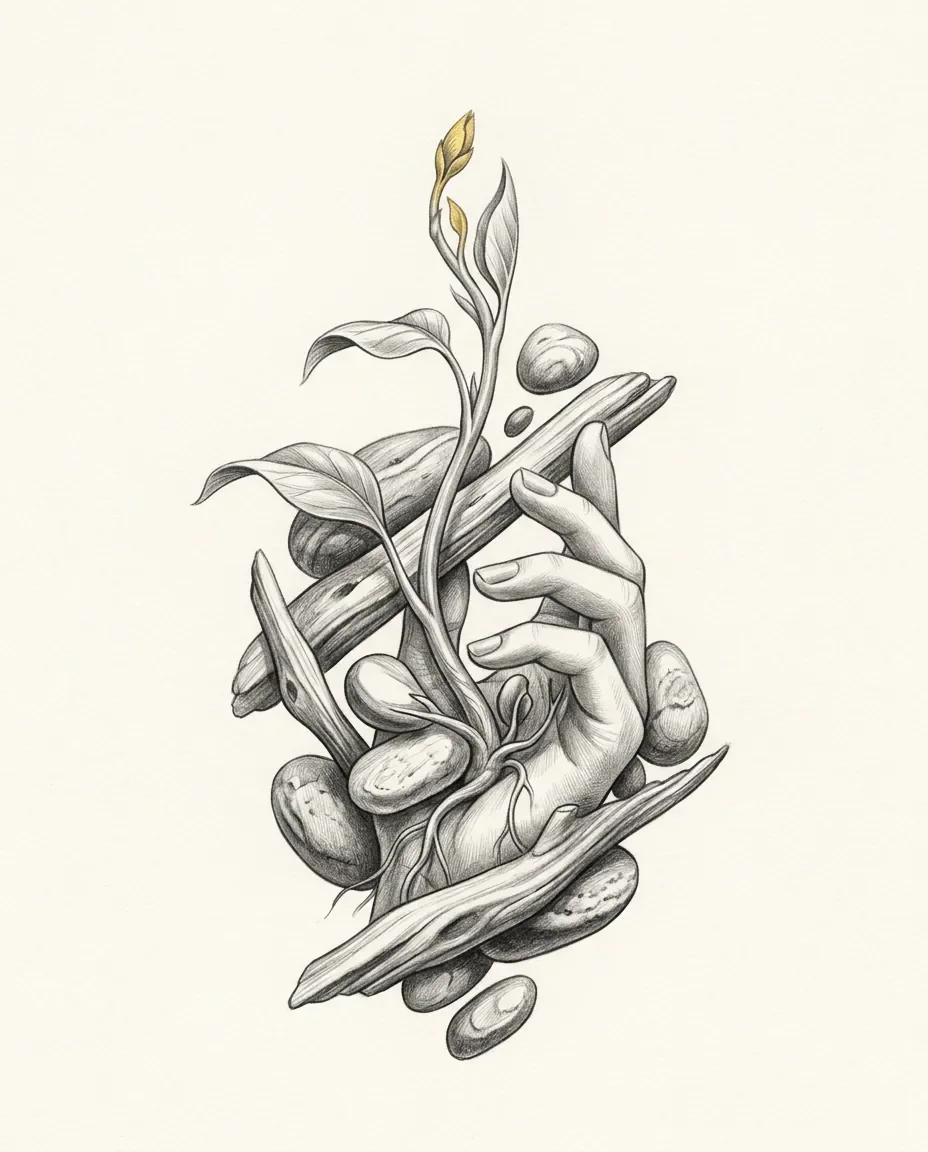
Biophilia
Added 10 Jul 2026 · Updated 22 Aug 2026
Biophilia is the proposed innate human tendency to seek connection with nature and other living things. It is a non-sexual affinity and a scientific hypothesis about why contact with the living world feels restorative, not an erotic interest.
- Prevalence
- Ultra-common
- Category
- Non-Sexual Fetishism
- Domain
- Non-sexual interest
- Confidence
- Medium confidence
- Status
- Not a paraphilia or disorder; a proposed innate affinity for nature studied in evolutionary biology and environmental psychology, and applied in biophilic design.
- Also known as
- biophilia hypothesis, love of nature, affinity for living things
- Added
- 10 Jul 2026
- Updated
- 22 Aug 2026
Overview
Biophilia is the proposed innate human tendency to affiliate with nature and other forms of life. Often called the biophilia hypothesis, it holds that people carry an evolved affinity for living things, so that gardens, animals, water, and green landscapes feel calming and restorative in ways that built, lifeless settings do not. It appears in this directory as a non-sexual affinity for the living world, closer to a psychological orientation and design philosophy than to any fetish. This article covers where the term came from, the science behind the hypothesis, its use in architecture, and how strong the evidence actually is.
Definition & scope
Biophilia describes a broad pull toward life and lifelike processes: an attraction to plants, animals, natural light, water, and natural forms and patterns. As a hypothesis it makes a specific claim, that this pull is partly innate and evolutionary rather than only learned, because ancestral humans who attended to living cues, safe water, useful plants, dangerous or useful animals, tended to survive and reproduce.
The word covers two related things that are worth separating: a general love of nature that most people recognise, and a formal scientific hypothesis about its evolutionary origin, which is harder to test and remains debated.
Examples
What the term covers. Keeping houseplants and minding whether they thrive; choosing the desk by the window; walking to a park at lunchtime for no stated reason; aquariums in waiting rooms; gardening, allotments and window boxes; birdwatching; the near-universal preference, shown a photograph of a wooded landscape and one of a car park, for the landscape. It also covers the built forms the idea has produced: daylight and views of greenery in offices, timber and stone left visible, water in atria, courtyard trees at hospitals. The claim being made in every case is the same: that these preferences are not arbitrary taste but an inherited disposition toward living things.
What the term does not cover. It is not an erotic interest of any kind, despite the -philia ending, which here carries its ordinary Greek sense of affinity rather than the sexual sense the suffix acquired in clinical vocabulary. Dendrophilia, a rare sexual or reverential interest in trees, shares the botanical subject and nothing else. Topophilia is attachment to a particular place rather than to life in general, and comes out of human geography. Environmentalism is a political and ethical commitment that biophilia is sometimes offered to explain, but the two are separable: a person can love gardens and vote against conservation. And the affinity is not a diagnosis, so it appears in no psychiatric manual.
How the word is used. In three registers with different meanings. Erich Fromm's is characterological, naming an orientation toward life. E. O. Wilson's is evolutionary, and is the one intended in most scientific writing. The third is commercial: in architecture and property marketing "biophilic" has become a near-synonym for "has plants in it," a usage that carries none of the hypothesis's actual claim.
History & origins
The term has a documented twentieth-century lineage, moving from psychology into evolutionary biology and then into design.
- 1964: The psychoanalyst and social psychologist Erich Fromm used "biophilia" in The Heart of Man to name a psychological orientation, a love of life and the living, which he contrasted with its opposite, "necrophilia" in his non-sexual, characterological sense.
- 1984: The biologist Edward O. Wilson published Biophilia, redefining it as the "innate tendency to focus on life and lifelike processes" and grounding it in evolution. This is the version most people mean today.
- 1993: The social ecologist Stephen R. Kellert and Wilson co-edited The Biophilia Hypothesis, a collection that gathered evidence and argument and turned the idea into a named research program.
From hypothesis to design movement
From the 1990s onward the idea spread beyond biology into architecture and planning as biophilic design: the deliberate use of natural light, plants, water, natural materials, and views of greenery to make buildings feel healthier and less stressful. This applied strand drew support from an influential earlier finding by Roger Ulrich, whose 1984 study in Science reported that surgical patients with a window view of trees recovered faster and needed less pain medication than those facing a brick wall.
Psychology
Proposed mechanisms centre on evolved attention and stress recovery. The core claim is that natural scenes engage a restorative response, lowering physiological stress and restoring depleted attention, an idea developed in the attention-restoration and stress-recovery theories of environmental psychology. A related line of work on "fractal fluency" suggests people process the mid-range fractal patterns common in nature, such as branching trees and coastlines, with lower stress and easier perception than they process the harder geometry of built environments.
Is biophilia real?
The experience is real and well documented; the strong evolutionary claim is contested. Many studies find that contact with nature reduces stress, improves mood, aids attention, and supports faster recovery, so the everyday pull toward greenery is not in doubt. What remains debated is whether this reflects a genetically hard-wired instinct, as Wilson argued, or is substantially learned through culture and experience. Critics note that biophilia can be hard to falsify and that learned preference is difficult to rule out, so the hypothesis is best read as plausible and partly supported rather than proven.
Prevalence & culture
How common is it?
Affinity for nature is close to universal, which is part of why the hypothesis is attractive and part of why it is hard to test: if nearly everyone shows it, disentangling instinct from culture is difficult. Its cultural footprint is large. Biophilic design is now a recognised approach in architecture and workplace wellness, houseplants and gardening are mass hobbies, and "nature therapy" practices such as the Japanese shinrin-yoku (forest bathing) have spread internationally. The related enthusiasm for calming, sensory experience seen in ASMR and oddly satisfying media taps a similar appetite for restorative, low-stress attention.
What is biophilic design?
Biophilic design is the applied side of the idea: shaping buildings and interiors to satisfy the human pull toward nature. In practice that means daylight and views of greenery, indoor plants and living walls, water features, natural materials such as timber and stone, and organic forms and patterns. Its rationale leans on stress-recovery findings like Ulrich (1984) and on the broader environmental-psychology claim that natural cues lower physiological arousal and restore attention.
Variations & related interests
Biophilia connects to gardening, birdwatching, and nature-based hobbies, to the design philosophy of biophilic architecture, and to the broader impulse toward calming sensory engagement found in ASMR. It is the conceptual opposite of Fromm's "necrophilia" in his characterological sense, and should not be confused with the sexual paraphilia of the same name.
Common questions
Is biophilia a fetish or a sexual attraction to nature?
No. Biophilia is a non-sexual affinity (the ordinary pull toward plants, animals, water and green space), and the -philia in it means affinity in the plain Greek sense, as in bibliophilia. That is why it is catalogued here among non-sexual interests. A sexual interest in trees and plants does exist and has a different name, dendrophilia; the two are unrelated beyond sharing a subject.
What is the opposite of biophilia?
Erich Fromm paired it with "necrophilia" in a strictly characterological sense (an orientation toward what is dead, mechanical and fixed), which has nothing to do with the sexual paraphilia necrophilia that shares the word. Later environmental psychologists more often use "biophobia" for aversion to nature, which some accounts extend to the readiness with which people acquire fears of snakes and spiders.
Do office plants and green walls actually do anything?
Something, probably modest. The strongest single result in this literature is still Ulrich's 1984 hospital-window finding, a view out, not a potted plant. Studies of indoor greenery report smaller effects on mood and perceived comfort, usually measured by self-report over short periods. The direction of the evidence is consistent; the size of the effect is easy to oversell and frequently is.
Is biophilic design just marketing?
Partly. The underlying findings about daylight, views and natural materials are real, if modest, and the design principles that follow are sensible. The label, though, is applied loosely: a green wall in a lobby is far cheaper than reorganising a building around daylight and sightlines, and it photographs better. A useful test is whether the design changes what occupants can actually see and reach, or only what visitors notice.
Is forest bathing the same thing as biophilia?
No. Forest bathing, or shinrin-yoku, is one applied practice; biophilia is the explanation sometimes offered for why it might work. The practice involves unhurried, unstructured time among trees with attention on the senses rather than on exercise or distance covered. Research into its specific health claims is uneven, with better support for short-term mood and stress effects than for the stronger physiological claims made in popular writing.
Is loving animals or being outdoorsy the same as biophilia?
They are instances of it rather than synonyms. Wilson's version of the hypothesis covers life and lifelike processes generally, so pets, gardening, hiking, birdwatching and a fish tank all count as expressions of one underlying pull. What biophilia adds to the list is a claim about why those enthusiasms are so widespread across cultures, which is also the part that is hardest to test.
- ASMR69/100Autonomous Sensory Meridian Response · Non-Sexual FetishismA non-sexual, pleasant tingling sensation that typically begins on the scalp and moves down the neck and spine. Soft sounds, gentle attention, or close personal care trigger it. It underpins a large online relaxation-media subculture.69
- Oddly Satisfying50/100Non-Sexual FetishismA non-sexual sense of pleasure and calm derived from order, symmetry, smoothness, and neatly arranged or perfectly fitting objects. It is the core appeal of 'oddly satisfying' media. It is a common sensory and aesthetic affinity, not a disorder or paraphilia.50
- Birdwatching66/100Non-Sexual FetishismA hobby centered on observing, identifying and often listing wild birds, ranging from casual garden watching to the competitive pursuit of rare species. That competitive pursuit is called "twitching." One of the largest nature-based hobbies in the world, with tens of millions of participants.66
- Celebrity Worship Syndrome70/100Non-Sexual FetishismAn intense, one-sided preoccupation with a famous person that, in its stronger forms, absorbs a fan's identity and daily life. It is a non-sexual parasocial and psychological phenomenon measured on a graded scale, not a clinical diagnosis or a sexual interest.70
- Foodie Culture72/100Non-Sexual FetishismFoodie culture is a non-sexual enthusiasm in which food is a hobby and an identity as well as sustenance. It spans restaurant-seeking, cooking, culinary travel and food photography. A foodie is an everyday person with an ardent interest in food.72
- Compulsive Shopping59/100compulsive buying-shopping disorder · Non-Sexual FetishismA persistent, hard-to-resist urge to shop and buy, marked by excessive purchasing that a person cannot control despite mounting debt, clutter, and distress. It is an impulse-control and behavioural-addiction phenomenon, not a sexual interest.59
From Ancient Greek *bíos* (βίος, "life") + *philía* (φιλία, "love, affinity"), literally "love of life." Introduced as a psychological term by Erich Fromm in 1964 and redefined in an evolutionary sense by Edward O. Wilson in 1984.
affinity for nature · environmental psychology · design philosophy · sensory affinity
Prevalence is computed from the entry's cited population estimate. Rows marked ESTare indicative editorial estimates scored against a fixed anchor rubric, not measured quantities. Method & anchors: methodology.
Ultra-common · ≈ 1 in 5 or more
- 01Biophilia hypothesis, WikipediaFromm's 1964 use in The Heart of Man; Wilson's 1984 Biophilia; the 1993 Kellert & Wilson volume The Biophilia Hypothesis; biophilic design; fractal fluency; criticism of the evolutionary claim
- 02Ulrich (1984), View through a window may influence recovery from surgery, Science 224(4647):420-421surgical patients with a window view of trees recovered faster and used less pain medication than those facing a brick wall, an anchor finding for restorative effects of nature