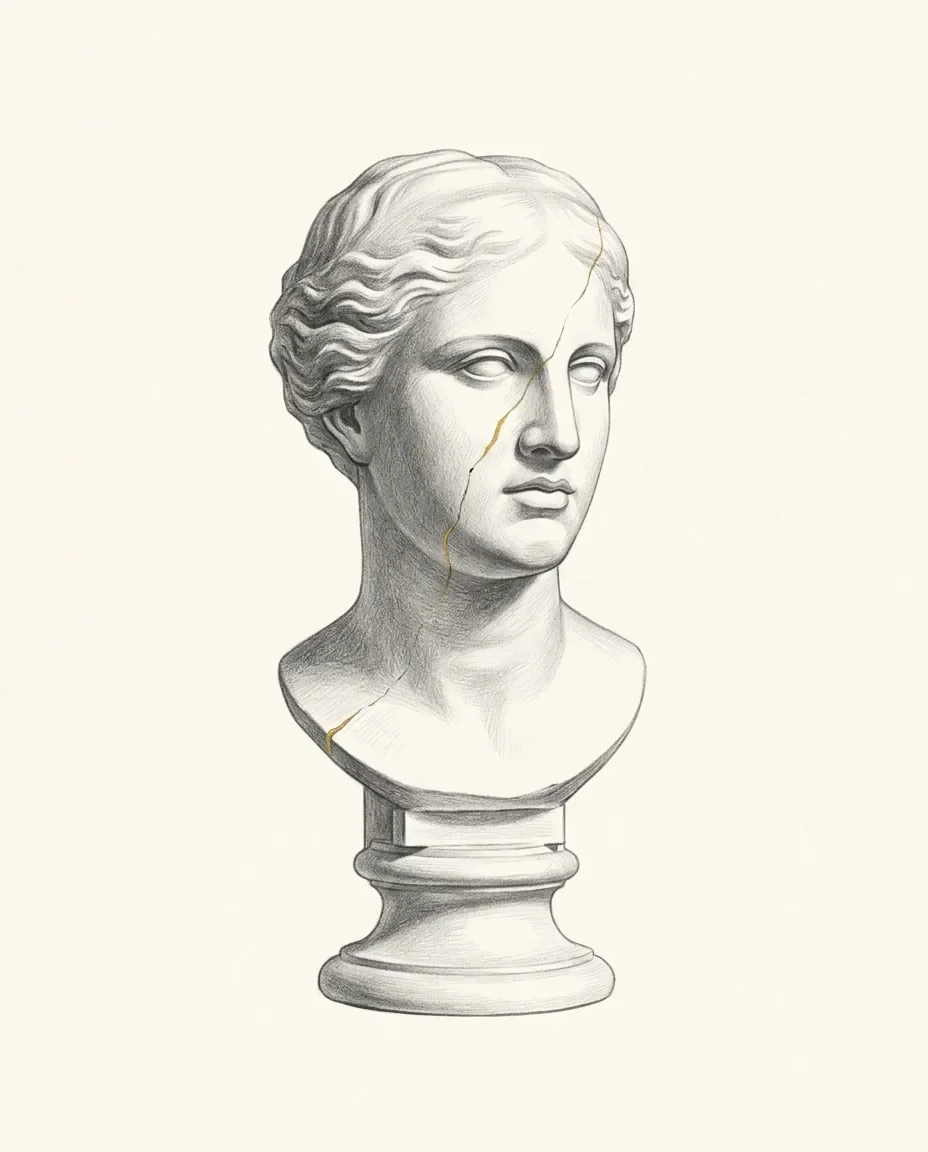
Dysmorphophilia
Dysmorphophilia
Added 11 Jul 2026 · Updated 22 Aug 2026
Dysmorphophilia is a rare, weakly attested catalogue term for sexual arousal connected to physical deformity. Reference works disagree on whether the focus is a partner's deformity or one's own perceived flaws, and it is recognised as a diagnosis nowhere.
- Prevalence
- Very rare
- Category
- Clinical Paraphilias
- Clinical term
- Dysmorphophilia
- Domain
- Sexual interest · Paraphilia
- Confidence
- Low confidence
- Status
- Weakly attested catalogue term with two conflicting glosses; not a diagnosis in DSM-5-TR or ICD-11. Distinct from dysmorphophobia / body dysmorphic disorder. A distressing presentation would fall under other specified paraphilic disorder.
- Also known as
- deformity fetish, arousal from physical deformity, dysmorphophilic interest
- Added
- 11 Jul 2026
- Updated
- 22 Aug 2026
Overview
Dysmorphophilia is a rare, weakly attested catalogue term for sexual arousal connected to physical deformity or perceived bodily flaws. The label is unstable: reference works disagree on whether the focus is a partner's deformed body or the person's own, and no diagnostic manual recognises it. It should not be confused with dysmorphophobia, the older clinical name for what is now body dysmorphic disorder, a distressing preoccupation with imagined ugliness that has nothing to do with arousal. This article sets out both readings, traces the tangled history of the word, and reports what the neighbouring research on attraction to disability can (and cannot) tell us.
Definition & scope
Two incompatible definitions circulate under the same term.
- Arousal to another person's deformity. A dictionary gloss recorded in Wiktionary gives it as "sexual arousal arising from deformed, mentally impaired, or physically impaired partners." On this reading the word overlaps almost entirely with teratophilia, which the Wikipedia List of paraphilias defines as attraction to "deformed or monstrous people," on the authority of Anil Aggrawal's 2008 forensic text.
- Arousal about one's own perceived deformity. That same Wikipedia list glosses dysmorphophilia much more narrowly, as arousal tied to "one's own perceived physical deformities," citing the sexologist John Money (1999).
One sense points outward at a partner; the other points inward at the self. A term whose two readings face in opposite directions is not a settled clinical concept, and that is the honest way to present it.
What dysmorphophilia is not
- It is not dysmorphophobia or body dysmorphic disorder. Those are anxiety-and-compulsion conditions about appearance, not sexual interests.
- It is not a synonym for finding an unconventional body attractive. Attraction outside a narrow beauty standard is ordinary and not paraphilic.
- It is not the same as apotemnophilia, the desire for an amputation of one's own body, although the self-directed reading of dysmorphophilia sits uncomfortably close to it.
Is dysmorphophilia a recognised diagnosis?
No. It appears in neither the DSM-5-TR nor the ICD-11. A presentation that genuinely caused distress or impairment would be handled under other specified paraphilic disorder, and, as the clinical review of paraphilia in StatPearls sets out, an unusual interest only becomes a disorder when it produces distress, impairment, or harm to a non-consenting person.
Examples
What the term covers. Both of the incompatible senses set out above, which is why any use of the word needs disambiguating first. In the outward sense it labels arousal connected to another person's deformity or physical or cognitive impairment; in the inward sense, attributed to John Money, it labels arousal connected to one's own perceived deformity. Nothing in the literature settles which reading is correct, and the word travels loosely enough that a reader meeting it should assume neither.
What the term does not cover. It is not dysmorphophobia or body dysmorphic disorder, a distressing, compulsion-driven preoccupation with an imagined or slight defect in appearance, now placed on the obsessive-compulsive spectrum. That is a recognised condition, it has nothing to do with arousal, and it shares only a Greek root with this label. Nor is it ordinary attraction to a body outside a narrow beauty standard. Where the focus is more specific, better words exist: teratophilia for the monstrous or deformed, abasiophilia for braces and mobility aids, amputee-focused interest, apotemnophilia for the wish to become an amputee, and body integrity dysphoria for the ICD-11 condition behind that wish.
How the word is used. Almost nowhere outside paraphilia word-lists. There is no case series named after it, no instrument that measures it, and no secure first attestation in its arousal sense, and it appears in neither the DSM-5-TR nor the ICD-11. People whose interest matches the outward sense generally describe themselves as devotees instead. Disability scholarship objects to any framing that reduces a person to a "deformity" to be desired, and that objection lands on this particular word hardest of all.
History & origins
Clinical lineage
The word has no clean coinage story, and its two readings have separate roots.
- 1891: The Italian psychiatrist Enrico Morselli described dysmorphophobia, from Greek dysmorphia ("ugliness"), for a fixed and distressing conviction of one's own ugliness. The Body Dysmorphic Disorder Foundation records the coinage; some accounts date Morselli's first description to 1886. This is the ancestor of BDD, not of any paraphilia, but the shared Greek root is the likeliest source of the later confusion between the two words.
- 1980: DSM-III admitted the condition to American psychiatry as an atypical somatoform disorder.
- 1984: Money and Kent Simcoe published their account of acrotomophilia, arousal responsive to amputation, an example of the Greek-root vocabulary Money built for unusual sexual interests. Many of these labels entered the literature as names rather than as studied conditions.
- 1987: DSM-III-R replaced dysmorphophobia with body dysmorphic disorder, which is the name still used.
- 1999: Money is cited as the source for the paraphilic sense of dysmorphophilia ("one's own perceived physical deformities"), placing the term inside his large self-generated paraphilia catalogue.
- 2013: DSM-5 moved body dysmorphic disorder into the obsessive-compulsive spectrum, sharpening the separation between the -phobia and -philia words.
Beyond those threads the paraphilic term is close to absent from peer-reviewed sexology. There is no case series named after it, no instrument that measures it, and no firmly established first use in its arousal sense.
Cultural evolution
What cultural presence there is belongs to the neighbouring vocabulary rather than to this word. Since the 1990s, online "devotee" communities (people attracted to disability, often to amputation in particular) have given the outward-facing sense a visible, if contested, social home, alongside the older literary lineage of monstrous or disfigured figures as objects of desire. Disability scholarship is sharply divided about these communities, and reasonably so: framing another person's body as a "deformity" to be desired risks reducing them to that feature. That objection applies with full force to the word dysmorphophilia itself.
Psychology
Because the label is so thinly documented, any mechanism proposed for it is inference rather than finding. The nearest real evidence concerns devotism. Limoncin and colleagues (2014) surveyed 209 self-identified devotees recruited from online communities and reported two distinguishable groups: one aroused by the disability itself, treating it as the erotic object and struggling to become aroused in its absence, and another drawn to qualities they attributed to disabled people, such as adaptability, fortitude, and courage. The second group looks less like a paraphilia than like an ordinary, if unusual, pattern of attraction, which is a useful caution against reading every case of this kind as pathology.
Where the interest points inward at one's own body, it leaves paraphilia territory and moves toward body-image psychology and the literature on body integrity identity disorder, where earlier authors such as Richard Bruno (1997) proposed a shared model for devotees, pretenders, and those seeking amputation. No controlled study isolates dysmorphophilia as its own construct, so its causes are, plainly, unknown.
Prevalence & culture
How common is dysmorphophilia?
Nobody knows, and the negligible figure attached to this entry reflects the absence of data rather than a measurement. No survey has ever asked about it by name. The neighbouring categories give only a rough sense of scale: the large fetish-community survey by Scorolli and colleagues (2007), which sampled at least 5,000 people across 381 internet discussion groups, found that body parts and features accounted for about 33 percent of preferences and objects associated with the body about 30 percent, with feet and footwear dominating both. Interests organised around bodily difference are a small fraction of the remainder. Visibility in media and research is correspondingly slight, and where it exists it runs under the labels devotee, teratophilia, or attraction to disability rather than under this one.
Variations & related interests
Dysmorphophilia sits closest to teratophilia (attraction to the deformed or monstrous) and to the disability-adjacent interests: abasiophilia, attraction to people with impaired mobility or orthopaedic braces; amputee attraction; and apotemnophilia, the self-directed desire for amputation. Wherever a real partner is involved, the ordinary rules hold. The interest is ethical only between informed, consenting adults, and the person on the other side of it is owed the same dignity and interest as a whole human being that anyone else is.
Common questions
Is dysmorphophilia the same as body dysmorphic disorder?
No, and confusing them is the single most common error around the word. Body dysmorphic disorder (historically called dysmorphophobia) is a distressing preoccupation with a perceived flaw in one's own appearance, driven by anxiety and compulsion, and classified on the obsessive-compulsive spectrum. It has nothing to do with sexual arousal. The two words share a Greek root and that is the entire connection.
What is the difference between dysmorphophilia and teratophilia?
In the outward-facing sense, very little. Teratophilia is glossed as attraction to deformed or monstrous people and is the better-attested term of the two, with a clearer cultural lineage in monstrous and disfigured figures as objects of desire. Dysmorphophilia in that sense duplicates it. The difference only appears in the inward-facing sense, where dysmorphophilia is said to concern one's own perceived deformity instead.
What is a devotee?
It is the self-description used by people attracted to disability, most often to amputation, in online communities that have existed since the 1990s. Limoncin and colleagues (2014) surveyed 209 of them and found two distinguishable groups: one aroused by the disability itself and struggling to become aroused without it, and one drawn to qualities they attributed to disabled people, such as adaptability and fortitude. The second group does not look paraphilic at all.
Is being attracted to a disabled person a fetish?
Not by itself, and treating it as one is insulting to a lot of people. Attraction to someone who happens to be disabled is ordinary attraction. The labels in this area apply only where the impairment is itself the erotic object rather than one feature of a person. Even then the ethical test is the usual one: informed consent between adults, and treating the other person as a whole human being.
Why does dysmorphophilia have two opposite definitions?
Because it was never a studied construct. One gloss, recorded in Wiktionary, points outward at deformed or impaired partners; another, on Wikipedia's List of paraphilias and credited to John Money in 1999, points inward at one's own perceived deformities. Nothing arbitrates between them, because no body of research ever used the term consistently enough to fix a meaning.
Is dysmorphophilia harmful?
The interest is not inherently harmful and it is not a diagnosis; a presentation that genuinely caused distress or impairment would be handled under other specified paraphilic disorder. The real problem is relational rather than clinical. Framing another person's body as a deformity to be desired reduces them to that feature, which is what disability scholars object to, and it is the thing to watch for wherever a real partner is involved.
- Teratophilia35/100teratophilia · Identity & TransformationAn erotic or romantic attraction to beings perceived as monstrous, deformed, or non-human, ranging from fictional creatures to real people. Werewolves and demons sit at one end, people with unusual physical features at the other. It is mostly fantasy- and media-driven.35
- Abasiophilia (Braces & Mobility Aids)13/100Abasiophilia · Clinical ParaphiliasAbasiophilia is a paraphilic attraction to people who use orthopaedic braces, casts, calipers, or mobility aids such as wheelchairs. The impaired gait that goes with them is part of the attraction. It is one named branch of devoteeism, the broader erotic interest in physical disability.13
- Amputation Fetish12/100Apotemnophilia · Clinical ParaphiliasApotemnophilia is a rare interest in which the desire to be, or to become, an amputee is felt as arousing, or as necessary to one's true body image. It overlaps closely with body integrity dysphoria, recognised in ICD-11, and carries serious self-harm risk.12
- Desire to Be an Amputee21/100Apotemnophilia · Clinical ParaphiliasApotemnophilia is a rare condition in which a person desires to become an amputee, experiencing the absence of a specific limb as arousing. It may equally be felt as essential to their true body image. It overlaps closely with body integrity dysphoria, in which a healthy limb is felt as not belonging to the self.21
- Antholagnia9/100Antholagnia · Clinical ParaphiliasAntholagnia is a rare, weakly attested glossary term for sexual arousal linked to flowers, and especially to their scent. It sits under the broader umbrella of smell-based arousal (olfactophilia) and is benign and non-clinical.9
- Liquidophilia9/100Liquidophilia · Clinical ParaphiliasLiquidophilia is a rare, catalogue-level term for sexual arousal from immersing the body, classically the genitals, in liquids. It overlaps with water-based arousal (aquaphilia), is benign between consenting adults, and carries only practical safety cautions.9
From Greek *dysmorphos* ("misshapen, badly formed": *dys-* "bad" + *morphḗ* "form") plus *philía* ("love, affinity"), literally "love of the misshapen." It shares its root with *dysmorphophobia*, Enrico Morselli's 1891 term for the condition now called body dysmorphic disorder. The paraphilic sense is later, is attributed to John Money, and has no securely documented first use.
attraction to bodily difference · weakly attested · glossary term · disputed definition
Prevalence is computed from the entry's cited population estimate. Rows marked ESTare indicative editorial estimates scored against a fixed anchor rubric, not measured quantities. Method & anchors: methodology.
Very rare · fewer than 1 in 10,000
- 01dysmorphophilia, Wiktionarydefinition "sexual arousal arising from deformed, mentally impaired, or physically impaired partners" and Greek roots dysmorphos + -philia
- 02List of paraphilias, Wikipediaalternate gloss ("one's own perceived physical deformities") citing John Money (1999); teratophilia defined as attraction to "deformed or monstrous people" citing Aggrawal (2008); placement among catalogued paraphilias
- 03History of BDD, Body Dysmorphic Disorder FoundationEnrico Morselli coined dysmorphophobia in 1891; distinction from the paraphilic term
- 04Body dysmorphic disorder, Wikipediahistory of dysmorphophobia → DSM-III (1980) atypical somatoform disorder → DSM-III-R (1987) body dysmorphic disorder → DSM-5 (2013) move to the obsessive-compulsive spectrum
- 05DSM-5-TR, Paraphilic Disorders (American Psychiatric Association, 2022)dysmorphophilia is not a listed diagnosis; unlisted presentations fall under other specified paraphilic disorder
- 06ICD-11 for Mortality and Morbidity Statistics, World Health Organizationdysmorphophilia is not a recognised ICD-11 category
- 07Paraphilia, StatPearls (NCBI Bookshelf)general threshold at which a paraphilia becomes a disorder (distress, impairment, or harm to others)
- 08Limoncin et al. (2014), The sexual attraction toward disabilities: a preliminary internet-based study, International Journal of Impotence Research 26:51-54survey of 209 self-identified devotees; two subpopulations, one aroused by disability itself and one attracted to attributed qualities such as adaptability, fortitude and courage
- 09Scorolli et al. (2007), Relative prevalence of different fetishes, Int. J. Impotence Research 19(4):432-437at least 5,000 people across 381 internet discussion groups; body parts/features ~33% and objects associated with the body ~30% of preferences, with feet and footwear dominant