Abasiophilia (Braces & Mobility Aids)
Abasiophilia
Added 21 Jun 2026 · Updated 22 Aug 2026
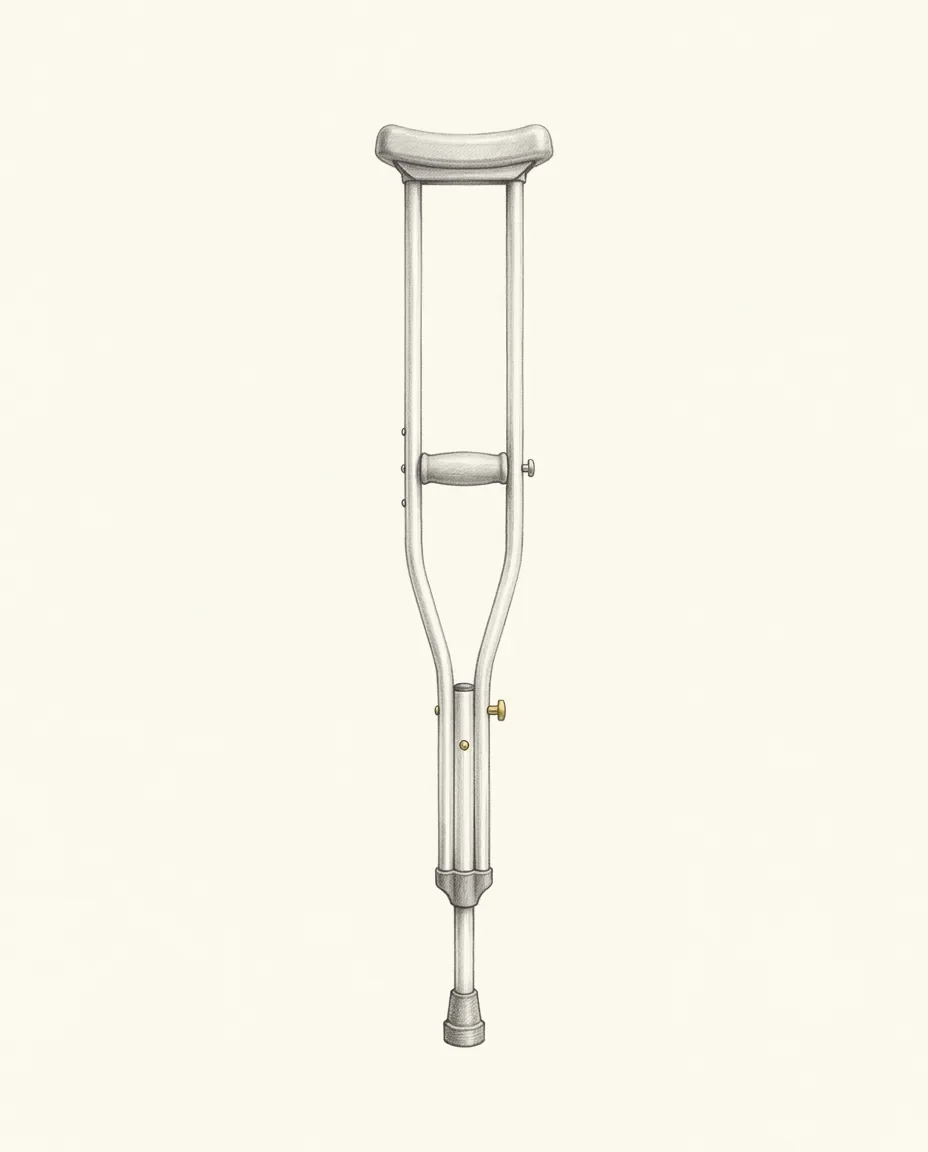
Abasiophilia is a paraphilic attraction to people who use orthopaedic braces, casts, calipers, or mobility aids such as wheelchairs. The impaired gait that goes with them is part of the attraction. It is one named branch of devoteeism, the broader erotic interest in physical disability.
- Prevalence
- Rare
- Category
- Clinical Paraphilias
- Clinical term
- Abasiophilia
- Domain
- Sexual interest · Paraphilia
- Confidence
- Low confidence
- Status
- Recognized paraphilia in clinical literature; not a DSM-5-TR/ICD-11 named disorder and pathological only if it causes distress, impairment, or non-consent.
- Also known as
- abasiophilia, braces fetish, mobility-aid attraction, orthopaedic devotee interest, leg-brace fetish
- Added
- 21 Jun 2026
- Updated
- 22 Aug 2026
Featured in
Overview
Abasiophilia is a paraphilic sexual attraction to people who use mobility-impairing devices (leg braces, orthopaedic casts, calipers, or wheelchairs) and to the altered gait or restricted movement that accompanies them. Sometimes called a braces fetish or an orthopaedic devotee interest, it is one of the named "devotee" attractions: a cluster of erotic interests oriented toward physical disability and assistive equipment. The focus may rest on the apparatus, on the impaired mobility, or on both together. This article covers where the term came from, how the interest sits in clinical taxonomy, and how thin the evidence base really is.
Definition & scope
Abasiophilia is defined by attraction to the appliance and the gait, not by any single act. Reference sources describe it as "a psychosexual attraction to people with impaired mobility, especially those who use orthopaedic appliances", per the Wikipedia entry on abasiophilia. Three distinctions matter:
- It is directed outward, at other people: it is not a wish to be disabled oneself. That inward-facing desire is body integrity dysphoria, and where limb loss is its object, the desire to be an amputee.
- It is not the same as attraction to amputees (acrotomophilia), although both sit inside the devotee spectrum.
- It is a paraphilia, not automatically a disorder. Neither the DSM-5-TR nor the ICD-11 names it; an atypical interest becomes a paraphilic disorder only when it produces distress, functional impairment, or harm to a non-consenting person.
Examples
What the term covers. Attraction to people who use leg braces, orthopaedic casts, calipers or wheelchairs, and to the altered gait and restricted movement that go with them. The focus may rest on the apparatus, on the impaired mobility, or on both at once. It shows up as attraction to partners who genuinely use such devices, as collecting and discussing imagery in small hobbyist communities, and as role-play involving braces and casts. Intensity ranges from a mild preference to a strongly organising focus of arousal.
What the term does not cover. It points outward, at other people, which separates it from body integrity dysphoria and the desire to be an amputee, both of which concern one's own body. It is not attraction to amputees, the other main branch of devoteeism, though the two are often lumped together. It is not medical setting kink, which responds to clinical rooms, instruments and roles rather than to how a person moves. It is not morphophilia, organised around overall body build, nor dysmorphophilia, a weakly attested catalogue term for arousal linked to deformity. And it does not describe disabled people at all: it names a pattern in the person doing the finding-attractive, and the people it is directed at are not a category of interest but adults with their own view of being approached this way.
How the word is used. A clinical-register coinage with a single author. John Money formed it from Greek abasia, "inability to walk," plus -philia, and first used it in print in 1990; it circulates mainly in reference taxonomies such as the list of paraphilias and, less often, inside devotee communities, which more usually say "devotee" or "braces fetish." Neither DSM-5-TR nor ICD-11 names it, so it reaches diagnosis only through the general paraphilic-disorder threshold of distress, impairment or harm.
History & origins
Clinical lineage
The term was built, and first used, by one man: the New Zealand-born sexologist John Money of Johns Hopkins University, who supplied a large share of the modern -philia vocabulary.
- 1886: Richard von Krafft-Ebing's Psychopathia Sexualis establishes the convention of naming atypical sexual interests with Greek and Latin compounds. It catalogues body-focused fixations but does not isolate this pattern.
- 1986: Money's book Lovemaps sets out his developmental account of how erotic templates form, and the naming system he later applies here. His concept of the lovemap treats a paraphilia as a personal map of arousal laid down in childhood and adolescence.
- 1990: Money uses abasiophilia in print for the first time, in the paper "Paraphilia in Females: Fixation on Amputation and Lameness; Two Personal Accounts" in the Journal of Psychology and Human Sexuality, built on two case histories of women erotically fixated on amputation and lameness. He formed the word from the Greek abasia ("inability to walk") plus -philia ("love of").
- 1997: Richard Bruno publishes "Devotees, Pretenders and Wannabes: Two Cases of Factitious Disability Disorder" in Sexuality and Disability, giving the surrounding field its working map (the DPW framework) of devotees who are attracted to disability, pretenders who simulate it, and wannabes who wish to acquire it.
That short list is close to the whole clinical record. Abasiophilia lives in case reports and reference taxonomies such as the list of paraphilias, not in a research literature, and any account claiming more precision than that is overreaching.
Cultural & subcultural evolution
The interest is best read as one branch of attraction to disability, a field long dominated by descriptions of acrotomophilia (attraction to amputees) until the wider devotee spectrum drew attention in the 1990s. Small, geographically scattered groups of brace-, cast-, and wheelchair-oriented enthusiasts found each other once the internet arrived, and the community's presence has stayed online, informal, and largely private ever since. Its cultural footprint is correspondingly slight: it supplies the motive of a killer in Michael Connelly's 2009 thriller The Scarecrow, and the theme is adjacent to films such as Crash (1996) and Quid Pro Quo (2008).
In practice
Expression is usually device-focused or fantasy-based:
- attraction to partners who genuinely use braces, casts, calipers, or wheelchairs;
- collecting, viewing, and discussing imagery within hobbyist communities;
- role-play or self-presentation involving orthopaedic braces and casts, which shares an aesthetic vocabulary with the clinical props of a medical-setting kink.
Much of it stays private and imaginative. Intensity ranges from a mild preference within an otherwise ordinary sexuality to a strongly organising focus of arousal.
Psychology
What causes it?
There is no established cause. The available accounts borrow from general theories of paraphilia: an early erotic association formed in childhood or adolescence, often around a first encounter with braces or a cast, and the eroticisation of a stimulus that stands out sharply against ordinary expectation. Money's lovemap model frames abasiophilia as a distinctive map of arousal laid down developmentally, and he floated mechanisms such as "implied parental approval" and a "flight from pressure", but these were never tested. Samples are tiny, the interest is heterogeneous, and every mechanism above should be read as a hypothesis.
Prevalence & culture
How common is abasiophilia?
Nobody knows. No population survey has measured it, and it appears in no major fantasy-prevalence study, so any percentage attached to it is invented. The closest empirical work targets the wider category: Limoncin and colleagues (2014), writing in the International Journal of Impotence Research, ran an internet-based survey of people sexually attracted to disability, describing that population rather than establishing a rate for it. Older observational reports within the devotee literature noted that only a minority of devotees sustain long-term relationships with disabled partners. The honest summary: rare, real, and under-studied.
Safety, consent & law
Between consenting adults the interest is lawful and, in itself, harmless. Because its object is disability, the ethical bar sits higher than usual: a disabled partner is a person, not an apparatus, and any real-world expression has to respect their autonomy, dignity, and consent rather than treat them as a prop. Disabled people report unwanted attention from devotees, which is the concrete harm to guard against. Clinically the interest warrants attention only where it causes the person distress, impairs their functioning, or spills into conduct that ignores someone else's consent.
Common questions
What is a devotee?
Within this literature it is the general word for someone sexually or romantically attracted to disability, and abasiophilia is one branch of it. Richard Bruno's 1997 paper set out the working map still used: devotees are attracted to disability, pretenders simulate it themselves, and wannabes wish to acquire it. Those are three distinct positions, frequently confused, and only the first describes abasiophilia.
Is abasiophilia the same as being attracted to amputees?
No, although both sit inside devoteeism and the literature often runs them together. Attraction to amputees is acrotomophilia, and it dominated the field's writing for decades. Abasiophilia is specifically about orthopaedic appliances and impaired mobility: braces, casts, calipers, wheelchairs, and the altered gait that comes with them. A person may have one interest, both, or neither.
Does abasiophilia mean wanting to be disabled yourself?
No. That is a different pattern entirely, and conflating the two is the most common error made about the term. Wanting one's own body to be impaired is body integrity dysphoria, a recognised ICD-11 condition, or in Bruno's vocabulary the "wannabe" position. Abasiophilia is directed at other people and carries no wish to change one's own body.
Is abasiophilia a mental disorder?
It is described as a paraphilia in the clinical literature but is not a named disorder in either DSM-5-TR or ICD-11. The general rule applies: an atypical interest becomes a paraphilic disorder only when it causes the person distress, impairs their functioning, or involves someone who has not consented. On its own, and between consenting adults, it does none of those things.
Is it wrong to be attracted to someone because they use a wheelchair?
The attraction itself is not chosen and is not in itself wrong. What disabled people object to, and the objection is theirs rather than a clinical judgement, is being approached as an instance of a category: unsolicited messages, questions about their body from strangers, attention that arrives because of the equipment and stops there. Unwanted attention from devotees is a documented and specific complaint. The practical test is whether the interest survives contact with the actual person.
Should you tell a disabled partner about this interest?
If the relationship is real, at some point yes, and early rather than after they work it out. The reason is consent: a partner is entitled to know what part their disability plays in someone's attraction, and to decide what they think about that. Concealing it and then being discovered is the version that causes the most damage, because it retroactively makes the whole relationship feel like a pretext.
Is abasiophilia illegal?
No. Between consenting adults it is lawful and involves no restricted activity. The legal questions that can arise are the ordinary ones that apply to anyone: consent, harassment, and the recording or sharing of images without permission. Nothing about the interest as such is criminalised anywhere, and it has no legal status distinct from any other attraction.
- Amputation Fetish12/100Apotemnophilia · Clinical ParaphiliasApotemnophilia is a rare interest in which the desire to be, or to become, an amputee is felt as arousing, or as necessary to one's true body image. It overlaps closely with body integrity dysphoria, recognised in ICD-11, and carries serious self-harm risk.12
- Desire to Be an Amputee21/100Apotemnophilia · Clinical ParaphiliasApotemnophilia is a rare condition in which a person desires to become an amputee, experiencing the absence of a specific limb as arousing. It may equally be felt as essential to their true body image. It overlaps closely with body integrity dysphoria, in which a healthy limb is felt as not belonging to the self.21
- Medical Setting Kink50/100Settings & SituationsAn erotic interest in the imagery, props, and atmosphere of medical or clinical settings, enacted consensually between adults. Examination rooms, white coats, instruments, and the doctor-patient dynamic are typical. Arousal comes from the setting's blend of authority, vulnerability, care, and ritual.50
- Dysmorphophilia9/100Dysmorphophilia · Clinical ParaphiliasDysmorphophilia is a rare, weakly attested catalogue term for sexual arousal connected to physical deformity. Reference works disagree on whether the focus is a partner's deformity or one's own perceived flaws, and it is recognised as a diagnosis nowhere.9
- Dendrophilia (Trees & Plants)11/100Dendrophilia · Clinical ParaphiliasDendrophilia is a very rare interest in which trees and plants become the focus of sexual, romantic or reverential feeling. It is usually grouped with object-sexuality (objectophilia), has no dedicated clinical literature, and is not a disorder unless it causes distress or impairment.11
- Symphorophilia (Disasters & Accidents)10/100Symphorophilia · Clinical ParaphiliasSymphorophilia is a very rare paraphilia, named by John Money in 1984, in which sexual arousal centres on disasters and accidents. Classically that means a staged car crash or fire, and the suspense that precedes it. Real-world enactment is dangerous, so the entry is framed with caution.10
Coined by the sexologist John Money and first used in print in 1990, joining Greek *abasia* ("inability to walk": *a-*, "without" + *basis*, "step, gait") with *-philia* ("love of"): literally an attraction bound up with impaired walking.
devoteeism · disability · mobility-aids
Prevalence is computed from the entry's cited population estimate. Rows marked ESTare indicative editorial estimates scored against a fixed anchor rubric, not measured quantities. Method & anchors: methodology.
Rare · ≈ 1 in 1,000
- 01List of paraphilias, WikipediaLists abasiophilia as a named paraphilia (attraction to people using braces/mobility aids), supporting the definition and clinical-term status.
- 02Paraphilia, StatPearls, NCBI BookshelfClinical framework for paraphilia vs paraphilic disorder and the distress/impairment/harm threshold applied here.
- 03Abasiophilia, WikipediaDefinition ('psychosexual attraction to people with impaired mobility, especially those who use orthopaedic appliances'), Money's 1990 coinage, and the cultural references (Connelly's The Scarecrow, 2009; Crash, 1996; Quid Pro Quo, 2008).
- 04Money, J. (1990). Paraphilia in Females: Fixation on Amputation and Lameness; Two Personal Accounts, APA PsycNetThe Journal of Psychology and Human Sexuality paper in which John Money first used the term abasiophilia, based on two case accounts.
- 05Attraction to disability, WikipediaFrames abasiophilia within devoteeism, the devotee/pretender/wannabe spectrum, and acrotomophilia's earlier dominance of the literature.
- 06Bruno, R. L. (1997). Devotees, Pretenders and Wannabes: Two Cases of Factitious Disability Disorder, Sexuality and Disability (Springer)Source for the 1997 DPW (devotee/pretender/wannabe) framework that organises attraction to disability.
- 07Limoncin et al. (2014). Sexual attraction toward disabilities: a preliminary internet-based study, International Journal of Impotence ResearchInternet survey of people sexually attracted to disability; cited as the closest empirical work on the wider devotee category, and for the absence of a population prevalence rate.
- 08ICD-11 for Mortality and Morbidity Statistics, WHOEstablishes that abasiophilia is not a named ICD-11 disorder; paraphilic patterns qualify as disorders only with distress, impairment, or harm.
- 09John Money, WikipediaBiography of the sexologist who coined abasiophilia and much of the modern -philia vocabulary.
- 10Lovemap, WikipediaMoney's 1986 lovemap concept and his developmental theory of how erotic templates such as abasiophilia form.
- 11Psychopathia Sexualis, WikipediaKrafft-Ebing's 1886 work established the Greek/Latin naming convention for atypical sexual interests that abasiophilia later followed.