Monster Fetish
Teratophilia
Added 21 Jun 2026 · Updated 22 Aug 2026
An erotic or romantic attraction to monstrous, mythical, alien, or otherwise non-human creatures as portrayed in fiction, art, games, and film. Sometimes called teratophilia, it centers on imagined fantasy beings rather than any real person or animal.
- Prevalence
- Uncommon
- Category
- Identity & Transformation
- Clinical term
- Teratophilia
- Domain
- Sexual interest
- Confidence
- Low confidence
- Status
- Not a recognized paraphilia; a fantasy-oriented attraction to fictional non-human beings, benign and distinct from attraction to real animals.
- Also known as
- teratophilia, monster attraction, creature attraction, monster lover, creature fetish
- Added
- 21 Jun 2026
- Updated
- 22 Aug 2026
Featured in
Overview
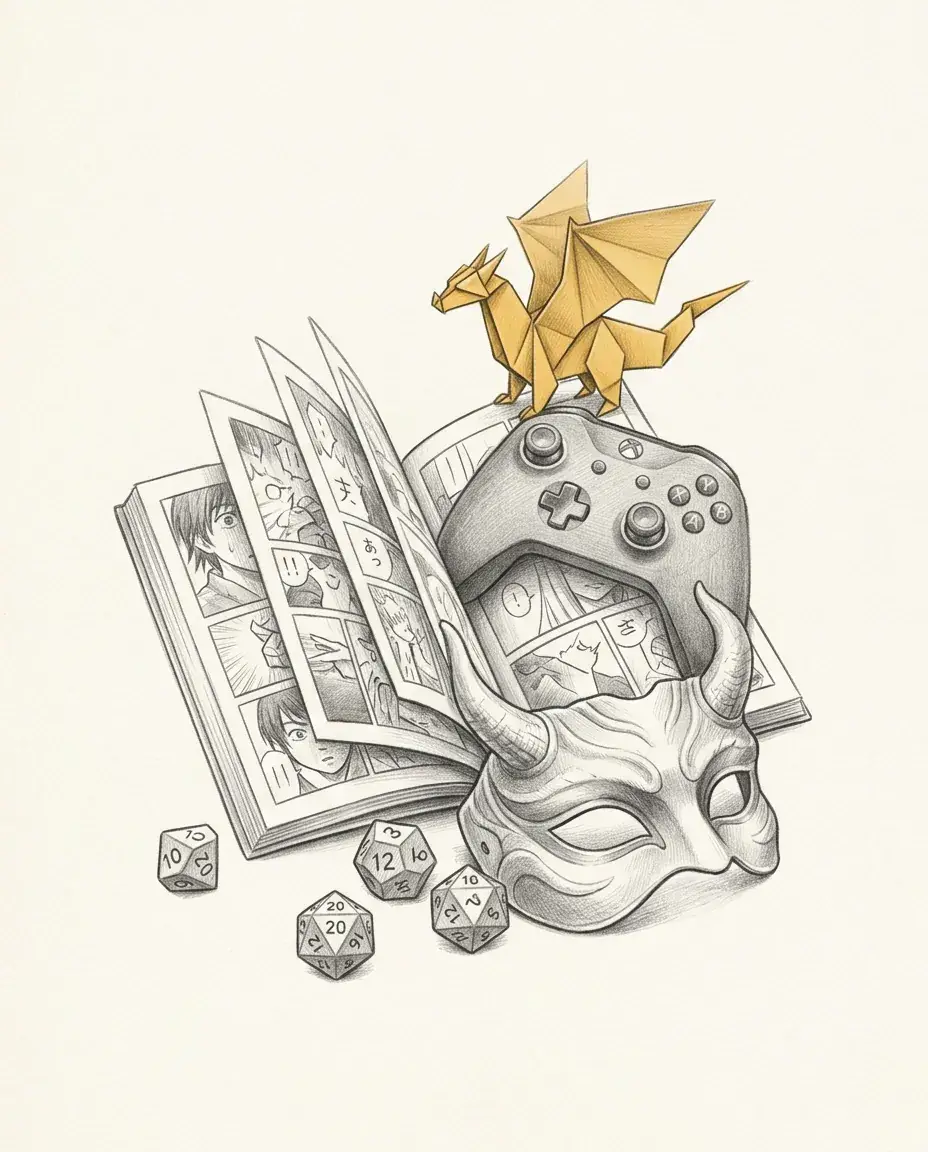
Monster attraction, sometimes labelled teratophilia, is an erotic or romantic interest in monstrous, mythical, alien, demonic, or otherwise non-human fantasy beings such as dragons, demons, aliens, cryptids and the sympathetic "creatures" of Gothic fiction. It is overwhelmingly a media-driven interest, focused on imagined characters in fiction, art, games and film rather than anything in the real world. This article traces its long literary lineage, its sparse clinical record, the modern "monster romance" boom, and why the interest is benign and wholly distinct from any attraction to real animals.
Definition & scope
Monster attraction is directed at fictional non-human forms: mythological hybrids, aliens, demons, and the desiring creatures of speculative and horror fiction. The pull may be romantic, aesthetic, sexual, or a blend, and it lives almost entirely in imagination and media. Two boundaries define it. First, it is not attraction to real animals: teratophilia concerns invented beings that cannot exist and cannot be harmed, which sets it apart categorically from zoophilia / bestiality. Second, it is not a clinical diagnosis and appears in no diagnostic manual. Popular usage occasionally stretches the word "teratophilia" to cover attraction to human bodily difference, but the sense that drives the modern communities, and the one this entry documents, is the fantasy-creature one described on Wikipedia's teratophilia page.
Examples
What the term covers. The dragon, demon, alien or cryptid love interest of a novel or a game; a self-published "monster romance" with a non-human lead; fan fiction and fan art built around a creature from a film; a dating game whose romanceable characters are not human; cosplay of the creature rather than of the person it menaces; and the long-running affection for the sympathetic Gothic monster, whose whole appeal is that it is monstrous and loved anyway. In every case the object is a character that does not and cannot exist.
What the term does not cover. Bestiality concerns real animals, which can be harmed and cannot consent; it is a recognised paraphilia and a criminal offence in most jurisdictions, and the two topics share nothing but a rough silhouette. The furry fandom is a community organised around anthropomorphic animal characters, much of it social and creative rather than erotic. Several narrower branches have their own entries: monster girl characters keep a human appearance with monstrous features, while alien, vampire, werewolf and tentacle interests each attach to a single creature type.
How the word is used. "Teratophilia" is a modern Greek-derived coinage that circulates in glossaries and popular lists rather than in medicine; it appears in neither DSM-5-TR nor ICD-11. Readers are far more likely to meet the interest under fandom labels such as "monster romance" or "monster lover", which name a genre and a readership rather than a condition.
History & origins
A pre-clinical literary lineage
The imaginative pairing of the human and the monstrous is far older than any clinical vocabulary, and folklorists treat it as a recurring narrative type. The classifier of the Aarne–Thompson–Uther index groups these as "animal bridegroom" tales (ATU 425C, within the broader ATU 425 Search for the Lost Husband).
- 2nd century CE: the tale of Cupid and Psyche, embedded in Apuleius's The Golden Ass, turns on love for a hidden bridegroom rumoured to be a monster; it is widely cited as a literary ancestor of the type, per Wikipedia's Beauty and the Beast.
- 1740: Gabrielle-Suzanne Barbot de Villeneuve published the first full literary Beauty and the Beast (La Belle et la Bête) in the collection La Jeune Américaine et les contes marins, a novel-length tale aimed largely at adult readers.
- 1756: Jeanne-Marie Leprince de Beaumont abridged and revised it for Magasin des enfants, producing the version most retold since.
- 1818: Mary Shelley's Frankenstein gave Gothic and "weird" fiction a sympathetic, desiring creature, a current that twentieth-century cinema (from Universal monsters onward) sustained.
Scholars such as the folklorist Maria Tatar, who compiled cross-cultural animal-groom variants, read many of these tales as didactic stories that reframed an intimidating partner as ultimately worthy of love, an early cultural negotiation of desire for the monstrous, as surveyed by Book Riot's brief history of monster romance.
A thin clinical record
Unlike the partialisms and paraphilias catalogued by the founders of sexology, teratophilia received almost no attention from nineteenth- and early-twentieth-century clinicians; it does not appear in the foundational works of Richard von Krafft-Ebing or Havelock Ellis. The word combines Ancient Greek téras ("monster, marvel, portent") with -philia ("love"), and is a modern descriptive coinage whose precise first use is not well documented. The most-cited modern clinical mention comes from the behavioural psychologist Mark Griffiths, who in 2013 described teratophilia on his widely read paraphilia blog as arousal involving deformed or monstrous figures, while noting the evidence base is largely anecdotal. It is listed in popular taxonomies such as Wikipedia's list of paraphilias rather than in the DSM or ICD, and, crucially for this entry, it is not a recognised clinical paraphilia. (A separate, older medical term, teratophobia, denotes a fear of bearing a malformed child and is unrelated.)
The modern "monster romance" surge
The contemporary fan sense (open, often playful desire for clearly fictional non-human beings) crystallised online in the 2010s. Self-published authors reached large audiences through fan communities, Tumblr, and e-book platforms without traditional gatekeepers; works such as Virginia Wade's Moan for Bigfoot (2013) and the parody output of Hugo-finalist Chuck Tingle brought "monster erotica" into public debate, while Ruby Dixon's Ice Planet Barbarians series helped push non-human romance toward the mainstream. Mainstream film fed the same current: Guillermo del Toro's The Shape of Water (2017) and the Venom symbiote (2018) became frequent reference points for the fandom.
In practice
The interest is expressed almost entirely through engagement with speculative media rather than anything physical: reading and writing fan fiction and "monster romance" novels, fan art, romance and dating games featuring non-human love interests, cosplay, and dedicated online communities. The appeal often lies in difference and otherness, in distinctive forms or features, in the fantasy of being desired by a powerful or protective being, or in the imaginative freedom of desire beyond ordinary human norms. It overlaps with adjacent transformation and consumption fantasies such as vore and body inflation, and with costume and masking practices such as cosplay and female masking.
Psychology
Is monster attraction normal?
Within its fictional frame it is an ordinary variation of speculative-fiction fandom, not a disorder. It causes no distress or impairment for the people who hold it, harms no one, and is not listed among clinical paraphilias.
Proposed mechanisms are speculative, because direct study is minimal. The appeal is commonly linked to novelty and the allure of the exotic; to attraction directed at strength, protectiveness, or untamed qualities projected onto fictional beings; and to the safe psychological distance fantasy provides for exploring desire: as Book Riot puts it, "you're not really going to be abducted by aliens or kidnapped by minotaurs." Some readings emphasise the genre's embrace of "otherness" and acceptance of the abject. None of this rests on a robust empirical base, and the interest is best understood as a fantasy-oriented variation within broader speculative-fiction fandom rather than a discrete clinical condition.
Prevalence & culture
How common is monster attraction?
No one knows precisely: there is no dedicated prevalence survey, so any figure carries low confidence and rests on search-interest and community proxies. What the research does support is that media-driven, unusual fantasies are widespread without being statistically typical.
There is no dedicated prevalence survey for monster attraction, so confidence in any figure is low and estimates rely on search-interest and community proxies. The broad framing in general-population fantasy research (that media-driven, unusual fantasies are widespread without being statistically typical) comes from work such as Joyal, Cossette & Lapierre (2015), which found that very few fantasies are genuinely rare. Cultural visibility, by contrast, has grown sharply: best-selling "monster romance" fiction (a large Goodreads/romance.io category), fantasy films, and creature-dating games sustain sizeable, active fan communities. Aggregated adult-search reporting such as Pornhub Insights treats monster/creature content as a notable but niche fantasy genre.
Common misconceptions
The most important clarification is that monster attraction concerns fictional, non-human characters and is categorically different from zoophilia / bestiality, an attraction to real animals that is harmful and, in most jurisdictions, illegal. Monster attraction raises no consent or legal concerns, involves no real party who can be harmed, and is not a recognised paraphilic disorder; it is a benign, fantasy-oriented variation expressed through media and consenting-adult fandom.
Common questions
Is monster attraction the same as bestiality?
No, and the difference is categorical rather than one of degree. Monster attraction is directed at invented beings (dragons, demons, aliens) that cannot exist, cannot be harmed, and appear only in fiction. Bestiality concerns real animals, which cannot consent and are harmed; it is a recognised paraphilia and a criminal offence in most jurisdictions. A fictional creature has no welfare to protect.
What is monster romance?
A publishing category in which the love interest is explicitly non-human, and one of the fastest-growing corners of romance fiction. It took shape online in the 2010s, when self-published authors reached readers without traditional gatekeepers: Virginia Wade's Moan for Bigfoot (2013), the parody output of Chuck Tingle, and Ruby Dixon's Ice Planet Barbarians series, which helped push non-human romance toward the mainstream.
How is monster attraction different from the furry fandom?
Furry fandom is a community built around anthropomorphic animal characters, with conventions, art, costume and identity practices, much of it social and creative rather than erotic. Monster attraction is an attraction rather than a community, and its objects are monstrous rather than animal: dragons, demons, aliens, cryptids. People overlap freely between the two, but they describe different things: one a fandom, one a taste.
Why are people attracted to monsters in fiction?
The usual explanations are novelty and the pull of the exotic; attraction to strength, protectiveness or untamed qualities projected onto a being with no human constraints; and the safety of the frame: as Book Riot puts it, "you're not really going to be abducted by aliens or kidnapped by minotaurs." Direct study is minimal, so all of this is descriptive rather than demonstrated.
Where does the word teratophilia come from?
From Ancient Greek téras, "monster, marvel, portent", plus -philia, "love"; literally love of monsters. It is a modern descriptive coinage rather than a nineteenth-century clinical term, and its first use is not well documented. It should not be confused with teratophobia, an older and unrelated medical word for the fear of bearing a malformed child.
Is Beauty and the Beast a monster romance?
It is close to the type specimen. Folklorists classify it as an "animal bridegroom" tale, ATU 425C, with Apuleius's second-century Cupid and Psyche as a literary ancestor. The first full version was published by Gabrielle-Suzanne Barbot de Villeneuve in 1740 for largely adult readers; the familiar retelling is Leprince de Beaumont's 1756 abridgement. The pairing long predates any modern fandom.
- Vore25/100Vorarephilia · Identity & TransformationA fantasy interest in the idea of one being swallowing or being swallowed whole by another, almost always depicted in fiction, art, and animation. It is a symbolic, non-literal engulfment theme rather than any real act.25
- Body Inflation20/100Identity & TransformationA fantasy-driven interest in the imagined swelling, rounding, or expansion of a body to cartoonish proportions. It is expressed overwhelmingly through art, animation, and fiction, and centres on the visual and conceptual transformation rather than any real physiological event.20
- Female Masking17/100Identity & TransformationFemale masking is the practice of wearing a lifelike full-head silicone or latex mask to present as a woman or as an idealized doll-like figure. A matching body suit is usually worn with it. It centres on transformation, embodiment and total concealment of the wearer's own identity.17
- Autosexuality39/100automonosexualism · Identity & TransformationSexual attraction directed at oneself: arousal from one's own body, image or touch that stands on its own and does not depend on a partner. An identity label in modern use, filed in older sexology as automonosexualism.39
- Fursuiting37/100Identity & TransformationWearing a full or partial animal costume, a fursuit, to physically embody an anthropomorphic character, typically one's own fursona. It is predominantly a performative, playful, craft-driven and social activity within the furry fandom rather than a sexual one.37
- Scalie37/100Identity & TransformationWithin the furry fandom, a scalie is a fan whose interest centres on anthropomorphic reptiles, amphibians and dragons rather than furred mammals. The term covers both the characters and the people who favour them, and includes an optional erotic dimension for some.37
From Ancient Greek 'teras' (τέρας, 'monster, marvel, portent'; stem 'terato-') + '-philia' (φιλία, 'love'); literally 'love of monsters'. A modern descriptive coinage, distinct from the older medical term 'teratophobia' (fear of bearing a malformed child).
non-human attraction · fantasy · media-driven
Prevalence is computed from the entry's cited population estimate. Rows marked ESTare indicative editorial estimates scored against a fixed anchor rubric, not measured quantities. Method & anchors: methodology.
Uncommon · ≈ 1 in 100
- 01List of paraphilias, Wikipediadefinition/existence of teratophilia (attraction to monsters/creatures)
- 02Joyal, Cossette & Lapierre (2015), What Exactly Is an Unusual Sexual Fantasy?, J. Sexual Medicine 12(2):328-340framing media-driven fantasy attraction as uncommon but not statistically rare
- 03Pornhub Insights, search-term popularity (search-interest proxy)search-interest proxy for monster/creature content (a notable but niche fantasy genre)
- 04Beauty and the Beast, Wikipedialiterary history of human/non-human romance: Apuleius's Cupid and Psyche (2nd c. CE) as precursor, Villeneuve 1740 in La Jeune Américaine et les contes marins, Leprince de Beaumont 1756 in Magasin des enfants, and the ATU 425C animal-bridegroom classification
- 05Teratophilia, Wikipediadefinition (attraction to monsters, demons, or cryptids), Greek etymology (teras + philia), the thin sexological record (absent from Krafft-Ebing and Ellis), Mark Griffiths's 2013 blog description, and modern reference points (Chuck Tingle, The Shape of Water, Venom)
- 06What's the Appeal of Monster Romance? A Brief History of Sexy Monsters, Book Riotmodern monster-romance history and appeal: animal-groom folklore, Maria Tatar's cross-cultural compilation, Villeneuve 1740, Virginia Wade's Moan for Bigfoot (2013), Chuck Tingle, The Shape of Water (2017), and the 'safety of fantasy' framing of the genre's appeal