Ecdysiophilia
Ecdysiophilia
Added 11 Jul 2026 · Updated 22 Aug 2026
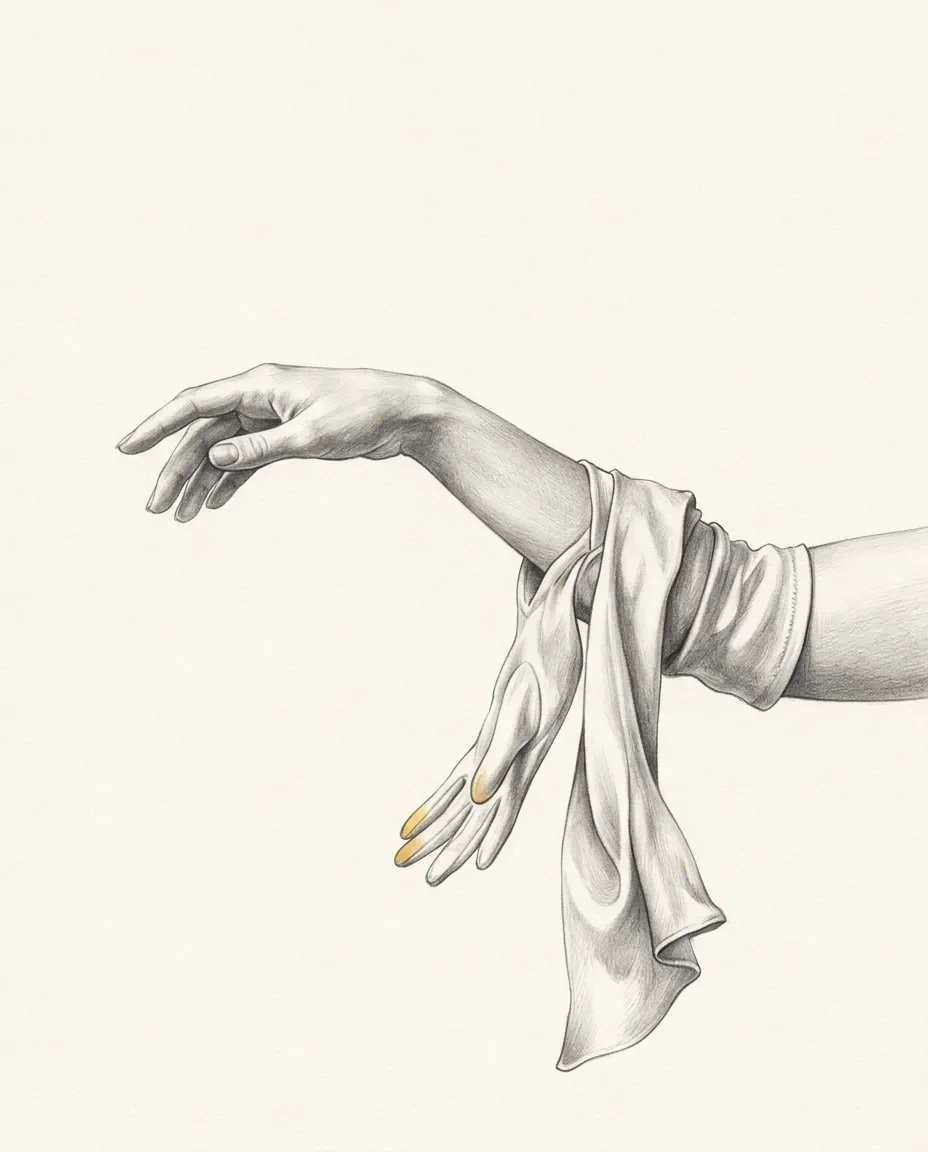
Ecdysiophilia is sexual arousal centered on striptease or the act of undressing, built on anticipation and gradual exposure. It may mean watching a partner slowly remove clothing, or performing the reveal oneself. It is a benign, non-clinical erotic interest.
- Prevalence
- Rare
- Category
- Clinical Paraphilias
- Clinical term
- Ecdysiophilia
- Domain
- Sexual interest · Paraphilia
- Confidence
- Low confidence
- Status
- A benign, non-clinical paraphilia listed on standard catalogues; it is not a DSM-5-TR or ICD-11 disorder and would only rise to a paraphilic disorder if it caused distress, impairment, or involved non-consent.
- Also known as
- ecdysiophilia, striptease arousal, undressing fetish, arousal from stripping
- Added
- 11 Jul 2026
- Updated
- 22 Aug 2026
Featured in
Overview
Ecdysiophilia is sexual arousal centred on striptease and the act of undressing: the slow, deliberate removal of clothing rather than nudity itself. For a person with this interest the charge lies in the reveal, the build-up and gradual exposure, more than in the undressed body at the end of it. The word is built on the biological term for molting, and it names a benign, common-in-mild-form erotic taste rather than a disorder. This article covers the term's origin, how the interest is expressed, its proposed psychology, and its cultural place.
Ecdysiophilia appears on standard catalogues of paraphilias, such as the Wikipedia list of paraphilias, but a paraphilia only rises to a clinical paraphilic disorder when it causes distress, impairment, or harm to others. Most people who enjoy a striptease never approach that threshold.
Definition & scope
The defining feature is that arousal tracks the process of disrobing. The interest can run in either direction: toward watching a partner or performer strip, or toward performing the undressing oneself. It differs from simple attraction to a naked body, and from voyeurism proper, in that the eroticism is bound to the staged, gradual quality of the reveal.
A related but distinct interest is the boot fetish and other garment fetishes, where a specific item of clothing is itself the object of desire; in ecdysiophilia the clothing matters chiefly because its removal creates a controlled, unfolding tease. Watching a partner undress overlaps with voyeurism; performing a striptease for a willing audience overlaps with exhibitionism in its non-clinical, consensual sense. Because striptease is a mainstream feature of adult entertainment and of ordinary intimacy, the interest is far more often a spice than a fixation.
Examples
What the term covers. A partner asked to undress slowly rather than simply getting undressed; a private striptease performed for one person; the appeal of a burlesque routine, where the whole craft lies in what is withheld and for how long; and the strong response some people have to a gradual reveal in adult media, where the sequence matters more than the final frame. The interest runs in both directions: some are drawn to watching the reveal, some to performing it, many to both.
What the term does not cover. Attraction to a garment in its own right is a clothing fetish, as with lingerie, stockings or boots; here the clothes matter only while they are coming off. Clothed sex is close to the opposite, since the clothing stays on. Tease and denial shares the shape of drawn-out anticipation but withholds orgasm rather than exposure. Watching a willing performer is voyeurism in its consensual sense and often shades into camming; watching someone who has not agreed to be watched is voyeuristic disorder, and exposing oneself to an unwilling stranger is exhibitionistic disorder. Both of those are offences, and neither is what this word describes.
How the word is used. It is catalogue vocabulary rather than everyday speech: it appears on reference lists of paraphilias and almost nowhere else, since in conversation people simply say they like a striptease. It is in neither DSM-5-TR nor ICD-11. The root is biological (ecdysis, the molting of a shell or skin), the same image H. L. Mencken reached for when he built ecdysiast on it in 1940.
History & origins
The word
The erotic term borrows from biology. Ecdysis is the scientific name for molting, the shedding of skin or shell by snakes, insects and crustaceans, from the Greek ekdysis meaning "a stripping off" or "casting off." In 1940 the journalist and lexicographer H. L. Mencken built the word ecdysiast on that root. As the etymologist Michael Quinion documents, Mencken coined it in a letter dated 5 April 1940, replying to the burlesque performer Georgia Sothern, who had asked him to help find "a new and more palatable word" for her profession than strip-teasing. The popular belief that Mencken invented it for Gypsy Rose Lee is mistaken, and Lee herself reportedly disliked the term. Ecdysiophilia extends the same molting metaphor into the vocabulary of sexual interest; unlike ecdysiast, it has no single documented coiner.
The performance tradition
Striptease as staged entertainment has a long lineage in burlesque and cabaret, and the tease, the withholding and slow granting of exposure, has always been its organizing principle. The erotic interest catalogued as ecdysiophilia is essentially the personalization of that tradition: the same anticipation, brought into private life.
In practice
Expression is ordinary and consensual: enjoying a partner's slow undressing, asking for or performing a private striptease, or responding strongly to the tease of gradual exposure in adult entertainment. The interest needs no specialised equipment or setting beyond the willingness of those involved, and it usually sits within a broader sexual life rather than replacing it.
Psychology
Proposed mechanisms are the ordinary ones behind teasing and anticipation. Delayed and gradual reveal heightens arousal by building tension, a pattern well described in general models of sexual response. Elements of control, focus and ritual, the performer directing attention while the watcher waits, may add to the appeal. Evidence specific to ecdysiophilia is thin, and no distinct causal pathway has been established; it is best understood as one variety of a widespread taste for anticipation rather than a separate condition.
Is ecdysiophilia normal?
Yes, in its everyday form. Enjoying a striptease or the slow undressing of a partner is common and unremarkable, and carries no health or legal concern between consenting adults. It would only warrant clinical attention if it became distressing, compulsive, or was pursued without others' consent.
Prevalence & culture
There are no reliable prevalence figures for ecdysiophilia as a discrete category; it is rarely isolated in surveys because mild forms are so ordinary. Its cultural footprint, by contrast, is large: striptease runs through film, music video, the burlesque revival, and mainstream adult entertainment. Research attention is minimal, matching its benign status.
Related interests
- Voyeurism: arousal from watching, which overlaps when the striptease is observed.
- Exhibitionism: in its consensual sense, the pleasure of performing the reveal.
- Public sex: shares the theme of staged, watched intimacy.
Common questions
Why is watching someone undress more arousing than seeing them naked?
Because anticipation does work that the endpoint cannot. A gradual reveal keeps attention suspended, gives each stage a meaning it would not have on its own, and hands the watcher a sequence rather than a fact. The performer's control over pacing adds a second layer: someone is deciding what is shown and when. Nudity resolves that tension, which is exactly why the tease is often reported as the better part.
Is ecdysiophilia the same as a clothing fetish?
No, and the difference is easy to test. In a clothing fetish the garment itself is the object of desire, so it usually stays on or stays present. In ecdysiophilia the clothing matters only as something being removed; it is the process, not the fabric. Someone can have both, and a lingerie or stocking fetish often sits alongside enjoyment of the reveal, but they remain separate interests.
Is ecdysiophilia a recognised disorder?
No. It appears on catalogues of paraphilias but in no diagnostic manual, and a paraphilia only becomes a paraphilic disorder when it causes the person distress or impairment or involves someone who has not consented. Enjoying a striptease clears none of those bars. In its ordinary form the interest is so unremarkable that surveys rarely bother to isolate it.
What is the difference between ecdysiophilia and voyeurism?
Voyeurism is about the act of watching, whatever is being watched. Ecdysiophilia is about one particular thing being watched (or performed), namely the removal of clothing. They overlap whenever a striptease has an audience, but a person can enjoy watching a partner undress without any wider interest in observing others, and a voyeuristic interest need have nothing to do with disrobing.
Is performing a striptease a form of exhibitionism?
In the consensual sense of the word, yes: exhibitionism covers the pleasure of being watched by a willing audience, and performing a reveal for a partner sits squarely inside it. The clinical term exhibitionistic disorder means something entirely different: exposing oneself to people who have not agreed to see it, which is a criminal offence in most jurisdictions and shares only a word root with this.
Does ecdysiophilia have anything to do with strip clubs or sex work?
Only as one setting among several. Commercial striptease is where the performance tradition is most visible, and burlesque and cabaret gave the tease its stagecraft, but the interest itself is most often expressed privately between partners, at no cost and with no professional performer involved. Naming the interest says nothing about whether a person uses commercial adult entertainment.
- Voyeurism78/100Scopophilia · Acts & ActivitiesArousal from watching others who know they are being observed, or who consent to being viewed, such as a partner, performers, or participants in group settings. It is a common, benign facet of human sexuality.78
- Exhibitionism72/100Acts & ActivitiesArousal from being seen, watched, or displaying oneself to willing audiences within agreed limits. As a consensual interest it is a common, non-pathological variation of erotic expression, distinct from the clinical disorder that involves exposure to non-consenting observers.72
- Public Sex59/100Settings & SituationsA consensual interest in sexual activity in outdoor or public settings, where the change of environment or a slim chance of discovery heightens arousal. The appeal centres on novelty and risk rather than on being deliberately witnessed.59
- Boot Fetish52/100Clothing & GarmentsA sexual interest in boots, from knee-high and thigh-high fashion styles through riding, work, combat, and military boots. They are valued for their silhouette, materials, and connotations of authority. It overlaps with shoe, leather, and uniform fetishism.52
- Gerontophilia28/100Gerontophilia · Clinical ParaphiliasGerontophilia is a marked, preferential sexual attraction by a younger adult toward elderly partners. Between competent, consenting adults it is lawful and is treated clinically as an age-focused variation rather than an inherently harmful disorder.28
- Enema Fetish23/100Klismaphilia · Clinical ParaphiliasKlismaphilia is a paraphilic interest in which sexual arousal centres on receiving or giving enemas and the sensations that follow. Those sensations are internal fullness and rectal distension. The focus is the procedure and bodily feeling rather than a partner's appearance.23
From the Greek ekdysis ("a getting out, a stripping off"), the scientific term for molting, plus -philia ("love of"). The same root gave the journalist H. L. Mencken the word ecdysiast (a striptease performer) in 1940.
benign paraphilia · anticipation-focused · performance
Prevalence is computed from the entry's cited population estimate. Rows marked ESTare indicative editorial estimates scored against a fixed anchor rubric, not measured quantities. Method & anchors: methodology.
Rare · ≈ 1 in 1,000
- 01List of paraphilias, Wikipediadefinition of ecdysiophilia as arousal from stripteasing or undressing
- 02Ecdysiast, World Wide Words (Michael Quinion)H. L. Mencken coined 'ecdysiast' in 1940 from Greek ecdysis (molting) for Georgia Sothern; the Gypsy Rose Lee attribution is a myth
- 03Striptease, Wikipediaburlesque and cabaret history of striptease as staged entertainment built on gradual reveal
- 04Paraphilic disorder, Wikipediaa paraphilia becomes a disorder only when it causes distress, impairment, or harm to others