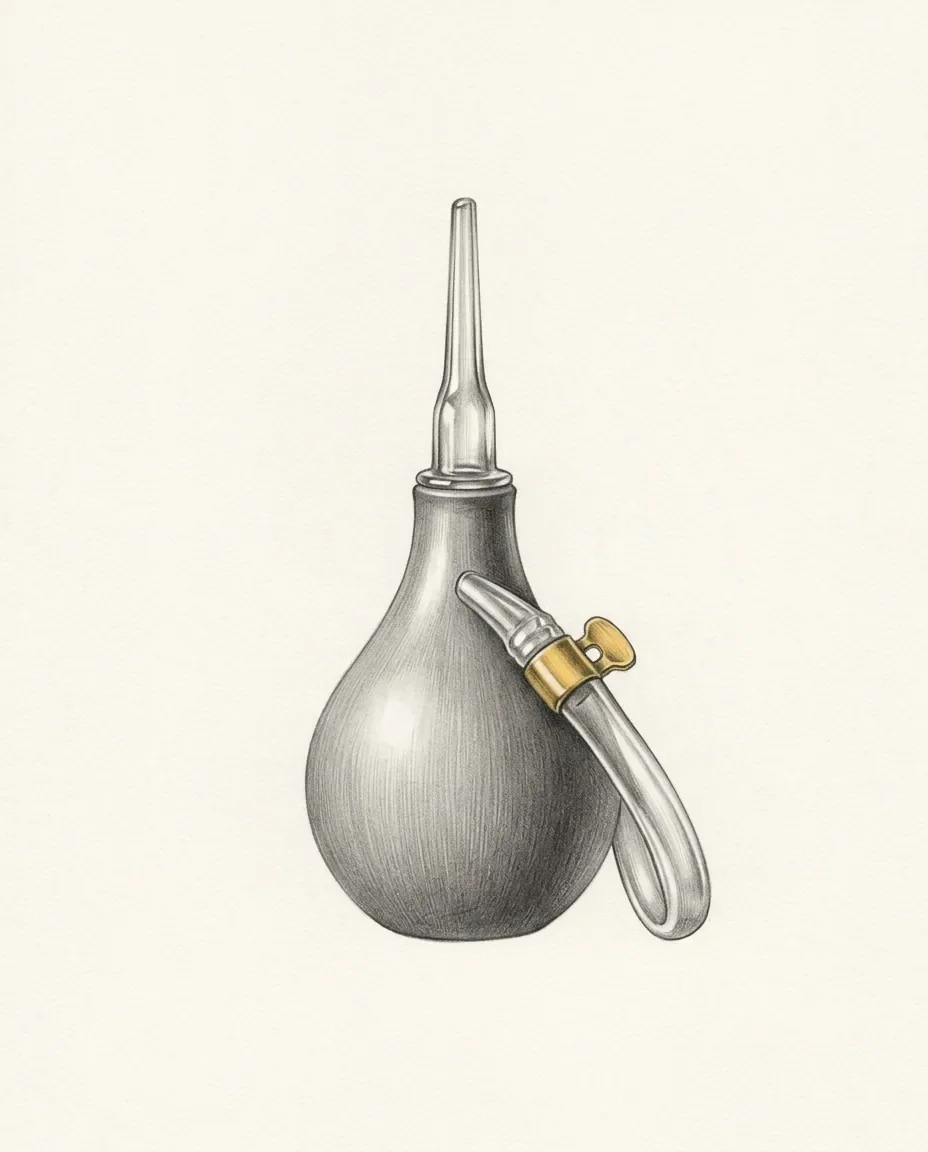
Enema Fetish
Klismaphilia
Added 21 Jun 2026 · Updated 22 Aug 2026
Klismaphilia is a paraphilic interest in which sexual arousal centres on receiving or giving enemas and the sensations that follow. Those sensations are internal fullness and rectal distension. The focus is the procedure and bodily feeling rather than a partner's appearance.
- Prevalence
- Rare
- Category
- Clinical Paraphilias
- Clinical term
- Klismaphilia
- Domain
- Sexual interest · Paraphilia
- Confidence
- Low confidence
- Status
- Uncommon paraphilia catalogued in clinical literature; classified as other specified paraphilic disorder only with distress, impairment, or non-consent.
- Also known as
- klismaphilia, klysma paraphilia, enema play
- Added
- 21 Jun 2026
- Updated
- 22 Aug 2026
Featured in
Overview
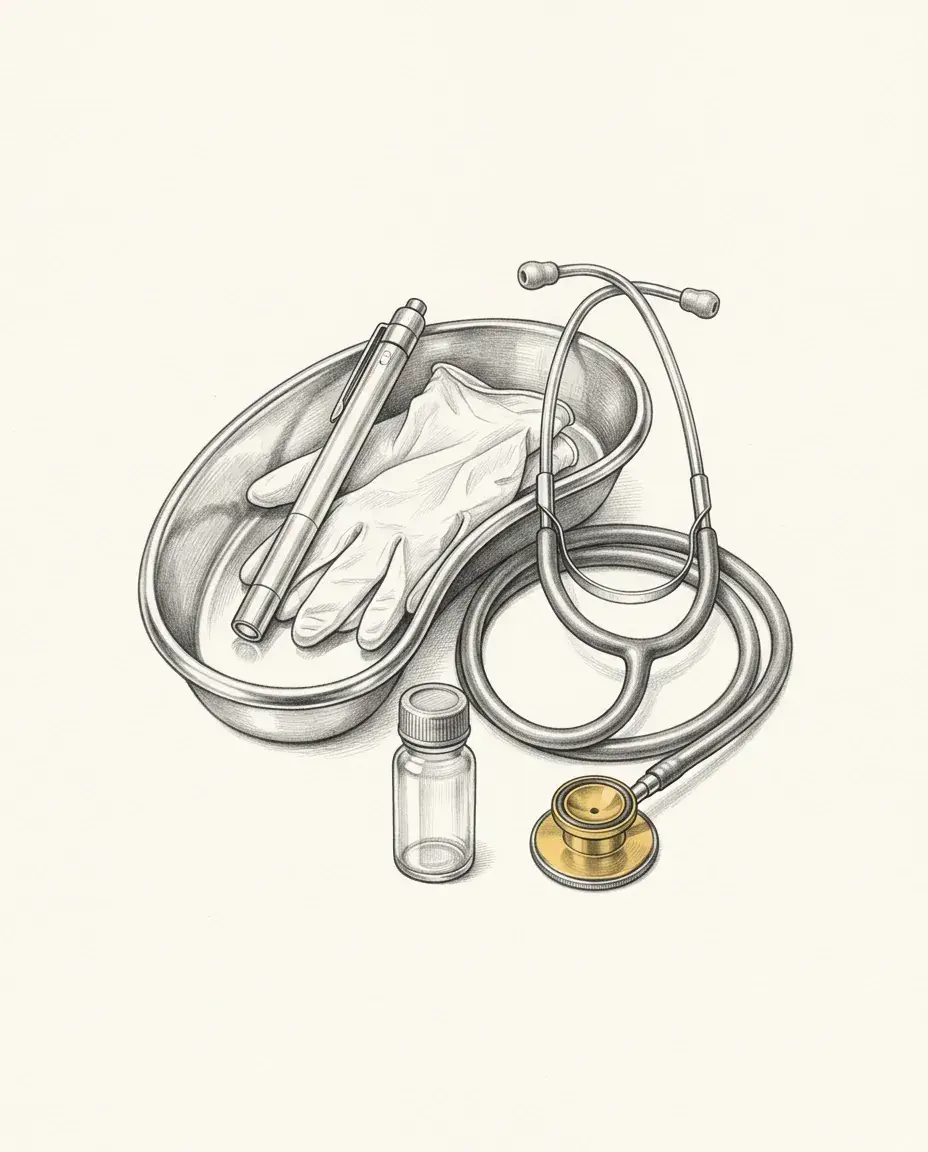
Klismaphilia is the clinical term for erotic interest organised around the enema, the introduction of liquid into the rectum, and the bodily sensations it produces, such as internal fullness, pressure, and release. Its defining feature is that the procedure itself, and the unusual interoceptive feeling it creates, become the primary source of arousal rather than a partner's appearance. It overlaps with broader medical-setting kink and anal-eroticism themes, but the ritual and the internal sensation of the enema set it apart.
Examples
What the term covers. Solo use, in which the anticipation, the ritual of preparation and the retained sensation of fullness are the whole point; partner-administered enemas inside a negotiated medical setting scene, often with one person taking the clinician role of doctor/nurse role-play; and dynamics where the appeal sits in being tended to, or in tending to someone, rather than in the fluid or the equipment. As with other paraphilic interests it runs in either direction: some people want to receive, some to administer, some both.
What the term does not cover. Routine hygienic douching before anal sex is not klismaphilia; the difference is intent, not equipment. Anal play is the wider family of anal and rectal stimulation, where the focus is contact and pressure rather than internal volume. A scat fetish centres on faeces themselves, which klismaphilia does not require and most of its practitioners treat as the mundane part. Watersports and omorashi concern urine and bladder desperation; omorashi shares the structure of building fullness and delayed release, but in a different organ. Figging produces a burning sensation rather than distension, and a diaper fetish is about the garment and what it suggests.
How the word is used. Klismaphilia is the clinical word, coined in 1973 and used almost entirely in case literature; "enema play" and "enema fetish" are the everyday and community terms for the same thing. Neither is a named diagnosis. The DSM-5-TR has no entry for it, nor does the ICD-11, and both reach it only through their residual other-specified category.
History & origins
The enema before sexology
The enema has an exceptionally long career as a medical and hygienic practice: documented in ancient Egyptian and Greek medicine, recommended through the Galenic tradition, and a fixture of European domestic health regimens by the seventeenth through nineteenth centuries, when the clyster syringe was a standard household instrument. This deep familiarity with the procedure, often administered in childhood for constipation or fever, is part of why early sexologists treated it as a plausible nucleus for erotic conditioning. The broader literature on anal eroticism owes much to Sigmund Freud's Three Essays on the Theory of Sexuality (1905), which framed the anal zone as an erotogenic region in psychosexual development.
Clinical naming
- 1973: The American psychiatrist Joanne Denko coined the term klismaphilia in "Klismaphilia: Enema as a Sexual Preference: Report of Two Cases", published in the American Journal of Psychotherapy (vol. 27, pp. 232–250). She built the word from the Greek klysma ("a washing out, an injection") plus -philia, to describe patients for whom enemas were a deliberate source of arousal rather than a medical necessity.
- 1976: Denko expanded the case literature in "Amplification of the Erotic Enema Deviance" (American Journal of Psychotherapy 30(2):236–255), refining the descriptive picture.
- 1982: The physiologist Jeremy Agnew, writing separately in the same journal, published "Klismaphilia: A Physiological Perspective" (36(4):554–566), which examined the anatomical basis of anal and rectal sensitivity and why the interoceptive sensations of an enema can register as erotic.
Since Denko's coinage the interest has been folded into the residual paraphilia categories of the diagnostic manuals: the DSM-IV-TR catalogued it under Paraphilia Not Otherwise Specified (code 302.9), and the DSM-5-TR addresses such interests under other specified paraphilic disorder. It has never had a dedicated diagnostic entry; like most uncommon paraphilias it is named only in encyclopedic lists of paraphilias.
In practice
Klismaphilia is expressed both solo and with a partner, frequently within negotiated medical-play scenarios where one person adopts a caregiver or clinician role. For many practitioners the appeal blends a distinctive physical sensation with psychological elements of vulnerability, surrender, nurturing, or controlled discomfort. Because this entry is clinical, it gives no procedural how-to detail.
Psychology
Proposed mechanisms emphasise early associations between enema experiences and bodily attention or care, the intense and unusual interoceptive sensation involved, and the symbolic dynamics of trust, exposure, and being tended to. As with other paraphilic interests, it is generally understood through a mix of conditioning, fantasy, and individual psychology, with no single established cause and a thin evidence base. The phenomenon is documented mainly through case reports and clinical commentary rather than large epidemiological studies, so confident causal claims are not warranted.
Prevalence & culture
Klismaphilia is uncommon and sits well into the long tail of paraphilic interests. It does not appear as a named category in the large fetish-frequency surveys (it was not separately tabulated in Scorolli et al. (2007), whose fetish-population data are dominated by body-part and object foci) so its prevalence is estimated rather than measured. The nearest historical figure is indirect: Alfred Kinsey's mid-century survey noted that a small minority of women reported using enemas among self-stimulation techniques, but this is not a measure of the paraphilia itself. Klismaphilia maintains a modest but established online and forum presence and little mainstream visibility. Clinically it is classified under other specified paraphilic disorder only when it causes distress, functional impairment, or is acted on non-consensually.
Safety, consent & law
Between consenting adults the practice is legal, and the real constraints are physiological. They are also more serious than in most material or role-play interests, which is the main reason this entry treats safety at length.
Large volumes of plain water can dilute the body's electrolytes far enough to cause confusion, seizures or dangerous heart rhythms, so volume and frequency matter more here than technique does. Harsh chemical additives (soaps, alcohol, household preparations) inflame and burn the bowel lining; Denko's own cases noted hospitalisations caused by them. Force, rigid equipment or an over-distended bowel can tear the rectal or colonic wall, and a perforation is a surgical emergency that may announce itself only hours later as severe abdominal pain, fever, or bleeding. Repeated high-volume use can blunt the reflexes that normally produce a bowel movement, so that going without help becomes difficult.
The practical implications are consistent: modest volumes of plain, body-temperature water; no additives; unhurried, gentle insertion; stopping at sharp pain rather than working through it; and medical attention for severe pain, fever, or bleeding afterwards. Informed consent and physiological awareness are the core requirements.
Common questions
Is an enema fetish dangerous?
It carries more physical risk than most interests in this catalog. Large volumes of plain water can disturb the body's electrolyte balance badly enough to cause confusion, seizures or dangerous heart rhythms; harsh additives such as soap or alcohol burn the bowel lining; and force, rigid equipment or over-distension can perforate the bowel, which is a surgical emergency. Small volumes of plain body-temperature water, no additives, and stopping at sharp pain rather than working through it are what the caution comes down to.
Can frequent enemas make you dependent on them?
Repeated high-volume use can blunt the reflexes that normally trigger a bowel movement, so that going without assistance becomes difficult. The pattern is well recognised from long-term laxative and enema use for constipation, and it is a reason to keep frequency low rather than a reason to panic about an occasional one. Persistent difficulty going unaided is worth raising with a doctor, who does not need to be told why the habit began.
Why do enemas feel erotic to some people?
Two strands are usually proposed. The rectum and anal canal are densely innervated, and Jeremy Agnew's 1982 paper argued that the unusual interior experience of distension and release can register as erotic on that basis alone. The other strand is associative: the procedure involves exposure, attention and being tended to, a combination that can become the nucleus of a later interest. Neither is established. The evidence is case reports rather than studies, so confident causal claims are not warranted.
Is klismaphilia a disorder?
Not in itself. It has never had its own diagnostic entry, and DSM-5-TR reaches it only through the residual other specified paraphilic disorder category, which applies only when the interest causes marked distress, impairs functioning, or involves someone who has not consented. An interest a person is at ease with, practised safely alone or with a willing partner, is not a clinical matter.
What is the difference between klismaphilia and anal play generally?
Where the sensation comes from. Anal play is stimulation by contact (fingers, toys, penetration), and the nerve endings around the opening do most of the work. Klismaphilia centres on internal volume: the fullness of retained liquid, the pressure it creates, and eventually its release. The two often occur together, and an enema is frequently a preliminary to anal sex for reasons unconnected to the fetish.
Is it safe to use an enema before anal sex?
Kept small and simple it is generally low-risk: a modest volume of plain body-temperature water, no soap or additives, and enough time afterwards for the bowel to settle. Over-doing it is the usual problem, because repeated flushing irritates the lining and can leave it more prone to injury and to infection during sex, which is the opposite of the intended effect. This is hygiene rather than klismaphilia, though the two frequently meet.
Where does the word "klismaphilia" come from?
From the Greek klysma, a washing-out or injection, plus -philia. The psychiatrist Joanne Denko assembled it in 1973 for a paper in the American Journal of Psychotherapy describing two patients for whom enemas were a deliberate source of arousal rather than a medical necessity. It has stayed a clinical word: outside case literature people say "enema play" or "enema fetish".
- Medical Setting Kink50/100Settings & SituationsAn erotic interest in the imagery, props, and atmosphere of medical or clinical settings, enacted consensually between adults. Examination rooms, white coats, instruments, and the doctor-patient dynamic are typical. Arousal comes from the setting's blend of authority, vulnerability, care, and ritual.50
- Watersports55/100Urolagnia · Body Functions & FluidsA sexual interest in urine or urination, commonly called watersports. Clinically named urolagnia or urophilia, it is a recognized paraphilic interest that, when practised safely between consenting adults, is generally regarded as a benign variation.55
- Desire to Be an Amputee21/100Apotemnophilia · Clinical ParaphiliasApotemnophilia is a rare condition in which a person desires to become an amputee, experiencing the absence of a specific limb as arousing. It may equally be felt as essential to their true body image. It overlaps closely with body integrity dysphoria, in which a healthy limb is felt as not belonging to the self.21
- Ecdysiophilia26/100Ecdysiophilia · Clinical ParaphiliasEcdysiophilia is sexual arousal centered on striptease or the act of undressing, built on anticipation and gradual exposure. It may mean watching a partner slowly remove clothing, or performing the reveal oneself. It is a benign, non-clinical erotic interest.26
- Gerontophilia28/100Gerontophilia · Clinical ParaphiliasGerontophilia is a marked, preferential sexual attraction by a younger adult toward elderly partners. Between competent, consenting adults it is lawful and is treated clinically as an age-focused variation rather than an inherently harmful disorder.28
- Agrexophilia17/100Agrexophilia · Clinical ParaphiliasAgrexophilia is sexual arousal from the knowledge that other people are aware of, or can hear, one's sexual activity. The charge comes from being known rather than from being directly watched, distinguishing it from ordinary exhibitionism.17
From the Greek klysma (κλύσμα), "a washing out" or "injection," plus -philia, "love of." The clinical term was coined by the psychiatrist Joanne Denko in 1973 in the American Journal of Psychotherapy.
OSPD · internal-sensation focus · medical-adjacent
Prevalence is computed from the entry's cited population estimate. Rows marked ESTare indicative editorial estimates scored against a fixed anchor rubric, not measured quantities. Method & anchors: methodology.
Rare · ≈ 1 in 1,000
- 01List of paraphilias, Wikipediadefines klismaphilia (enema fetish) as a recognized paraphilia
- 02Paraphilia, StatPearls, NCBI Bookshelfclinical classification of klismaphilia within other-specified paraphilic disorders
- 03DSM-5-TR, Paraphilic Disorders (American Psychiatric Association, 2022)frames klismaphilia within the OSPD/paraphilic-disorder category
- 04Klismaphilia, Wikipediaterm coined by psychiatrist Joanne Denko in 1973; Greek root klysma meaning a washing-out; DSM-IV-TR Paraphilia NOS code 302.9
- 05Denko, J. (1973) Klismaphilia: Enema as a Sexual Preference, American Journal of Psychotherapy 27(2):232-250original 1973 paper in which Denko coined the term klismaphilia from two case reports
- 06Agnew, J. (1982) Klismaphilia, A Physiological Perspective, American Journal of Psychotherapy 36(4):554-5661982 follow-up paper by Jeremy Agnew examining the anatomical basis of anal/rectal sensitivity and why enema sensations register as erotic
- 07Scorolli et al. (2007), Relative prevalence of different fetishes, Int. J. Impotence Research 19(4):432-437large fetish-frequency survey dominated by body-part and object foci; klismaphilia not separately tabulated, supporting its long-tail status
- 08Three Essays on the Theory of Sexuality (Freud, 1905), Wikipediaearly framing of the anal zone as an erotogenic region in psychosexual development
- 09Sexual Behavior in the Human Female (Kinsey, 1953), WikipediaKinsey's mid-century survey noted a small minority of women reported enemas among self-stimulation techniques, an indirect historical figure not measuring the paraphilia itself