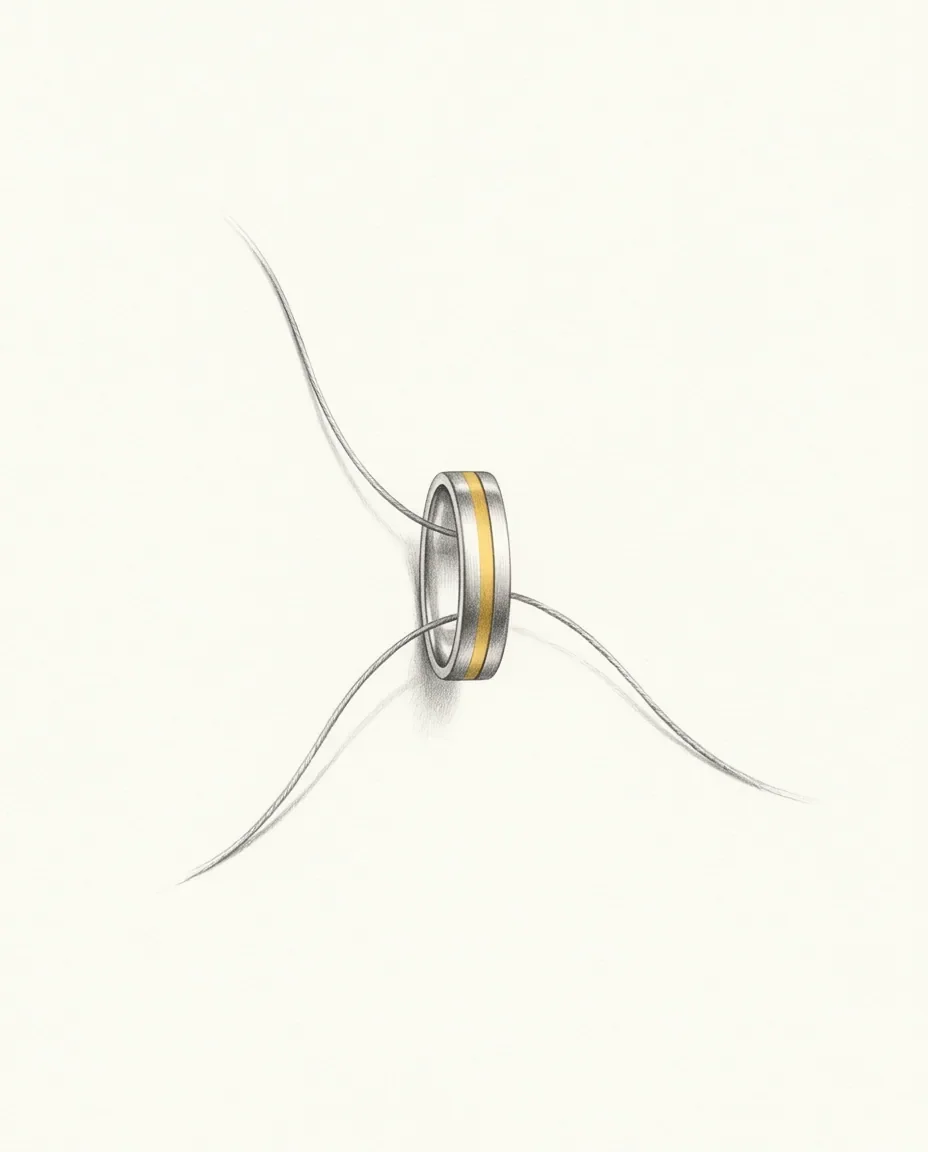
Solo Polyamory
Solo poly · Autonomous polyamory
Added 26 Jul 2026 · Updated 22 Aug 2026
A polyamorous approach in which a person keeps multiple relationships without designating a primary partner or cohabiting. They do not merge finances or build a household around a couple.
- Prevalence
- Uncommon · 1.5% of adults
- Type
- Relationship structure
- Family
- Polyamorous structures
- Also known as
- Solo poly, Autonomous polyamory
- Confidence
- Low confidence
Overview
Solo polyamory is a way of practicing polyamory that puts personal autonomy, rather than a couple or a household, at the center of a person's romantic life. A solo polyamorous person may have one relationship or several at a time, but declines to organize their life around any one of them as a "primary" partner. They typically keep their own home, their own finances, and their own decision-making independent of any relationship, treating themselves, not a couple, as the stable unit (Healthline). WebMD describes the practice similarly, as multiple intimate relationships pursued without cohabiting, merging finances, or working toward the traditional milestones partners in conventional relationships are expected to reach (WebMD).
Examples
Solo polyamory is about where the centre of a life sits, not about how many people are in it, which is the distinction almost every misreading misses.
What the term covers. Someone with two long-standing partners who keeps their own flat, their own finances and their own name on every account; a person who treats a sibling, a close friend or a flatmate as their most significant ongoing commitment while dating romantically; deliberate avoidance of the public markers of coupledom (joint invitations, shared insurance, a merged social identity) without any avoidance of commitment itself. Some solo polyamorous people describe themselves as their own primary partner.
What the term does not cover. Being single is the absence of relationships; solo polyamory is a way of holding them. Relationship anarchy is a broader stance against ranking any connection, where solo polyamory concerns autonomy and household structure and leaves a person free to prioritise if they wish. Hierarchical polyamory is the direct contrast, since the primary slot is exactly what is declined, and non-hierarchical polyamory answers the ranking question without saying anything about living arrangements.
How the word is used. It is community vocabulary, popularised from 2012 by the journalist Amy Gahran writing as Aggie Sez at SoloPoly.net, and framed against what she called the Relationship Escalator: the assumed climb from dating to exclusivity to cohabitation to marriage. "Solo poly" is the everyday short form. No survey measures it.
History
The practice long predates its current label; independent, multi-partner relationships without a shared household have existed as long as polyamory itself. The term "solo polyamory" gained its clearest public voice starting in 2012, when journalist Amy Gahran began writing under the pen name Aggie Sez at the blog SoloPoly.net. Gahran has said she did not invent the phrase, but her writing did much to define and popularize it, framing solo polyamory in explicit opposition to what she called the "Relationship Escalator": the assumed sequence of dating, exclusivity, cohabitation, engagement, and marriage that most romantic relationships in Western culture are expected to climb (Solo Poly). In a 2014 post laying out her own definition, Gahran described solo polyamory as staying open to ethically non-exclusive relationships while avoiding the kind of "primary-style merging of life infrastructure or identity" that comes with sharing a home or finances, and preferring to operate and present herself as an individual rather than as half of a couple (Solo Poly). She expanded these ideas in her 2017 book Stepping Off the Relationship Escalator: Uncommon Love and Life, drawing on interviews with more than 1,500 people about relationships that diverge from the conventional script.
How it works in practice
What distinguishes solo polyamory from other polyamorous structures is less the number of partners than the deliberate absence of a hierarchy built around one of them. A solo polyamorous person does not usually rank a partner as "primary" the way someone practicing hierarchical polyamory might; instead, each relationship is allowed to find its own shape without being measured against a central couple. Healthline notes that some solo poly people describe themselves as their own primary partner, and may treat a close friend, sibling, or roommate as their most significant ongoing commitment rather than a romantic or sexual partner (Healthline).
In practice this often means partners keep separate residences and separate finances, make major life decisions (where to live, whether to have children, how to spend savings) without needing a partner's consent, and avoid the public markers of coupledom, joint social invitations, matching last names, shared insurance, that signal a merged life to friends and family. It does not require avoiding commitment altogether: a solo polyamorous person can maintain a long, deeply committed relationship, provided that commitment does not require entangling their day-to-day infrastructure with a partner's.
The practice is often confused with two adjacent but distinct ideas. It is not the same as relationship anarchy, which rejects ranking relationships against each other as a general principle applied to every connection a person has, romantic or otherwise; solo polyamory specifically concerns a person's own relationship to autonomy and household structure, and someone practicing it may still rank or prioritize relationships if they choose to. It is also not simply being single: a solo polyamorous person is actively dating and maintaining ongoing intimate relationships, whereas being single describes the absence of such relationships. Healthline's overview describes solo poly people as leading what is sometimes called a "singleish" life, independent in structure but not in romantic or sexual activity (Healthline).
Demographics & research
No population survey isolates solo polyamory as a distinct category with its own prevalence figure. The most-cited recent data on the broader population is a 2021 study of a US census-based quota sample of 3,438 single adults, which found 10.7% had ever engaged in polyamory and 16.8% expressed willingness to try it (Moors et al., 2021, Frontiers in Psychology). That study did not break its sample down by relationship structure, so there is no published figure for what share of polyamorous people practice a solo, non-hierarchical, or hierarchical version of it.
Common misconceptions
Solo polyamory is often read as a euphemism for being single, uncommitted, or unwilling to settle down, but its own literature frames it the opposite way: as a deliberate structural choice about how relationships are organized, not a statement about how seriously they're taken. Gahran's Relationship Escalator framing is aimed at exactly this misconception, arguing that skipping cohabitation or marriage does not make a relationship less real or less committed, only differently structured (Solo Poly). It is also sometimes treated as identical to relationship anarchy, though the two ideas address different questions: relationship anarchy is a philosophy about not ranking relationships at all, while solo polyamory is a practice centered on personal autonomy and independent living that leaves room for a person to still value some relationships more than others.
Common questions
What is the difference between solo polyamory and being single?
Solo polyamorous people are actively dating and maintaining ongoing intimate relationships, sometimes several, sometimes long and serious. Being single describes not having those relationships. What solo polyamory declines is the merging of households, finances and identity that usually accompanies a serious relationship, which is why it is sometimes described as a "singleish" life rather than a single one.
Can solo polyamorous people have committed relationships?
Yes. The commitment being declined is infrastructural, not emotional: a solo polyamorous person can sustain a relationship for decades provided it does not require entangling day-to-day life with a partner's. Amy Gahran's Relationship Escalator framing is aimed squarely at the assumption that skipping cohabitation or marriage makes a relationship less real rather than differently structured.
Can a solo polyamorous person live with a partner?
It is unusual, because separate residences are the most common expression of the principle, but the defining feature is refusing to build life around a couple rather than refusing an address. Someone who shares a house on flatmate terms (separate finances, separate decisions, no merged identity) can reasonably describe themselves as solo polyamorous. Someone who has merged both has stopped.
What is the difference between solo polyamory and relationship anarchy?
They answer different questions. Relationship anarchy is a philosophy about not ranking relationships at all, romantic or platonic. Solo polyamory is a practice centred on personal autonomy and independent living, and it leaves room for someone to value one relationship above another if they choose. The two overlap often and neither implies the other.
Who coined the term solo polyamory?
No one claims the coinage, but the journalist Amy Gahran (writing as Aggie Sez at SoloPoly.net from 2012) did most to define and popularise it. Her 2014 definition described staying open to ethically non-exclusive relationships while avoiding "primary-style merging of life infrastructure or identity". She expanded the argument in her 2017 book Stepping Off the Relationship Escalator, drawn from interviews with over 1,500 people.
 PolyamoryMaintaining multiple consensual romantic and/or sexual relationships at the same time, openly and with the knowledge of everyone involved. It is a relationship structure, not a sexual orientation.
 Relationship AnarchyA relationship philosophy that refuses any built-in ranking of romantic, sexual and platonic bonds, treating each connection as its own negotiated agreement. It does not default to a couple-first hierarchy.
 Non-Hierarchical PolyamoryA polyamorous structure in which no relationship is designated primary or secondary by rule and no fixed rank governs decisions. Time, commitment, and major decisions are negotiated relationship by relationship instead.
 Hierarchical PolyamoryA polyamorous structure in which one relationship, usually called primary, is explicitly ranked above others, called secondary or tertiary. The ranking covers time, cohabitation, finances, or decision-making authority.
 Consensual Non-MonogamyAn umbrella term for any arrangement in which everyone involved knowingly agrees that partners may have additional romantic or sexual relationships. That knowing agreement is what separates it from cheating.
- Troilism49/100Troilism · Acts & ActivitiesArousal from observing one's own partner engage with another person, with everyone's consent. It overlaps with voyeurism, candaulism, and cuckold or hotwife dynamics, and is often associated with compersion.49
- Group Sex78/100Acts & ActivitiesSexual interest or fantasy involving more than two consenting adults at once, from threesomes to larger gatherings. It is among the most reported fantasies and a consensual practice within negotiated, lawful settings.78
- Jealousy Fetish36/100Zelophilia · Power, Roles & ScenariosZelophilia is sexual arousal connected to feelings of jealousy: one's own or a partner's. It eroticizes a charged interpersonal emotion rather than an object, overlaps with cuckolding and consensual non-monogamy, and is typically enacted as a negotiated emotional dynamic.36
Prevalence is computed from the entry's cited population estimate. Rows marked ESTare indicative editorial estimates scored against a fixed anchor rubric, not measured quantities. Method & anchors: methodology.
Uncommon · ≈ 1 in 100
Basis: No survey measures solo polyamory as its own category; the figure is derived as a minority subset of the polyamorous population measured by Moors et al. (2021, Frontiers in Psychology), which found 10.7% of a US quota sample of 3,438 single adults had ever engaged in polyamory.
- 01Healthline, Solo PolyamoryCore definition, autonomy and no-primary-partner framing, and the 'singleish' distinction from being single (reviewed by Janet Brito, PhD, LCSW, CST-S).
- 02WebMD, What Is Solo Polyamory?Definition emphasizing independence, no cohabitation or merged finances, and rejection of traditional relationship milestones.
- 03Solo Poly (Aggie Sez / Amy Gahran), Riding the Relationship Escalator (or Not)Origin and framing of the 'Relationship Escalator' concept central to solo polyamory's self-definition; blog start date of 2012.
- 04Solo Poly (Aggie Sez / Amy Gahran), What Is Solo Polyamory? My TakePrimary-source definition of solo polyamory: avoidance of merged life infrastructure, autonomy as a core value, and that Aggie Sez did not coin the term herself.
- 05Moors et al. (2021), Desire, Familiarity, and Engagement in Polyamory, Frontiers in PsychologyPrevalence and desire figures for polyamory generally, used as the population base for the derived prevalence estimate.