Pregnancy Fetish
Maiesiophilia
Added 21 Jun 2026 · Updated 22 Aug 2026
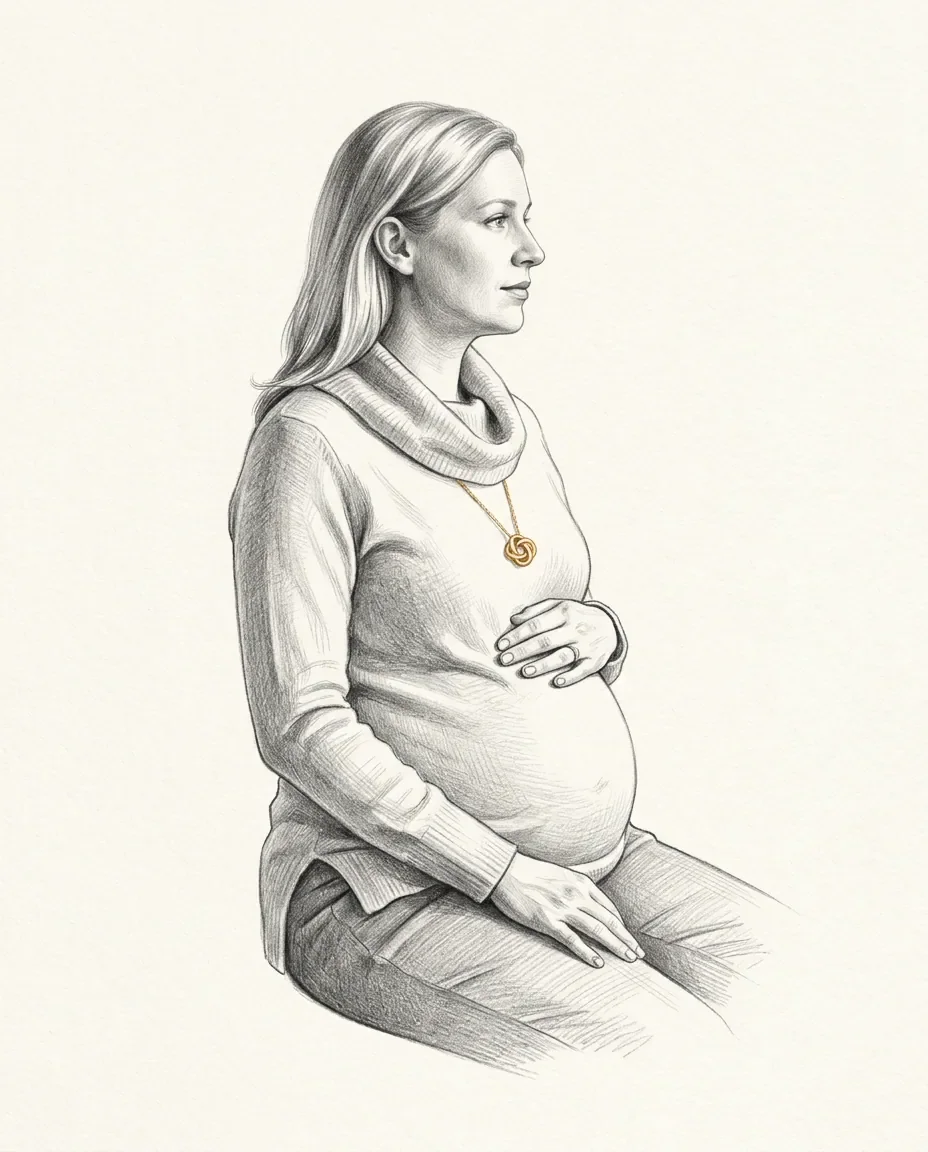
A sexual attraction to pregnancy or to pregnant or visibly pregnant-appearing bodies, focused on the physical and symbolic changes of gestation.
- Prevalence
- Common
- Category
- Identity & Transformation
- Clinical term
- Maiesiophilia
- Domain
- Sexual interest · Paraphilia
- Confidence
- Medium confidence
- Status
- Named paraphilia (maiesiophilia); typically benign and not a disorder unless it causes distress or impairment.
- Also known as
- pregnancy fetish, maiesiophilia, maieusiophilia, preggophilia, preggo fetish, pregnant fetish
- Added
- 21 Jun 2026
- Updated
- 22 Aug 2026
Overview
Pregnancy fetish, clinically termed maiesiophilia (also spelled maieusiophilia and sometimes maieusophoria), is a sexual attraction centred on pregnancy and the pregnant body: the rounded belly, the fuller figure, lactation, or the broader symbolism of fertility, nurturing, and bodily transformation. For most people who report it, the interest is a benign aesthetic and emotional preference rather than a source of distress. This article traces the attraction's ancient roots in fertility imagery, the recent and imprecise history of its clinical name, how it is expressed, its proposed psychology, and its measurable but minority cultural footprint.
Definition & scope
The focus of maiesiophilia can rest on any of several features of gestation: the visibly gravid abdomen, the fuller overall figure, the movement of the fetus, lactation, or the narrative of conception, pregnancy, and childbirth. The Wikipedia article on pregnancy fetishism records this spread, noting attraction to "women who are pregnant or appear pregnant, attraction to lactation, or attraction to particular stages of pregnancy such as impregnation or childbirth." It is distinct from a simple preference for a fuller body type, and it overlaps with, without being identical to, lactation and belly interests. Attraction to a pregnant partner is common enough to be unremarkable; the term names the cases where pregnancy itself is the organising erotic theme.
Examples
What the term covers. Heightened attraction to a partner during their pregnancy; an aesthetic response to the gravid figure in photography, painting and film; a focus on one particular stage, most often the visibly rounded later months; role-play in which pregnancy is simulated with padding or clothing; and attraction to lactation where it accompanies the rest. The interest may be entirely private and unexpressed, or it may be the reason a couple document a pregnancy in photographs. In every form described here the subject is an adult, and the interest concerns pregnancy in adults.
What the term does not cover. Its nearest neighbour is the breeding kink, which centres on conception and impregnation, the moment of becoming pregnant, rather than the pregnant body that follows; the two often coexist, but their objects differ. Lactation can occur without pregnancy and is a separate interest wherever milk rather than gestation is the focus. Belly fetish attaches to the abdomen in general. Feederism, the weight gain fetish and body inflation share the image of an enlarging abdomen but are organised around feeding, gain and fantasy expansion respectively. Nurturing adult dynamics such as the mommy domme role concern care and authority rather than gestation, and a straightforward preference for a fuller figure is not maiesiophilia either.
How the word is used. "Pregnancy fetish" is the ordinary English label and "preggo" the community shorthand, familiar from adult-media category names. Maiesiophilia is a modern Greek-pattern coinage whose first use and coiner are undocumented; it circulates in reference catalogues and paraphilia glossaries rather than in clinical speech, and a clinician is far more likely to describe the interest than to name it. Even the spelling is unsettled, with maieusiophilia and maieusophoria both in use.
History & origins
Ancient roots in fertility imagery
The attraction is far older than any clinical label: fertility and the gravid form have been venerated across cultures for tens of thousands of years. The Venus of Willendorf, an 11-centimetre oolitic-limestone figurine carved roughly 30,000 years ago and unearthed near Willendorf, Austria, in 1908, emphasises the breasts, hips, and rounded abdomen so strongly that many researchers read it as a fertility object, one of numerous Upper Palaeolithic "Venus" figures and later mother-goddess traditions that placed the fecund body at the centre of veneration. Whatever their original purpose, such artefacts show that the swelling, generative figure has been a charged symbol across nearly the whole span of representational art.
A recent and imprecisely dated clinical name
As a named sexual interest, the term is recent and not precisely datable. The modern coinage maiesiophilia is built from Greek maieusis ("midwifery," literally the act of bringing to birth) plus -philia ("love of"). Richard von Krafft-Ebing's Psychopathia Sexualis (1886) and Havelock Ellis's Studies in the Psychology of Sex established the template of naming attractions with Latin and Greek compounds, but the pregnancy-specific word postdates them, and its exact first use and coiner are not well documented. Its clearest appearance in a reference catalogue is in the forensic pathologist Anil Aggrawal's 2009 Forensic and Medico-legal Aspects of Sexual Crimes and Unusual Sexual Practices, whose Appendix lists 547 paraphilias, and it is carried in the Wikipedia list of paraphilias. It is not a standalone diagnosis in the DSM-5-TR or the ICD-11; it falls under the general framework of paraphilic interests, treated as a disorder only where it causes distress, impairment, or harm.
Cultural turning point: the 1991 Vanity Fair cover
One turning point in the mainstreaming of the pregnant form was Annie Leibovitz's August 1991 Vanity Fair cover of a nude, seven-months-pregnant Demi Moore. Praised by some as a bold artistic statement and condemned by others as obscene, the image is widely credited with reframing visible pregnancy as glamorous rather than something to be concealed, and Wikipedia describes it as marking "the beginning of a period which has since seen pregnancy presented by celebrities as a glamorous state of living." That shift is cultural rather than fetishistic, but it expanded the public visibility of the gravid body the interest centres on.
In practice
Maiesiophilia is expressed in ordinary-seeming ways: attraction to a pregnant partner, interest in pregnancy-themed imagery and media, role-play involving real or simulated gestation (for example using padding), or fantasies about conception and the gravid body. It frequently overlaps with adjacent interests such as erotic lactation and impregnation themes, and it sits near appetite-and-fullness interests like feederism. For many people the appeal blends an aesthetic response to the changing figure with emotional associations of intimacy, abundance, and creation.
Psychology
Is a pregnancy fetish normal?
A pregnancy fetish is not in itself a disorder; among consenting adults it is regarded as a benign preference. Explanations for it are plural and non-exclusive, and the dedicated evidence base is thin. Some accounts emphasise attraction to secondary signals of fertility; others point to the comfort and warmth evoked by nurturing imagery, or to individual conditioning in which the pregnant form acquires erotic salience through association. Clinically the interest is distinguished from a disorder only by the presence of distress or impairment, the same depathologised framing the DSM-5-TR applies to atypical interests in general.
Prevalence & culture
How common is it?
There is no representative prevalence figure specific to maiesiophilia, but pregnancy is a recognisable and reasonably persistent theme in adult media and online search behaviour, pointing to a measurable audience even as it remains a minority interest. Citing Pornhub Insights, the Wikipedia article reports that searches for "pregnant" content spiked in 2017, up roughly 20% since 2014. The theme supports dedicated content categories and online communities and appears routinely in mainstream "A–Z of kinks" coverage, consistent with a common-but-minority paraphilic theme rather than a rare or pathological one.
Safety, consent & law
Between consenting adults the interest raises no special legal concern, and it concerns adults throughout: attraction between adults, to the pregnant bodies of adults. As with any attraction involving a partner, mutual consent and comfort are essential, and consent here is worth revisiting rather than assuming, since someone content to be admired or photographed at one stage of a pregnancy may feel quite differently at another. Ordinary care for a pregnant partner's physical health and well-being applies, with attentiveness to comfort and exertion across the stages of pregnancy and deference to whatever medical guidance they have been given.
Common questions
What is the difference between a pregnancy fetish and a breeding kink?
They sit next to each other and are routinely confused. A breeding kink is organised around conception, the act, idea or imagined risk of impregnation, and generally plays out as fantasy rather than reproductive intent. A pregnancy fetish is organised around the state that follows: the gravid body, its changes, and for some people birth or lactation. Either can occur without the other, though many people report both.
Is maiesiophilia a real medical diagnosis?
No. It is a catalogue term rather than a diagnosis. It appears in reference works such as Anil Aggrawal's 2009 appendix of 547 paraphilias and in general lists of paraphilias, but neither DSM-5-TR nor ICD-11 recognises it as a standalone condition. Under both manuals an atypical interest becomes clinically relevant only where it causes distress or impairment, or involves someone who has not consented.
Does having a pregnancy fetish mean someone wants children?
Not necessarily, and the two are independent. The attraction is to the appearance, symbolism and physical changes of gestation, which is a separate matter from an intention to conceive or raise a child. Plenty of people who report the interest have no reproductive plans at all, and plenty of expectant parents have no such interest. The related breeding kink is likewise usually a fantasy about conception rather than a plan for it.
What does a pregnancy fetish look like if nobody involved is pregnant?
Most of the time it is expressed through media and imagination rather than an actual pregnancy: photography, art, fiction, and dedicated online communities. Where partners want to bring it into a relationship directly, simulated forms such as padding, clothing and role-play about gestation are the usual route. This is one reason the interest resists measurement, since a great deal of it never involves a pregnant person at all.
Does the interest include childbirth?
For some people, yes. Accounts of the interest describe attention falling on any stage of the process, from impregnation through the visibly gravid months to childbirth itself, and individuals differ sharply over which part appeals. Others find the later stages the least interesting element and focus on the middle of a pregnancy instead. The term covers the whole range rather than requiring all of it.
Is a pregnancy fetish legal?
Yes. It concerns adults, and nothing about the attraction is unlawful in itself. The legal questions that can arise are the ordinary ones attaching to any interest rather than anything specific to this one: consent to whatever a partner is asked to do, care over intimate photographs and who else sees them, and the fact that noticing a stranger's pregnancy confers no licence to comment on it or to touch them.
- Lactation Fetish42/100Lactophilia · Body Functions & FluidsA sexual interest in lactation, breast milk, or adult nursing, sometimes practised within an adult nursing relationship (ANR). A recognized but uncommon interest that, between consenting adults, is generally regarded as a benign variation.42
- Belly Fetish32/100Abdominal Partialism · Body Parts & PartialismAbdominal partialism is a strong erotic focus on the belly and stomach area. Preferences vary widely, from toned or soft midriffs to the navel itself, and may include gentle touch of the region. It is a benign variation in consenting adults.32
- Feederism (Feeding & Weight Gain)39/100Acts & ActivitiesA kink centered on the act of feeding a partner and, often, on deliberate weight gain, structured as a feeder/feedee dynamic. Arousal can come from feeding, fullness, indulgence, body change, and the control exchanged between partners.39
- Breeding Kink / Impregnation Fetish54/100Impregnation fetishism · Acts & ActivitiesA pattern of sexual arousal centered on the idea, act, or imagined risk of impregnation, getting someone pregnant or being impregnated. It is usually fantasy or role-play rather than an actual wish to conceive.54
- Body Inflation20/100Identity & TransformationA fantasy-driven interest in the imagined swelling, rounding, or expansion of a body to cartoonish proportions. It is expressed overwhelmingly through art, animation, and fiction, and centres on the visual and conceptual transformation rather than any real physiological event.20
- Attraction to Trans Women45/100Gynandromorphophilia · Identity & TransformationA pattern of erotic and romantic attraction toward trans women and other feminine-presenting people who also have some male-typical features. Research frames it as a variant of attraction among consenting adults rather than a disorder.45
From Greek maieusis 'midwifery, bringing to birth' (related to maia, 'midwife') + -philia 'love of'; a modern clinical coinage meaning, roughly, 'love of the birthing/gravid state'. Also spelled maieusiophilia; the variant maieusophoria also circulates. Its exact first coinage and coiner are not well documented, though it is catalogued in Anil Aggrawal's 2009 list of paraphilias.
body · pregnancy · fertility · transformation
Prevalence is computed from the entry's cited population estimate. Rows marked ESTare indicative editorial estimates scored against a fixed anchor rubric, not measured quantities. Method & anchors: methodology.
Common · ≈ 1 in 20
- 01List of paraphilias, WikipediaDocuments maiesiophilia as a named paraphilia involving attraction to pregnancy.
- 02An A–Z of Kinks and Fetishes, GlamourDescribes pregnancy as a recognized fetish theme in mainstream kink coverage.
- 03Pornhub Insights, search-term popularity (search-interest proxy)Pregnancy-themed search terms indicate a measurable, recurring audience interest.
- 04Venus of Willendorf, WikipediaLong history of venerating the fertile/gravid form in prehistoric figurative art.
- 05Richard von Krafft-Ebing, Psychopathia Sexualis (1886)Foundational work establishing the clinical practice of naming paraphilic attractions with classical -philia compounds.
- 06Anil Aggrawal, Forensic and Medico-legal Aspects of Sexual Crimes and Unusual Sexual Practices (CRC Press, 2009), table of contentsReference catalogue whose appendix lists 547 paraphilias, an early documented appearance of maiesiophilia among named paraphilic interests.
- 07Pregnancy fetishism, WikipediaDefinition; variant terms (maieusophoria); the 1991 Annie Leibovitz Vanity Fair cover of pregnant Demi Moore; Pornhub data on the ~20% rise in 'pregnant' searches between 2014 and a 2017 spike.
- 08More Demi Moore, Wikipedia (Annie Leibovitz, Vanity Fair, August 1991)The August 1991 Vanity Fair cover that reframed visible pregnancy as glamorous and launched celebrity pregnancy photography.
- 09DSM-5-TR, Paraphilic Disorders (American Psychiatric Association, 2022)Maiesiophilia is not a standalone diagnosis; atypical interests are disorders only where they cause distress, impairment, or harm.
- 10ICD-11, Paraphilic disorders (World Health Organization)No standalone pregnancy-fetish classification; depathologised framing of benign atypical interests.