Feederism (Feeding & Weight Gain)
Added 21 Jun 2026 · Updated 22 Aug 2026
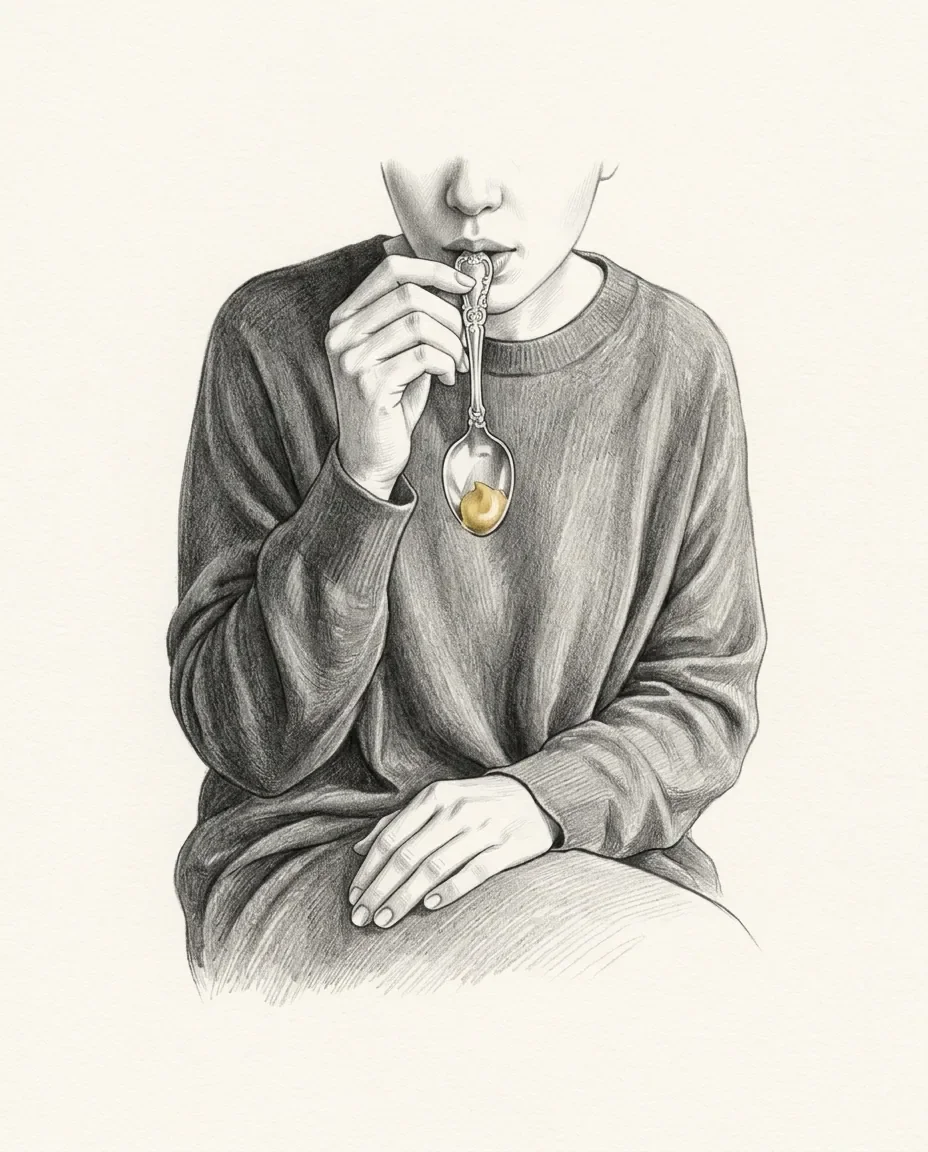
A kink centered on the act of feeding a partner and, often, on deliberate weight gain, structured as a feeder/feedee dynamic. Arousal can come from feeding, fullness, indulgence, body change, and the control exchanged between partners.
- Prevalence
- Uncommon
- Category
- Acts & Activities
- Domain
- Sexual interest
- Confidence
- Medium confidence
- Status
- Not a recognized clinical paraphilia; a niche kink, benign with consent though weight-gain elements can raise health concerns.
- Also known as
- feederism, feeding fetish, feeder/feedee dynamic, gaining, fat fetishism (feeding form), encouraging, feedism
- Added
- 21 Jun 2026
- Updated
- 22 Aug 2026
Overview
Feederism, also called a feeding fetish, is a sexual interest organised around feeding a partner and, frequently, around intentional weight gain. It typically pairs a "feeder" (sometimes "encourager"), who provides food and encouragement, with a "feedee" or "gainer," who eats and may pursue gaining. Arousal can stem from the act of feeding, the sensation of fullness, indulgence, visible body change, the eroticisation of size and softness, or the control exchanged between partners. This article traces the subculture's documented emergence, how it is typically expressed, its proposed psychology, and the health and consent considerations that responsible communities emphasise.
Definition & scope
Feederism is defined by a relational dynamic rather than by any single act. The core roles are the feeder, who feeds, praises, and encourages, and the feedee or gainer, who is fed and who may want to gain weight. Much feederism is fantasy or role-play rather than a real gaining programme, and the community itself distinguishes between the two. Because a feeder can influence a partner's body and health, the ethics of consent sit closer to the surface here than in most kinks.
Examples
What the term covers. Reading and writing gaining fiction, or trading imagery, with no intention that anyone actually gain; by the continuum described below, this is where most participants sit. A feeder praising a partner's appetite or pressing a second helping. Ritualised feeding: being fed by hand, a scripted meal, a dessert treated as a scene rather than a course. A stuffing session that ends in the sensation of fullness and changes nothing about the body. Tracking weight, measurements, or the fit of a waistband as an erotic marker of change. At the rare far end, a deliberate, sustained gaining programme.
What the term does not cover. Attraction to larger bodies on its own (fat admiration) involves no feeding and no gaining, and many fat admirers reject the feeder label outright. A weight gain fetish is arousal at the idea of a body growing larger, usually in fiction, without the two-person dynamic that defines feederism. A food fetish puts the food itself at the centre, where feederism is about the feeding and its consequences; foodie culture is the non-sexual, hobbyist version of enthusiasm about eating. Belly fetish is a partialism that often accompanies feederism but stands on its own, and body inflation and vore are impossible-by-design cartoon fantasies rather than anything a body does.
How the word is used. It is community jargon, coined and defined online rather than in any clinic. "Feeder," "feedee," "gainer" and "encourager" all come out of 1980s and 1990s newsletters and forums, and neither feederism nor feedism appears in DSM-5-TR or ICD-11; the one case report in the clinical literature could not decide whether it named a distinct paraphilia at all.
History & origins
Feederism is a modern subculture whose name and community identity emerged with networked communication rather than from clinical taxonomy. Fat admiration and the eroticisation of body size are documented across many cultures and eras, but the specific feeder/feedee framework took shape through dedicated communities in the late twentieth century.
From fat admiration to an online subculture
- 1970s: Within gay male culture, a parallel "gainer" scene grew out of the Girth & Mirth social movement, as documented in Wikipedia's overview of fat fetishism. The straight-oriented fat-admiration (FA) movement developed alongside organisations such as NAAFA (the National Association to Advance Fat Acceptance).
- 1988: Gainer-specific newsletters appeared, giving dispersed enthusiasts a shared vocabulary: "feeder," "feedee," "gainer," "encouraging."
- 1992: EncourageCon, an early gainer gathering, was held in New Hope, Pennsylvania.
- 1990s: Online hubs such as Dimensions Magazine (which also hosted fat-acceptance material) and, later, FantasyFeeder.com let enthusiasts connect, share fiction and imagery, and consolidate the feeder/feedee identity. GainRWeb launched in 1996 as an early site for gay men interested in weight gain.
Some participants prefer the term "feedism" over "feederism," arguing it implies a more equal relationship between the partners rather than centring the feeder.
Clinical and academic framing
Feederism is not classified as a paraphilia in the DSM-5-TR or ICD-11. Descriptive reference works such as Wikipedia's List of paraphilias record it as arousal from feeding and weight gain within a feeder/feedee dynamic, reflecting its status as a consensual kink rather than a disorder. Academic attention has been limited but growing:
- 2008: Alyshia Bestard's University of Waterloo master's thesis, Feederism: An Exploratory Study into the Stigma of Erotic Weight Gain, proposed a widely-cited "feederism continuum" running from fantasy (reading and viewing material) through encouraging, feeding, and, at the rare extreme, feeding toward immobility.
- 2011: Lesley Terry and Paul Vasey published "Feederism in a Woman", a case report in Archives of Sexual Behavior (40(3):639–645), which concluded it was unclear whether female feederism is a distinct paraphilia or a thematic variation of morphophilia or sexual masochism.
- 2015: Kathy Charles and Michael Palkowski's book Feederism: Eating, Weight Gain and Sexual Pleasure, drawing on conversations with over twenty feeders and feedees, became the most encompassing study to date, framing the practice through fat studies, identity, and consensual power exchange.
How the interest is layered
Bestard's continuum is a useful map of intensity, running from the common and low-stakes to the rare and high-risk:
| Level | What it involves | How common |
|---|---|---|
| Fantasy | Reading and viewing stories and imagery; no real gaining | Most participants |
| Encouraging | Praise and support for a partner's eating or size | Common |
| Feeding | Active, ritualised feeding of a partner | Less common |
| Gaining to immobility | Deliberate gain toward severe limitation | Rare, high-risk |
In practice
Feederism is expressed through shared eating, feeding rituals, encouragement and praise, stuffing, belly play, tracking or fantasising about body change, and the exchange of imagery and stories. Many participants keep the dynamic largely fantasy-based or symbolic, and Bestard's continuum places the majority toward the fantasy end, while others incorporate real lifestyle elements. It overlaps with fat admiration, stuffing, body inflation fantasy, burping, and dominance/submission themes.
Psychology
The appeal often involves nurturing and being nurtured, themes of indulgence and abundance, the eroticisation of body size and softness, and a control dynamic in which one partner directs the other's consumption. For feedees, the draw can include surrender, pampering, and acceptance of a larger body; for feeders, providing, caretaking, and witnessing change. As with other power-exchange interests, the eroticism frequently rests on trust and on the symbolic meaning of giving and receiving rather than on the food itself. The evidence base remains thin and largely qualitative, case reports and content analyses rather than controlled studies, so causal claims should be treated cautiously.
Prevalence & culture
Feederism is a small but established online subculture with dedicated forums and community spaces, and it appears in kink directories and body-acceptance discussions; FetLife hosts dedicated feederism, gaining, and feeder/feedee groups as a community-size proxy. Direct prevalence data are scarce: no major population survey isolates feederism, so figures rely on community-size proxies and lay sources rather than on epidemiological estimates. Media coverage is occasional and often sensationalised, which can obscure the everyday, consensual reality of most participants.
Safety, consent & law
The practice is legal between consenting adults. The principal considerations are health and consent. Encouraging substantial weight gain can carry real medical risks (cardiovascular, metabolic, and mobility-related), so ethical practice emphasises informed consent, autonomy over one's own body, honesty about health, and the ability to pause or stop the dynamic at any time. Where a feeder pressures a partner beyond freely given consent, the dynamic can shade into coercion or control, which responsible communities explicitly reject.
Common questions
What is the difference between a feeder and a feedee?
The feeder provides: food, encouragement, praise, and often the structure of the scene. The feedee, sometimes called a gainer, is the one who eats and who may want to grow larger. Some people identify firmly as one or the other for life; others switch between them, much as partners in other power-exchange dynamics do. Neither role requires that any real weight gain take place, and for most participants none does.
Is feederism the same as being attracted to fat people?
No. Attraction to larger bodies, usually called fat admiration, is about how a body already looks. Feederism is about feeding, encouragement and often change, so the erotic charge sits in the act and the dynamic rather than in a fixed body type. The two overlap heavily and many people hold both interests, but plenty of fat admirers have no wish to feed anyone and actively reject the association.
Is feederism a paraphilia or a disorder?
No. Neither DSM-5-TR nor ICD-11 lists it, and the clinical literature is thin: Terry and Vasey's 2011 case report in Archives of Sexual Behavior could not settle whether female feederism is a paraphilia in its own right or a thematic variation on other interests. As with any interest in this catalog, clinical attention is warranted only where there is genuine distress, impairment, or a partner who has not agreed.
Is feederism dangerous?
It can be, and the honest answer says so. Where a dynamic moves beyond fantasy into sustained weight gain, the risks are the ordinary medical ones (cardiovascular and metabolic disease, joint and mobility problems), and they accumulate with the gain rather than with the kink. Fantasy, encouragement and occasional stuffing carry little beyond the discomfort of overeating. Communities that take the interest seriously treat honesty about health, and the freedom to stop gaining at any point, as non-negotiable.
Is feederism abusive?
Not inherently, but the potential sits closer to the surface than in most kinks, because one person is influencing another's body and long-term health. The dividing line is freely given, revocable consent: a feedee who sets the pace and can stop is in a kink, while a partner who is pressured, misled about the health consequences, isolated, or fed against their wishes is being coerced. Responsible feederism communities name that distinction explicitly and reject the second.
Do feeders really want a partner to become immobile?
Almost never. Gaining toward immobility sits at the rare, high-risk end of the continuum proposed in Bestard's 2008 thesis, and it is heavily over-represented in television and tabloid coverage precisely because it is extreme. The great majority of participants stay at the fantasy and encouragement end, where nothing about anybody's body actually changes. Reading the extreme as typical is the most common misunderstanding of the subculture.
How common is feederism?
Nobody knows precisely, because no population survey isolates it. Prevalence has to be inferred from community-size proxies: dedicated feederism, gaining and feeder/feedee groups on platforms such as FetLife, long-running forums, and the fiction archives that predate them. Those indicators point to a small but stable and internationally distributed subculture rather than a mass interest, which is why this entry's estimate carries only medium confidence.
- Belly Fetish32/100Abdominal Partialism · Body Parts & PartialismAbdominal partialism is a strong erotic focus on the belly and stomach area. Preferences vary widely, from toned or soft midriffs to the navel itself, and may include gentle touch of the region. It is a benign variation in consenting adults.32
- Body Inflation20/100Identity & TransformationA fantasy-driven interest in the imagined swelling, rounding, or expansion of a body to cartoonish proportions. It is expressed overwhelmingly through art, animation, and fiction, and centres on the visual and conceptual transformation rather than any real physiological event.20
- Burp Fetish11/100Eructophilia · Body Functions & FluidsA burp fetish (eructophilia) is a rare sexual interest in belching, one's own or a partner's, focused on the sound or the act of producing it. Its associations with fullness and uninhibited bodily release are part of the appeal. It is benign and consensual, and appears in no diagnostic manual.11
- Lift and Carry (L&C)38/100Acts & ActivitiesAn erotic or playful interest in one person physically lifting and carrying another, or in being lifted and carried. It centres on strength, weight contrast, and the dynamic of being supported or overpowered.38
- Shoeplay41/100Acts & ActivitiesThe play of slipping a shoe partly on or off, dangling it from the toes, or dipping the heel out of the back. A defining, often voyeuristic behaviour within shoe and foot interest, frequently observed in public as well as performed deliberately.41
- Agonophilia42/100agonophilia · Acts & ActivitiesArousal from a staged struggle: wrestling, pinning and mock resistance between partners who agreed to it. A forensic-glossary term for what most people who do it call wrestling or rough-housing.42
An English coinage from "feeder" (one who feeds) plus the suffix "-ism" denoting a practice or movement; the paired roles "feeder" and "feedee" use the agent and recipient forms of the verb "feed" (Old English fēdan). The term arose within online kink and size-acceptance communities in the 1990s and has no classical-language root.
food · body · control · power exchange
Prevalence is computed from the entry's cited population estimate. Rows marked ESTare indicative editorial estimates scored against a fixed anchor rubric, not measured quantities. Method & anchors: methodology.
Uncommon · ≈ 1 in 100
- 01List of paraphilias, Wikipediadescribes feederism as arousal from feeding and weight gain within a feeder/feedee dynamic
- 02FetLife, kink community group sizes (community-size proxy)community-size proxy; dedicated feederism, gaining, and feeder/feedee groups
- 03Fat fetishism, Wikipediahistory of the feeder/feedee subculture and the gay gainer scene (Girth & Mirth 1970s, gainer newsletters 1988, EncourageCon 1992, GainRWeb 1996, Dimensions Magazine), terminology (feeder/feedee/gainer/encourager, 'feedism'), NAAFA ties, and the 2008 Bestard thesis and 2015 Charles & Palkowski book
- 04Terry & Vasey (2011), Feederism in a Woman, Archives of Sexual Behavior 40(3):639-645 (PMID 20041284)case report defining feeder/feedee arousal from feeding and weight gain; concludes it is unclear whether female feederism is a distinct paraphilia or a thematic variation of morphophilia or sexual masochism
- 05Bestard (2008), Feederism: An Exploratory Study into the Stigma of Erotic Weight Gain, University of Waterloo (UWSpace)master's thesis proposing the feederism continuum from fantasy through encouraging and feeding to the rare extreme of gaining toward immobility, and documenting the stigma around erotic weight gain
- 06Charles & Palkowski (2015), Feederism: Eating, Weight Gain, and Sexual Pleasure, Palgrave Macmillan (Springer)book-length study drawing on conversations with over twenty feeders and feedees, framing feederism through fat studies, identity, and consensual power exchange