Rockhounding
Added 10 Jul 2026 · Updated 22 Aug 2026
A non-sexual hobby of searching for, collecting, and studying rocks, minerals, gemstones, and fossils gathered from the natural environment. Cutting and polishing, known as lapidary work, often follows. It centers on outdoor discovery, identification, and the aesthetics of stone.
- Prevalence
- Common
- Category
- Non-Sexual Fetishism
- Domain
- Non-sexual interest
- Confidence
- Medium confidence
- Status
- Not a disorder; a common outdoor hobby. Compulsive acquisition may rarely overlap with hoarding-spectrum concerns.
- Also known as
- rock collecting, mineral collecting, amateur geology, lapidary hobby, fossicking
- Added
- 10 Jul 2026
- Updated
- 22 Aug 2026
Featured in
Overview
Rockhounding is the non-sexual hobby of searching for, collecting, and studying rocks, minerals, gemstones, and fossil specimens gathered from the natural environment. Also called rock collecting, mineral collecting, or amateur geology, and known as fossicking in Australia, New Zealand, and Cornwall, it often leads into lapidary work: cutting, grinding, and polishing stones into cabochons or display pieces. It is a benign example of non-sexual fetishism in the colloquial sense, an intense, structured attachment to a category of physical objects rather than a clinical condition. This article covers what rockhounding is, its documented history, and the appeal that draws people into it.
Definition & scope
Rockhounding covers the field side of the hobby: identifying promising ground, prospecting outcrops, streambeds, mine tailings, and public collecting sites, and carrying home agate, jasper, quartz, petrified wood, fossils, and countless other specimens. Many rockhounds then move indoors to the lapidary bench, where saws, grinders, and tumblers turn rough finds into polished stones and jewellery. The hobby overlaps with, but is distinct from, professional geology and from purely acquisitive mineral collecting of fine cabinet specimens bought rather than found.
Examples
What the term covers. A day spent working a gravel bar for agate, a roadside outcrop for quartz, a desert flat for jasper or petrified wood, or an old mine dump for whatever the miners left behind; the fossil side of the hobby, from shells and crinoids in limestone to leaf impressions in shale; and the bench work that follows, where a saw, grinder, tumbler and polish turn a dull find into a cabochon. Club field trips, gem-and-mineral shows and specimen swaps carry most of the social life of the hobby, and a shelf of labelled finds (locality, date, identification) is its usual end product.
What the term does not cover. Rockhounding is field collecting, so it is distinct from buying finished cabinet specimens, which is mineral collecting in the acquisitive sense, and from professional geology, which is a science rather than a pastime. It is one discipline within general collecting, alongside coin and stamp collecting, antiquing and the rest, and it is not compulsive hoarding, a clinical condition defined by distress and unusable living space rather than by the number of rocks in a garage. It overlaps with, but is not the same as, the crystal and lucky charm cultures that attribute powers to stones; a rockhound's interest in a specimen is geological and aesthetic. And nothing about the hobby is sexual.
How the word is used. "Rockhound" is informal American English, worn as a badge rather than applied as a label. "Amateur geology" is the neutral description, "fossicking" the Australian, New Zealand and Cornish word, and "lapidary" names the cutting and polishing side specifically. There is no clinical term because there is nothing clinical here: the hobby appears in no diagnostic manual, and the "non-sexual fetishism" heading it sits under in this catalog means only an intense, structured attachment to a class of objects.
History & origins
The term
"Rockhound" is early-twentieth-century American slang for an enthusiast of rocks and minerals, the "-hound" implying an eager pursuer, as in "newshound." The precise coinage is not firmly documented, but the word and the recreational hobby it names are distinctly American and Canadian; older and other English-speaking traditions call the same activity amateur geology or fossicking.
From prospecting to pastime
The roots of rockhounding lie in prospecting. As Wikipedia's amateur-geology entry notes, the first amateur geologists were prospectors searching for valuable minerals and gemstones for commercial gain, and only later did people take up the pursuit for the beauty of stones themselves. Notable early enthusiasts of mineralogy include Johann Wolfgang von Goethe (1748–1832), whose large mineral collection is well documented.
The modern American hobby has a clearer arc:
- 1930s: as Encyclopedia.com records, popular American rockhounding begins in earnest. Electrification and the automobile pushed a new mass of hobbyists into the mountains and deserts of the American West, where agate, jasper, and petrified wood could be picked up.
- 1947: Lapidary Journal is founded, later publishing an annual Rockhound Buyer's Guide that listed rock shops and gem-and-mineral clubs across the United States.
- Early 1960s: the hobby peaks, with the Bureau of Land Management estimating around 3 million American rockhounds at its height.
- 2000: mindat.org, now a central online database for mineral localities and identification, launches in October, anchoring a large modern online community.
In practice
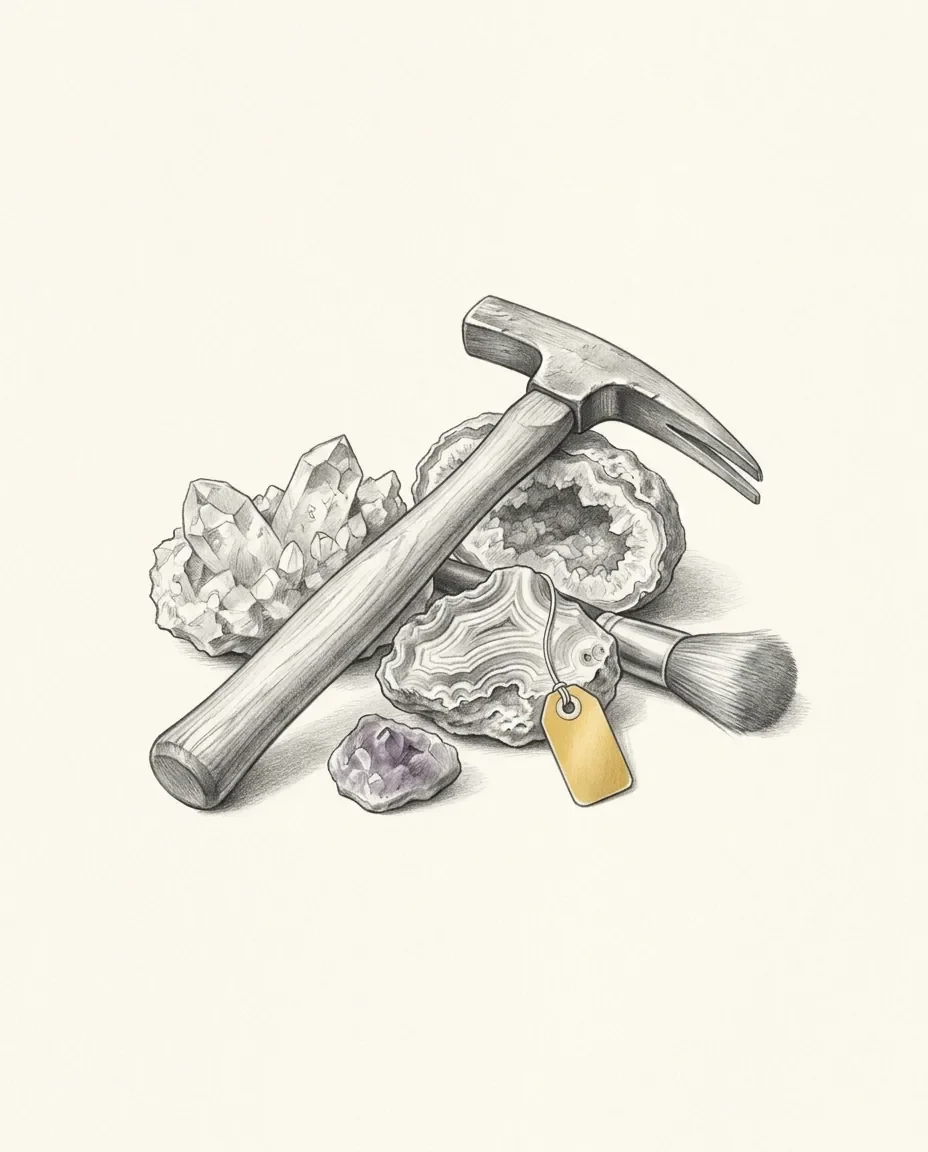
Rockhounding is expressed through fieldwork and the bench. Enthusiasts research collecting sites, obtain any needed permissions, and search outcrops, gravel bars, road cuts, mine dumps, and beaches with basic tools: a rock hammer, chisel, hand lens, and collecting bags. Finds are cleaned, identified using streak, hardness, crystal form, and reference guides, and either displayed as-is or worked on the lapidary bench through cutting, grinding, tumbling, and polishing. Local gem-and-mineral clubs, shows, and swaps are central to the culture. The hobby sits alongside other collecting and outdoor object pursuits such as coin & stamp collecting.
Psychology
Rockhounding blends collecting drives with the rewards of outdoor activity: the treasure-hunt thrill of an unpredictable find, a wish for completeness across species or localities, a sense of mastery over identification, and simple aesthetic pleasure in colour, crystal, and polish. The physical hunt outdoors adds exercise and place-attachment that purely indoor collecting lacks. For nearly everyone it is a healthy pastime; as the framing in Joyal, Cossette & Lapierre (2015) implies, ordinary collecting hobbies fall well outside the range of statistically unusual or pathological interests.
Prevalence & culture
How common is rockhounding?
Rockhounding is a widespread but more specialised hobby than general collecting, with an active core supported by thousands of local clubs, regional federations, gem-and-mineral shows, and a large online community centred on databases like mindat.org. Historically its high-water mark was the early 1960s, when the Bureau of Land Management estimated roughly 3 million American rockhounds. Interest has since ebbed and flowed, with renewed attention through social media, crystal culture, and family-friendly field trips.
Safety, consent & law
Rockhounding carries real practical hazards and legal limits. Field risks include falls, rockfall, silica dust, sharp tools and flying chips when hammering (eye protection is not optional), and the serious hazards of abandoned mine workings, which should not be entered. Access is heavily regulated: collecting is restricted or prohibited in national parks and many protected areas, some public lands allow limited personal collecting while others require permits, and taking specimens from private land needs the owner's permission. Vertebrate fossils in particular are legally protected in many jurisdictions. Rockhounds are expected to follow site rules, respect claims and boundaries, and collect responsibly.
Common questions
Is it legal to take rocks you find?
It depends entirely on the land. Collecting is prohibited in national parks and most protected areas; some public land allows limited personal collecting and some requires a permit; private land requires the owner's permission, and taking without it is theft. Vertebrate fossils are specially protected in many jurisdictions even where ordinary rock collecting is allowed. The working rule is to establish who owns the ground and what they permit before picking anything up.
What is the difference between rockhounding and mineral collecting?
How the specimen arrives. Rockhounding is field collecting: you find it yourself, which is most of the point. Mineral collecting in the narrow sense means assembling fine cabinet specimens, most of them bought from dealers or at shows and judged on quality and rarity rather than on the story of the hunt. Many people do both, and in casual use the two words are treated as synonyms.
What is fossicking?
The same activity under a different name. Fossicking is the standard word in Australia and New Zealand and survives in Cornwall; it comes from a British dialect verb meaning to rummage or search out. "Rockhounding" is the North American equivalent, and "amateur geology" the neutral description used more or less everywhere. Nothing distinguishes them but the region doing the naming.
Do you need expensive equipment to start?
No. A rock hammer, a cold chisel, safety glasses, sturdy gloves, a hand lens and a bag cover the field side entirely, and a regional field guide does more for your results than any tool. Costs appear only if you take up lapidary work, where a slab saw, grinder and polishing kit run into real money. A rotary tumbler is the cheap entry point and asks for nothing but patience.
Can you collect fossils?
Sometimes, and the rules are stricter than for rocks. Common invertebrate and plant fossils (shells, corals, crinoids, leaf impressions) are widely collectable on ground where collecting is permitted at all. Vertebrate fossils are a different matter: bones, teeth and tracks are legally protected in many jurisdictions, and removing them from public land can be an offence even at a site where an amateur may freely take agate.
How do you identify a rock you have found?
By working through physical properties rather than appearance alone: hardness against a known scale, the colour of the streak left on unglazed porcelain, crystal form, cleavage, lustre and heft. A regional field guide narrows things quickly, because most localities produce a limited set of species. Beyond that, the mindat.org database indexes minerals by locality, and the identification table at a local gem-and-mineral club remains the fastest route for a stubborn specimen.
Is rockhounding a fetish, or something sexual?
No. It appears in this catalog under non-sexual fetishism, a term of art for an intense, organised attachment to a class of objects, the same sense in which someone is said to have a fetish for fountain pens. Rockhounding is a mainstream outdoor hobby with clubs, shows, published field guides and a scientific literature behind it, and there is nothing sexual about any part of it.
From the blog
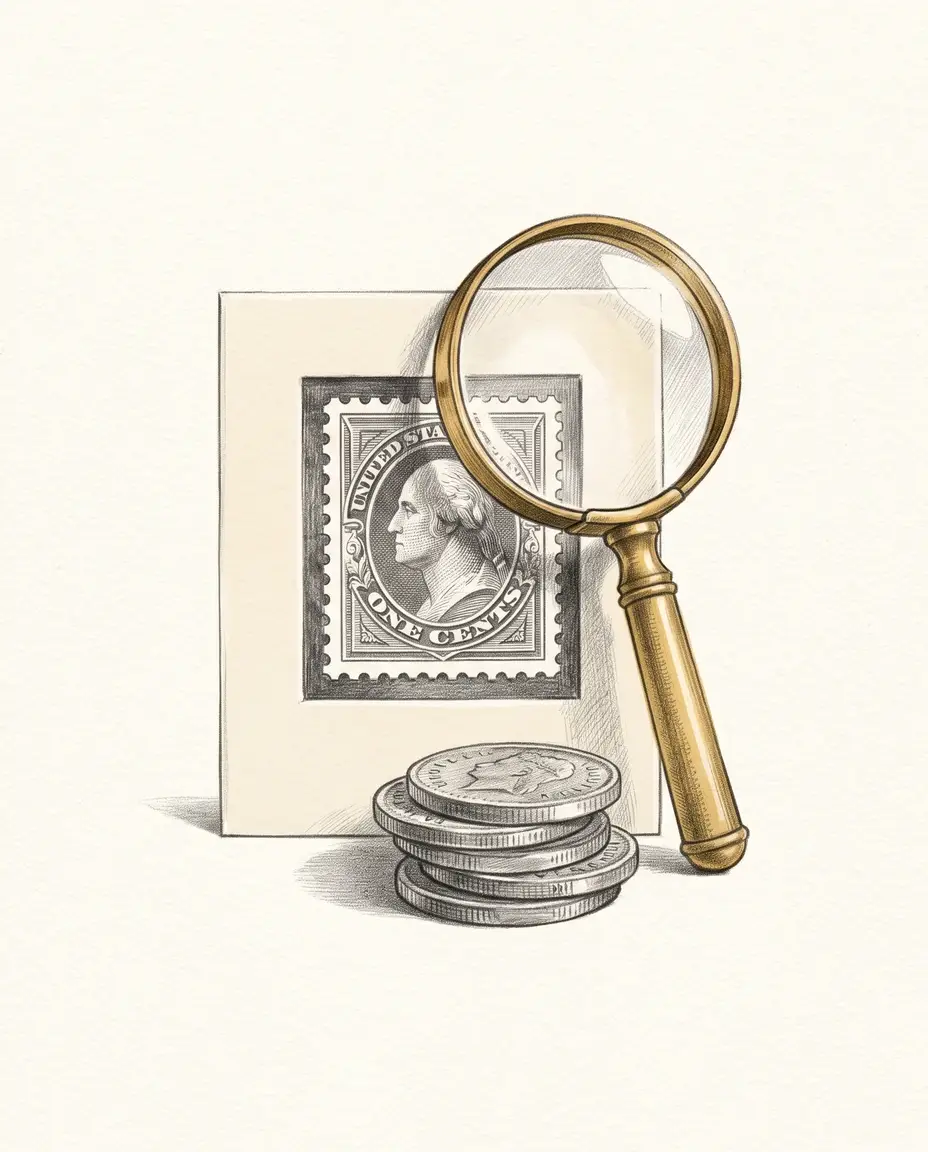
- Coin & Stamp Collecting38/100Non-Sexual FetishismA non-sexual, focused interest in acquiring, organizing, and studying coins, banknotes, and postage stamps (numismatics and philately). It centers on heritage, completeness, and the tactile and historical appeal of small physical artifacts.38
- Collecting57/100Non-Sexual FetishismA strong, non-sexual drive to acquire, organize, and complete sets of objects: from stamps and coins to figures, records, and memorabilia. It is a widespread hobby and behavioral pattern, not a clinical disorder, and is distinct from hoarding.57
- Conchology42/100Non-Sexual FetishismThe study and collecting of mollusc shells, from beach finds to systematic collections with locality data. One of the oldest collecting hobbies on record and the one that shades into natural science. Non-sexual, with its own societies and shows.42
- Militaria Collecting42/100Non-Sexual FetishismA non-sexual enthusiasm for acquiring, researching and preserving military objects: medals, uniforms, headgear, insignia, deactivated weapons and documents. One of the oldest organised collecting fields, with its own dealers, auction houses and societies.42
- Hyperphantasia43/100Hyperphantasia · Non-Sexual FetishismA cognitive trait marked by extremely vivid, involuntary-feeling mental imagery, sometimes described as being nearly as clear as actual sight. It sits at the opposite end of the visualization spectrum from aphantasia.43
- Watch Collecting41/100Horological Fixation · Non-Sexual FetishismAn intense, non-sexual fascination with mechanical timepieces and luxury watches, centered on craftsmanship, brand heritage, and the act of collecting. It is a hobby and consumer-culture interest rather than a clinical condition.41
"Rockhound" is early-twentieth-century American slang: "rock" plus the agentive "-hound" (an eager pursuer, as in "newshound"). The precise coinage is not well documented. The synonym "fossicking," used in Australia and New Zealand, derives from a British dialect word meaning to rummage or search out.
collecting · hobby · outdoor
Prevalence is computed from the entry's cited population estimate. Rows marked ESTare indicative editorial estimates scored against a fixed anchor rubric, not measured quantities. Method & anchors: methodology.
Common · ≈ 1 in 20
- 01Amateur geology, Wikipediadefinition of rockhounding/amateur geology, fossicking terminology, prospecting origins, notable early collectors, and mindat.org launching October 2000
- 02Rockhounding, Encyclopedia.compopular American rockhounding beginning in the 1930s, role of electrification and the automobile, 1947 Lapidary Journal, and the early-1960s peak with a BLM estimate of ~3 million rockhounds
- 03Joyal, Cossette & Lapierre (2015), What Exactly Is an Unusual Sexual Fantasy?, J. Sexual Medicine 12(2):328-340framing that ordinary collecting hobbies fall outside statistically unusual or pathological interests