Sneeze Fetish
Mucophilia
Added 21 Jun 2026 · Updated 22 Aug 2026
An erotic interest in sneezing (its sound, the bodily convulsion, and the loss of composure it represents) sometimes extending to nasal mucus. It is a rare body-function interest with a small, internet-based community.
- Prevalence
- Rare
- Category
- Body Functions & Fluids
- Clinical term
- Mucophilia
- Domain
- Sexual interest
- Confidence
- Low confidence
- Status
- Uncommon body-function interest; benign, not a recognized disorder unless it causes distress, impairment, or non-consent.
- Also known as
- mucophilia, sternutophilia, mucus fetish, snot fetish, sneezing fetish
- Added
- 21 Jun 2026
- Updated
- 22 Aug 2026
Overview
A sneeze fetish is sexual arousal connected to the act of sneezing (its sound, its sudden physical convulsion, and the unguarded loss of composure it represents) sometimes extending to the nasal mucus that may accompany it. The sneeze-focused interest is occasionally labelled sternutophilia, while arousal centred on mucus itself is called mucophilia; the two overlap but are not identical. This article covers a benign, uncommon body-function interest that is documented in only one published clinical case and is otherwise known chiefly through online communities.
Examples
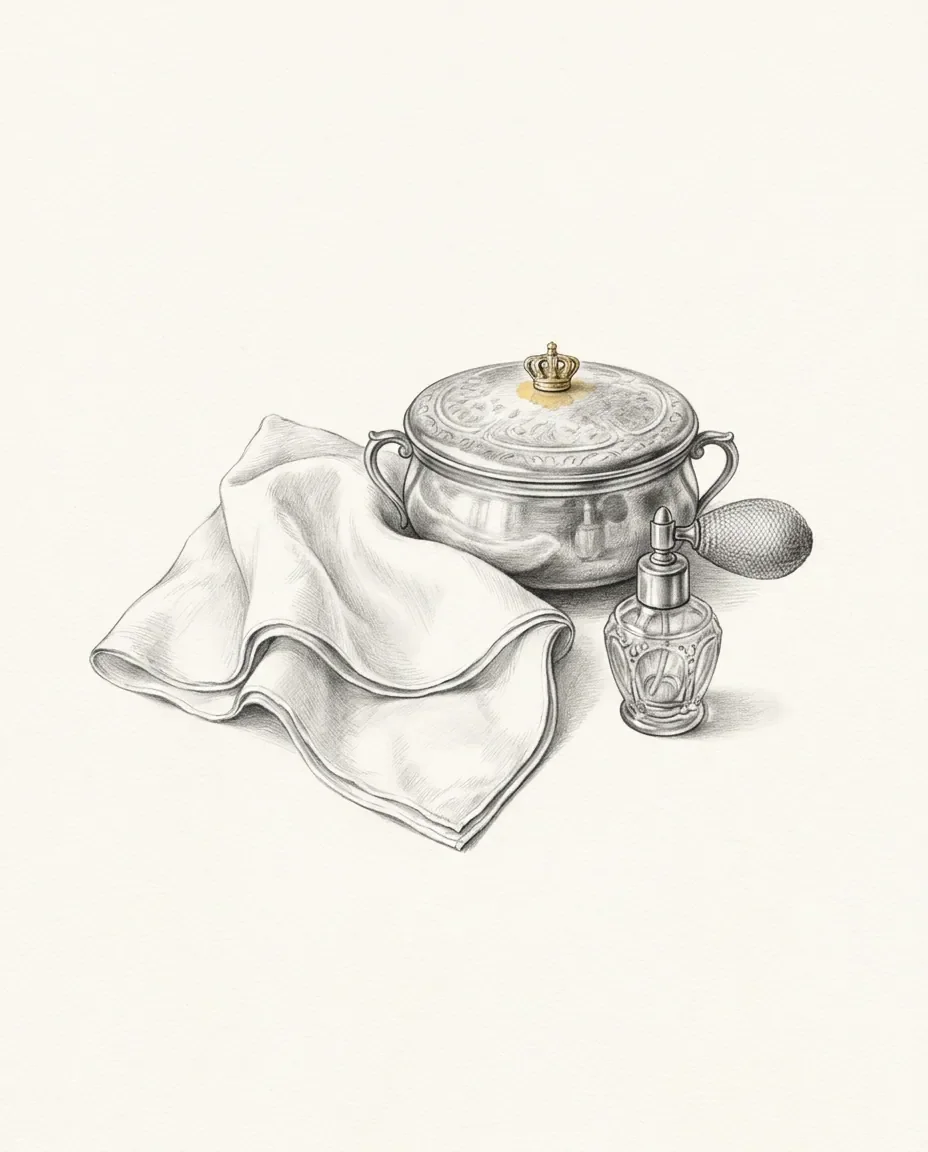
What the term covers. The interest splits roughly along the line its two names mark out. Sternutophilia points at the sneeze (the helpless build-up, the caught breath, the sound, the momentary loss of composure), and for many enthusiasts the anticipation carries more charge than the sneeze itself. Mucophilia points at the nasal mucus, and at the tissues and handkerchiefs that go with it. The two coexist often enough that a single entry covers both, but they are not the same interest, and someone can hold one and find the other unappealing. Expression is overwhelmingly observational or written rather than participatory.
What the term does not cover. Breath fetish is directed at a partner's breath (its warmth, sound and scent), not at a reflex. Breath play is the consensual restriction of breathing and belongs to an entirely different, and far riskier, family. Tickling fetish is the closest structural neighbour, since it too centres on an involuntary reaction and the loss of composure it produces, but the trigger and the body part differ. Spit fetish and cum fetish are the adjacent body fluid interests. ASMR is a non-sexual tingling response to soft sound and close attention; it is confused with this because both are sound-triggered and both found their audiences in the same corners of the early internet.
How the word is used. "Sneeze fetish" is the plain vernacular the community actually uses. Sternutophilia and mucophilia are modern lay coinages that circulate in online glossaries and paraphilia lists rather than in the psychiatric canon, and neither appears in the DSM-5-TR or the ICD-11. They surface mostly when someone is looking the interest up, which is a fair description of the terms' entire career.
History & origins
Clinical lineage
Unlike the classical paraphilias catalogued by 19th-century alienists such as Richard von Krafft-Ebing in Psychopathia Sexualis (1886), the sneeze fetish has almost no formal clinical pedigree. The single landmark in the medical literature is a case report by the psychiatrist Michael B. King, "Sneezing as a fetishistic stimulus," published in Sexual and Marital Therapy in 1990 (King, 1990, 5(1):69–82). Writing from the Royal Free Hospital in London, King described a young man for whom sneezing functioned as an erotic stimulus, alongside a fear of vomiting; desensitisation eased the phobia but had little effect on the fetishistic arousal, which was instead managed with thought-stopping techniques. No large prevalence survey, plethysmographic study, or replication has appeared since, and the interest does not feature as a named diagnosis in the DSM-5-TR or the ICD-11; it is one of countless benign variations that fall outside the diagnostic categories.
The terms themselves are modern lay constructions rather than coinages from the historical psychiatric canon. Sternutophilia joins Latin sternutatio ("a sneezing") to Greek -philia ("love of"); mucophilia joins Latin mucus to the same suffix. Both circulate in online glossaries and reference compilations, such as Wikipedia's List of paraphilias, rather than in diagnostic manuals, and their precise first use is undocumented.
Cultural & subcultural evolution
The interest's visibility is essentially a product of the internet age. From the late 1990s onward, hobby forums and dedicated sites gave a previously invisible and geographically dispersed interest a place to gather, name itself, and trade material-most prominently the long-running Sneeze Fetish Forum, which became a hub for written stories, audio, and discussion. The community surfaced briefly in mainstream coverage during the COVID-19 pandemic, when journalists noted the awkward position of people aroused by sneezing at a moment when a sneeze had become a marker of contagion and alarm. Such moments aside, the interest has stayed almost entirely below the cultural radar.
In practice
Expression is typically limited to:
- watching, listening to, or imagining sneezing;
- viewing or describing photographs, audio, and videos;
- written role-play and storytelling within enthusiast communities.
For many enthusiasts the appeal rests on the involuntary, unguarded nature of the response (the build-up, the loss of control, the brief vulnerability) rather than on any secretion, which connects the sneeze fetish to broader interests in spontaneity and exposed reflex. Some overlap exists with the breath fetish, where breathing, gasping, and other respiratory phenomena carry the erotic charge, while the mucus-focused variant sits closer to other body-secretion interests such as the cum fetish.
Psychology
What causes a sneeze fetish?
No specific cause is established. Explanations usually invoke early classical conditioning, in which a sneeze or related stimulus became paired with sexual arousal during a formative experience, together with the strong sensory and emotional salience of the reflex: its suddenness, sound, facial expression, and visible loss of composure. King's 1990 case is consistent with this learning model but, as a single report, cannot establish a general cause. As with most uncommon body-function interests, the evidence base is thin, and clinicians generally frame the experience as a benign variation rather than a disorder unless it causes distress, impairment, or involves non-consent.
Prevalence & culture
How common is a sneeze fetish?
No epidemiological figure exists; the only clinical documentation is King's single 1990 case, and the interest maintains a modest but durable presence in online forums and dedicated sites with very little mainstream visibility. Broad fetish-prevalence surveys such as Scorolli and colleagues' (2007) analysis of online fetish communities place body-fluid and body-secretion interests among the smallest categories reported (body fluids around 9% of fetish-group memberships in that sample), so any estimate for this specific interest is highly uncertain and rests on community proxies such as forum and FetLife group sizes rather than population data.
Safety, consent & law
The interest is benign between consenting adults and raises no legal concern. Ordinary hygiene applies wherever bodily secretions are involved, but the activity itself carries minimal physical risk, and most expression is observational or fantasy-based. As always, the usual principles of informed, ongoing consent apply where another person is involved.
Common questions
Is a sneeze fetish a disorder?
No. Neither the DSM-5-TR nor the ICD-11 names it, and nothing about it meets the threshold those manuals set for a paraphilic disorder, which is marked distress, functional impairment, or a non-consenting person. Clinicians treat it as one of the very large number of benign variations that fall outside the diagnostic categories. In the single published clinical case the man concerned was distressed by his own arousal, and the distress, not the interest, was what brought him to treatment.
What does sternutophilia mean?
It is the sneeze-specific label, built from Latin sternutatio, "a sneezing", plus the Greek suffix -philia. It is used to distinguish arousal centred on the sneeze itself from mucophilia, which centres on nasal mucus. Both are modern lay constructions found in online glossaries rather than terms with any history in the psychiatric literature, and neither has a documented first use.
Do people with a sneeze fetish want to be sneezed on?
Usually not. The great majority of expression is observational (watching, listening to recordings, reading and writing stories), and for many the appeal is the build-up and the visible loss of control rather than anything physical. Interest in the mucus itself is a distinct and narrower strand. As with any interest involving another person, what actually happens between partners is a matter for explicit agreement rather than assumption.
Is there any health risk to a sneeze fetish?
Very little, since most of it is watching, listening or reading. The one real consideration is that a sneeze is an efficient way to spread respiratory infection (colds, influenza and COVID-19 all travel this way), so deliberately seeking close proximity to someone who is sneezing raises the ordinary risk of catching whatever they have. Irritants used to provoke a sneeze can also damage the nasal lining.
Is there a sneeze fetish community?
Yes, a small and durable one, and it is almost entirely online. From the late 1990s onward, forums and dedicated sites gave a dispersed and previously invisible interest somewhere to gather and name itself; the long-running Sneeze Fetish Forum became the best-known hub, built around written stories, audio and discussion. Community proxies such as forum and FetLife group sizes are the only measure of its scale that exists.
Can a sneeze fetish be treated?
There is nothing to treat unless the person wants there to be. Where an interest causes genuine distress, therapy addresses the distress rather than trying to delete the arousal, which is generally not achievable. That is what the single published case suggests: in King's 1990 report, desensitisation resolved the patient's associated fear of vomiting but barely touched the fetishistic arousal, which was instead managed with thought-stopping techniques.
From the blog

- Breath Fetish19/100Halitophilia · Body Functions & FluidsHalitophilia is an erotic interest in a partner's breath: its warmth, sound, scent and the intimacy of feeling it against the skin. A rare, scent-oriented interest with a small online following, usually framed as one facet of a wider attraction to natural body scent.19
- Cum Fetish43/100Spermatophilia · Body Functions & FluidsAn erotic interest in which semen and the act of ejaculation become a focus of arousal, through their visual presence or their scent. Symbolic associations with climax, virility and fertility also carry the charge. It is a common element of mainstream adult fantasy rather than a discrete clinical disorder.43
- Heartbeat Fetish19/100Cardiophilia · Body Functions & FluidsAn erotic or sensual interest in the heart and heartbeat, its sound through a stethoscope or an ear pressed to the chest. The pulse felt at the wrist or neck counts too, as does how it quickens with emotion and exertion. A rare interest with a small, durable online community.19
- Vomit Fetish19/100Emetophilia · Body Functions & FluidsA sexual interest in the act of vomiting or in vomit itself, clinically termed emetophilia and known in slang as a Roman shower. It is a rare excretory body-function interest, documented in only a couple of clinical case reports and associated with notable health risks.19
- Salirophilia (Soiling a Partner)21/100Salirophilia · Body Functions & FluidsSexual arousal from soiling, disheveling, or messing up a partner's appearance: smearing dirt, mud, or substances onto their body, hair, makeup, or clothing. It is usually tied to themes of degradation and consensual humiliation.21
- Scat Fetish22/100Coprophilia · Body Functions & FluidsA sexual interest in feces or the act of defecation, colloquially called scat. A rare excretory paraphilia recognised in clinical nosology and carrying significant infection risk.22
Two coexisting clinical-style coinages: *sternutophilia*, from Latin *sternutatio* ("a sneezing") + Greek *-philia* ("love of"), for the sneeze-focused interest; and *mucophilia*, from Latin *mucus* ("nasal slime") + *-philia*, for the mucus-focused interest. Both are modern lay constructions circulating in online glossaries rather than terms originating in the historical psychiatric literature.
mucus · sneezing · secretion
Prevalence is computed from the entry's cited population estimate. Rows marked ESTare indicative editorial estimates scored against a fixed anchor rubric, not measured quantities. Method & anchors: methodology.
Rare · ≈ 1 in 1,000
- 01List of paraphilias, Wikipediadefinition/existence of mucophilia/sternutophilia (mucus and sneezing arousal)
- 02Scorolli et al. (2007), Relative prevalence of different fetishes, Int. J. Impotence Research 19(4):432-437prevalence anchor (body fluids ~9% of fetish-group memberships, among the smallest categories)
- 03FetLife, kink community group sizes (community-size proxy)community-size proxy showing sneeze/mucus interest as a small niche group
- 04King, M. B. (1990), 'Sneezing as a fetishistic stimulus', Sexual and Marital Therapy 5(1):69-82, Taylor & Francisthe single landmark clinical case report documenting sneezing as a fetishistic stimulus, including the desensitisation/thought-stopping treatment course
- 05Psychopathia Sexualis, WikipediaKrafft-Ebing's 1886 catalogue of paraphilias, used to contrast the sneeze fetish's near-absence from the historical clinical canon
- 06DSM-5-TR, Paraphilic Disorders (American Psychiatric Association, 2022)the interest is not a named diagnosis; benign variations fall outside diagnostic categories
- 07ICD-11, Paraphilic disorders (World Health Organization)the interest is not a named paraphilic disorder in the ICD-11