Tickling Fetish
Knismolagnia
Added 21 Jun 2026 · Updated 22 Aug 2026
An erotic or playful interest centered on tickling, ticklishness, and the laughter, squirming, and gentle restraint it produces. It ranges from lighthearted affection to a focused fetish within consensual play.
- Prevalence
- Common
- Category
- Sensation & Pain
- Clinical term
- Knismolagnia
- Domain
- Sexual interest
- Confidence
- Low confidence
- Status
- Not a recognized disorder; a common benign interest ranging from playful to a focused niche fetish.
- Also known as
- Tickling (Knismolagnia), tickling, knismolagnia, tickle play, tickle fetish, titillagnia, tickle torture
- Added
- 21 Jun 2026
- Updated
- 22 Aug 2026
Featured in
Overview
A tickling fetish, clinically termed knismolagnia, is a sexual or strongly playful interest in tickling and the responses it evokes. The focus may rest on giving or receiving the sensation, on the involuntary laughter and squirming it triggers, or on the vulnerability and mock-helplessness of someone who cannot stop reacting. Also called titillagnia or knismophilia, it ranges from lighthearted affection to a focused niche fetish with its own vocabulary and community. This article traces the term's roots in tickle science and sexology, how the interest is expressed in consensual play, what little is known about its psychology and prevalence, and the consent and safety considerations that attend it.
Definition & scope
Two distinct physical responses underlie the interest, and they map onto quite different flavours of play. The distinction, standard in tickle science, is between light itch-like touch and hard laughter-inducing pressure:
| Response | Character | Typical zones | Effect |
|---|---|---|---|
| Knismesis | Light, feather-like, itch-like | Skin generally: back, neck, ears, arms | Rarely provokes laughter |
| Gargalesis | Heavier, repeated, high-pressure | Feet, armpits, torso, stomach | Reflexive laughter, squirming |
Both the affectionate and eroticised forms draw on this pairing: the teasing anticipation of knismesis and the overwhelming, helpless quality of gargalesis.
Examples
What the term covers. Light, feather-or-fingertip contact used to build anticipation; the heavier, laughter-inducing form directed at the feet, ribs, armpits or waist, usually with some restraint so the ticklish partner cannot simply escape, which the community calls "tickle torture"; and the settled roles enthusiasts organise around, a ler who tickles, a lee who is tickled, and a switch who does both. Interest can also be entirely spectatorial, expressed through dedicated tickling media rather than through anything the person does themselves. For many it never leaves the register of affectionate play; for others it is the main event, with negotiated scenarios, chosen implements and a preferred zone.
What the term does not cover. Sensation play is the wider family it sits in, and sensory overload play floods several channels at once rather than working a single reflex. It is not pain play: hard tickling can be genuinely difficult to endure, but the sensation is not pain and the appeal does not run through it. Bondage commonly supplies the restraint, though the restraint is scaffolding rather than the interest. Tease and denial withholds release instead of provoking a reflex. Ordinary affectionate tickling, between friends or with children, is not an erotic interest at all, and tickling someone who has not agreed to it is not play.
How the word is used. "Tickle fetish" is the everyday phrase and the one people actually search. Knismolagnia, with its variants knismophilia and titillagnia, is sexological vocabulary that survives in twentieth-century compendia of sexual terminology rather than in any diagnostic manual, and neither DSM-5-TR nor ICD-11 lists it. Knismesis and gargalesis, by contrast, are legitimate scientific terms, but they name the two tickle responses, not the interest in them.
History & origins
The science of the tickle
The eroticised interest sits atop a much older scientific literature on ticklishness itself. The terms knismesis and gargalesis were coined from Greek roots in 1897 by the American psychologists G. Stanley Hall and Arthur Allin in their paper "The Psychology of Tickling, Laughing, and the Comic" in the American Journal of Psychology. Charles Darwin had earlier observed that laughter from tickling depends on a light, social, and somewhat unpredictable touch, noting that one cannot easily tickle oneself, anticipating modern interest in the reflex's social and anticipatory character.
Naming the eroticised form
The clinical-sounding label knismolagnia is built from the Greek knismos ("tickling, itching") and lagneia ("lust"), placing it among the many -lagnia coinages that proliferated in late-nineteenth- and early-twentieth-century sexology. It travels alongside the variants knismophilia and titillagnia. The foundational catalogues of the period, Krafft-Ebing's Psychopathia Sexualis (1886) and Havelock Ellis's Studies in the Psychology of Sex, did not single tickling out, and the term's precise coinage is not well documented; it survives mainly in twentieth-century compendia of sexual terminology, such as Brenda Love's Encyclopedia of Unusual Sex Practices (1992) and Anil Aggrawal's Forensic and Medico-legal Aspects of Sexual Crimes (2009), rather than in any formal diagnostic manual. It is not recognised as a disorder in the DSM-5-TR or the ICD-11, where it would at most fall under consensual interests that are not, in themselves, pathological.
Community and modern study
The contemporary tickle-fetish community is largely an internet phenomenon, organised through dedicated forums, video producers, and social media, and it has evolved its own role vocabulary: a "ler" (from tickler) for the active partner, a "lee" (from ticklee) for the receiver, and "switch" for those who enjoy both. The first sizeable empirical study of the interest arrived only recently: Dagher & Ishiyama (2024), "Tickle fetishism: pleasure beyond playfulness," in Frontiers in Psychology, surveyed 719 self-identified enthusiasts and mapped their preferences in detail.
In practice
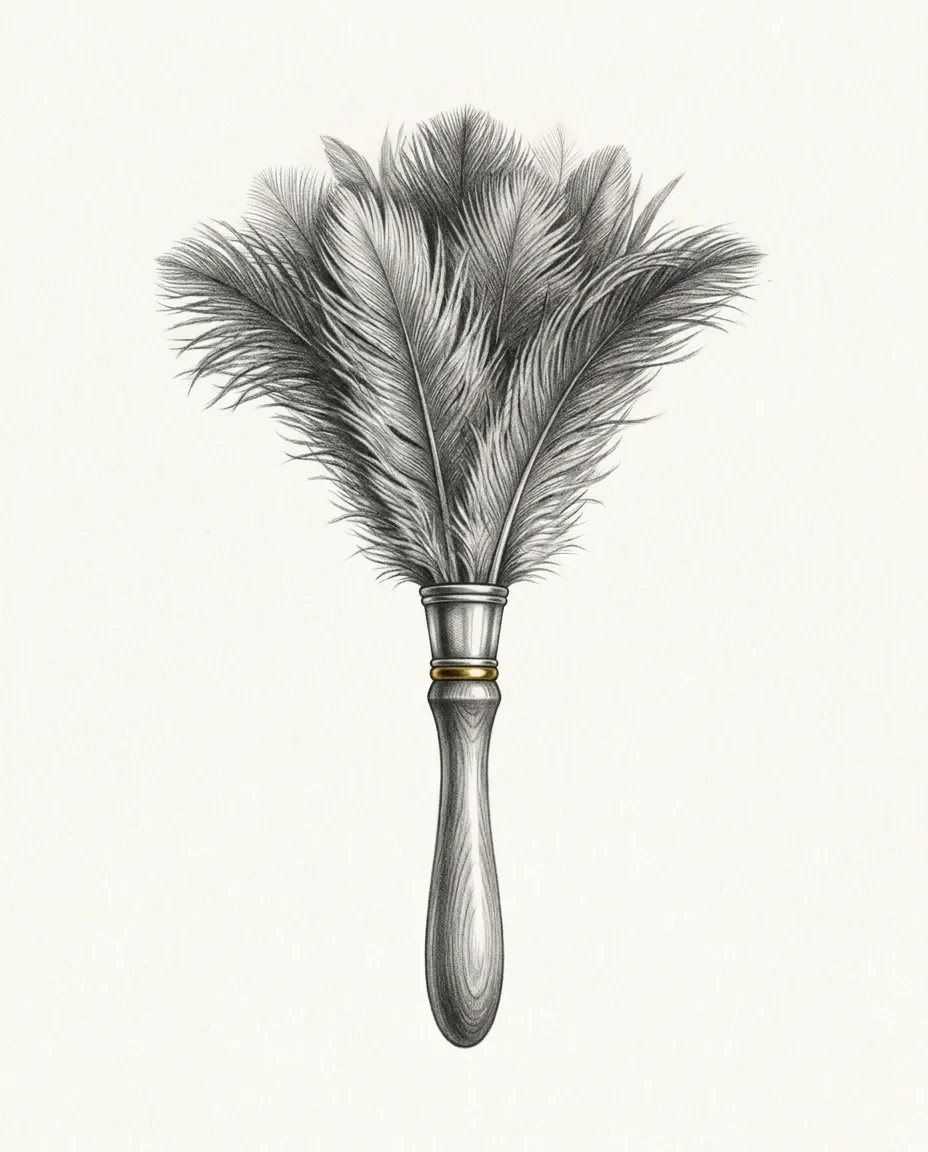
The interest is typically expressed through light sensation play, frequently combined with gentle restraint so the ticklish person cannot easily escape, which heightens the playful tension and the sense of mock-helplessness. Hands, fingers, and nails are by far the most common tools, with feathers, brushes, and the tongue also reported; the feet, armpits, torso, and stomach are the zones most associated with the harder, laughter-inducing form. For many people it stays affectionate and humorous; for others it is an organised interest with negotiated roles, props, and scenarios, and it overlaps readily with sensory-overload play and with the playful, regressive dynamics of age-play.
Psychology
Is a tickling fetish normal?
A tickling interest is a common, benign variation, not a disorder. Proposed explanations highlight the unusual nature of the tickle response itself, which braids together pleasure, reflexive laughter, and a flicker of distress or unease: a blend that maps onto erotic themes of teasing, control, and surrender. Early playful associations from childhood, and the well-documented social-bonding function of tickling, are also frequently invoked. In the Dagher & Ishiyama (2024) sample, roughly 88% reported being somewhat or fully satisfied by sexual activity from tickling alone, and about 26% reported reaching orgasm through tickling alone, suggesting that for committed enthusiasts the sensation can function as a primary rather than merely accessory source of arousal. The evidence base remains thin and self-selected, so no single causal account is established.
Prevalence & culture
How common is a tickling fetish?
No reliable general-population figure exists. Tickling enjoys broad cultural familiarity as ordinary, affectionate play, which makes the line between common enjoyment and a focused fetish hard to draw. Work on sexual fantasy such as Joyal, Cossette & Lapierre (2015) frames sensation- and dominance-flavoured interests as common rather than statistically rare, but tickling is rarely isolated as its own item, so estimates lean on community size and survey mentions. The Dagher & Ishiyama (2024) survey, drawn from 193 English-speaking and 526 Japanese-speaking respondents recruited through tickle-fetish social media, is the most detailed snapshot to date, but its authors stress that the self-selected, online-recruited sample (74% male, mostly East Asian) cannot speak to prevalence in the general population. Active communities persist on FetLife and dedicated tickling-media platforms.
Safety, consent & law
The interest is regarded as benign among consenting adults and raises no inherent legal concerns. Two consent nuances are emphasised in practice: intense tickling can feel genuinely overwhelming, and laughter can mask real distress, since a person may be laughing involuntarily while wanting the activity to stop. Ethical play therefore relies on clearly agreed signals (often non-verbal, since speech can be difficult amid laughter) and a reliable way to halt at once, particularly when any form of restraint is involved.
Common questions
Why is being tickled pleasurable and unbearable at the same time?
Because the response is genuinely mixed. Hard, laughter-inducing tickling produces reflexive laughter, squirming and a flicker of panic all at once, and the body reads pleasure and distress from the same event. That ambiguity is much of the appeal for enthusiasts, since it maps neatly onto erotic themes of teasing, helplessness and surrender, but it is also why the sensation can flip from delightful to intolerable within seconds with no change in what the other person is doing.
Does laughing mean someone is enjoying being tickled?
No, and this is the single most important practical point about the interest. Laughter from tickling is a reflex, not a verdict: a person can be laughing helplessly while urgently wanting it to stop. Because of that, and because speech is difficult mid-laughter, partners usually agree a signal that does not depend on words (a tap, a dropped object, a specific gesture) and treat it as binding the instant it appears.
Why can't you tickle yourself?
Charles Darwin noticed the same thing and connected it to the social, unpredictable character of the tickle: laughter depends on light touch arriving in a way you cannot anticipate. When you do it yourself, your own movement is fully predicted, so the reflex barely fires. The same unpredictability is why anticipation (the hand hovering rather than landing) is such a large part of tickle play.
What do “ler” and “lee” mean in the tickling community?
They are contractions of tickler and ticklee. A ler is the person doing the tickling, a lee is the person receiving it, and someone who enjoys both roles is a switch, the same structure other kink communities use for top, bottom and switch. The vocabulary is community jargon rather than clinical terminology, and it exists mainly so people can state a preference quickly when arranging play.
What is “tickle torture”?
It is the community's name for prolonged, inescapable tickling, usually with the receiver restrained so they cannot pull away, and it is a description of intensity rather than of harm. Between consenting adults it is negotiated like any other scene, with an agreed stop signal. The word borrows the imagery of coercion the way much BDSM vocabulary does; nothing about it makes non-consensual tickling acceptable.
Why are feet such a common focus in tickle play?
The soles are among the most reliably ticklish areas for the heavier, laughter-inducing response, along with the armpits, ribs and stomach, and they are easy to restrain and reach. That physiology means tickle play and foot fetish interest overlap heavily in practice, but they are separate things: many tickling enthusiasts have no particular attraction to feet, and simply go where the reflex is strongest.
Is tickling actually risky?
The sensation itself is low-risk, and the hazards come from the surrounding circumstances. Sustained laughter makes breathing and speaking difficult; a restrained person struggling hard can strain muscles or joints, or bruise against restraints; and an intense session can become genuinely distressing without that being obvious from the outside. The precautions are therefore about restraint safety, a non-verbal stop signal, and checking in rather than relying on the sound of laughter.
- Sensory Overload Play29/100Sensation & PainA consensual sensation-play practice of deliberately flooding the senses with intense, layered, or competing input. Overlapping touch, temperature, sound, and light produce an overwhelming, disorienting state. It is the mirror image of sensory deprivation.29
- Age-Play49/100Power, Roles & ScenariosA consensual role-play between adults in which one or more partners adopt an age different from their own, often a younger persona, within a negotiated dynamic. An umbrella term for many caregiver, mentor, or peer scenarios; it never involves actual minors.49
- Mummification45/100Sensation & PainMummification is a form of consensual bondage in which a person's body is wrapped or encased in materials such as plastic film, tape, or bandages. The wrapping often runs head to foot, restricting movement and heightening sensory experience. It is a recognised BDSM practice, not a clinical paraphilia.45
- Pinching and Clamping45/100Sensation & PainA consensual sensation-play interest in steady, focused pressure applied to the skin or sensitive areas, by the fingers or by implements. Clamps and clothespins are typical. The appeal lies in the slow build of controlled pressure and the vivid rush of sensation when it is released.45
- Sensation Play45/100Sensation & PainAn interest in heightened, varied skin sensations created with soft, textured, or lightly stimulating implements. Feathers, fur, silk, brushes, ice, or pinwheels are typical, often combined with anticipation and the contrast between soothing and prickling touch. It is a common, gentle form of erotic play.45
- Hair Pulling44/100Trichophilia · Sensation & PainA consensual interest in the sensation and dynamic of pulling, or having one's hair pulled, during intimacy. The appeal blends scalp tension, dominance and surrender, and the guided movement the grip allows.44
From Greek knismos ("tickling, itching") + lagneia ("lust"), literally "tickling-lust"; coined among the -lagnia terms of late-nineteenth- and early-twentieth-century sexology.
light sensation · ticklishness · playful restraint
Prevalence is computed from the entry's cited population estimate. Rows marked ESTare indicative editorial estimates scored against a fixed anchor rubric, not measured quantities. Method & anchors: methodology.
Common · ≈ 1 in 20
- 01List of paraphilias, Wikipediadefinition/existence of knismolagnia (sexual arousal from tickling)
- 02FetLife, kink community group sizes (community-size proxy)community-size proxy: active tickling/tickle-torture interest groups indicate a small but real following
- 03Joyal, Cossette & Lapierre (2015), What Exactly Is an Unusual Sexual Fantasy?, J. Sexual Medicine 12(2):328-340framing, tickling-type sensation play is not among the statistically rare fantasies but remains a minority interest
- 04Tickling, WikipediaDarwin's observations on the social, light-touch nature of laughter from tickling and the science of the tickle response
- 05Knismesis and gargalesis, WikipediaHall & Allin (1897) coinage of knismesis (light) and gargalesis (laughter-inducing) tickling from Greek roots
- 06Tickle fetishism, Wikipediaclinical synonyms (knismophilia, titillagnia), ler/lee/switch community terminology, and references to Brenda Love (1992) and Anil Aggrawal (2009)
- 07Dagher & Ishiyama (2024), Tickle fetishism: pleasure beyond playfulness, Frontiers in Psychologysurvey of 719 tickle-fetish enthusiasts: ticklishness rates, tools/body parts, satisfaction and orgasm from tickling, and self-selection limitation