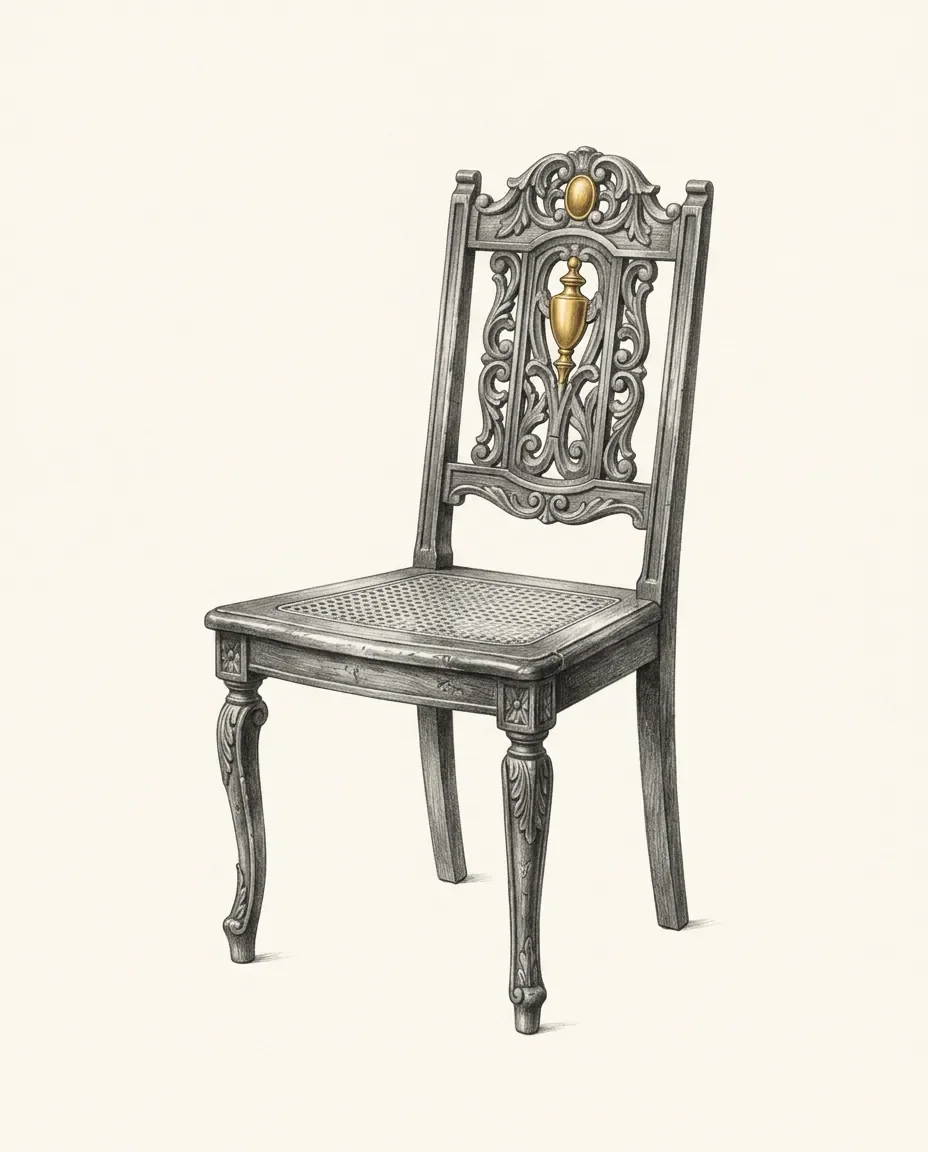
Antiquing
Added 10 Jul 2026 · Updated 22 Aug 2026
A non-sexual hobby of shopping for, sourcing, identifying, and collecting antiques: old furniture, decorative objects, and everyday artifacts. They are valued for age, craftsmanship, and history. It centers on the hunt, connoisseurship, and the tactile appeal of aged material.
- Prevalence
- Very common
- Category
- Non-Sexual Fetishism
- Domain
- Non-sexual interest
- Confidence
- Medium confidence
- Status
- Not a disorder; a common hobby. Compulsive acquisition may rarely overlap with hoarding-spectrum concerns.
- Also known as
- antique collecting, antique hunting, antiquarianism
- Added
- 10 Jul 2026
- Updated
- 22 Aug 2026
Featured in
Overview
Antiquing is the non-sexual hobby of shopping for, identifying, and collecting antiques: furniture, ceramics, silver, textiles, and everyday artifacts prized for their age, craftsmanship, and history. Also called antique collecting or antique hunting, it is a classic example of non-sexual fetishism in the colloquial sense, meaning an intense, structured attachment to a category of physical objects rather than a clinical condition. The appeal blends the pleasure of the hunt, connoisseurship, nostalgia, and the tactile draw of aged wood, patina, and worn material. This article covers what antiquing is, its documented history, and the ordinary psychology of collecting behind it.
Definition & scope
An antique is conventionally an object at least 100 years old, valued for age, rarity, condition, craftsmanship, or provenance. Items that are old but fall short of that century mark are usually called vintage or collectible instead. Antiquing is the activity built around such objects: browsing shops, fairs, estate sales, and auctions; learning to date and authenticate pieces; negotiating price; and building a collection or furnishing a home. Confusingly, the same word also names a decorative technique of painting and distressing new items to look old, a sense recorded from the eighteenth century. This entry concerns the collecting hobby, not the finishing craft.
Is antiquing the same as being an antiquarian?
Not quite. An antiquarian is a scholar or student of antiquities, old artefacts and manuscripts, a term with learned, academic weight (from Latin antiquarius, "pertaining to ancient times"). An antiquer, by contrast, is a hobbyist or dealer focused on acquiring and appreciating objects. The two overlap where serious collectors research the history of what they buy.
Examples
What the term covers. A Saturday worked through a town's antique shops and a monthly flea market with nothing particular in mind. A specialist who follows one maker, one period or one material (Georgian silver, studio pottery, treen, country chairs) through dealers' fairs and auction catalogues. The house clearance and the estate sale, where the appeal is precisely that nothing has been sorted yet. The furnishing buyer who simply wants an old table that will outlast a new one. Research, restoration and resale all count as part of the hobby: a great deal of antiquing happens in reference books, maker's marks and auction archives rather than in shops.
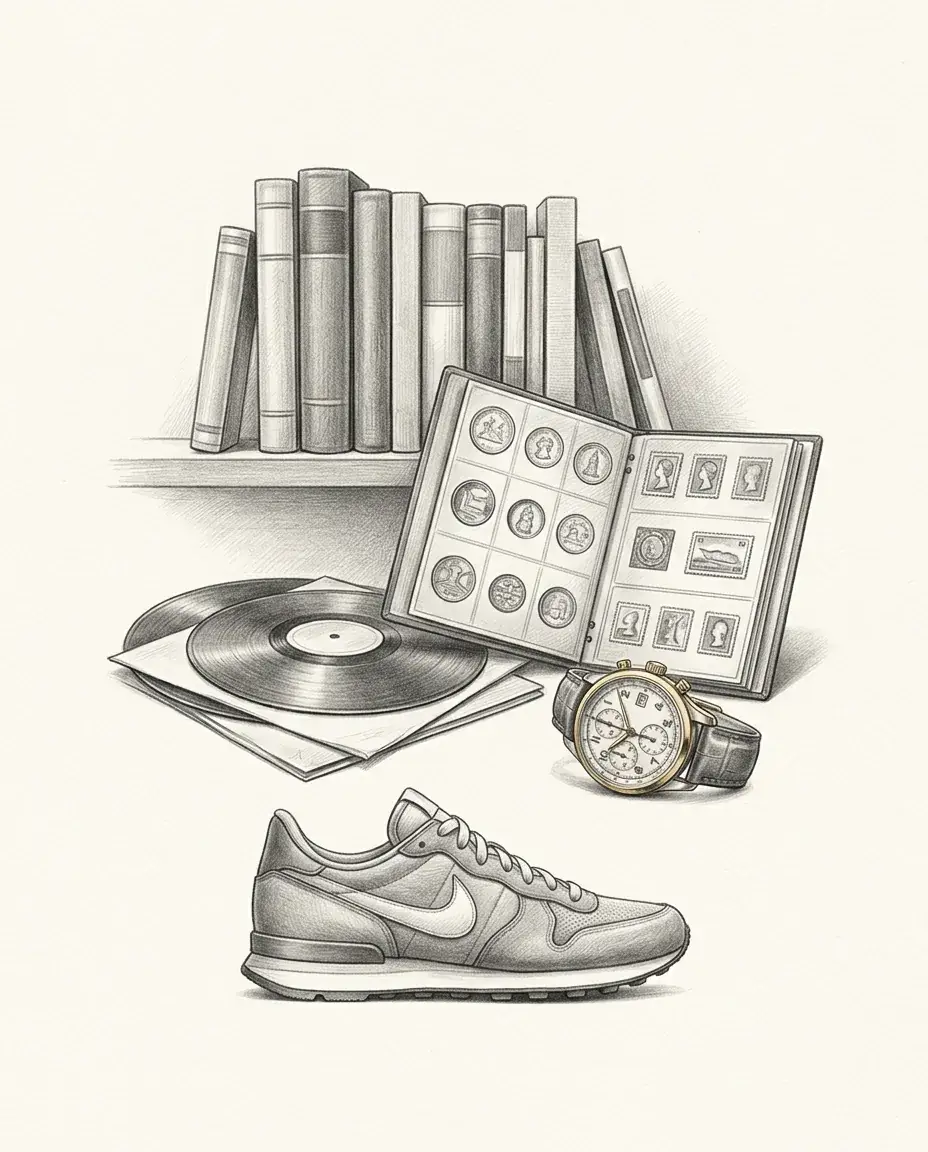
What the term does not cover. Neighbouring hobbies share the method but organise around a category rather than around age: coin and stamp collecting, vinyl-record collecting, watch collecting, knife collecting, postcards and taxidermy all include modern objects an antiquer would not touch. Rockhounding gathers from the ground rather than from the market. Bibliomania and tsundoku are book-specific, and collecting is the parent behaviour all of them belong to. The decorative-finish sense of "antiquing" (painting and distressing new furniture to look old) is the same word for the opposite activity: one buys age, the other simulates it.
How the word is used. Plain leisure vocabulary with no clinical register at all, and nothing sexual about it. Within the trade the useful distinctions are between a dealer (buys to sell), a collector (buys to keep) and a decorator (buys to furnish), and "antiquing" covers what all three do on a Saturday morning. "Antiques" names the goods, "antiquing" the activity, and "antiquarian" is a scholarly word that has drifted mostly to booksellers.
History & origins
The word
The adjective "antique" entered English around the 1530s meaning "aged, venerable," from French antique and Latin antiquus ("ancient, of olden times"). It was first pronounced like its doublet "antic," with the French pronunciation adopted only around 1700. As a verb for shopping for old objects, "antiquing" is recorded from the eighteenth century, with the distressing-and-painting sense following shortly after.
Where the 100-year rule came from
The century threshold is not arbitrary. As the Wikipedia survey of the term records, the US Smoot-Hawley Tariff Act of 1930 exempted from import duty objects produced before 1830, and 1830 marked the rough beginning of American mass production. An item made before then would have been about a hundred years old by 1930, and that rolling "at least 100 years" test became the internationally accepted benchmark. In 1979 the British critic Edward Lucie-Smith noted that dealers still sometimes insisted nothing made after 1830 was truly antique, though enthusiasm for Art Nouveau and Art Deco had softened that line.
The hobby
Collecting old objects long predates the modern hobby. The Greeks, Egyptians, and Romans gathered artifacts of earlier civilizations for religious, aesthetic, and status reasons, and the Renaissance revived antiquarian collecting of classical coins, sculpture, and relics among scholars and nobility.
- Antiquity: ancient cultures collect and trade older artifacts for religious, aesthetic, and prestige value.
- Renaissance: humanist antiquarians collect classical coins, inscriptions, and sculpture, treating them as windows onto the past.
- 17th–18th centuries: the aristocratic cabinet of curiosities and the Grand Tour spread a taste for acquiring old and exotic objects among the wealthy.
- Later 19th century: as Encyclopedia.com notes, industrial prosperity and new leisure drew far larger numbers into collecting antique china, furniture, and decorative goods, establishing antiquing as a broad middle-class pastime.
- 20th–21st centuries: dedicated shops, fairs, auction houses, price guides, and later television programmes and online marketplaces turned antiquing into a mainstream hobby and a global trade.
In practice
Antiquing is expressed through the search as much as the purchase. Enthusiasts browse antique shops, flea markets, estate and house-clearance sales, specialist fairs, and auctions, and increasingly online listings. Many narrow to a focus: a period, a maker, a material, or a category such as clocks, glass, or country furniture. Skill lies in dating and attributing pieces, spotting reproductions and later repairs, judging condition and patina, and negotiating a fair price. Much of the satisfaction comes from research and the chase, not ownership alone. It sits alongside other object-focused hobbies such as coin & stamp collecting and vinyl-record collecting.
Psychology
Antiquing draws on collecting drives common across people: a wish for order and completeness, nostalgia, a sense of mastery over a bounded field of knowledge, and a tangible connection to history and to previous owners. The patina and imperfection of old objects carry emotional weight that new goods rarely match. For the overwhelming majority it is a healthy leisure pursuit. Only rarely does acquisition tip into compulsion severe enough to strain finances or fill a home past function, where it can edge toward hoarding-spectrum concerns. As the framing in Joyal, Cossette & Lapierre (2015) implies, ordinary collecting hobbies fall well outside the range of statistically unusual or pathological interests.
Prevalence & culture
How common is antiquing?
Antiquing is a widespread mainstream hobby with a large casual following and a smaller core of serious collectors and dealers. Precise participation figures are hard to pin down because casual browsing shades into occasional buying, but the trade is global and long-established, supported by auction houses, dedicated fairs, price guides, and a visible presence in popular media. Programmes such as the Antiques Roadshow, running in Britain since 1979 and in a US version since 1997, have kept antiquing culturally prominent, even as tastes and the market for "brown furniture" have shifted over recent decades.
Safety, consent & law
Antiquing is legal and harmless. Practical caution concerns authentication and fraud (reproductions, marriages, and later restorations sold as original), provenance and the risk of stolen or looted goods, and export controls on items of cultural or archaeological significance. Trade in certain materials, notably ivory and some protected animal products, is heavily restricted or banned in many jurisdictions, so material and provenance matter as much as age.
Common questions
How old does something have to be to be called an antique?
A hundred years is the working rule, and it is a rolling one: an object made in 1930 qualifies today and did not in 2020. Below that threshold the trade says vintage for things with period character and collectible for anything sought after regardless of age. Outside customs and import contexts none of this is binding, so dealers apply it loosely and specialist fields set their own conventions entirely.
Why is antiquing listed in a catalog of fetishes?
Because "fetish" has an older, non-clinical sense: an intense, structured attachment to a class of physical objects. Antiquing is a clean example of that pattern and is filed here as non-sexual fetishism for exactly that reason. Nothing about the hobby is sexual, it appears in no diagnostic manual, and it sits alongside other object-focused pursuits such as coin and stamp collecting and vinyl-record collecting rather than alongside anything erotic.
Is antiquing an expensive hobby to start?
It need not be. The entry point is browsing, which costs nothing, and the cheapest end of the trade (flea markets, car-boot and yard sales, junk shops, house clearances) is where most collectors learn by buying small and occasionally getting it wrong. Expertise is the real currency: someone who can date a piece and spot a later repair pays less for better things than someone who cannot. Serious money becomes necessary only in narrow, well-documented fields where competition is fierce.
How can you tell if an antique is a reproduction?
There is no single test, which is why dealers spend years learning. The usual signals are construction and wear: hand-cut against machine-cut joints, tool marks, screws and nails of the right type for the period, shrinkage across the grain, and wear in the places hands and feet would actually have touched. Patina that is even everywhere is suspicious, because real wear is not. Marks and signatures are the weakest evidence, being the easiest thing to fake.
Is collecting antiques the same as hoarding?
No. Collecting is selective, organised and usually built on knowledge: a collector can say why each piece is there and roughly what it is worth. Compulsive hoarding is a recognised disorder involving indiscriminate acquisition and an inability to discard, where the volume of objects makes living space unusable and causes real distress. The line worth watching is not how much someone owns but whether the acquiring has stopped being a choice.
Are there antiques you are not allowed to buy or sell?
Yes, and material matters as much as age. Trade in elephant ivory and several other protected animal products is banned or tightly restricted in many countries, with narrow exemptions that vary by jurisdiction and usually demand documentation. Archaeological finds and items of cultural significance are subject to export licensing and sometimes to repatriation claims. Objects looted in wartime or stolen more recently remain stolen however often they have been resold, so provenance is a legal question and not only a scholarly one.
Do antiques hold their value?
Not dependably. Antiques are a taste market and taste moves: the heavy dark "brown furniture" that was a staple of the trade for decades has fallen a long way, while other periods have risen. Buying for investment means competing with dealers who know the field better than a hobbyist does, and selling costs (commission, transport, the gap between trade and retail prices) eat into any gain. The usual advice is to buy things you want to live with.
From the blog
- Coin & Stamp Collecting38/100Non-Sexual FetishismA non-sexual, focused interest in acquiring, organizing, and studying coins, banknotes, and postage stamps (numismatics and philately). It centers on heritage, completeness, and the tactile and historical appeal of small physical artifacts.38
- Vinyl Record Collecting44/100Non-Sexual FetishismA non-sexual enthusiasm for collecting, curating, and listening to vinyl records, valuing the analog format's sound, sleeve art, ritual, and physicality. It blends consumer culture, music fandom, and sensory satisfaction.44
- Collecting57/100Non-Sexual FetishismA strong, non-sexual drive to acquire, organize, and complete sets of objects: from stamps and coins to figures, records, and memorabilia. It is a widespread hobby and behavioral pattern, not a clinical disorder, and is distinct from hoarding.57
- Frisson54/100Non-Sexual FetishismA pleasurable, non-sexual wave of chills, tingling and goosebumps, often felt down the spine, triggered by emotionally moving music or art. Film and moments of awe trigger it too. Sometimes nicknamed a "skin orgasm."54
- Sneakerhead55/100Non-Sexual FetishismA non-sexual collecting subculture centred on athletic and designer sneakers, whose enthusiasts pursue rare, limited, and historically significant footwear. Such enthusiasts are known as "sneakerheads". The shoes are prized as collectibles, art objects, and identity markers rather than as sources of arousal.55
- Synesthesia55/100synaesthesia · Non-Sexual FetishismA benign neurological trait in which one sense automatically and involuntarily triggers another: seeing colours in sounds or words, tasting shapes. A documented 'sexual' subtype attaches vivid cross-sensory perceptions to arousal and orgasm.55
"Antique" entered English around the 1530s from French *antique*, from Latin *antiquus* ("ancient, of olden times"), built on *anti-* ("before"). The verb "antiquing" for shopping for old objects is recorded from the eighteenth century; the related sense of distressing new items to look old followed shortly after.
collecting · hobby · heritage
Prevalence is computed from the entry's cited population estimate. Rows marked ESTare indicative editorial estimates scored against a fixed anchor rubric, not measured quantities. Method & anchors: methodology.
Very common · ≈ 1 in 7
- 01Collecting, Wikipediaantiquity and Renaissance roots of collecting old objects; framing of antiquing as a non-clinical object-focused hobby
- 02Antique, Wikipedia100-year definition of antique and distinction from vintage/collectible; US Smoot-Hawley Tariff Act of 1930 exempting pre-1830 objects and the 1830 mass-production benchmark; Edward Lucie-Smith's 1979 note on the pre-1830 dealer convention
- 03Antiquarian, Wikipediadefinition of an antiquarian as a scholar of antiquities and manuscripts (Latin antiquarius), distinguishing scholarly study from the collecting hobby
- 04Antique Collecting, Encyclopedia.comlater-19th-century spread of antique collecting through industrial prosperity and leisure among larger numbers of people
- 05Antique, Etymonline1530s English adoption of 'antique' from Latin antiquus; c.1700 shift to French pronunciation; 18th-century dating of antiquing
- 06Joyal, Cossette & Lapierre (2015), What Exactly Is an Unusual Sexual Fantasy?framing that ordinary, common interests fall well outside the range of statistically unusual or pathological ones
- 07Antiques Roadshow, Wikipediathe programme's British run since 1979 and US version since 1997, evidencing antiquing's continued cultural visibility