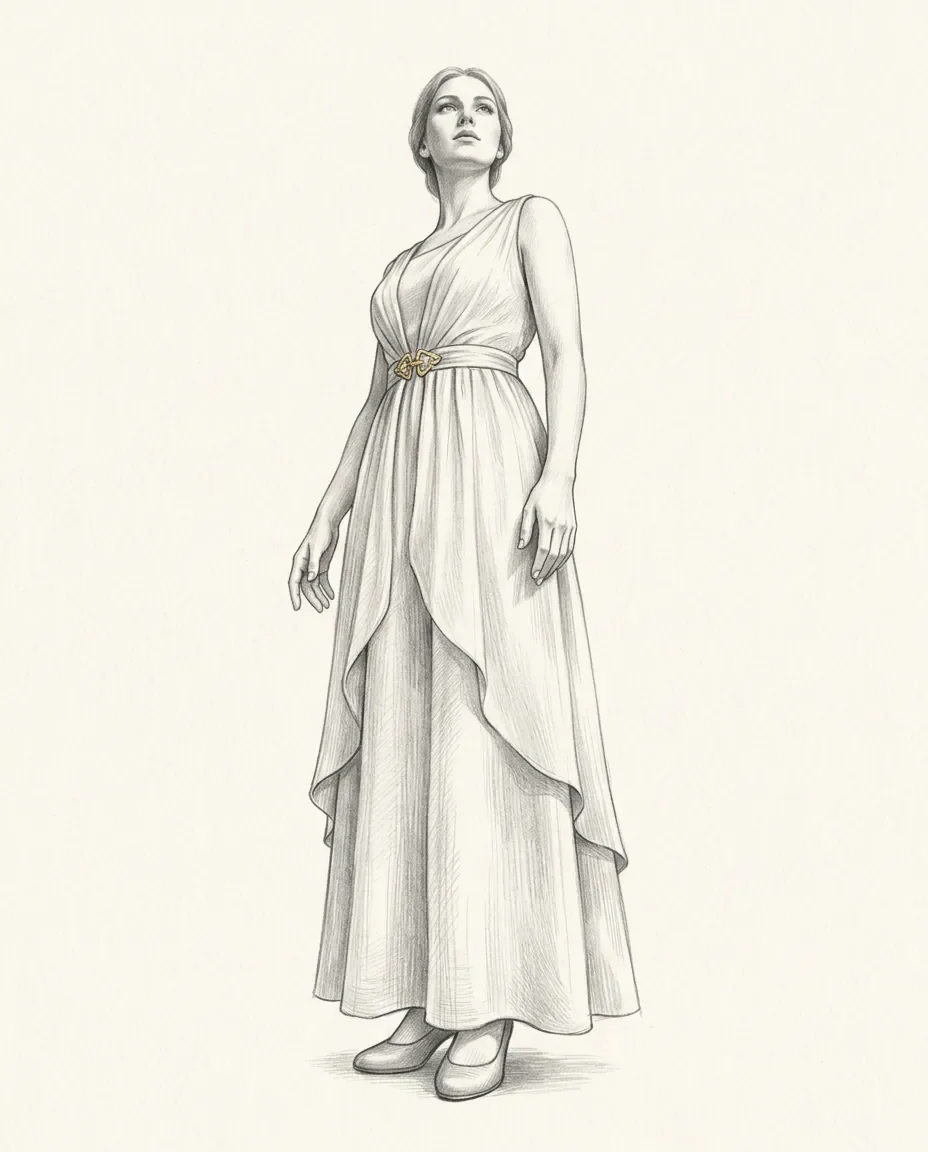
Giantess Fetish
Macrophilia
Added 21 Jun 2026 · Updated 22 Aug 2026
Macrophilia is an erotic or romantic fascination with giant or vastly oversized beings, most commonly a giant woman (giantess). The appeal centers on extreme size difference and the fantasy of being tiny in relation to a much larger figure.
- Prevalence
- Rare
- Category
- Identity & Transformation
- Clinical term
- Macrophilia
- Domain
- Sexual interest
- Confidence
- Low confidence
- Status
- Niche fantasy interest, not a recognized DSM-5-TR/ICD-11 diagnosis; benign and clinically irrelevant absent distress or impairment.
- Also known as
- Macrophilia (Attraction to giants / giantess), macrophilia, size fetish (giant), growth fetish, giant fetish, GTS
- Added
- 21 Jun 2026
- Updated
- 22 Aug 2026
Featured in
Collection
Fantasy, Fiction & Fandom
Interests rooted in fiction, fantasy creatures, and fan culture, from anime and gaming to monsters and myth.
45 entries
Collection
Size & Scale
Interests built on difference in size: giants and shrinking, growth and scale, where the disparity itself is the point.
11 entries
Overview
Macrophilia is an erotic or romantic fascination with giants, or with the fantasy of beings dramatically larger than oneself. The most common expression is interest in a giantess, though giant figures of any gender feature. Because the central scenario is physically impossible at human scale, the interest is almost entirely imaginative and media-driven rather than enacted, and it turns on the relative-size dynamic itself rather than on any particular act. This article traces the fantasy's roots in folklore and literature, the modern -philia label, the formative role of the early internet in shaping the community, and what the limited evidence says about its prevalence.
Examples
The central scenario cannot physically occur, so the interest is bounded by how it is depicted and by the neighbours it gets mistaken for.
What the term covers. Drawn and painted art, comics, 3-D renders, animation and written fiction featuring a woman of impossible scale; forced-perspective and composited video; collaborative text role-play in which one partner takes the giantess role; and the tag GTS, which works as a genre label across art sites and clip marketplaces. Tone spans the range, from gentle scenarios of being sheltered, carried or cradled to fantasy power dynamics in which scale simply stands in for dominance.
What the term does not cover. Macrophilia is the general label for attraction to giant beings of any gender; "giantess fetish" names its dominant strand and the creative fandom built around it. Its mirror image is microphilia, catalogued here as shrinking, and many people hold both at once. Size difference kink stays inside real human proportions, so an attraction to unusually tall partners belongs there rather than here. Vore is swallowing and engulfment, a separate theme that giant scenarios sometimes borrow, and the crush fetish is a distinct interest again. Body inflation and muscle growth are growth fantasies running along different axes than scale.
How the word is used. Entirely vernacular. "Giantess" and its abbreviation GTS are fandom vocabulary, used to tag artwork as often as to describe a person's desire, which is why the term behaves more like a genre name than a diagnosis. Macrophilia is a modern descriptive -philia coinage rather than a clinical category: it appears in neither the DSM-5-TR nor the ICD-11, and its first use is not well documented. "She draws giantess art but does not call it a fetish" is unremarkable here, because much of the audience engages with the material purely as fiction.
History & origins
The older fascination with scale
The fascination with extreme size difference is far older than any clinical label. Giants are a staple of world myth, fairy tale, and scripture, and the literary touchstone repeatedly named by enthusiasts is Jonathan Swift's Gulliver's Travels (1726): specifically the land of Brobdingnag and the giant girl Glumdalclitch who carries the diminutive Gulliver. In a 1999 Salon feature, one self-identified macrophile traced his attraction directly to reading that episode in childhood, "before I knew what the birds and the bees were all about." Twentieth-century monster and creature cinema then gave size-contrast imagery enduring popular form.
The modern term
The word macrophilia combines the Greek makrós ("large, long") with -philia ("love, affinity"), literally "love of the large." It belongs to the family of modern descriptive -philia labels that proliferated in twentieth-century sexology after Richard von Krafft-Ebing's Psychopathia Sexualis (1886) standardized the practice of naming sexual interests in Greek and Latin. Macrophilia itself is not a classical clinical category and its precise coinage is not well documented; the Wikipedia article on macrophilia describes it as a fantasy interest that took recognizable shape largely through fan communities rather than through the diagnostic literature. It is not a recognized DSM-5-TR or ICD-11 diagnosis.
The internet era and community formation
Macrophilia is one of the interests whose modern identity was effectively built online. Usenet newsgroups in the 1990s offered early, anonymous spaces to share size-themed stories; by the late 1990s, GeoCities-hosted sites such as Giantess Corner documented in the 1999 Salon piece were circulating digitally manipulated giantess imagery. Later hubs on DeviantArt and Pixiv, dedicated forums such as Giantess City, and the convention SizeCon (first held in 2016) consolidated a creative subculture. The internet did not merely host the interest; commentators including psychologist Mark D. Griffiths have argued it helped create and facilitate it by connecting an audience that mainstream media rarely served. Adjacent fantasy interests such as shrinking and broader transformation themes grew alongside it in the same spaces.
In practice, how the interest is typically expressed
The interest is expressed through artwork, animation, written stories, special-effects and forced-perspective video, and consensual role-play in which one partner is imagined as enormous and the other as miniature. Themes range from gentle awe, protection, and being cradled or carried, to power and dominance framed around scale, placing parts of the interest adjacent to dominance and submission while usually remaining far gentler in tone. Across these variations the emphasis remains on the size relationship rather than on explicit content.
Psychology, proposed mechanisms and appeal
Proposed psychological accounts link macrophilia to feelings of smallness, safety, surrender, or wonder, and to early imprinting on size-contrast imagery. Mark Griffiths has speculated that the roots of many such fetishes lie in childhood or early adolescence, "where sexual arousal is, at first, accidentally associated with giants: maybe watching a TV program where a giantess initiates feelings of sexual arousal." Psychologist Helen Friedman has offered a gendered observation, suggesting fewer women report macrophilia because those who already perceive men as larger or more powerful "have no need to fantasize about it." Both ideas are interpretive: because controlled empirical study of macrophilia is essentially absent, these explanations remain largely theoretical.
Prevalence & culture
How common is macrophilia?
Macrophilia is rare in the general population, but it supports unusually active online communities and has measurable digital visibility. Pornhub reported that giantess was the single fastest-rising search topic of 2015, up roughly 1,091% over the previous year, and the giantess category has been reported among the most-searched on the clip marketplace Clips4Sale. These are platform-specific search figures, not general-population prevalence rates. Broader fantasy-prevalence research (for example Joyal, Cossette & Lapierre (2015)) frames uncommon fantasy themes as statistically infrequent yet not necessarily abnormal, which fits the way macrophilia is generally understood: a niche fantasy interest with a recognizable, productive creative subculture that now sustains its own annual gathering, SizeCon, first planned by a New York size-community meetup group in 2016.
Safety, consent & law
The defining scenario cannot occur in reality, so consent and safety issues do not arise in the usual sense; the interest is realized through fiction, imagery, or consensual size-themed role-play between adults. Standard considerations are limited to honest communication between partners who choose to engage in such play. Macrophilia is benign and clinically irrelevant absent distress or impairment.
Common questions
What does GTS stand for?
GTS is the community abbreviation for giantess. It functions mainly as a tag: art sites, forums and clip marketplaces use it to mark size-fantasy material so it can be found and filtered. Because it labels content rather than people, plenty of artists and readers use the tag without describing themselves as macrophiles at all.
What is the difference between macrophilia and a giantess fetish?
Macrophilia is the broader term: attraction to giant beings of any gender, or to the fantasy of being tiny beside one. A giantess fetish is its most common form and the one with a fandom attached: giant women specifically, plus the art, fiction and video built around them. In everyday use the two words get swapped freely, but only one of them is gender-neutral.
How do people act out a giantess fantasy if giants don't exist?
Mostly they do not act it out at all; they read, draw, write or watch it. Where it does take a physical form the tools are illusion rather than scale: forced-perspective photography and video, composited footage, miniature sets and props, and role-play in which one partner speaks and behaves as the giant while the other plays the miniature. The fantasy runs on suggestion, which is part of why the creative side of the community is so productive.
Is a giantess fetish related to vore?
They are separate interests that share a stage. Vore is the fantasy of one being swallowing another whole, and it can be written at any scale; giant scenarios sometimes include it because the premise makes it easy. Many people are drawn to one and actively dislike the other, and treating them as the same thing is a common outsider error.
Is a giantess fetish a disorder?
No. It is not listed in the DSM-5-TR or the ICD-11 and belongs to no diagnostic category. Because the scenario cannot happen, the interest is realised through fiction, imagery and role-play between consenting adults, so it puts no one at risk. As with any interest, it would become clinically relevant only if it caused the person genuine distress or crowded out the rest of their life.
Why do people find extreme size difference arousing?
There is no settled answer, because macrophilia has essentially never been studied under controlled conditions. The accounts that exist point to feelings of smallness and safety, surrender and awe, or the reverse: power expressed through scale. Mark Griffiths has suggested that interests of this kind often begin with an accidental early association, arousal happening to coincide with size-contrast imagery in childhood or adolescence. That is an interpretation offered by a commentator, not a research finding.
- Shrinking Fetish26/100Microphilia · Identity & TransformationMicrophilia is an erotic or romantic fascination with miniature beings, or with the fantasy of being shrunk to a tiny size. The counterpart to macrophilia, it centres on extreme size difference and is realised almost entirely through fiction, art, and role-play.26
- Transformation Fetish33/100Metamorphophilia · Identity & TransformationA transformation fetish is an erotic or imaginative fascination with the process of a body changing form into something else. That might be an animal, an object, or another kind of being. The appeal centers on the metamorphosis itself rather than the end state.33
- Dominance and Submission92/100Power, Roles & ScenariosA consensual erotic dynamic in which one partner takes a dominant role and the other a submissive role, exchanging power within agreed limits. It is one of the most widespread elements of BDSM and of human sexual fantasy.92
- Parthenophilia (Attraction to Virgins)31/100Parthenophilia · Identity & TransformationA sexual preference for adult partners who have not had sex before: the wish to be a partner's first and an attraction to inexperience as a quality. A glossary term with no place in either diagnostic manual, concerning adults throughout.31
- Gender Swap Fetish30/100Identity & TransformationAn erotic or imaginative interest in fantasy scenarios where a character changes sex or swaps bodies, rather than any real-world act. It is expressed mainly through fiction, art, captions, games, and role-play. A media-driven theme distinct from real gender identity.30
- Self-As-Female Arousal32/100Autogynephilia · Identity & TransformationAutogynephilia is a contested research construct describing sexual arousal at the thought or image of oneself as female. The proposed pattern concerns people assigned male. It appears in the DSM-5 only as a specifier for transvestic disorder, not as a stand-alone diagnosis.32
From Ancient Greek makrós (μακρός, "large, long") + -philia (-φιλία, "love, affinity"), literally "love of the large"; a modern descriptive coinage, not a classical clinical term.
size difference · fantasy transformation · scale play
Prevalence is computed from the entry's cited population estimate. Rows marked ESTare indicative editorial estimates scored against a fixed anchor rubric, not measured quantities. Method & anchors: methodology.
Rare · ≈ 1 in 1,000
- 01List of paraphilias, Wikipediadefinition/existence of macrophilia as an attraction to giants/giantesses
- 02Joyal, Cossette & Lapierre (2015), What Exactly Is an Unusual Sexual Fantasy?, J. Sexual Medicine 12(2):328-340framing of niche fantasy themes as uncommon but not statistically rare
- 03FetLife, kink community group sizes (community-size proxy)community-size proxy for the giantess/macrophilia fandom
- 04Macrophilia, WikipediaEtymology and description of macrophilia as a fantasy size-difference interest with internet-era fan communities; Griffiths' childhood-association theory, Friedman's gendered observation, the Pornhub 2015 ~1,091% giantess search rise, the Clips4Sale category ranking, and SizeCon (2016).
- 05Urge: A giant fetish, Salon (1999)Early internet community history (GeoCities-hosted Giantess Corner) and a macrophile tracing the interest to Gulliver's Travels in childhood.
- 06SizeCon, official siteSizeCon, the macrophilia/size-community convention first planned by a New York size-community meetup group in 2016.
- 07Gulliver's Travels, WikipediaSwift's 1726 work and the Brobdingnag / Glumdalclitch size-contrast episode repeatedly cited as a literary touchstone for the giantess fantasy.
- 08Psychopathia Sexualis, WikipediaKrafft-Ebing's 1886 work established the convention of naming sexual interests in Greek/Latin, the lineage to which the -philia label belongs.
- 09Mark D. Griffiths, WikipediaIdentifies Mark D. Griffiths, the Nottingham Trent behavioural-addiction psychologist who has written on macrophilia's proposed childhood-association origins.