Shrinking Fetish
Microphilia
Added 21 Jun 2026 · Updated 22 Aug 2026
Microphilia is an erotic or romantic fascination with miniature beings, or with the fantasy of being shrunk to a tiny size. The counterpart to macrophilia, it centres on extreme size difference and is realised almost entirely through fiction, art, and role-play.
- Prevalence
- Rare
- Category
- Identity & Transformation
- Clinical term
- Microphilia
- Domain
- Sexual interest
- Confidence
- Low confidence
- Status
- Niche fantasy interest, not a recognized DSM-5-TR/ICD-11 diagnosis; benign and clinically irrelevant absent distress or impairment.
- Also known as
- microphilia, tiny fetish, minimization, size difference fetish, shrunken woman fetish
- Added
- 21 Jun 2026
- Updated
- 22 Aug 2026
Featured in
Overview
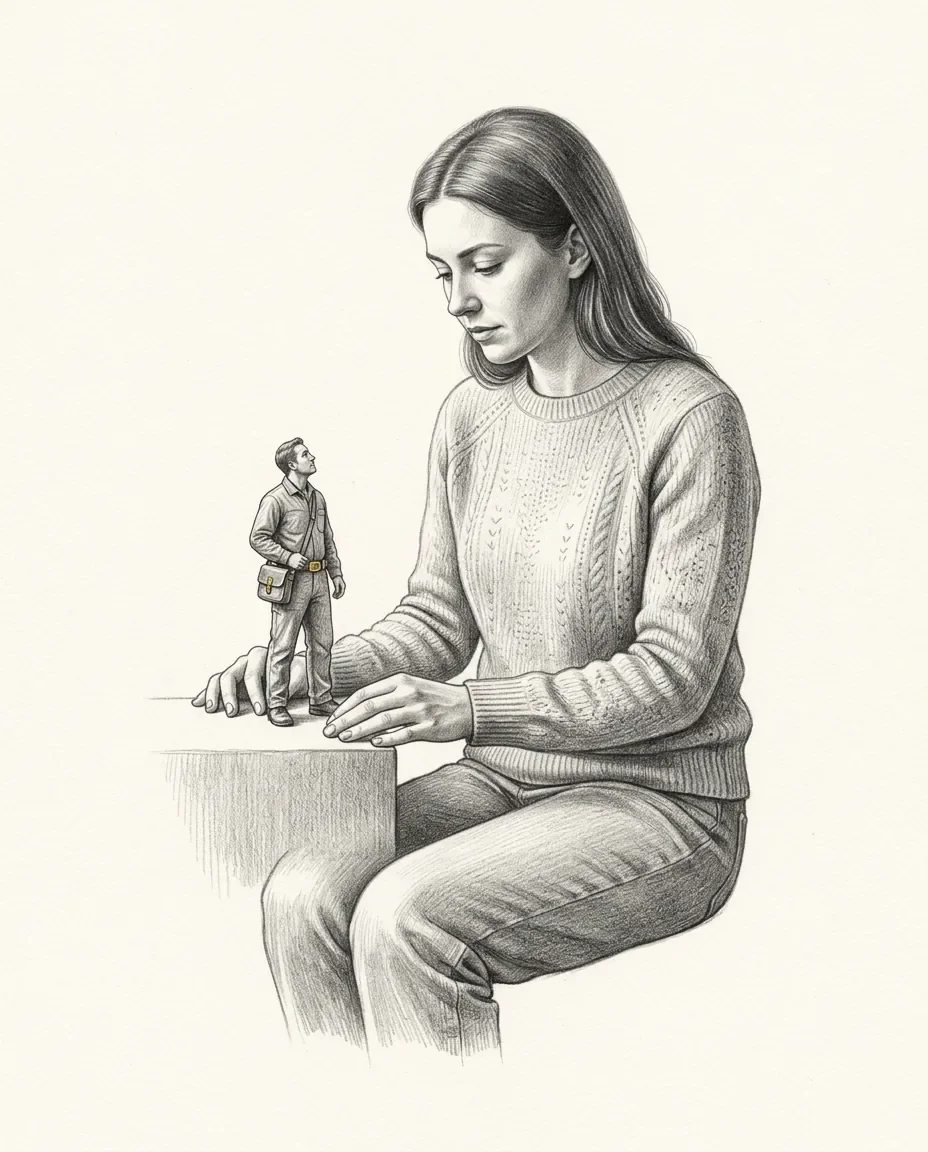
A shrinking fetish, clinically labelled microphilia, is an erotic or romantic fascination with very small beings, or with scenarios in which a person is shrunk to a fraction of normal size. It is the mirror image of macrophilia, the attraction to giants: where one imagines a partner as enormous, the same scene can be reframed from the perspective of becoming tiny. The two interests frequently coexist within the same individuals and communities, both organised around a single central theme: extreme size difference. This article covers the term's uncertain origins, the long literary and cinematic lineage the interest draws on, how it is expressed, the psychology proposed to underlie it, and what little is known about its prevalence.
Definition & scope
The defining premise is a radical disparity in scale, approached from the small side. Two vantages are common: the fantasy of being shrunk (helpless, sheltered, or navigating a suddenly enormous world) and the attraction to a tiny other. Because the two vantages are the same scene viewed from opposite ends, microphilia and macrophilia are best treated as a single size-difference interest rather than as separate categories, and both routinely overlap with transformation and power-exchange themes. It is a fantasy interest, not a physically realisable practice.
Examples
Because the premise cannot occur, the interest is bounded by how it is depicted and by the neighbours it is mistaken for.
What the term covers. Written stories and comics; drawn, painted and 3-D illustration; animation; forced-perspective photography and compositing, which is as close to the scene as a camera can get; and consensual role-play in which one adult narrates or performs the shrunken part while the other plays the ordinary-sized world around them. Both vantages count (imagining oneself reduced, and being drawn to a tiny other), and the emotional register runs from shelter, care and tenderness through to helplessness and surrender, with a single scene often written either way.
What the term does not cover. Macrophilia is the same size gap read from the giant's end, and the giantess fetish is its most common form; those mirror this entry rather than duplicate it. Size difference kink stays inside real human proportions (a tall partner beside a short one) and needs no fantasy at all, which is the cleanest dividing line here. An attraction to short or petite people is likewise a body-type preference, closer to morphophilia. Vore, crush, trampling and lift and carry are often staged at miniature scale, but each is defined by its own act rather than by the scale itself.
How the word is used. Microphilia is a descriptive community label built as the mirror of macrophilia, not a clinical one: it turns up in informal inventories such as the List of paraphilias but in no edition of the DSM and nowhere in ICD-11. Online, the material is usually filed under "size" or under the giantess shorthand "GTS", while "shrinking fetish" is the plain-English phrase people actually search for.
History & origins
A descriptive label, not a clinical one
The precise coinage of microphilia is not well documented. It does not appear as a named diagnosis in any edition of the DSM or in the ICD-11, and circulates chiefly as a community and descriptive term, typically catalogued among the long inventory of informal interests in the List of paraphilias. It is best understood as the inverse of macrophilia, literally "love of the small" against "love of the large," a pairing that entered wide use through online communities rather than the clinical literature.
Cultural and cinematic lineage
Though the term is modern, the imagery is ancient. Miniaturisation and shrinking are recurring motifs in folklore and fiction:
- folklore: diminutive figures such as "Thumbelina" and "Tom Thumb" establish the tiny-person motif in the fairy-tale tradition.
- 1726: Jonathan Swift's Gulliver's Travels dramatises radical scale difference in both directions, from the tiny Lilliputians to the giant Brobdingnagians.
- 1957: the science-fiction film The Incredible Shrinking Man gives the shrinking experience a vivid, sustained visual treatment that later enthusiasts repeatedly cite as formative.
- 1958: Attack of the 50 Foot Woman, referenced in the macrophilia literature as an early touchstone, popularises the inverse giantess image.
- 1966: Fantastic Voyage miniaturises a crew to travel inside a human body, reinforcing the "tiny in a vast world" theme.
Community formation
These narrative traditions supplied much of the imagery the modern interest draws upon, but the recognisable community took shape only with the internet. From the 1990s onward, forums, story archives, and art-sharing platforms, many overlapping with the giantess ("GTS") and transformation scenes, gave the interest a culture of its own. Academic discussion, where it exists, situates size-difference fantasy within the broader study of unusual-but-non-pathological sexual fantasy rather than within disorder.
In practice
Because the defining premise is physically impossible at human scale, the interest is expressed almost entirely through fiction, artwork, animation, forced-perspective photography, and consensual role-play. Common themes include being held, sheltered, carried, or hidden; exploring a partner or an everyday object as though it were a vast landscape; or navigating an enormous environment. Emotional tones span tenderness and protectiveness, vulnerability and surrender, playfulness and wonder, and power dynamics built around the disparity in scale, which is where it shades into dominance and submission and transformation fantasy.
Psychology
What causes a shrinking fetish?
No cause is established. Proposed explanations connect microphilia to fantasies of smallness, helplessness, intimacy, protection, or awe, and to early exposure to shrinking and miniaturisation motifs in cartoons, fairy tales, and science fiction. Mark Griffiths, one of the few academics to have written about size-based interests, speculates that the roots of macrophilia, and by extension its microphilic mirror, may lie in sexual arousal during childhood and early adolescence that becomes accidentally associated with images of giants and scale. Like other size interests it overlaps with dominance, submission, and transformation themes. Direct empirical research is very limited and most accounts remain descriptive.
Prevalence & culture
How common is a shrinking fetish?
It is rare. Microphilia is not measured by the major fetish-prevalence surveys, and is best framed through the broader literature on uncommon fantasy: Joyal, Cossette & Lapierre (2015) showed that many fantasies once assumed to be rare are in fact reported by a meaningful minority, while genuinely unusual scenarios, into which size-transformation fantasy falls, remain reported by relatively few. The interest nonetheless maintains dedicated online spaces, frequently shared with the giantess and transformation communities and with niche visibility inside fantasy and animation fandoms. Its size-difference sibling has some measurable footprint: on the clip marketplace Clips4Sale the giantess kink was reported to be the single most-searched category in 2023, per the macrophilia literature, and community-size proxies such as group membership on platforms like FetLife suggest a small but cohesive following. It is not a recognised clinical diagnosis and is best understood as a specialised fantasy interest.
Safety, consent & law
The interest is harmless. Its scenarios cannot occur in reality and are realised entirely through media or consensual, size-themed role-play between adults, so consent and safety considerations are limited to ordinary, respectful communication and boundary-setting between partners.
Common questions
Are microphilia and macrophilia the same fetish?
They are two views of one thing. Both turn on an enormous gap in scale; microphilia takes the small end and macrophilia the large. The same artwork or story usually serves both, the communities are largely shared, and many people describe holding both at once. Keeping the two labels separate is useful mainly for saying which side of the scene someone identifies with.
Is a shrinking fetish the same as liking short or petite partners?
No. A preference for small stature is a body-type preference within the ordinary human range, closer to what this catalogue files under morphophilia or size difference kink. Microphilia depends on a scale gap that cannot exist (a person measured in centimetres), which is precisely why it lives in fiction and artwork rather than in anybody's bedroom.
How is a shrinking fetish acted out if the scenario is impossible?
Almost entirely through media and imagination: stories, illustration, animation, and forced-perspective photography, which is the closest a camera can get. With a partner it becomes narrated role-play: one person voices the shrunken character while the other plays the giant world around them, often using everyday objects as stand-in scenery. There is no physical technique to learn.
Is a shrinking fetish the same thing as vore?
No, although the two overlap heavily in artwork. Vore is defined by swallowing or being swallowed, and it usually needs a size gap to work, so a great deal of vore art is drawn at miniature scale. Microphilia is defined by the scale itself, and the shrunken character in a shrinking-fetish story is far more often sheltered, carried or exploring than eaten.
What does "GTS" mean in size-fetish communities?
It is long-standing online shorthand for giantess, and it names a shared community rather than a separate interest. Because the giant and the shrunken vantages describe the same scenario, size-themed forums, archives and art tags have historically gathered under the giantess banner, so material aimed at microphiles is usually found there rather than under any microphilia heading.
Is microphilia a paraphilia or a mental disorder?
Neither. It is not a named diagnosis in any edition of the DSM or in ICD-11, and it appears only in informal inventories of unusual interests. Because the scenarios cannot happen, nobody can be harmed by them. It would become clinically relevant only in the way any interest can: if a person found it genuinely distressing, or it began to displace the rest of their life.
- Giantess Fetish31/100Macrophilia · Identity & TransformationMacrophilia is an erotic or romantic fascination with giant or vastly oversized beings, most commonly a giant woman (giantess). The appeal centers on extreme size difference and the fantasy of being tiny in relation to a much larger figure.31
- Transformation Fetish33/100Metamorphophilia · Identity & TransformationA transformation fetish is an erotic or imaginative fascination with the process of a body changing form into something else. That might be an animal, an object, or another kind of being. The appeal centers on the metamorphosis itself rather than the end state.33
- Dominance and Submission92/100Power, Roles & ScenariosA consensual erotic dynamic in which one partner takes a dominant role and the other a submissive role, exchanging power within agreed limits. It is one of the most widespread elements of BDSM and of human sexual fantasy.92
- Alien Fetish25/100Exophilia · Identity & TransformationAn erotic or romantic attraction to fictional extraterrestrial or otherworldly beings, expressed through media, art, and storytelling. No real entity is involved. A fantasy-driven interest closely tied to science-fiction fandom; not a recognized clinical paraphilia.25
- Clown Fetish25/100Coulrophilia · Identity & TransformationCoulrophilia is an erotic or imaginative attraction to clowns or the clown persona, including the makeup, costume, and theatrical character. It is an uncommon interest, not a recognized clinical diagnosis.25
- Dronification25/100Identity & TransformationDronification, also called drone play, is a roleplay interest in which a person is imagined or treated as an obedient, depersonalised "drone". It is an identity-transformation fantasy: a machine-like unit stripped of individuality. It draws on objectification, hypnosis and science-fiction themes of lost autonomy.25
From Greek mikrós (μικρός, "small") + -philia (-φιλία, "love of" or "affinity for"), literally "love of the small." It is formed as the direct counterpart to macrophilia (from makrós, "large").
size difference · fantasy transformation · scale play
Prevalence is computed from the entry's cited population estimate. Rows marked ESTare indicative editorial estimates scored against a fixed anchor rubric, not measured quantities. Method & anchors: methodology.
Rare · ≈ 1 in 1,000
- 01List of paraphilias, Wikipediadefinition/existence of microphilia (attraction to miniature beings/shrinking)
- 02Joyal, Cossette & Lapierre (2015), What Exactly Is an Unusual Sexual Fantasy?, J. Sexual Medicine 12(2):328-340framing fantasy-transformation scale play as an uncommon but non-rare fantasy
- 03FetLife, kink community group sizes (community-size proxy)community-size proxy for size/shrinking interest groups (small niche)
- 04Macrophilia, Wikipediamacrophilia/microphilia counterpart relationship, Mark Griffiths' speculation on childhood/adolescent origins, and media touchstones (Attack of the 50 Foot Woman)
- 05ICD-11, World Health Organizationmicrophilia is not a named diagnosis; it is a descriptive community label rather than a clinical category
- 06Gulliver's Travels, WikipediaSwift's 1726 novel dramatising radical scale difference (tiny Lilliputians, giant Brobdingnagians) as a literary antecedent
- 07The Incredible Shrinking Man, Wikipedia1957 science-fiction film giving the shrinking experience a sustained visual treatment cited by enthusiasts