Submission
Added 21 Jun 2026 · Updated 6 Sep 2026
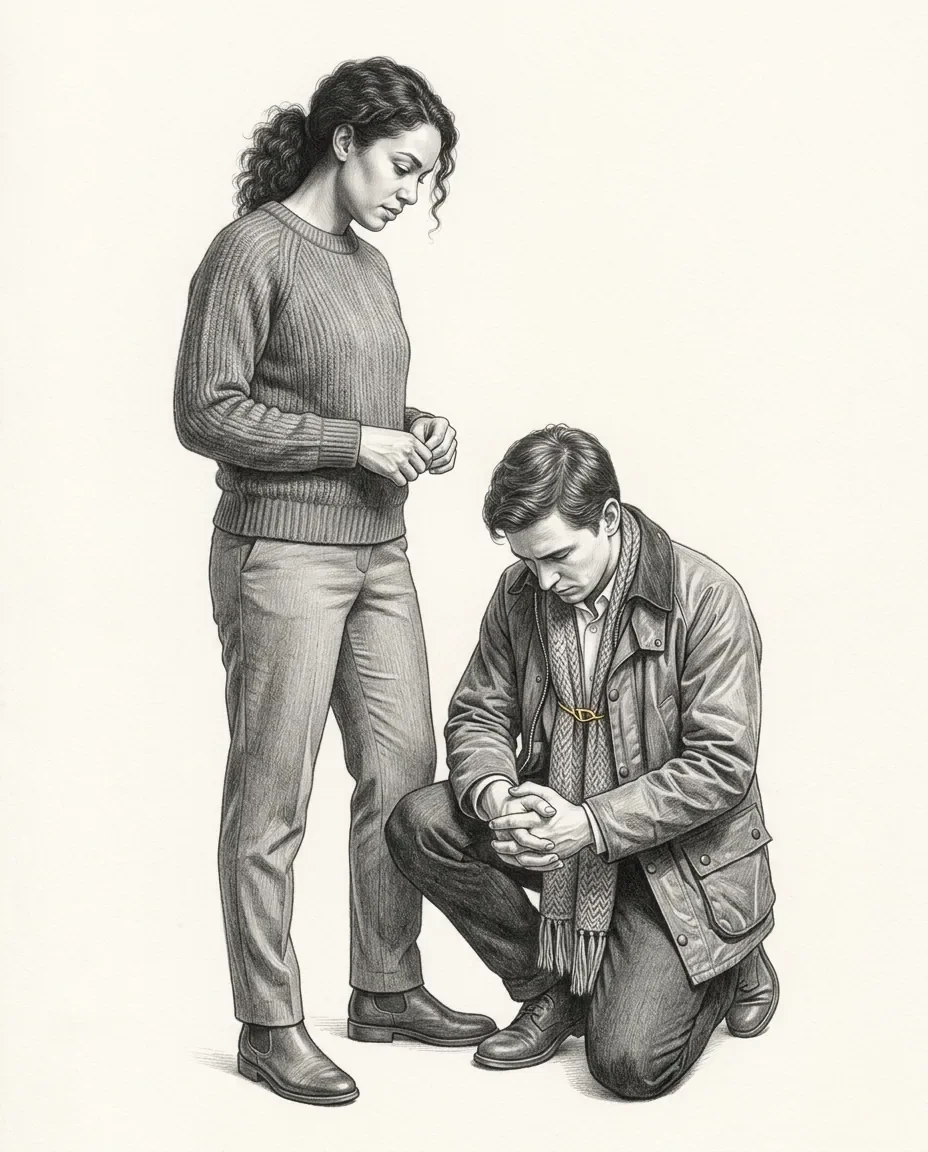
Taking the yielding, following role in a consensual power-exchange dynamic. One of the two halves of dominance and submission (D/s), in which a person cedes control to a trusted partner under negotiated limits.
- Prevalence
- Ultra-common
- Category
- Power, Roles & Scenarios
- Domain
- Sexual interest
- Confidence
- High confidence
- Status
- A normative variation of sexual interest. Neither manual lists consensual power exchange as a paraphilia or a disorder.
- Also known as
- Submission (the submissive role), sub, bottom, submissive role, surrender, yielding control, power exchange (bottoming)
- Added
- 21 Jun 2026
- Updated
- 6 Sep 2026
Featured in
Overview
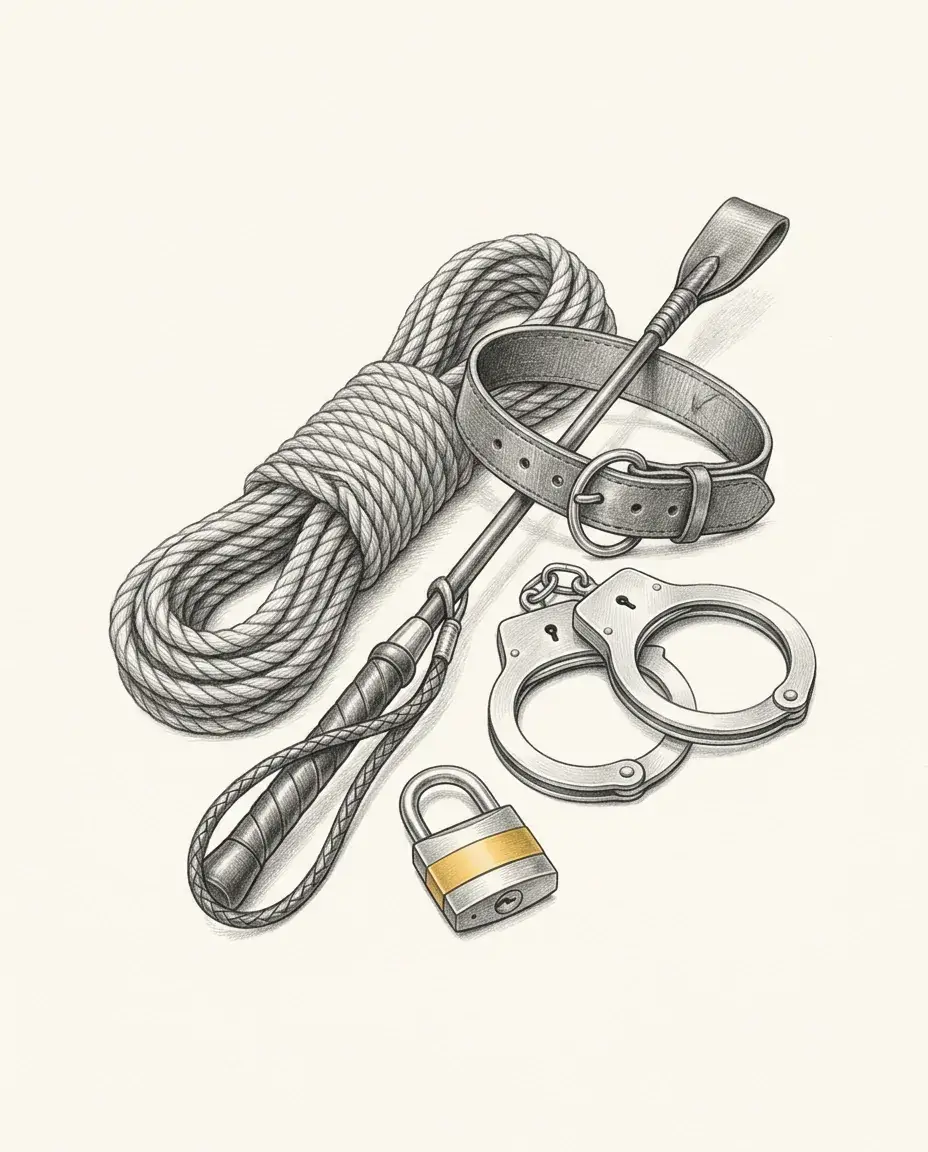
Submission is the yielding role within consensual power exchange, in which an adult chooses to hand authority to a partner and follow their direction. The submissive (commonly called a sub or, for the receiving partner in a scene, a bottom) agrees to defined rules, may take instruction or render service, and experiences arousal, comfort, or fulfilment in surrendering control. It is the structural counterpart to dominance and a core component of BDSM.
Examples
Submission is a role, so what it looks like varies; the confusion around the word comes from neighbouring terms that describe something else.
What the term covers. Following a partner's lead during sex with no label attached to it; obedience within a negotiated scene; service submission, in which the role runs through tasks and care; standing rules or rituals that persist between meetings; a collar accepted as a token of the arrangement; formalised long-term structures such as a master/slave bond; and brat play, where the yielding is real and comes out as playful resistance.
What the term does not cover. Masochism is an appetite for sensation, not for authority, and a submissive may want no pain at all. Bondage is a technique that anyone can apply to anyone. Degradation is one possible flavour of a dynamic, not its definition; plenty of submission is built on praise. The role says nothing about temperament: a submissive chooses, and a passive person does not choose.
How the word is used. "Submission" is ordinary English pressed into subcultural service; sub is the standard clipped noun, and some protocol-minded writing marks the hierarchy typographically, capitalising the dominant partner's pronouns and lowercasing the submissive's. Neither DSM-5-TR nor ICD-11 contains an entry for the submissive role; the closest clinical term, masochism, names something narrower.
History & origins
Clinical lineage
The pleasure of yielding control entered medicine in the late nineteenth century. The Austro-German psychiatrist Richard von Krafft-Ebing introduced the term masochism in Psychopathia Sexualis (1886), naming it after the novelist Leopold von Sacher-Masoch, whose novel Venus in Furs (1870) dramatised a man who persuades a woman to take him as her slave and degrade him. Krafft-Ebing framed it, alongside sadism, as a sexual perversion. Sigmund Freud's Three Essays on the Theory of Sexuality (1905) folded the active/passive pairing into psychoanalysis, theorising masochism as sadism turned inward.
For most of the twentieth century psychiatry treated erotic submission as psychopathology. Researchers and the manuals dismantled that framing in stages. Alfred Kinsey's reports (1948 and 1953) documented sadomasochistic interest as a common element of ordinary sexual life. By the DSM-5 (2013) and its 2022 text revision, the DSM-5-TR, American psychiatry drew a sharp line between a paraphilia (an unusual interest) and a paraphilic disorder (one that causes distress, impairment, or harm to non-consenting others): so consensual submission, absent distress, is no longer a diagnosis. The World Health Organization's ICD-11 went further, removing the old sadomasochism category and retaining only coercive sexual sadism disorder for non-consensual acts, formally depathologising consensual kink.
Cultural & subcultural evolution
The imagery of willing subjection is ancient: dominant-submissive partnership appears in early versions of the Kama Sutra. The modern community took shape much later. Through the twentieth-century leather, fetish, and "old guard" scenes, practitioners developed their own vocabulary of consent. The slogan "safe, sane and consensual" (SSC), and later "risk-aware consensual kink" (RACK), reframed power exchange as a negotiated agreement. Within this framing the bottom grants submission; a common formulation says the submissive holds the underlying control of the exchange. The 2011 novel Fifty Shades of Grey and its films brought D/s vocabulary into mainstream culture, accelerating public familiarity with terms like sub, Dom, and safeword.
In practice
Submission runs across a broad range, from light compliance and following a partner's lead during sex to negotiated scenes involving protocol, service, obedience play, or an ongoing authority dynamic. It can be brief and situational or, at its most structured, an enduring Master/slave arrangement. Many people move between roles over time: see switching. Throughout, the submissive's consent is the foundation: they negotiate limits in advance, retain the right to stop via a safeword, and the surrender is voluntary at every moment.
Psychology
Proposed mechanisms for the appeal of submission centre on the relief of ceding responsibility, focused present-moment attention, and the eroticisation of trust and vulnerability. Deep, sustained submission can also induce a flow-like or trance-like altered state known in the community as subspace. A biopsychosocial systematic review of BDSM (2019) reports that practitioners tend to show lower rejection sensitivity and greater confidence in relationships, and that only a small minority wish they did not have these interests, though it cautions that causal mechanisms remain under-studied and that the evidence base is uneven.
Prevalence & culture
Dominance and submission are among the most reported sexual interests. In Lehmiller's survey of 4,175 Americans (2018), submission and dominance fantasies were among the most common reported. The BDSM systematic review (2019) found that roughly 46.8% of respondents in one survey had ever engaged in BDSM-themed activity, and among practitioners about 41% self-identified as submissive, slave, or bottom: with up to three-quarters of women in some samples preferring the submissive role. Joyal, Cossette & Lapierre (2015) classified submissive fantasies as statistically common: 64.6% of women and 53.5% of men reported fantasising about being dominated, one of the most endorsed themes in the survey. The theme saturates popular fiction, film, and pornography, and submissive identity is a major presence in online communities such as FetLife.
Safety, consent & law
Consensual submission among informed adults is legal in most jurisdictions and clinically benign. Responsible practice depends on prior negotiation, ongoing consent, a safeword, and aftercare. The submissive retains agency at all times, and a trustworthy partner honours stated limits without exception; a person in deep subspace may be unable to give fresh consent mid-scene, which is why partners agree limits beforehand.
Common questions
What is the difference between a submissive and a bottom?
A bottom is the receiving partner in a particular activity: the one being tied, spanked or directed for the length of that scene. A submissive occupies a role, which normally implies yielding authority and may extend well beyond any single scene. The two often coincide, but not always: someone can bottom for an evening without submitting to anyone, and a submissive can top a scene at their dominant's instruction.
Is being submissive in bed related to being passive in everyday life?
There is no reliable relationship between the two. Surrendering control is only meaningful for someone who has it, which is part of why people whose working lives are full of responsibility report the role so often. Assertiveness, confidence and career seniority predict nothing about erotic role in either direction.
Can you be a feminist and be sexually submissive?
Yes, and feminists have argued over this for decades without the argument settling. The position most practitioners take is that feminism concerns the freedom to choose, and that a privately negotiated, revocable arrangement between adults is a different object from structural inequality. The disagreement is real and has no clinical dimension.
How do I tell my partner I want to be submissive?
Raise it outside a sexual moment, when there is no pressure to act on it, and be concrete: name one or two specific things that appeal. Framing it as something to try together, with a defined stopping point, gives a partner room to be curious. Expect the conversation to take more than one attempt.
Does being submissive mean doing whatever you are told?
No. It means agreeing in advance to follow direction within a scope both people have set. Limits are stated beforehand, and a submissive who reaches one is expected to say so; that is the mechanism working as designed. An arrangement in which the answer is always yes has removed the consent that made it a dynamic.
What is sub drop?
A period of low mood, tearfulness, irritability or fatigue in the hours or days after an intense scene, reported across kink communities and attributed to the body settling after a surge of arousal and stress hormones. It is not a sign that anything went wrong. Planned aftercare, food, rest and contact with the partner over the following days are the usual response; see subdrop.
How do I know if I am actually submissive?
There is no test, and the label matters less than the preference. The useful question is what appeals (being directed, being cared for, being tested, having decisions taken away), because those pull in different directions and suit different partners. Many people find the answer changes with the relationship, and moving between roles over time is common enough to have its own name: switching.
From the blog
Definitions5 min read
What a switch is, and how switching works
What is a switch in BDSM? A person who takes both dominant and submissive roles, estimated at 12 percent of adults, with survey shares and history.

How common6 min read
Do men and women have different kinks, and by how much
Do men and women have different kinks? Bondage appeals to 29.5% of men and 29.2% of women, threesomes to 34.1% and 11.1%. Where the surveys find a gap.

Definitions8 min read
What BDSM stands for, and what it covers
What does BDSM stand for? Bondage and discipline, dominance and submission, sadism and masochism: what each pair means, how common it is, where the lines are.
How common7 min read
The most common kinks, ranked by what the surveys found
The most common kinks, ranked by evidence: dominance and submission, bondage, foot fetish, roleplay and voyeurism lead 474 entries, read tier by tier.
- Dominance85/100Power, Roles & ScenariosTaking the leading, controlling role in a consensual power-exchange dynamic. One of the two halves of dominance and submission (D/s) within BDSM, in which a person directs the scene, sets the rules, and guides a willing partner who has agreed to yield control.85
- Switching65/100Power, Roles & ScenariosA person who enjoys both the dominant and submissive roles in consensual power exchange, rather than identifying with only one. A switch may move between leading and yielding across partners, scenes, relationship phases, or moods.65
- Master/Slave Dynamic58/100Power, Roles & ScenariosAn intensive, often ongoing form of consensual power exchange in which one adult (master or mistress) holds broad authority over another (slave). The arrangement runs inside a negotiated, ownership-styled framework. A structured, high-commitment expression of dominance and submission.58
- Dominance and Submission92/100Power, Roles & ScenariosA consensual erotic dynamic in which one partner takes a dominant role and the other a submissive role, exchanging power within agreed limits. It is one of the most widespread elements of BDSM and of human sexual fantasy.92
- Roleplay81/100Power, Roles & ScenariosAdopting characters, personas, or imagined scenarios to enact sexual fantasy with a partner. One of the most common and versatile sexual interests, role-play frames or heightens arousal through story, character, and pretend.81
- Femdom (Female Domination)68/100Power, Roles & ScenariosA BDSM practice and scene dynamic in which a woman takes the dominant role over a submissive partner, expressed through control or discipline. It is also expressed through worship or humiliation. It ranges from playful bedroom scenes to paid professional dominatrix sessions.68
From the English "submission," via Old French "submission" and Latin "submissio" (a lowering, yielding), from "sub-" (under) + "mittere" (to send, put). A plain-English role name; the related clinical term "masochism" was coined by Krafft-Ebing in 1886 after the novelist Leopold von Sacher-Masoch.
power exchange · submissive role · surrender
Prevalence is computed from the entry's cited population estimate. Rows marked ESTare indicative editorial estimates scored against a fixed anchor rubric, not measured quantities. Method & anchors: methodology.
Ultra-common · ≈ 1 in 5 or more
- 01Lehmiller (2018), Tell Me What You Want, survey of 4,175 AmericansBDSM/dominance-submission fantasy prevalence anchor (active interest ~45-50%)
- 02Joyal, Cossette & Lapierre (2015), What Exactly Is an Unusual Sexual Fantasy?, J. Sexual Medicine 12(2):328-340framing of submission/BDSM as a common, non-rare fantasy
- 03An A–Z of Kinks and Fetishes, Glamoursubmission listed as a mainstream common kink (lay framing)
- 04Dominance and submission, Wikipediahistory of power exchange, the masochism/Sacher-Masoch lineage, and consent-based 'safe, sane and consensual' framing
- 05Richard von Krafft-Ebing, Psychopathia Sexualis (1886)coinage of 'masochism' (after Leopold von Sacher-Masoch) as the early clinical framing of erotic submission
- 06Three Essays on the Theory of Sexuality, WikipediaFreud (1905) folding the active/passive masochism-sadism pairing into psychoanalysis
- 07Sexual Behavior in the Human Male, WikipediaKinsey (1948) documenting sadomasochistic interest within ordinary sexual life
- 08Sexual Behavior in the Human Female, WikipediaKinsey (1953) documenting sadomasochistic interest within ordinary sexual life
- 09DSM-5, WikipediaDSM-5 (2013) / DSM-5-TR (2022) distinction between a paraphilia and a paraphilic disorder, depathologising consensual submission
- 10International Classification of Diseases, WikipediaICD-11 removal of the sadomasochism category, retaining only coercive sexual sadism disorder for non-consensual acts
- 11BDSM From an Integrative Biopsychosocial Perspective: A Systematic Review (2019), PMCprevalence (46.8% ever engaged; ~41% self-identify submissive/bottom; up to 75% of women submissive), lower rejection sensitivity, relationship confidence, and minority wishing to be without these interests