Mermaid Fetish
Added 26 Jun 2026 · Updated 22 Aug 2026
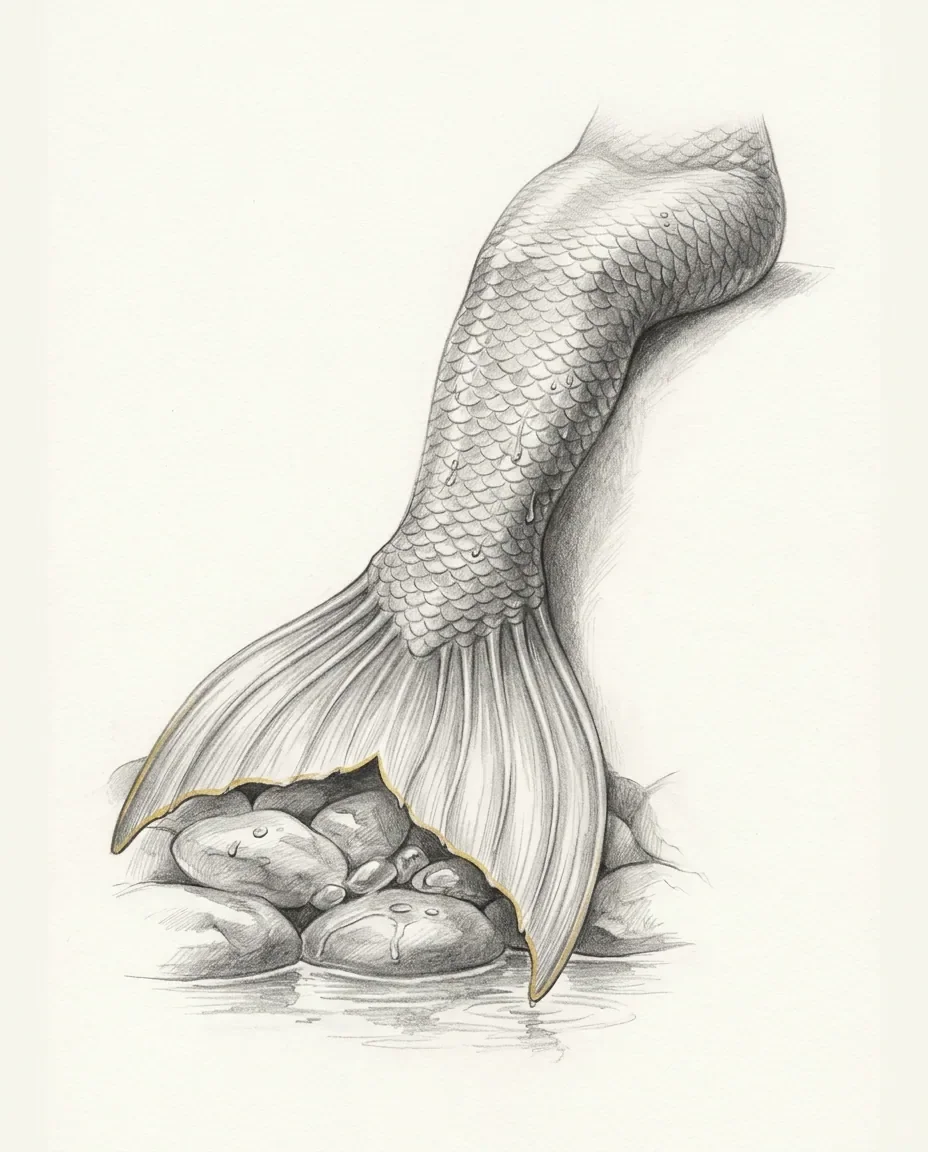
An erotic or romantic attraction to mermaids and merfolk, or to mermaid imagery and embodiment. It spans fantasy attraction to the half-human, half-fish figure and an overlapping real-world hobby, mermaiding, in which people swim in costume tails.
- Prevalence
- Rare
- Category
- Identity & Transformation
- Domain
- Sexual interest
- Confidence
- Low confidence
- Status
- Not a recognized clinical diagnosis; a fantasy/aesthetic niche interest that overlaps the largely non-sexual mermaiding hobby.
- Also known as
- merfolk attraction, mermaiding, siren fetish, mer attraction
- Added
- 26 Jun 2026
- Updated
- 22 Aug 2026
Featured in
Overview
Mermaid fetish is an erotic or romantic attraction to mermaids and merfolk, the half-human, half-fish figures of folklore, or to mermaid imagery and embodiment more broadly. It has two overlapping faces: a fantasy attraction to the mer figure (sometimes called merfolk attraction or, after the seductive sea-women of myth, a siren fetish), and an enacted aesthetic interest tied to mermaiding, the real-world hobby of swimming in a costume tail. This article covers the figure's long cultural history, the modern mermaiding subculture, and the appeal behind both.
Definition & scope
The interest runs from the purely imaginative to the embodied. At one end is attraction to the mermaid or merman as a fantasy partner: a being that is beautiful, aquatic and not-quite-human. At the other is the appeal of mermaid embodiment: the tail, the underwater grace, and the act of becoming or admiring a mer. It overlaps the broader transformation fetish (the appeal of a body changed into something other), monster fetish and teratophilia where the mer is read as a non-human creature, and the costume-and-embodiment cultures adjacent to the furry fandom. Mermaiding as a hobby is mostly not sexual: most participants pursue it for performance, fitness, fantasy play and aesthetics, and the fetish is a distinct, smaller overlay.
Examples
What the term covers. Attraction to mermaid and merman characters as they appear in folklore, film, illustration and fan fiction; the pull of the tail and of a body that is half-human; role-play in which one partner takes a mer persona; and, on the embodied side, admiring or taking part in mermaiding, where the tail, the underwater movement and the photographs of it are the point. Most of the interest lives in art, fiction and costume rather than in anything a partner does.
What it does not cover. Mermaiding itself is not a fetish: the overwhelming majority of people who swim in tails do it for performance, fitness, fantasy play and aesthetics, and the erotic interest is a distinct and far smaller overlay. Aquaphilia attaches arousal to water and immersion rather than to the figure in it. Cosplay fetish turns on embodying a named fictional character. Monster girl covers feminine characters who keep a human appearance while adding non-human traits, an archetype the mermaid sits at the edge of, and teratophilia covers beings read as monstrous, a register most mermaid enthusiasts would not recognise. Transformation fetish centres on the change into a mer rather than on the mer.
How the word is used. "Mermaid fetish" is internet-era vernacular with no clinical counterpart; it appears in neither DSM-5-TR nor ICD-11, and no sexological survey measures it. The hobby's own words, mermaiding, mer and merfolk, carry no sexual sense whatever, which is worth knowing before reading them that way: someone who calls themselves a mer is describing what they do in a pool.
History & origins
The mer figure in culture
The mermaid is one of the most durable images in world folklore, and its seductive register is old.
- Antiquity: The oldest documented mermaid-like deity is the Syrian goddess Atargatis (Derceto), described by Diodorus Siculus as taking the form of a human-headed fish; Mesopotamian art from the Old Babylonian period onward shows fish-tailed figures (the merman kulullu).
- Classical to medieval: The Greek siren, originally a bird-woman whose song lured sailors to their deaths, was reimagined by the classical and medieval periods as a fish-tailed sea-woman, fusing seduction and danger into the figure that later became the mermaid.
- 1837: Hans Christian Andersen published The Little Mermaid, which fixed the beautiful, longing, romantic mermaid in the modern Western imagination; Disney's 1989 adaptation carried it to a mass audience.
Across these traditions the mermaid carried a charge of beauty, danger and the lure of the sea, the cultural raw material the attraction draws on.
Mermaiding as a modern subculture
The embodiment side has a more recent, datable history.
- 1947: The Weeki Wachee Springs attraction in Florida staged its first underwater "mermaid" show in October, choreographed by former US Navy diver Newton Perry, who hid air hoses in the scenery so performers appeared to breathe underwater. It became a Florida state park in 2008.
- c. 2003–2004: The first professional freelance mermaids appeared, most visibly Hannah Fraser ("Hannah Mermaid"), who built custom tails for underwater performance and ocean-conservation work and raised the activity's profile internationally.
- 2012: The Mermaid Kat Academy opened as one of the first dedicated mermaid schools, marking the shift from lone performers to organised instruction.
- 2000s to present: The hobby grew with the spread of monofins and, later, custom silicone tails (high-end platinum-cure tails often cost well over $1,000 and weigh 25 to 60 pounds out of water), supported by conventions, classes and a sizable online community of "mers." Netflix's 2023 docuseries MerPeople gave the subculture mainstream visibility.
In practice
The interest is expressed through mermaid art and fiction, character role-play, and admiration of, or participation in, mermaiding: costume tails, underwater photography and performance. For most people in mermaiding the activity is aesthetic and recreational rather than sexual. Where the fetish overlay is present it centres on the figure's beauty and the fantasy of the aquatic, transformed body, expressed through fantasy and media rather than explicit acts.
Psychology
What is the appeal?
Proposed accounts tie it to the mermaid's long association with beauty and seductive danger, to the appeal of transformation and an other-than-human body, and to the sensory romance of water and weightlessness. The siren tradition adds a specific charge of allure mixed with risk. As with most niche fantasy attractions, dedicated empirical study is absent, so these explanations are interpretive. The embodiment interest also connects to the documented pleasures of costume, performance and identity play seen in adjacent communities.
Prevalence & culture
How common is it?
No prevalence survey isolates mermaid attraction, and it does not feature in the major sexual-fantasy studies such as Joyal, Cossette & Lapierre (2015), so any figure is low-confidence. The hobby of mermaiding, by contrast, has a visible and growing presence, with professional performers, commercial tail-makers, conventions and large social-media followings. Cultural visibility is high thanks to centuries of mermaid imagery and modern films and shows, though that visibility tracks the mermaid as an icon far more than any sexual interest.
Safety, consent & law
As a fantasy attraction the interest raises no consent or legal concerns, since no real, living partner is involved. The associated hobby does carry real physical risk: swimming with the legs bound in a tail raises drowning danger, especially for children, and breath-hold (freediving) performance adds risk of hypoxic blackout. Reputable mermaiding instruction stresses supervision, training and never swimming a tail alone, the standard water-safety framing.
Common questions
Is mermaiding a fetish?
For most people, no. Mermaiding is a swimming and performance hobby built on monofins, costume tails, underwater photography, classes and conventions, and it is pursued for fitness, fantasy play and aesthetics. A sexual interest in mermaids exists and sometimes overlaps with it, but the two are separate, and assuming everyone in a tail shares the second is the most common misreading of the community.
What is the difference between a mermaid fetish and a transformation fetish?
The object of interest differs. A mermaid fetish centres on the figure: the mer as a beautiful, aquatic, not-quite-human being. A transformation fetish centres on the process of a body changing form, where becoming a mermaid is one destination among many others. Anyone who finds the moment of change more compelling than the finished mer belongs to the second category rather than the first.
Is swimming in a mermaid tail dangerous?
Yes, meaningfully so. A tail binds the legs together, which removes the swimmer's normal ability to kick free or tread water and raises drowning risk accordingly, a particular concern where children are involved. Performance mermaiding adds breath-hold freediving, which carries a risk of hypoxic blackout. Reputable instruction insists on training, direct supervision and never swimming a tail alone.
How much does a mermaid tail cost?
The range is wide. A fabric tail worn over a monofin is inexpensive and is where most beginners start. The high-end platinum-cure silicone tails used by professional performers commonly run well over $1,000 and weigh roughly 25 to 60 pounds out of the water, which is part of why they are treated as specialist equipment rather than as swimwear.
Are mermen part of this too?
Yes. The interest is usually described as covering merfolk generally rather than mermaids only, and the male figure is ancient: Mesopotamian art from the Old Babylonian period onward depicts the fish-tailed merman known as the kulullu. The modern hobby is likewise not women-only, though mermaid imagery dominates the popular and commercial record by a wide margin.
Why are mermaids associated with seduction and danger?
The association is inherited rather than modern. The Greek siren began as a bird-woman whose song lured sailors to their deaths and was reimagined by the classical and medieval periods as a fish-tailed sea-woman, fusing allure with lethality into the figure that became the mermaid. Hans Christian Andersen's 1837 tale then layered longing and romance on top, and both registers survive in the image today.
Is a mermaid fetish a paraphilia or a disorder?
No. It is not a recognised clinical diagnosis and appears in neither DSM-5-TR nor ICD-11. As a fantasy-directed interest it involves no real partner, so it raises no consent question at all. Like any interest, it would warrant clinical attention only if it caused the person genuine distress or impairment, a threshold that has nothing to do with how unusual the object of the interest is.
- Transformation Fetish33/100Metamorphophilia · Identity & TransformationA transformation fetish is an erotic or imaginative fascination with the process of a body changing form into something else. That might be an animal, an object, or another kind of being. The appeal centers on the metamorphosis itself rather than the end state.33
- Monster Fetish38/100Teratophilia · Identity & TransformationAn erotic or romantic attraction to monstrous, mythical, alien, or otherwise non-human creatures as portrayed in fiction, art, games, and film. Sometimes called teratophilia, it centers on imagined fantasy beings rather than any real person or animal.38
- Teratophilia35/100teratophilia · Identity & TransformationAn erotic or romantic attraction to beings perceived as monstrous, deformed, or non-human, ranging from fictional creatures to real people. Werewolves and demons sit at one end, people with unusual physical features at the other. It is mostly fantasy- and media-driven.35
- Furry Fandom54/100Identity & TransformationMembership in the furry fandom, the community organised around anthropomorphic animal characters that blend human and animal traits. It spans fan art, writing, costuming and conventions and centres on creating a character, a fursona. Most participation is social and creative; an erotic dimension is optional for some.54
- Alien Fetish25/100Exophilia · Identity & TransformationAn erotic or romantic attraction to fictional extraterrestrial or otherworldly beings, expressed through media, art, and storytelling. No real entity is involved. A fantasy-driven interest closely tied to science-fiction fandom; not a recognized clinical paraphilia.25
- Hucow27/100Identity & TransformationA role-play and BDSM subculture in which a submissive partner takes on the persona of a dairy cow, overseen by a dominant "farmer" or "bull." Scenes combine milking and lactation play, restraint and breeding themes. It is a consensual objectification fantasy involving no real animals.27
English mermaid combines Middle English mere ("sea, lake") with maid ("young woman"), literally "sea-maiden"; the alias siren derives from the Greek seiren, the song-luring sea-creatures of myth.
fantasy · transformation · aquatic · embodiment
Prevalence is computed from the entry's cited population estimate. Rows marked ESTare indicative editorial estimates scored against a fixed anchor rubric, not measured quantities. Method & anchors: methodology.
Rare · ≈ 1 in 1,000
- 01Mermaid, WikipediaCultural history of merfolk: Atargatis/Derceto as the oldest mermaid-like deity, Mesopotamian fish-tailed figures (kulullu), the siren's transformation, and the figure's seductive register.
- 02Mermaiding, WikipediaThe modern hobby/subculture: first professional freelance mermaids c. 2004, Hannah Mermaid, monofins and silicone tails (cost/weight), Weeki Wachee Springs (1947), and drowning/freediving safety risks.
- 03The Little Mermaid, WikipediaHans Christian Andersen's 1837 tale that fixed the romantic mermaid archetype in modern Western culture.
- 04Joyal, Cossette & Lapierre (2015), What Exactly Is an Unusual Sexual Fantasy?Major sexual-fantasy prevalence survey in which mermaid attraction does not feature, illustrating its rarity and absence from mainstream prevalence data.
- 05First mermaid show at Weeki Wachee Springs, Florida Historical SocietyConfirms the first Weeki Wachee mermaid show in October 1947 and Newton Perry's hidden air-hose technique that let performers appear to breathe underwater.