Monster Girl
Added 26 Jun 2026 · Updated 22 Aug 2026
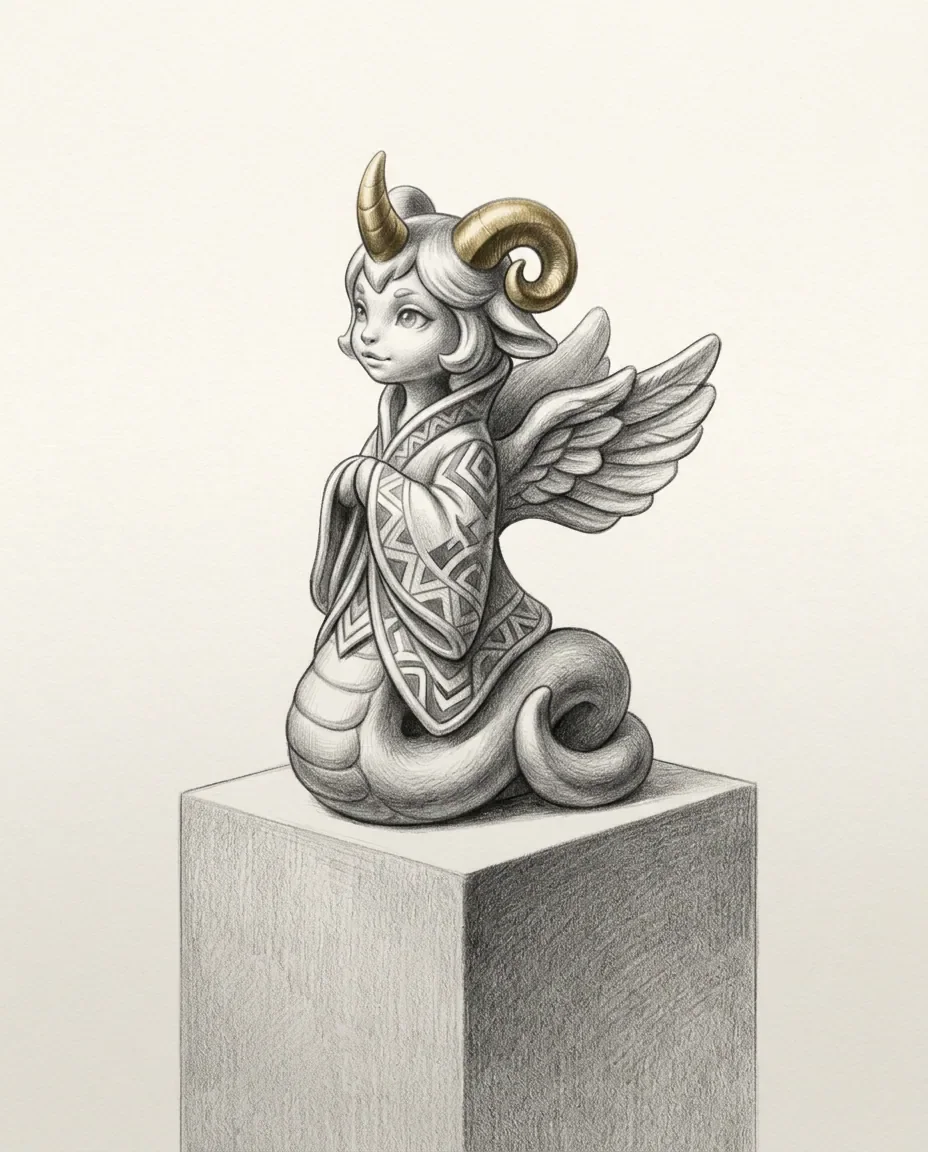
Monster girl (Japanese: monsutā musume) is a fiction archetype of feminine characters who keep an attractive human appearance while adding monster traits. Horns, scales, wings and serpentine tails are typical, and the term also covers the attraction to the archetype. It is the cute, moe wing of monster attraction.
- Prevalence
- Uncommon
- Category
- Identity & Transformation
- Domain
- Sexual interest
- Confidence
- Low confidence
- Status
- Not a recognized DSM-5-TR or ICD-11 diagnosis. A fandom genre and benign fantasy attraction directed at drawn fictional characters.
- Also known as
- monstergirl, mamono, 魔物娘, monster musume
- Added
- 26 Jun 2026
- Updated
- 22 Aug 2026
Featured in
Overview
Monster girl (Japanese: モンスター娘, monsutā musume; also written 魔物娘, mamono musume) is a fiction archetype, and the attraction to it, of female characters who keep an appealing human appearance while adding the features of a mythical or monstrous creature: horns, scales, wings, a serpentine tail, animal ears or insect parts. It is the cute, "moe" wing of monster attraction, distinct from the broader, often darker teratophilia (attraction to monsters in general). This article covers the archetype, its growth out of moe anthropomorphism, the works that defined it, and how it differs from generic monster fetishism.
Definition & scope
A monster girl is, per the Wikipedia definition, "a fictional trope of a girl or young woman who is or shares visual traits with a monster." The defining balance is partial humanity: enough recognisable human (and conventionally attractive) features to read as a person, combined with selected non-human traits. Common types include lamia (snake-bodied), harpies (winged), centaurs, slime girls, arachne (spider) and dragon girls.
That balance is also what separates the archetype from its neighbours, which the examples below set out. This entry concerns adult depictions and the attraction among adults only.
Examples
What the term covers. Depictions, and taste in depictions: there are no monster girls outside fiction to be attracted to. The standard bestiary is stable across the genre: lamia with a serpent's lower body, harpies whose arms are wings, arachne, centaurs, dragon girls, and slime girls whose entire body is the non-human element. The design rule is just as consistent: a recognisably human face and silhouette carry the character, with one or two legible creature traits added on top, and pushing the ratio further toward the creature stops the figure reading as a monster girl at all. The interest is expressed the way any fandom taste is: reading, drawing, writing, commissioning art, and organising all of it through genre tags.
What the term does not cover. Kemonomimi characters, catgirls and their relatives, carry only ears and a tail on an otherwise unmodified human body: a far lighter touch than the half-and-half monster girl. Scalies and the wider furry fandom start from anthropomorphic animals rather than mythological creatures. Mermaid, succubus and vampire figures belong to older single-creature traditions the archetype borrowed from rather than invented. Teratophilia and monster fetishism reach toward the frightening and the grotesque, which the moe framing deliberately does not, and tentacle erotica is a separate trope that often shares a page with the archetype without being it. Because the figures are drawn, this is attraction to characters (the territory of fictosexuality) and not to any person.
How the word is used. Fandom vocabulary throughout. Japanese sources write monsutā musume or mamono musume; English-language art and fiction communities use "monster girl" as a genre tag, and it labels the works at least as often as the attraction. Every term in the family originated with fans and creators; none came from sexology, and no diagnostic manual has a category for it.
History & origins
Moe anthropomorphism and early roots
The archetype grew out of moe anthropomorphism, the otaku-culture habit of recasting non-human things as cute girls. An important precursor was the Touhou Project series, begun in 1998, which depicted yōkai and other supernatural beings as cute girls. Through the 2000s this fed a wider trend of designing cute girls with monster traits, drawing also on the female "monster" allies of role-playing games such as Shin Megami Tensei.
The works that named the genre
Two creators anchored the modern form:
- 2007: the artist Okayado coined monster musume while posting one-page monster-girl comics to an online forum thread. This grew into the manga Monster Musume no Iru Nichijō (Monster Musume: Everyday Life with Monster Girls), serialised from March 2012 in Monthly Comic Ryū, whose mainstream success is widely credited with an "explosion" of monster-girl content.
- Late 2000s onward: the artist Kenkou Cross began posting the illustrated Monster Girl Encyclopedia online, later compiled into published volumes. It catalogues a large bestiary of monster-girl species with detailed lore and became a foundational reference for the fandom.
Monster Girl Quest!, a visual-novel game series, further popularised the genre. Sub-fandoms branched off, most visibly slime girls, inspired by characters such as Suu in Monster Musume.
In practice
The interest is expressed by consuming and creating fiction: manga, anime, visual novels, illustration, fan art and written stories, organised through fandom communities and tagging. Because the figures are imaginary, the appeal is entirely media- and fantasy-based. Many fans engage with the archetype as part of a wider taste for fantasy worlds and creature design rather than as an exclusive focus.
Psychology
There is no dedicated clinical research, so accounts are interpretive. Proposed drivers include the appeal of novelty and the exotic, the safe distance fantasy gives to non-human partners, and the specific charm of combining cute or attractive human features with striking creature traits. The moe framing matters: monster girls are typically designed to be endearing and sympathetic, which sets the interest apart from attraction to the frightening or grotesque. Like teratophilia, it is best read as one facet of a broader fantasy-and-creature taste rather than a fixed orientation.
Prevalence & culture
No population survey isolates monster-girl attraction, so its scale is inferred from fandom activity rather than measured. Its visibility is substantial within anime and manga culture: Monster Musume reached mainstream commercial success and an anime adaptation, the Monster Girl Encyclopedia sustains a large online following, and "monster girl" is a well-populated genre tag across art and fiction communities. Outside that ecosystem its footprint is modest.
Variations & related interests
Monster girl connects to several neighbouring entries: the general fictional-creature draw of teratophilia and monster fetishism, the alien and tentacle tropes, the size theme of the giantess fetish, and the broader attraction to drawn characters described under fictosexuality. The shared thread is desire oriented toward imagined, partly non-human figures.
Common questions
What is the difference between a monster girl and teratophilia?
Register, mostly. Teratophilia is the broad attraction to monstrous figures and takes in the genuinely frightening, deformed and grotesque. The monster girl archetype is deliberately engineered to be cute and sympathetic: the moe design language keeps the face, the proportions and the personality appealing, and treats the creature traits as charm rather than menace. Someone can hold both interests, but the aesthetics they are built on point in opposite directions.
Is a catgirl a monster girl?
Usually not, though fandom usage is loose enough that the tags sometimes travel together. A catgirl belongs to kemonomimi: a human body with animal ears and often a tail added, and nothing else changed. A monster girl reworks the body itself: a serpent's lower half, wings in place of arms, a torso that ends in slime. The test people apply in practice is whether the character would still read as human from the neck down.
Is monster girl a genre or a fetish?
The phrase does both jobs, which is a frequent source of confusion. It names a body of fiction (manga, visual novels, illustration, games) with recognisable conventions and a shared bestiary, and it names a taste for that fiction. Most people using the tag are describing what they read or draw. Reading the genre implies nothing about whether the reader holds the attraction, and the communities make no attempt to separate the two.
Is being attracted to monster girls a disorder?
No. It is not a recognised diagnosis in DSM-5-TR or ICD-11, and there is no clinical literature on it at all. The attraction is directed at drawn characters, so the two conditions those manuals use to mark an interest as disordered (serious distress or impairment for the person, or harm to a non-consenting party) have nothing to attach to. Fandom taste in fictional character design is not a psychiatric category.
Does liking monster girls mean you are into furries?
No, though plenty of people are in both fandoms and the art circles overlap heavily. The furry fandom is built on anthropomorphic animals and has its own decades-old culture, conventions and artistic conventions; the monster girl archetype comes out of Japanese moe anthropomorphism and draws on mythological creatures. Scalies, who focus on reptiles and dragons, sit closest to the boundary between the two.
Is monster girl content legal?
The archetype as described here concerns wholly fictional adult characters, and depictions of adults raise no legal issue between consenting adults. That is a real question worth answering directly, because moe design conventions are stylised and some readers assume otherwise. Material depicting minors is not part of this archetype, is not covered by this entry, and is a criminal offence in many jurisdictions regardless of whether it is drawn.
From the blog
- Teratophilia35/100teratophilia · Identity & TransformationAn erotic or romantic attraction to beings perceived as monstrous, deformed, or non-human, ranging from fictional creatures to real people. Werewolves and demons sit at one end, people with unusual physical features at the other. It is mostly fantasy- and media-driven.35
- Monster Fetish38/100Teratophilia · Identity & TransformationAn erotic or romantic attraction to monstrous, mythical, alien, or otherwise non-human creatures as portrayed in fiction, art, games, and film. Sometimes called teratophilia, it centers on imagined fantasy beings rather than any real person or animal.38
- Alien Fetish25/100Exophilia · Identity & TransformationAn erotic or romantic attraction to fictional extraterrestrial or otherworldly beings, expressed through media, art, and storytelling. No real entity is involved. A fantasy-driven interest closely tied to science-fiction fandom; not a recognized clinical paraphilia.25
- Tentacle Erotica39/100Identity & TransformationAn erotic interest in fantasy scenarios featuring tentacled creatures such as octopuses, plants, aliens, or monsters. It is expressed almost entirely through art, animation, and fiction rather than any real-world act. It centers on imaginative monster and transformation themes.39
- Giantess Fetish31/100Macrophilia · Identity & TransformationMacrophilia is an erotic or romantic fascination with giant or vastly oversized beings, most commonly a giant woman (giantess). The appeal centers on extreme size difference and the fantasy of being tiny in relation to a much larger figure.31
- Fictosexuality53/100Identity & TransformationFictosexuality is sexual attraction directed at fictional characters, such as figures from anime, games, novels or film. Related terms include fictoromance (romantic attraction) and fictophilia, the broader umbrella for strong, lasting love or desire for a fictional character.53
From Japanese monsutā musume (モンスター娘), combining the English loanword 'monster' (monsutā) with musume ('girl, daughter'); also written mamono musume (魔物娘), using the kanji 魔物 ('demon, monster') for the same idea. The term 'monster musume' was coined by the artist Okayado around 2007.
non-human attraction · moe anthropomorphism · anime & manga fantasy
Prevalence is computed from the entry's cited population estimate. Rows marked ESTare indicative editorial estimates scored against a fixed anchor rubric, not measured quantities. Method & anchors: methodology.
Uncommon · ≈ 1 in 100
- 01Monster girl, Wikipediadefinition of the monster-girl trope, moe anthropomorphism, the human-plus-creature design, and the genre's growth following erotic series such as Monster Musume
- 02Monster Musume, WikipediaOkayado's coinage and the Monster Musume no Iru Nichijo manga (serialised from 2012 in Monthly Comic Ryu) and its role in popularising the genre
- 03Monster Girl, Japanese with Animeetymology of monsutaa musume / mamono musume, the RPG-monster and Touhou (1998) roots, and the 2000s moe-anthropomorphism trend behind the archetype