Rigger / Rope Top
Added 10 Jul 2026 · Updated 22 Aug 2026
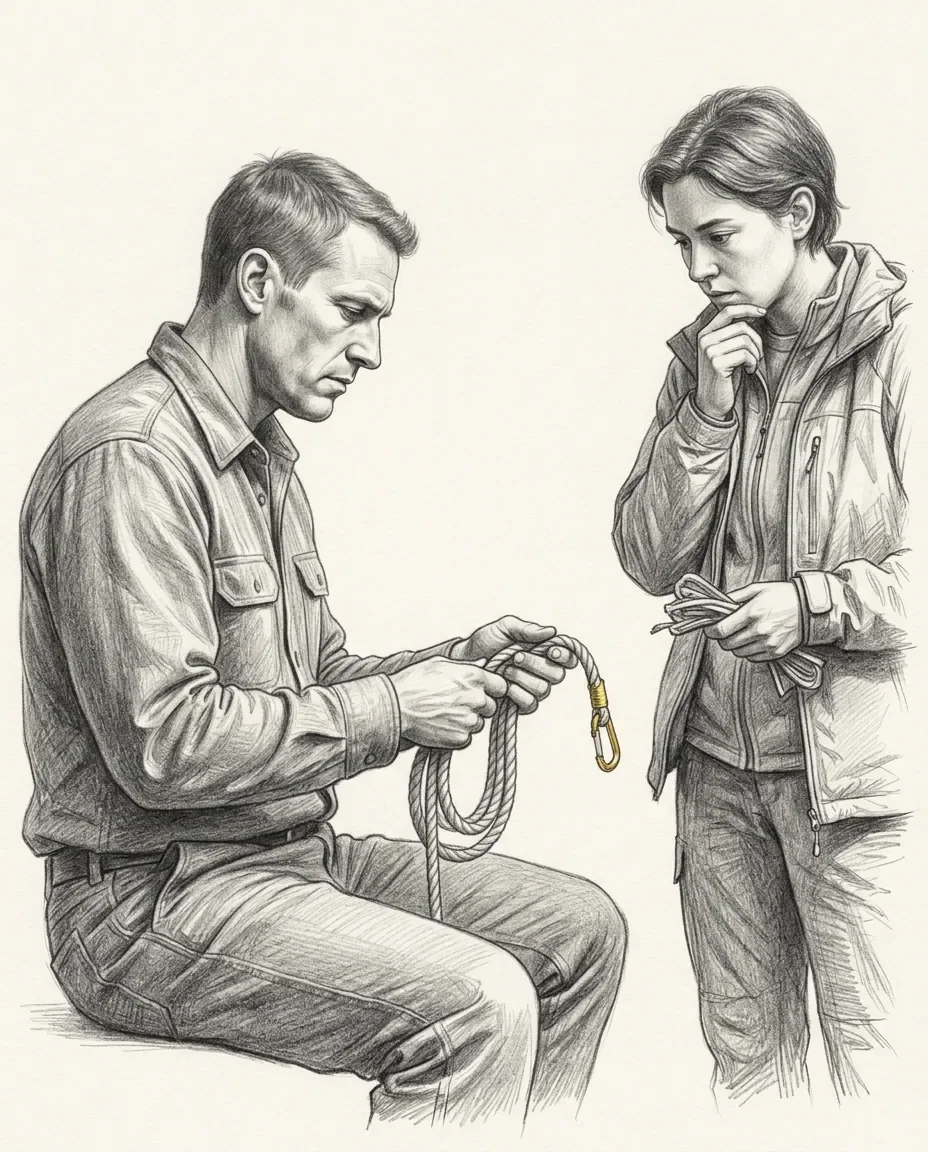
The role of the person who applies rope to restrain, position, or suspend a partner in bondage. A rigger or rope top is the active, tying half of a rope scene, paired with the rope bottom who is tied.
- Prevalence
- Common
- Category
- Power, Roles & Scenarios
- Domain
- Sexual interest
- Confidence
- Medium confidence
- Status
- A consensual BDSM role, not a clinical condition; treated as benign variation absent distress, impairment, or non-consent.
- Also known as
- rigger, rope top, bondage rigger, nawashi, bakushi
- Added
- 10 Jul 2026
- Updated
- 22 Aug 2026
Featured in
Overview
A rigger, also called a rope top, is the person who applies rope to restrain, position, or suspend a partner in bondage. It names a role rather than a fetish object: the rigger is the active, tying half of a rope scene, paired with the "rope bottom" who is tied. This article covers what the role involves, where its terminology comes from, the history of the rope craft it draws on, and the skills and responsibilities it carries in the wider rope-bondage community.
Definition & scope
The rigger is defined by the act of tying rather than by any single outcome. The same person may work at a range of intensities, from simple decorative ties and floor work to load-bearing suspension bondage. The role is orthogonal to dominance: many riggers are also the dominant partner, but a rigger can equally be a service top who ties for a bottom's benefit without directing the scene. The complementary role, the person receiving the rope, is usually called the rope bottom (older slang such as "rope bunny" has fallen out of favour as the scene has broadened).
Terminology
English borrows "rigger" from the general sense of one who works with ropes, rigging, and tackle, carried across into the BDSM scene during the late twentieth century. The Japanese rope tradition uses its own honorifics: as noted on Wikipedia's Japanese bondage article, a recognised master of the craft is called a nawashi (縄師, "rope master") or bakushi (縛師, "bondage master"). These titles are generally reserved for a small number of practitioners recognised for skill in Japan, with no formal institution conferring them.
Examples
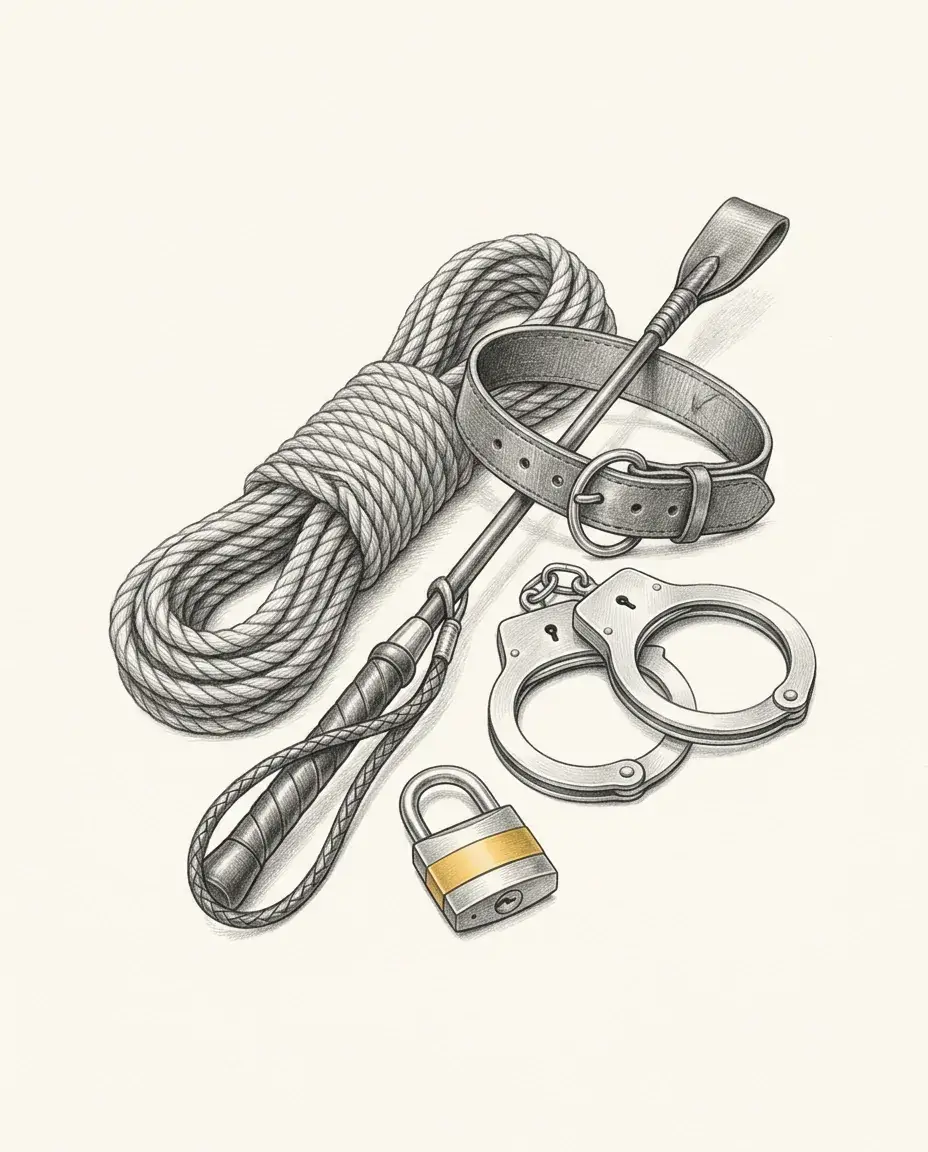
What the term covers. The role at every level of the craft: someone who ties a decorative chest harness on the floor and goes no further; someone who builds positions such as a hogtie or a spread-eagle from rope or cuffs; someone working within the Japanese shibari idiom; and the much smaller number who take a partner's weight off the ground in suspension. It covers riggers who are also the dominant partner and service tops who tie to the bottom's brief, riggers who tie for photography or performance, and the large majority who never tie outside their own home.
What the term does not cover. It is not a synonym for bondage, which names the activity rather than the person, nor for shibari, one tradition a rigger may or may not work in. It does not describe the person being tied: that role is the rope bottom, and the older slang for it has largely fallen away. Nor is it a title of competence: nothing certifies a rigger, and the word carries no assurance that its holder knows where the radial nerve runs. "Rigger" also has an ordinary occupational sense (people who work with lifting gear, ships' rigging and stage flying systems), which is exactly where the kink usage borrowed it.
How the word is used. All three names are community vocabulary and none is clinical; consensual roles of this kind are absent from DSM-5-TR and ICD-11 alike. The two English terms carry slightly different weight ("rigger" leaning technical and load-bearing, "rope top" leaning relational), but they are used interchangeably often enough that the distinction should not be pressed. The Japanese honorifics nawashi and bakushi work differently: they are conferred by reputation rather than adopted, and self-applying them outside that context is generally regarded as misuse.
History & origins
The rigger's craft is young as a named role but old as a practice. Two threads feed it: the Japanese rope tradition that produced shibari and kinbaku, and the Western bondage scene that adopted, renamed, and systematised it.
The Japanese rope lineage
Japanese erotic rope work grew out of hojojutsu, the martial art of restraining and transporting prisoners with cord, practised from the Edo period (roughly 1600 to 1868). As Tokyo Weekender's history of shibari records, those functional restraint techniques gradually crossed into erotic art through kabuki theatre and ukiyo-e woodblock prints.
- 1600s to 1860s: hojojutsu develops as a codified system of tying captives, its knots and wraps carrying signals of rank and offence.
- 1882 to 1961: the painter and researcher Seiu Ito, generally recognised as the father of kinbaku, studies hojojutsu and adapts it into kinbaku-bi ("the beauty of tight binding"), founding the taut, emotionally charged style that still defines Japanese rope.
- August 1952: the term kinbaku is formally established in the magazine Kitan Club, which alongside Yomikiri Romance published the early bondage photography that carried the form to a wider Japanese audience in the 1950s.
- 1960s onward: touring performers such as Eikichi Osada stage live rope shows, and the practitioners who lead them come to be called nawashi or bakushi.
Western adoption and the modern rigger
Kinbaku reached Western BDSM communities in the late twentieth century, spreading through imported photography, translated instruction, and the internet forums of the 1990s and 2000s. As the anglophone scene absorbed it, it needed a plain word for the person doing the tying: "rope top" borrowed the BDSM sense of top (the active partner), while "rigger" carried over the nautical and stagecraft sense of one who works with rigging. The two terms now sit alongside the Japanese honorifics, with "rigger" favoured for the technical, load-bearing side of the work and "rope top" stressing the relational, scene-running side.
In practice
A rigger negotiates the scene, chooses and inspects the rope (natural fibres such as jute and hemp are traditional in shibari, with softer cotton and synthetics also used), and applies ties while continuously monitoring the bottom. Core responsibilities are practical and safety-driven:
- Anatomy awareness: placing wraps away from vulnerable nerves, especially at the upper arm and wrist, to avoid compression injuries.
- Communication: agreeing limits and a safeword or safe signal, and checking circulation, sensation, and comfort throughout.
- Readiness: keeping safety shears within reach and never leaving a tied bottom unattended.
The more demanding the tie, the more these obligations matter: suspension in particular concentrates load on the body and raises the stakes of a poorly placed wrap.
Skill, craft & culture
Rope topping is a learned craft with its own workshops, teachers, and etiquette. Riggers progress from ground ties to partial and full suspension over time, and the community places strong emphasis on consent, negotiation, and technical education. The role carries visible prestige in performance shibari, fine-art and editorial rope photography, and touring instruction, though the great majority of riggers tie privately rather than publicly.
Psychology
The appeal of the role blends technical mastery, aesthetic composition of the body in rope, and the trust and care of holding another person's safety in one's hands. For many riggers the satisfaction is as much craft and connection as eroticism. Being a rope top is not a clinical category: the DSM-5-TR and ICD-11 treat consensual BDSM roles as benign variation, not disorder, absent distress, impairment, or non-consent.
Safety, consent & law
Because the rigger controls the physical risk, the role is where much of bondage safety lives. The best clinical evidence on rope injury comes from a 2023 case series in Cureus (Khodulev et al.), which found acute compression of the radial nerve to be the most common injury from Japanese rope bondage, present in 90% of the injured people studied, underlining why wrap placement is the rigger's central skill. Rope work is lawful between consenting adults in most jurisdictions, but consent has limits: the English R v Brown ruling held that consent is not always a defence to bodily harm, and any non-consensual restraint is a serious crime. Attentive aftercare is part of the rigger's role once the rope comes off.
Related roles & interests
The rigger pairs with the rope bottom and connects to dominance and submission dynamics, to the rope traditions of shibari, and to specific positions and forms such as spread-eagle bondage, hogtie bondage, and suspension bondage.
Common questions
Is a rigger always the dominant partner?
No. The roles are orthogonal. Many riggers do direct the scene, but a service top ties to the bottom's specification without taking charge of anything else, and a rope bottom can be the one steering the session. The confusion is understandable, since both are described as "topping," but tying is a technical function and dominance is a relational one, and either can exist without the other.
What should someone learn first before tying a partner?
Negotiation and checking in, before any knot: what the bottom wants, what they will report, and how they will signal when speech is difficult. Then anatomy (where nerves run close to the surface and which placements to avoid), followed by a small number of ties done reliably rather than many done approximately. Safety shears live within reach from the first session onward. Suspension is not something to learn from video.
What are the signs that a tie needs to come off immediately?
Numbness, pins and needles, a cold or discoloured hand or foot, loss of grip strength, sharp or shooting pain rather than dull pressure, any difficulty breathing, and any distress the bottom cannot put into words. The complication is that someone deep in a scene may not notice, or may not want to interrupt it, so checking sensation and grip at intervals is the top's job rather than something to wait for the bottom to raise.
How long does a rope nerve injury take to heal?
That is a question for a clinician rather than a rope teacher, and it depends entirely on how much compression occurred and where. What matters practically is the threshold for seeking help: numbness, weakness or a loss of fine control that outlasts the scene should be assessed medically rather than waited out, and the tie that caused it should be reviewed before it is used again.
Is suspension more dangerous than floor work?
Considerably. Taking weight off the ground concentrates load onto whatever the rope crosses, so nerve and circulation problems develop faster and with less warning, and hardware, anchor points and the structure overhead all become failure points that ground work simply does not have. Emergency release is also harder from the air. Suspension is taught as an advanced progression after ground ties for exactly these reasons.
Who is responsible if something goes wrong in a rope scene?
Both people, but not equally and not in the same way. The bottom agrees the limits and reports what they feel; the top holds the physical risk, chooses every placement, and controls how fast the rope comes off. In practice that means a top cannot treat silence as consent, or an absence of complaint as an absence of injury; the checking has to be active, and it does not stop when the scene becomes absorbing.
Can you be a rigger without being into BDSM?
Many people approach rope as craft, aesthetics or performance rather than as eroticism, and some tie almost exclusively for photography or stage work. The rope does not know the difference: consent, negotiation, nerve placement, monitoring and emergency release apply identically whether the framing is sexual, artistic or purely technical, and an injury in an art context is the same injury.
- Bondage86/100Acts & ActivitiesConsensual binding or restraint of a partner with rope, cuffs, tape or other materials for erotic, aesthetic or sensory pleasure. It is the "B" of BDSM and one of the most widely fantasised-about kinks.86
- Shibari (Japanese Rope Bondage)59/100Sensation & PainShibari is the Japanese art of binding a partner with rope into intricate patterns, derived from kinbaku ("tight binding"). It blends visual artistry, sensation and restraint with the trust between the person tying (rigger) and the bound partner (bottom).59
- Suspension Bondage49/100Sensation & PainA form of consensual bondage in which a restrained person is partly or fully lifted off the ground from one or more overhead suspension points. Rope, webbing, cuffs, or chain carry the load. It is a technically demanding, higher-risk practice within the wider rope-bondage and BDSM world.49
- Spread-Eagle Bondage54/100Sensation & PainA consensual bondage position in which a person's wrists and ankles are secured to four separate anchor points, holding the limbs wide apart. The body is immobilised in an open, exposed posture. It is one of the most recognisable ties in BDSM.54
- Hogtie Bondage51/100Sensation & PainA consensual bondage position in which a person's wrists and ankles are bound together behind the back, drawing the limbs toward each other. The body is held prone and immobile. The term is borrowed from the livestock practice of tying an animal's legs together.51
- Dominance85/100Power, Roles & ScenariosTaking the leading, controlling role in a consensual power-exchange dynamic. One of the two halves of dominance and submission (D/s) within BDSM, in which a person directs the scene, sets the rules, and guides a willing partner who has agreed to yield control.85
"Rigger" borrows the general English sense of a person who works with ropes and rigging (ultimately from Scandinavian roots for the cordage of a ship). "Rope top" combines "rope" with the BDSM sense of "top," the active partner in a scene. The Japanese equivalents are *nawashi* (縄師, "rope master") and *bakushi* (縛師, "bondage master").
BDSM roles · rope bondage · top/bottom dynamics · shibari
Prevalence is computed from the entry's cited population estimate. Rows marked ESTare indicative editorial estimates scored against a fixed anchor rubric, not measured quantities. Method & anchors: methodology.
Common · ≈ 1 in 20
- 01Japanese bondage (Shibari/Kinbaku), Wikipedianawashi and bakushi terminology for a recognised rope master; jute/hemp rope tradition; hojojutsu origins; Seiu Ito as father of kinbaku; kinbaku term formalised in Kitan Club (August 1952); radial nerve damage as most common reported injury
- 02A History of Shibari: The Evolution of Japanese Rope Bondage, Tokyo Weekenderhojojutsu prisoner-restraint origins in the Edo period; kabuki and ukiyo-e influence; Seiu Ito's development of kinbaku-bi; spread of the form to Western BDSM communities
- 03Khodulev et al. (2023), Acute Radial Compressive Neuropathy: The Most Common Injury Induced by Japanese Rope Bondage, Cureusradial nerve compression is the most common injury from Japanese rope bondage, present in 90% of injured individuals studied, underlining the rigger's responsibility for wrap placement
- 04R v Brown / Operation Spanner, Wikipedialegal framing that consent may not be a defence for bodily harm in some jurisdictions
- 05DSM-5-TR, American Psychiatric Associationconsensual BDSM roles are not pathologised absent distress, impairment, or non-consent
- 06ICD-11, World Health Organizationconsensual BDSM roles are not classified as a disorder absent distress or harm