Shibari (Japanese Rope Bondage)
Added 21 Jun 2026 · Updated 22 Aug 2026
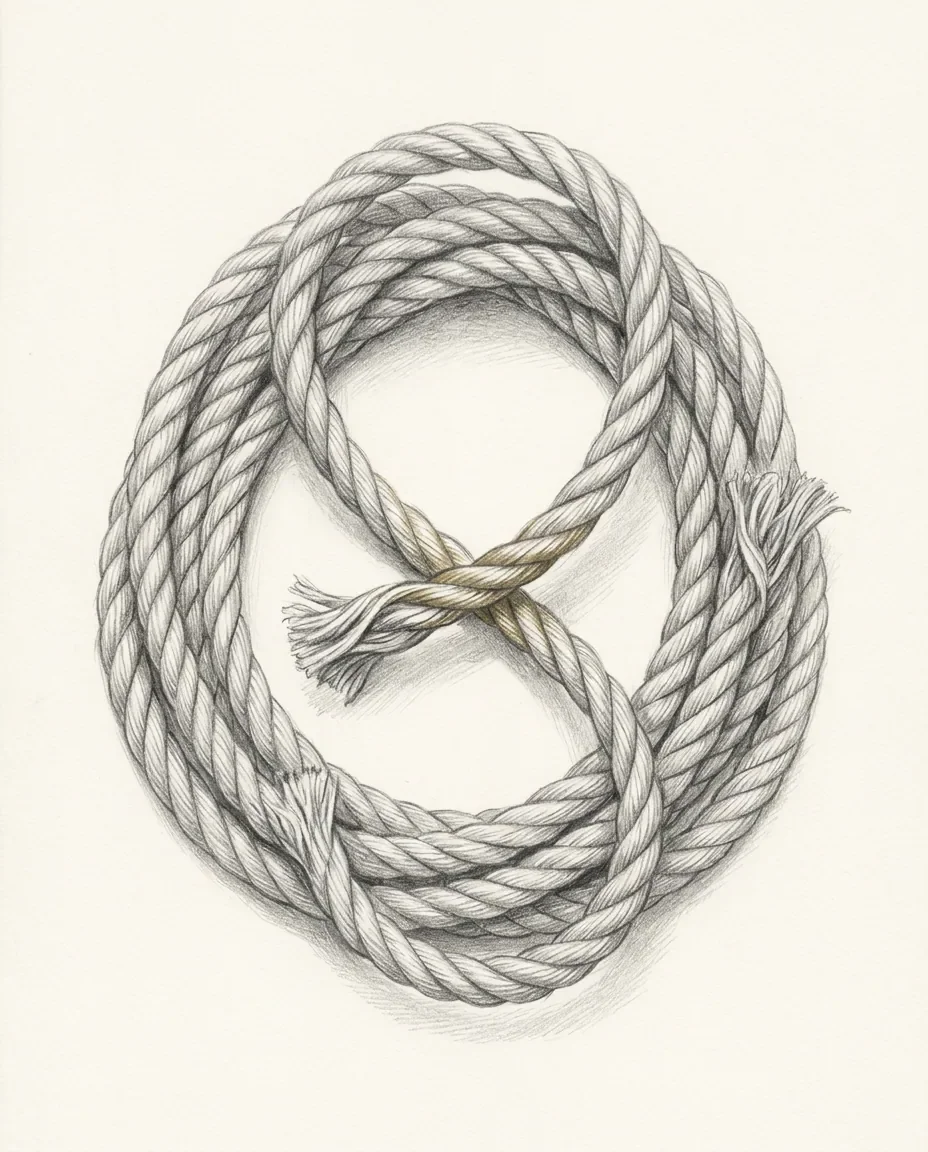
Shibari is the Japanese art of binding a partner with rope into intricate patterns, derived from kinbaku ("tight binding"). It blends visual artistry, sensation and restraint with the trust between the person tying (rigger) and the bound partner (bottom).
- Prevalence
- Common
- Category
- Sensation & Pain
- Domain
- Sexual interest
- Confidence
- Medium confidence
- Status
- Not a disorder; a consensual BDSM practice, not classified as a paraphilia.
- Also known as
- shibari, kinbaku, Japanese rope bondage, rope bondage, rope play, rope bunny, bondage rope art, 緊縛
- Added
- 21 Jun 2026
- Updated
- 22 Aug 2026
Featured in
Overview
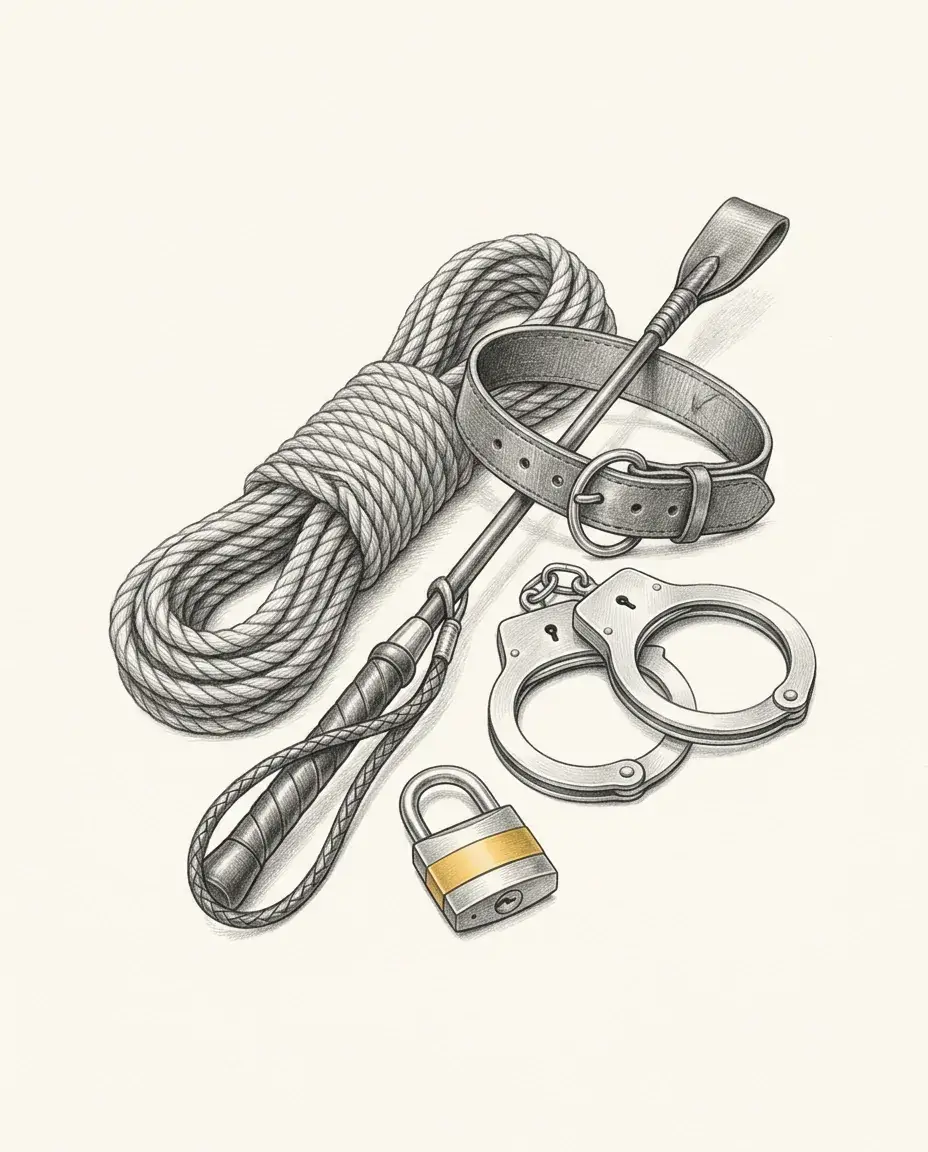
Shibari (Japanese rope bondage) is the art of binding a partner with rope to create intricate, often beautiful patterns across the body. While the ties can be purely decorative, in an intimate context the practice works as a form of bondage that emphasises restraint, sensation and the emotional connection between the person tying (the rigger or rope top) and the person being tied (the bottom, or "rope bunny"). The closely related Japanese term kinbaku (緊縛, literally "tight binding") names the more explicitly erotic, emotionally charged strand of the same tradition. This article traces the practice from its martial roots, through its twentieth-century transformation into an erotic art, to its place in modern BDSM culture, and the real safety questions rope play raises.
Definition & scope
In the West the two words are often split: shibari for the aesthetic, pattern-focused rope work and kinbaku for the emotionally intense erotic version. That distinction is largely a Western convention. Japanese practitioners traditionally used kinbaku for the whole erotic activity, and shibari ("to tie") as the plainer verb. What unites the field is the use of rope, most often natural jute or hemp, to restrain, decorate or suspend a consenting partner, from a single decorative chest harness to a full-body suspension.
Examples
Rope work spans a wide range of ambition, and the word sits beside several practices that use restraint for different ends.
What the term covers. A single decorative chest harness tied on the floor and untied twenty minutes later; a full-body floor tie built from several separate lengths; a partial suspension in which one limb or the hips are lifted; and full suspension bondage, the most technically demanding form. Named positional ties such as the hogtie, the spread-eagle and the strappado belong to the same working vocabulary, and a session conventionally ends with aftercare rather than at the moment the last rope comes off.
What the term does not cover. Restraint by cuffs, tape or chain is bondage but not shibari, which is defined by rope and by the patterned tradition behind it. Mummification encases the body rather than tying it. Rope applied to oneself is self-bondage, a separate and markedly riskier activity. And vincilagnia, arousal from the state of being bound, names an attraction rather than a craft: it can motivate rope work without describing it, and many practitioners do not report it at all.
How the word is used. Both shibari and kinbaku are Japanese loanwords carried into English by kink communities and by photography, and neither is clinical: no diagnostic manual, DSM-5-TR or ICD-11, contains either. In English "shibari" has acquired uses Japanese does not give it, standing as a bare noun for the practice and its aesthetic (a shibari class, shibari photography), which is why Japanese practitioners sometimes find the Western usage imprecise.
History & origins
Martial roots: hojojutsu
The practice traces to hojojutsu (捕縄術), the historical Japanese martial discipline of restraining prisoners with cord, which developed and was formalised during the feudal Edo period (roughly 1600 to the 1860s). These were techniques of arrest and confinement, not eroticism, but they accumulated a precise technical vocabulary and a strong aesthetic sense, with ties sometimes reflecting the rank or crime of the bound person.
From martial art to erotic art
As lethal arrest techniques fell out of use, their visual and technical language survived in kabuki theatre and in ukiyo-e woodblock prints, where bound figures appeared as dramatic subjects. The decisive figure in the modern erotic form is the painter, illustrator and photographer Seiu Itō (1882–1961), widely called the "father of modern kinbaku." Itō began studying hojojutsu around 1908 and reworked it into an art form; through the 1930s and his staged photographic sessions of the 1940s, many featuring his model and wife Kise Sahara, he reframed rope restraint as a subject of beauty within Japan's ero-guro (erotic-grotesque) current. His preference for tensioned, firm binding rather than loose staged rope shaped the taut style still associated with Japanese work today.
Post-war popularisation and naming
The practice spread widely in Japan in the 1950s through magazines such as Kitan Club, which published early nude bondage photography, and through performers like Eikichi Osada who staged live rope shows in the 1960s. The term kinbaku was coined in the August 1952 issue of Kitan Club by the bondage masters (bakushi) Minomura Kou (a member of Itō's circle) and Tsujimura Takashi, to mark erotic tying off from ordinary binding. Photographers including Nobuyoshi Araki later carried kinbaku imagery into the contemporary art world. The looser umbrella term shibari became common in Western kink communities during the 1990s.
Clinical framing
As a consensual recreational practice, rope bondage is not classified as a disorder. Bondage and dominance/submission interests appear in the DSM-5-TR and ICD-11 only as a disorder when they are non-consensual or cause clinically significant distress or harm. Consensual shibari between adults falls outside that.
In practice
A session may range from a single decorative chest harness to elaborate full-body ties or suspensions, in which the bound partner is partly or fully lifted from the ground. Participants frequently describe a meditative, trance-like absorption. The arousal and satisfaction are reported to come from the helplessness, the steady pressure of the rope, the visual presentation, and the concentrated, attentive exchange between partners rather than from any single act. The bottom's body and responses guide the pace throughout, and specific positional ties such as the hogtie sit within the same vocabulary.
Psychology
The appeal draws on themes of trust, surrender, control and mindfulness. For the bottom, the deliberate release of control can be calming, sometimes described as a "rope space" akin to a flow state; for the top, the focus is on careful craftsmanship and reading the partner's body. These dynamics place shibari within the broader psychology of consensual dominance and submission and of bondage more generally, an interest the empirical literature consistently finds common and benign rather than pathological. The Australian national survey by Richters et al. (2008) concluded that for most participants BDSM is a sexual interest or subculture, not a symptom of past abuse or of difficulty with conventional sex.
Prevalence & culture
How common is rope bondage?
Bondage is among the more commonly reported BDSM interests. In the representative Richters et al. (2008) survey of 19,307 Australians, about 1.8% of sexually active adults reported involvement in BDSM in the previous year (2.2% of men, 1.3% of women), while bondage fantasy runs far higher: Joyal, Cossette & Lapierre (2015) found bondage and submission fantasies to be common rather than statistically unusual. Rope bondage is one of the more visible forms, supported by international communities, instructional workshops, conventions and a performance-art scene; large dedicated FetLife groups are one proxy for its community size. Shibari is routinely listed among recognised mainstream kinks, for instance in Glamour's A–Z of kinks and fetishes, and enjoys broad visibility through photography, fashion editorials and music videos.
Safety, consent & law
Safety is central to responsible practice. Poorly placed rope can compress nerves (notably the radial nerve in the upper arm) or restrict circulation, and suspension carries genuine injury risk, including falls. Experienced practitioners study anatomy, keep safety shears within reach, monitor continuously for numbness, tingling or colour change, and negotiate limits and a safeword beforehand. Between consenting adults the practice is legal in most jurisdictions, though consent and safety remain relevant where bodily-harm law applies, since some legal systems limit the defence of consent to injury. Enthusiastic, informed consent from both partners is essential.
Common questions
Is shibari dangerous?
It carries real physical risk, which competent practice manages rather than eliminates. The common injury is nerve compression, classically the radial nerve in the upper arm, which usually resolves but can take weeks. Circulation can be restricted by rope left tight too long. Suspension adds the possibility of a fall and is the part of the discipline that most reliably requires instruction. Safety shears within reach, continuous checking for numbness or colour change, and an agreed safeword are standard.
Do you need a partner to learn shibari?
No, though most of the practice assumes one. Ties can be learned on a leg, a padded frame or a length of bamboo, which is how classes usually teach the patterns before anyone ties a person. Tying yourself is a different activity, self-bondage, and carries a much higher risk profile, because the one person able to release you is the one who cannot reach the knot.
What kind of rope is used for shibari?
Natural fibre is traditional: jute is the usual choice and hemp a close second, both valued for grip, a slight tooth that keeps knots from slipping, and low stretch. Cotton and synthetic ropes are softer, cheaper and easier to wash, and are common for learning, though their stretch makes them a poor choice for suspension. Rope is worked in several separate lengths rather than one long piece, and is conditioned and inspected before use.
Is shibari always sexual?
Not necessarily. Rope is also practised as a performance art, as a photographic subject, and as a physical discipline pursued for the focus it demands, and plenty of people tie in a class or on a stage with no erotic intent at all. The Japanese tradition it descends from is explicitly erotic, so the assumption is understandable, but the practice as it now exists spans both, and partners are expected to say which one they are in.
Does shibari leave marks?
Rope marks are normal and usually fade within a few hours to a day, an impression rather than a bruise. Actual bruising is possible wherever rope carries weight, particularly in suspension. What is not normal is numbness, pins and needles, or weakness in a hand or arm that persists after untying: that points to nerve compression rather than a mark, and it is the injury rope practitioners watch for most closely.
Is it disrespectful for Westerners to practise shibari?
Opinion differs, including among Japanese practitioners, and there is no settled answer. The most common position in rope communities is that the practice travelled by invitation, through teachers, books and touring workshops, and that the respectful version involves learning where the ties come from, using the Japanese names correctly, and not presenting the tradition as one's own invention. The sharper criticism is aimed less at practising it than at marketing it as exotic decoration while ignoring the lineage.
Is shibari legal?
Between consenting adults it is legal in most jurisdictions, being simply restraint that both parties agreed to. The complication is that several legal systems limit how far consent operates as a defence once real bodily harm occurs, so an injury serious enough to need treatment can in principle be assessed as assault regardless of agreement. In practice this arises rarely, and the ordinary safeguards that prevent injury also prevent the legal question.
From the blog

- Bondage86/100Acts & ActivitiesConsensual binding or restraint of a partner with rope, cuffs, tape or other materials for erotic, aesthetic or sensory pleasure. It is the "B" of BDSM and one of the most widely fantasised-about kinks.86
- Rigger / Rope Top50/100Power, Roles & ScenariosThe role of the person who applies rope to restrain, position, or suspend a partner in bondage. A rigger or rope top is the active, tying half of a rope scene, paired with the rope bottom who is tied.50
- Suspension Bondage49/100Sensation & PainA form of consensual bondage in which a restrained person is partly or fully lifted off the ground from one or more overhead suspension points. Rope, webbing, cuffs, or chain carry the load. It is a technically demanding, higher-risk practice within the wider rope-bondage and BDSM world.49
- Hogtie Bondage51/100Sensation & PainA consensual bondage position in which a person's wrists and ankles are bound together behind the back, drawing the limbs toward each other. The body is held prone and immobile. The term is borrowed from the livestock practice of tying an animal's legs together.51
- Spread-Eagle Bondage54/100Sensation & PainA consensual bondage position in which a person's wrists and ankles are secured to four separate anchor points, holding the limbs wide apart. The body is immobilised in an open, exposed posture. It is one of the most recognisable ties in BDSM.54
- Mummification45/100Sensation & PainMummification is a form of consensual bondage in which a person's body is wrapped or encased in materials such as plastic film, tape, or bandages. The wrapping often runs head to foot, restricting movement and heightening sensory experience. It is a recognised BDSM practice, not a clinical paraphilia.45
From Japanese 縛り shibari, the nominal form of shibaru, "to tie or bind." The related term kinbaku (緊縛) means "tight binding," and the older martial precursor hojojutsu (捕縄術) means roughly "the art of the capturing cord."
bondage · rope · kinbaku · BDSM · restraint
Prevalence is computed from the entry's cited population estimate. Rows marked ESTare indicative editorial estimates scored against a fixed anchor rubric, not measured quantities. Method & anchors: methodology.
Common · ≈ 1 in 20
- 01An A–Z of Kinks and Fetishes, GlamourLists shibari/rope bondage as a recognized mainstream kink and describes the practice.
- 02FetLife, kink community group sizes (community-size proxy)Large active rope-bondage and shibari interest groups indicate substantial community size.
- 03Sexual fetishism, Wikipedia (carries the Scorolli 2007 relative-frequency table)Provides context on bondage and fetish prevalence within the broader fetishism literature.
- 04Shibari / Japanese bondage, WikipediaHistory of hojojutsu, the Edo period, kabuki/ukiyo-e, the 1950s Kitan Club magazines, the ~1952 coinage of kinbaku, and the Western shibari/kinbaku distinction.
- 05Seiu Ito, WikipediaSeiu Itō (1882–1961), father of modern kinbaku; began studying hojojutsu c.1908; 1930s–40s staged photographic sessions with Kise Sahara.
- 06Nobuyoshi Araki, WikipediaPhotographer who carried kinbaku imagery into the contemporary art world.
- 07Joyal, Cossette & Lapierre (2015), What Exactly Is an Unusual Sexual Fantasy?, J. Sexual Medicine 12(2):328-340Bondage and submission fantasies are common rather than statistically unusual in the general population.
- 08Richters et al. (2008), Demographic and Psychosocial Features of Participants in BDSM: Data from a National Survey, J. Sexual Medicine 5(7):1660-1668Representative Australian survey (n=19,307): ~1.8% of sexually active adults involved in BDSM in the previous year; BDSM is a subculture/interest, not a symptom of abuse.
- 09DSM-5-TR, American Psychiatric AssociationConsensual bondage is not a paraphilic disorder unless non-consensual or causing distress/harm.
- 10ICD-11, World Health OrganizationConsensual rope bondage is not a recognised disorder in the ICD-11.