Worship Play
Added 10 Jul 2026 · Updated 22 Aug 2026
A consensual BDSM practice in which a submissive partner physically reveres part of a dominant's body as an act of devotion. Kissing, licking, caressing or massaging feet, muscles, buttocks or other areas are typical. It dramatizes a power exchange rather than being an activity valued for pain.
- Prevalence
- Very common
- Category
- Power, Roles & Scenarios
- Domain
- Sexual interest
- Confidence
- Medium confidence
- Status
- Consensual, low-risk BDSM practice and benign kink; not a recognized disorder and not listed as a paraphilia in DSM-5-TR or ICD-11.
- Also known as
- body worship, foot worship, muscle worship, ass worship, worship kink
- Added
- 10 Jul 2026
- Updated
- 22 Aug 2026
Featured in
Overview
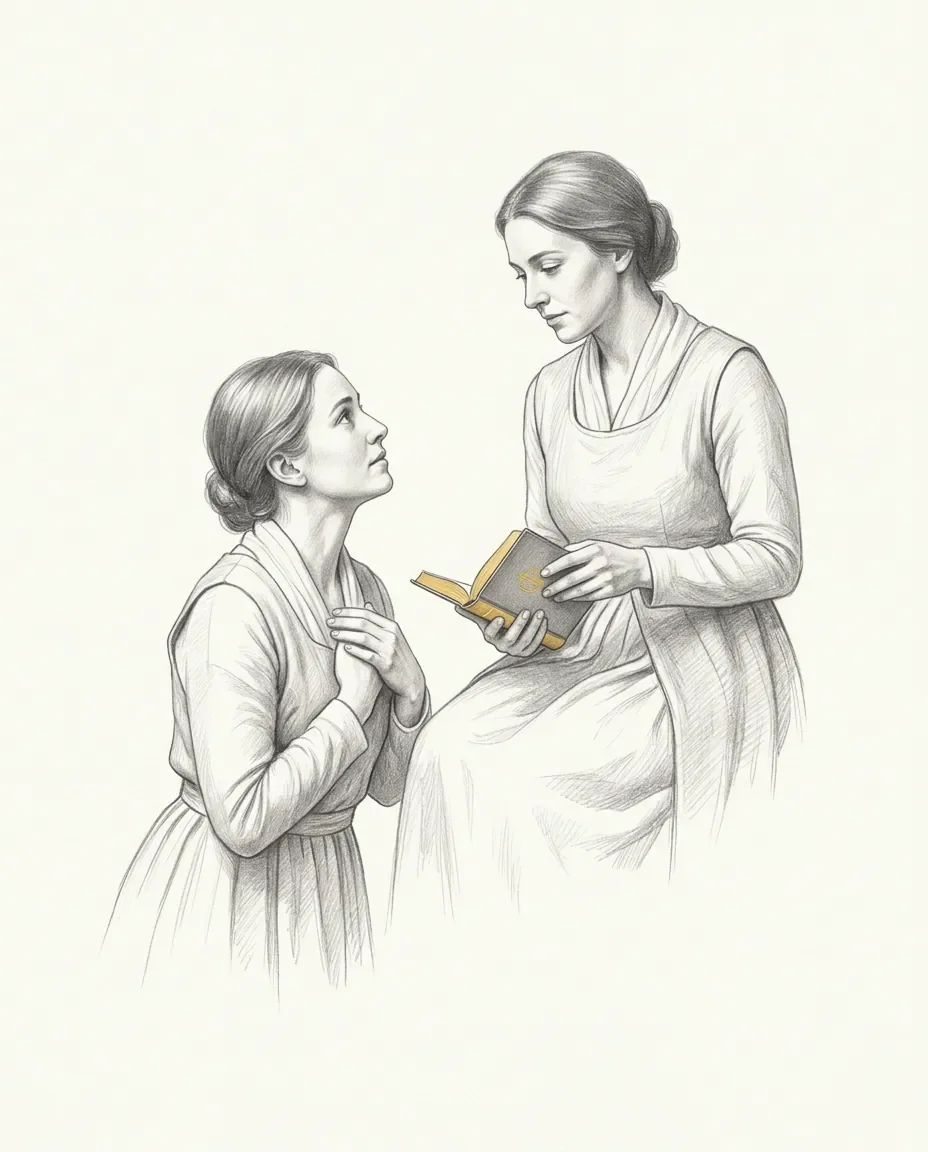
Worship play, usually called body worship, is a consensual BDSM practice in which one partner physically reveres a part of another's body as an act of devotion. Typically the submissive kisses, licks, caresses, massages or bathes a chosen area of the dominant's body, and the ritual expresses adoration while reinforcing the power dynamic between them. It is an umbrella term: its best-known branches are foot worship, muscle worship and buttock or "ass" worship, but any body part can be its focus. Unlike much of BDSM, worship play centres on reverence and service rather than pain, and it functions comfortably as a benign kink in consenting adults. This article covers what the practice involves, its subtypes, its psychology, and how it sits within power exchange.
Definition & scope
Body worship is defined by Wikipedia as "the practice of physically revering a part of another person's body," usually performed as a submissive act. Two threads run through it: erotic fetishism, where a specific body part is the object of arousal, and service-oriented submission, where the act of veneration itself, rather than any one body part, carries the meaning. The two overlap constantly.
What sets worship play apart from other BDSM activities is its posture of deference. The submissive positions themselves below the dominant, literally and symbolically, and treats the chosen body part as something to be honoured. Where impact play trades in sensation and bondage in restraint, worship play trades in adoration.
Common subtypes
- Foot worship: attention to the feet, the most widespread form; the foot's status as the body's lowest point makes kneeling to it a potent submission cue. It overlaps with the far broader foot fetish.
- Muscle worship: admiring, tracing and feeling a muscular partner's physique; sometimes practised with dominant bodybuilders.
- Buttock and other worship: veneration of the buttocks, hands, back, or other non-intimate areas, often folded into a wider service submission role.
Examples
The practice is broad enough that its edges matter more than its centre: almost any part of the body can be its object, so what identifies it is the posture of reverence rather than the anatomy chosen.
What the term covers. Kneeling to kiss, massage or simply hold a chosen area; sustained attention to the hands, back, shoulders or armpits as readily as to the better-known foci; bathing, dressing or grooming a partner as a ritual of care; verbal adoration running alongside the touch; and worship at a distance, where the submissive looks and praises with no contact at all. It appears as a short opening beat that sets the tone of a longer scene at least as often as it is the whole of one.
What the term does not cover. No pain is sought, which separates it from impact play and from sensation play generally. It is not service submission, which is organised around usefulness and tasks rather than veneration of a body, although the two run together constantly. It is the inverse of human furniture, where the submissive is the object being used rather than the one doing the honouring, and it is distinct from degradation, which lowers the submissive where worship raises the dominant. Nor is it an attraction: a person can perform worship attentively without any foot or body-part interest of their own, and the practice belongs to no particular gender configuration, femdom included.
How the word is used. This is community vocabulary rather than clinical language. "Body worship" is the commoner phrase and the one reference works index; "worship play" is the umbrella kink education tends to use; and the -worship compounds are freely productive, which is why new ones appear without needing definition. No diagnostic manual lists any of them.
History & origins
"Body worship" is a descriptive community term rather than a clinical coinage, and it has no single attributed author or dated origin. Its component interests are old: reverence of the body and of specific parts recurs throughout art and religious ritual, and partialism (arousal focused on a non-genital body part) was described within the early sexology of fetishism catalogued by Richard von Krafft-Ebing in Psychopathia Sexualis (1886).
As a named BDSM practice, body worship entered the shared vocabulary of the modern kink scene through community education. The Society of Janus, San Francisco's large BDSM education organisation, included body worship in the introductory BDSM curriculum it introduced in 2003, an example of the practice being formalised as a teachable skill rather than invented at a single moment.
In practice
Within a negotiated scene the submissive attends to the dominant's chosen body part through kissing, licking, caressing, massage, or bathing, framed as an act of devotion. The dominant may take pleasure in being adored and in the control the arrangement expresses, while the submissive finds fulfilment in the act of service itself. Sessions can be gentle and ritualistic or charged with verbal dominance, and worship play frequently opens or punctuates a longer power-exchange scene. This is a general description, not a how-to.
Psychology
The appeal draws on two overlapping motives. The first is partialism and fetishism: for some the specific body part, a foot, a muscled arm, is itself the source of arousal. The second is the power exchange: kneeling to venerate another person stages submission in an unmistakable way, and the vulnerability and trust involved are their own reward. For the dominant, being worshipped concentrates the experience of authority and desirability. Because the activity is low-risk and centred on service, clinicians and educators treat it as a benign expression of consensual kink rather than anything pathological. Dedicated empirical research is limited, so its psychology is read from the broader literatures on fetishism and on dominance and submission.
Prevalence & culture
The interests worship play organises are among the most common in all of kink. Foot-focused attraction is the single most frequently reported partialism: Scorolli et al. (2007), analysing thousands of online fetish community members, found feet and foot-related objects to be by far the most common bodily focus. The power-exchange context worship play stages is equally widespread. Joyal, Cossette & Lapierre (2015), surveying 1,516 adults in Québec, found that fantasies of dominating a partner (about 60% of men, 47% of women) and of being dominated (about 65% of women, 54% of men) were common for both sexes, and Lehmiller's (2018) survey of 4,175 Americans reached the same conclusion. Body worship is a standard part of professional domination practice and kink education, giving it steady cultural visibility even though "worship play" as an umbrella label is rarely measured directly.
Safety, consent & law
Worship play is among the lower-risk BDSM activities: it involves no impact, restraint or breath restriction, so the main considerations are ordinary hygiene, clear negotiation of what will be touched, and a safeword. As with all kink, consent is specific and ongoing, and agreeing to one form of worship is not agreement to anything further. Between consenting adults the practice is lawful.
Related interests
- Foot worship and foot fetish, the most common focus of worship play.
- Muscle worship, veneration of a muscular physique.
- Service submission, submission and dominance, the power dynamics it expresses.
Common questions
What is the difference between body worship and a foot fetish?
One is an act, the other an attraction. A foot fetish is a standing erotic interest in feet, present whether or not anything is ever done about it. Body worship is a practice of reverent attention, which can be directed at feet or at any other part, and which a submissive may perform for what it means rather than because the body part itself arouses them. Foot worship is where the two most often meet.
Is body worship always sexual?
Not necessarily. Some scenes are frankly erotic; others are closer to ritual, where the point is the posture of devotion and the trust it expresses, and arousal sits alongside it rather than being the object. Plenty of practitioners describe long stretches of massage or grooming that are calming rather than charged. As with much of BDSM, what makes it kink is the power dynamic being staged, not the presence of sex.
Is muscle worship the same thing as body worship?
Muscle worship is one branch of it. The focus there is a muscular physique (tracing, feeling and admiring it, sometimes with a partner who trains seriously or competes), while body worship is the umbrella covering that alongside feet, buttocks, hands and anything else. The relationship is subtype to category, and the same reverential framing applies to both.
What is ass worship?
Veneration directed at a partner's buttocks (kissing, caressing, massaging, praising) performed as a submissive act inside a power exchange. It is one of the three commonly named branches, alongside foot and muscle worship, and it follows the same logic: the chosen area is treated as something to be honoured, and the posture of the person honouring it carries the meaning. The label is community shorthand; there is no clinical term for it.
Do you have to be submissive to enjoy body worship?
No. The practice needs two positions and both are enjoyed. The person being worshipped experiences a concentrated form of authority and desirability, which is a common reason dominants seek it out, and people who identify as neither dominant nor submissive use it as a single element rather than a role. Switching between the two positions is entirely ordinary.
Is body worship safe?
It is among the lower-risk activities in BDSM: no impact, no restraint, no restriction of breathing. The realistic concerns are hygiene (washing beforehand, and avoiding contact with cuts, sores or fungal infection) and clear agreement about exactly what will be touched, since consent to one area is not consent to another. A safeword still belongs in the scene even when nothing painful is planned.
How do I bring body worship up with a partner?
Say what you would like to do, or have done, rather than naming a category: "I would like to spend some time on your hands" is easier to answer than "do you want to try body worship." Start short and low-stakes. It asks less than most kink (no equipment, no pain, nothing irreversible), which is why it is a common first step for people curious about power exchange.
- Foot Worship55/100Power, Roles & ScenariosThe submissive, reverent practice of kissing, massaging, caressing or venerating a partner's feet, usually inside a dominance-and-submission dynamic. It names an activity and a ritual of devotion rather than the underlying attraction, which is the foot fetish.55
- Muscle Worship45/100Sthenolagnia · Body Parts & PartialismAn erotic interest in muscular physique and displays of physical strength, encompassing admiration of developed musculature. For some, arousal is tied to demonstrations of power and the hands-on appreciation of a partner's muscles.45
- Service Submission45/100Power, Roles & ScenariosA submissive style in which fulfillment comes chiefly from attending to a dominant partner's needs through tasks, anticipation, and acts of care. The power exchange is expressed through helpful service and devotion rather than through pain, discipline, or humiliation.45
- Submission90/100Power, Roles & ScenariosTaking the yielding, following role in a consensual power-exchange dynamic. One of the two halves of dominance and submission (D/s), in which a person cedes control to a trusted partner under negotiated limits.90
- Dominance85/100Power, Roles & ScenariosTaking the leading, controlling role in a consensual power-exchange dynamic. One of the two halves of dominance and submission (D/s) within BDSM, in which a person directs the scene, sets the rules, and guides a willing partner who has agreed to yield control.85
- Foot Fetish83/100Podophilia · Body Parts & PartialismA focused erotic interest in feet (their shape, soles, toes, arches, or grooming) as a primary source of attraction. Within partialism (erotic focus on a non-genital body part) it is the example people report most, by a wide margin.83
A plain-English descriptive term: "worship" (reverence or adoration, from Old English weorþscipe, 'worthiness') applied figuratively to the reverent attention paid to a partner's body; "body worship" is a modern kink-community compound with no clinical coinage.
service submission · body veneration · power exchange
Prevalence is computed from the entry's cited population estimate. Rows marked ESTare indicative editorial estimates scored against a fixed anchor rubric, not measured quantities. Method & anchors: methodology.
Very common · ≈ 1 in 7
- 01Body worship, Wikipediadefinition of body worship as reverence of a body part as a submissive act; subtypes (foot, muscle, buttock); service-submission framing; Society of Janus curriculum (2003)
- 02Scorolli et al. (2007), Relative prevalence of different fetishesfeet and foot-related objects are the most common bodily focus among fetish community members, supporting foot worship as the leading subtype
- 03Lehmiller (2018), Tell Me What You Want, survey of 4,175 Americansnear-universal prevalence of dominance/submission fantasy, the power-exchange context worship play sits within
- 04Joyal, Cossette & Lapierre (2015), What Exactly Is an Unusual Sexual Fantasy?, PubMedpopulation survey of 1,516 Québec adults finding dominance and submission fantasies common for both sexes, quantifying the power-exchange context of worship play