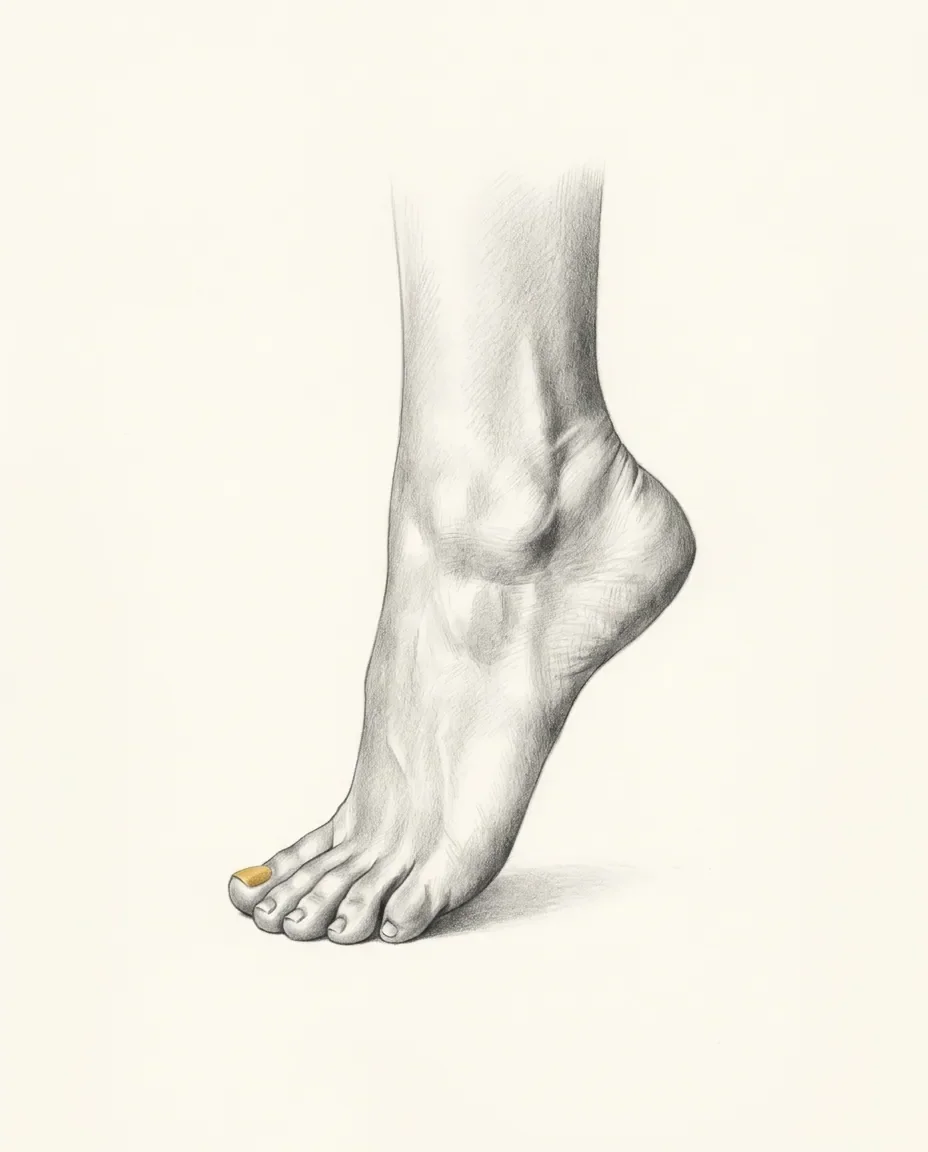
Foot Worship
Added 27 Jun 2026 · Updated 22 Aug 2026
The submissive, reverent practice of kissing, massaging, caressing or venerating a partner's feet, usually inside a dominance-and-submission dynamic. It names an activity and a ritual of devotion rather than the underlying attraction, which is the foot fetish.
- Prevalence
- Common
- Category
- Power, Roles & Scenarios
- Domain
- Sexual interest
- Confidence
- Low confidence
- Status
- A consensual D/s practice, not a clinical category. The underlying foot attraction is a partialism, and a disorder only if it causes distress, impairment, or non-consent.
- Also known as
- foot adoration, reverential foot play
- Added
- 27 Jun 2026
- Updated
- 22 Aug 2026
Featured in
Overview
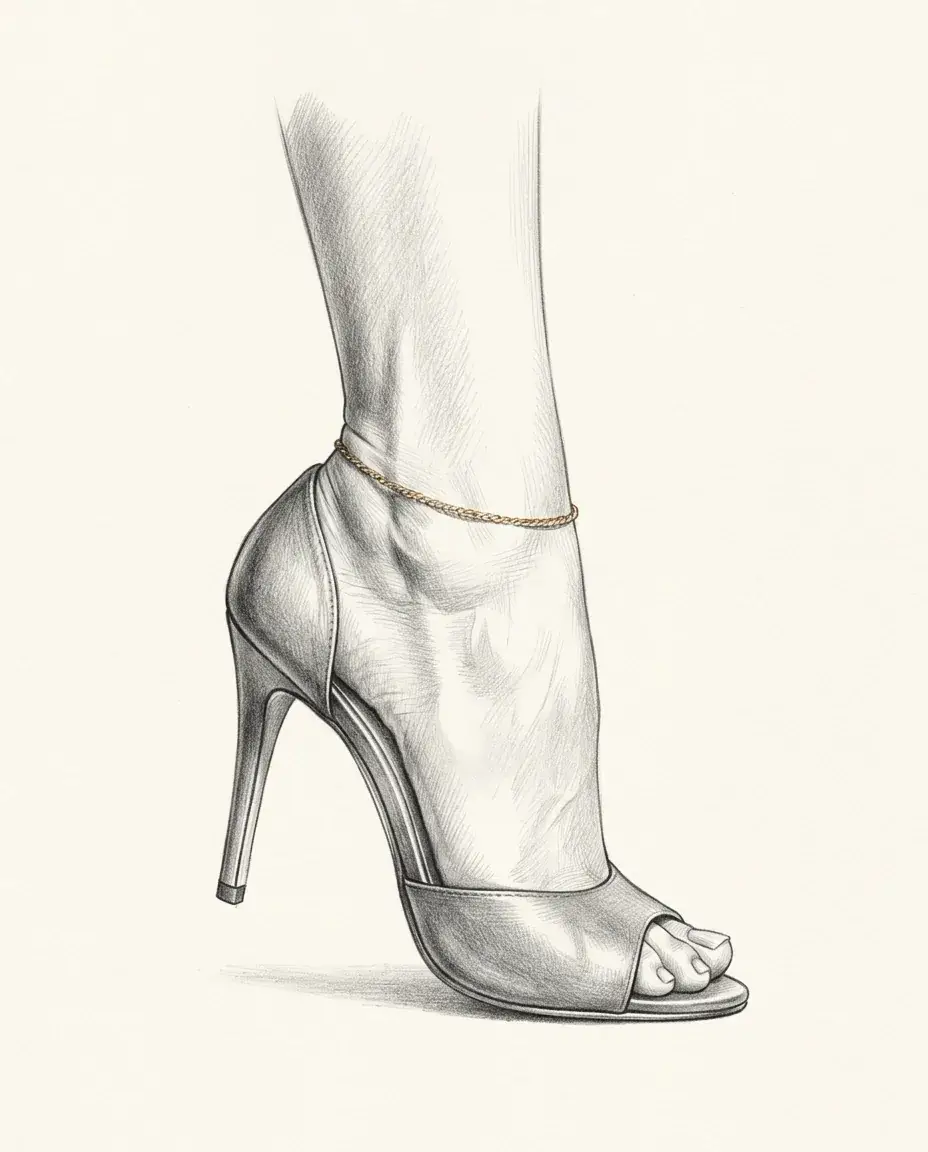
Foot worship is the reverent, devotional practice of attending to another person's feet, kissing, caressing, massaging, holding or otherwise venerating them, typically performed by a submissive partner for a dominant one. It is best understood as a practice rather than an attraction: where the Foot Fetish names an erotic interest in feet, foot worship names the ritual through which devotion to feet is enacted, and it carries a built-in power dynamic that a simple aesthetic preference need not. Its dominant-led counterpart, in which the foot is used to command, press or direct, is Foot Domination. This article traces the practice's long pre-erotic lineage in rituals of humility, its place within modern Submission, the psychology of veneration, and what can reasonably be said about how common it is.
Definition
Foot worship denotes the consensual, often ceremonial act of honouring a partner's feet through gentle physical and gestural devotion, kneeling to kiss the insteps, massaging the soles, caressing the arches, or simply holding the feet with reverence. The person whose feet are worshipped occupies the dominant or "top" position; the worshipper takes the submissive or "bottom" role (Consent Culture). Crucially, the term describes what is done and the deferential posture in which it is done, distinct from the Foot Fetish attraction that may or may not motivate it. A person can perform foot worship as an act of service without a fetishistic fixation, and a foot fetishist can experience attraction without ever adopting the worshipful, submissive framing.
Examples
What the term covers. Kneeling to kiss the insteps and ankles at a deliberately unhurried pace; massage offered as service rather than as comfort, with permission asked before moving to a new area; cradling or simply holding the feet from a lowered position; and the whole thing framed by a ritual opening and close: the dominant presenting their feet, a spoken phrase, a settled posture. The same acts appear in professional domination and in long-standing domestic dynamics, where the ceremony may be brief and habitual rather than staged.
What the term does not cover. The foot fetish is the attraction, which needs no ritual and no power difference; foot worship is the ritual, which can be performed as service without a fixed erotic focus. Foot domination inverts the direction, since there the foot commands rather than receives. A footjob is stimulation performed with the feet, an act rather than an attitude, and it requires no reverence at all. Sole licking and toe sucking name specific acts that occur inside worship scenes and just as often outside them; trampling applies weight rather than devotion; bootblacking tends the footwear, and a shoe or boot fetish targets the object outright. An ordinary foot massage, however affectionate, is not foot worship unless the deferential frame is the point.
How the word is used. Community vernacular from dominance-and-submission spaces, part of the wider body-worship family alongside worship play. It borrows "worship" from the religious register rather than the clinical one, and appears in neither DSM-5-TR nor ICD-11. To say that someone "worships" a partner's feet describes a posture as much as an activity, which is why the phrase survives comfortably in contexts with no scene attached.
History & origins
Feet, humility and veneration
Long before any erotic vocabulary, the foot was a culturally charged site of humility and deference, washing or tending another's feet was an act of self-lowering. In the Palestinian world, foot washing was a gesture of hospitality performed for guests by a servant or by the household's women, and 1 Samuel 25:41 records it offered as a token of humility. The most influential expression is the Christian narrative of Jesus washing his disciples' feet at the Last Supper (John 13:1-15), framed as a lesson that "whoever wishes to be first among you must be slave of all" (Britannica, Foot washing). The rite was formalised over centuries: St Benedict's Rule (529) prescribed communal feet-washing for humility, and the medieval Latin mandatum gave English the term "Maundy," with the foot-washing liturgy attached to the Thursday before Easter since around the seventh century in Spain (Maundy (foot washing), Wikipedia). This deep association, that tending the feet is the lowest, most self-abnegating of services, is precisely the symbolic raw material the erotic practice later draws upon.
The erotic and clinical lineage
The attraction to feet entered the medical record with nineteenth-century sexology. Richard von Krafft-Ebing's Psychopathia Sexualis (1886) catalogued foot- and shoe-focused fetishism and framed such fixations as childhood erotic associations, and Havelock Ellis discussed foot and shoe symbolism in his Studies in the Psychology of Sex (1936 edition). These works document the foot as an erotic object; what they do not isolate is foot worship as a named practice, which belongs less to the clinical literature than to the lived vocabulary of dominance-and-submission communities, where "worship" describes a posture of reverent service. The modern practice therefore sits at the meeting point of two streams: the ancient grammar of foot-tending as humility, and the documented erotic charge of the foot itself.
In practice
Among consenting adults, foot worship is typically slow, deliberate and ritualised. Common elements include:
- reverential kissing of the feet, ankles and insteps at an unhurried, devoted pace;
- massage offered as service, often with the worshipper asking permission before touching a new area or checking pressure preferences;
- caressing, cradling or simply admiring the feet from a kneeling or lowered position;
- a defined ritual frame, an opening signal (the dominant presenting their feet, a spoken phrase, a kneeling posture) and a close, which builds anticipation and deepens the dynamic (BDSMPact, Body Worship Guide).
The submissive's adopting a low position to attend to a body part conventionally regarded as "humble" is itself the point: ordinary contact is transformed into an enacted power exchange. Foot worship frequently shades into adjacent practices such as Sole Licking and Toe Sucking, and pairs naturally with the dominant-led Foot Domination. Where a scene moves from reverence to stimulation it becomes a footjob, which is an act rather than a dynamic and needs no devotional framing to occur.
Psychology
The practice's psychological pull rests on veneration and surrender rather than on any single mechanism. The worshipper's willingness to honour a body part culturally coded as "low" becomes an act of deep deference, while the recipient experiences being adored and served, a feedback loop of vulnerability and authority that many describe as strengthening the bond between partners (BDSMPact). This maps directly onto the broader psychology of Submission, where voluntarily ceding control and performing humble service are themselves the source of meaning and arousal. Where an underlying Foot Fetish is present, mainstream sexological accounts add associative-learning and early-pairing models for the attraction itself; but foot worship as a practice is driven as much by the ritual of devotion as by any fixed erotic target.
Prevalence & culture
No survey isolates foot worship as a distinct practice, so any figure is an estimate scaled down from foot-interest data. Feet are by a wide margin the most reported body-part fetish: Scorolli et al. (2007), a study of 381 online fetish communities covering an estimated 5,000-plus members, found that preferences for body parts (about 33%) and for body-associated objects (about 30%) dominated, and that within the body-part group feet accounted for roughly 47%, the single largest category by a wide margin. Foot worship is the most visible service-oriented expression of that interest within kink culture, well represented in dominance-and-submission communities, professional domination, and online glossaries and guides, yet it remains a narrower behavioural subset of the overall foot-interested population. The estimate here, on the order of 3% of adults having engaged in or being drawn to the practice, reflects that it is common within kink spaces but far less widespread than foot attraction in the abstract.
Safety, consent & law
Between consenting adults, foot worship is a benign activity with no inherent legal concern. As with any power-exchange practice, the essentials are explicit negotiation, clear boundaries and the ability to stop at any time; sources consistently stress that communication and consent are what keep the dynamic safe and mutually comfortable (Submissive Guide). The only practical considerations are ordinary foot hygiene and, because the practice is structured around a power imbalance, the same care for aftercare and check-ins that any Submission scene warrants.
Common questions
What is the difference between a foot fetish and foot worship?
One is an attraction, the other a practice. A foot fetish is a standing erotic interest in feet, which a person has whether or not they ever act on it. Foot worship is the reverent, service-shaped way of acting on an interest in feet, and it carries a built-in power difference: someone offers the devotion and someone receives it. Either can exist perfectly well without the other.
Do you have to be submissive to enjoy foot worship?
To perform it, more or less: the practice is defined by the deferential posture, and adopting that posture is the substance of it. But people who do not identify as submissive often take it up for a particular scene or relationship rather than as an identity, and switching between roles is common. The partner receiving the worship occupies the dominant side and need not be submissive anywhere.
Is foot worship always sexual?
Not necessarily. It is usually erotic in framing, but many practitioners describe the appeal as devotional rather than genital: the value lies in the act of service and the trust it demonstrates, and plenty of scenes involve no genital contact whatsoever. It also shades into service submission, where attending to a partner's needs is itself the reward.
Is it unhygienic to kiss or lick someone's feet?
Feet carry ordinary skin flora and whatever the day put on them, so washing beforehand resolves most of the concern. The cautions that actually matter are broken skin on either side, athlete's foot and other fungal infections, and cuts or sores in the mouth, all of which make passing something along more likely. Nail care matters too, since scratches are the common minor injury.
How is a foot worship scene usually negotiated?
In advance, and in plain terms: which parts of the feet may be touched, whether the mouth is involved, roughly how long, what signals the beginning and the end, and what stops it immediately. Because the structure is a power exchange, the check-ins and aftercare that any submission scene warrants apply here too, however gentle the activity looks from outside.
Is foot worship a paraphilia or a disorder?
No. It is a consensual practice between adults and appears in neither DSM-5-TR nor ICD-11. The underlying attraction to feet is a partialism, an erotic focus on a non-genital body part, and it becomes clinically relevant only where it causes the person real distress or impairment, or involves someone who has not consented.
What is the difference between foot worship and foot domination?
Who is doing what to whom. In foot worship the submissive partner attends to the dominant's feet as an act of devotion. In foot domination the dominant uses their feet actively, to direct, press, hold or command, so the same body part becomes an instrument rather than an object of reverence. Many dynamics move between the two inside a single scene.
From the blog
- Foot Fetish83/100Podophilia · Body Parts & PartialismA focused erotic interest in feet (their shape, soles, toes, arches, or grooming) as a primary source of attraction. Within partialism (erotic focus on a non-genital body part) it is the example people report most, by a wide margin.83
- Foot Domination48/100Power, Roles & ScenariosA power-exchange practice in which a dominant uses their feet as the instrument of control over a consenting submissive. Typical acts are directing the submissive to kiss, lick or clean the feet, holding them underfoot, or foot-gagging. It is the dominant-framed counterpart to foot worship.48
- Sole Licking45/100Acts & ActivitiesThe consensual oral worship of the sole of the foot, treated as a specific act within the broader practice of foot worship. It covers licking, kissing and mouthing the underside. It is one expression of foot fetishism rather than a distinct clinical diagnosis.45
- Toe Sucking55/100Acts & ActivitiesOral stimulation of the toes (licking, kissing, or sucking them) for erotic pleasure. A defining foot-focused act within the broader practice of foot worship, popularly nicknamed "shrimping" and given lasting cultural visibility by a 1992 royal tabloid episode.55
- Submission90/100Power, Roles & ScenariosTaking the yielding, following role in a consensual power-exchange dynamic. One of the two halves of dominance and submission (D/s), in which a person cedes control to a trusted partner under negotiated limits.90
- Incest Fantasy55/100Power, Roles & ScenariosIncest fantasy is an eroticized taboo theme in which consenting, unrelated adults roleplay forbidden-kin scenarios. Step-relative and other family dynamics are typical. The appeal is the transgression itself; actual incest is illegal and outside the scope of this entry.55
"Foot" is plain Old English (fot), and "worship" descends from Old English weorthscipe, "worth-ship," the condition of being worthy of honour or reverence. "Foot worship" is a descriptive English compound borrowed from the older religious sense of worship as devotional veneration; it is not a clinical coinage.
service & devotion · dominance & submission · foot play
Prevalence is computed from the entry's cited population estimate. Rows marked ESTare indicative editorial estimates scored against a fixed anchor rubric, not measured quantities. Method & anchors: methodology.
Common · ≈ 1 in 20
- 01Scorolli et al. (2007), Relative prevalence of different fetishes, Int. J. Impotence Research 19(4):432-437prevalence anchor (feet = 47% of body-part fetishes, the most common partialism); foot worship is scaled down as a narrower behavioural subset
- 02Relative prevalence of different fetishes, Scorolli et al., Int. J. Impotence Research (2007), Nature landing pagestudy of 381 online fetish communities (~5,000+ members); body parts ~33% and body-associated objects ~30% of preferences, with feet the single largest body-part category
- 03Foot fetishism, Wikipediaclinical lineage of the underlying foot attraction (Krafft-Ebing 1886, Havelock Ellis 1936)
- 04Foot washing, Encyclopaedia Britannicapre-erotic lineage: foot washing as hospitality and humility, the Last Supper narrative (John 13:1-15), and feet as a site of deference
- 05Maundy (foot washing), WikipediaSt Benedict's Rule (529) communal feet-washing, the mandatum/Maundy etymology, and the foot-washing liturgy attached to Maundy Thursday since ~7th-century Spain
- 06Body Worship Guide: Types, Psychology & How to Practice, BDSMPactin-practice elements (reverential kissing, worship massage, ritual framing) and the psychology of veneration and surrender within a D/s dynamic
- 07Foot Worship, Consent Culture (glossary)definition of foot worship and the dominant/top vs submissive/bottom role framing
- 08The Art of Foot Worship, Submissive Guideconsent, communication, and boundary-setting as the safety basis of the practice