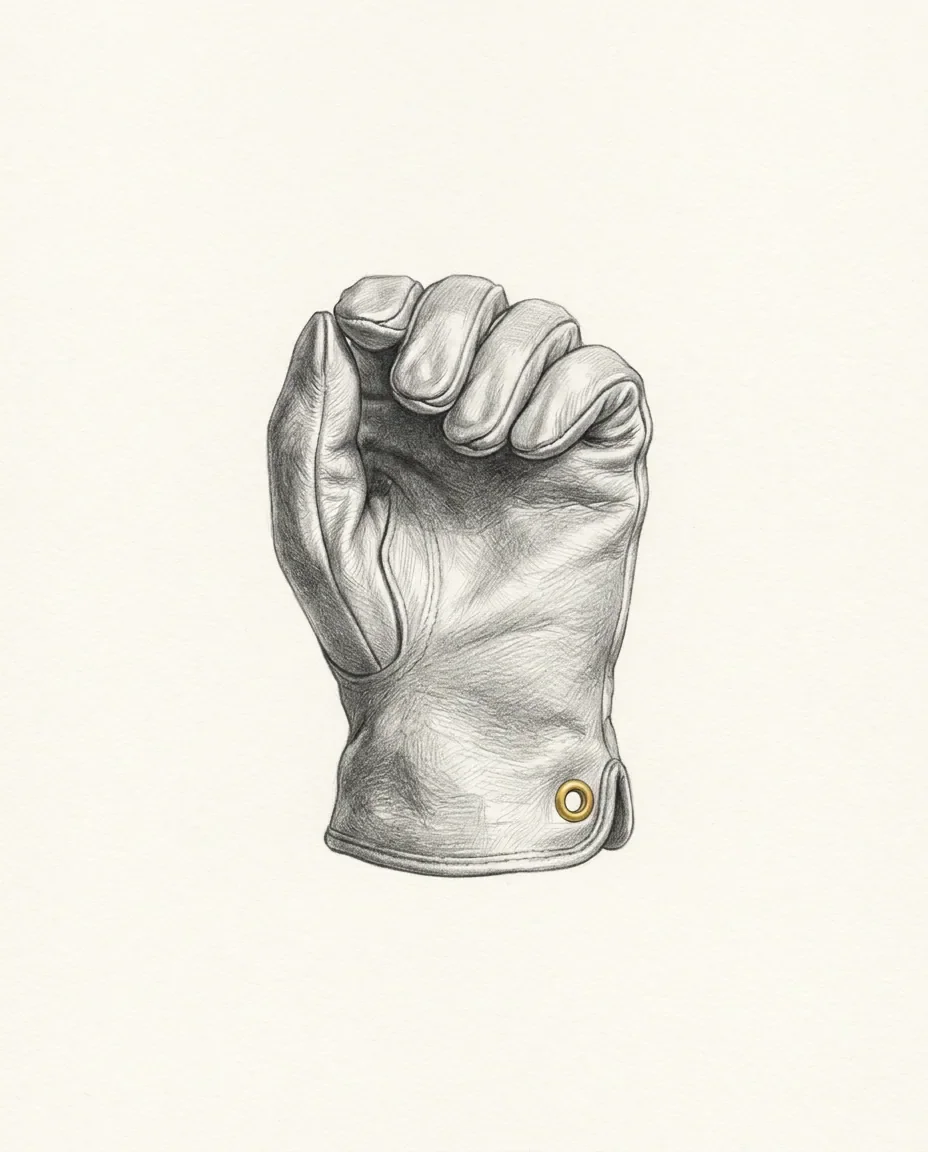
Fisting
Added 21 Jun 2026 · Updated 22 Aug 2026
Fisting is a consensual sexual practice in which a hand, and sometimes part of the forearm, is gradually inserted into a partner's vagina or rectum. The vaginal form is brachiovaginal, the anal form brachioproctic. An advanced act built on preparation, lubrication and trust, it is a normal variant, not a paraphilia.
- Prevalence
- Common
- Category
- Acts & Activities
- Domain
- Sexual interest
- Confidence
- Medium confidence
- Status
- Normal sexual variant; not a paraphilia or disorder.
- Also known as
- fist play, handballing, fist-fucking, brachioproctic / brachiovaginal insertion, FF
- Added
- 21 Jun 2026
- Updated
- 22 Aug 2026
Overview
Fisting is a consensual sexual practice in which a partner's hand, and sometimes part of the forearm, is gradually inserted into the vagina (clinically brachiovaginal) or rectum (brachioproctic). Rather than a thrusting motion, it centres on slow, careful insertion and the sensation of fullness, and is regarded as a normal, if advanced, variant of human sexual behaviour rather than a disorder. Because it involves significant stretching of delicate tissue, sex-education and kink communities treat it as a practice demanding patience, preparation and anatomical knowledge. This article covers its documented history in the gay leather subculture, how it is practised, its psychology, what surveys say about prevalence, and the substantial safety and harm-reduction considerations involved.
Examples
What the term covers. Two forms, distinguished in the clinical literature by anatomy: brachiovaginal insertion into the vagina and brachioproctic insertion into the rectum. Both are defined by gradual insertion and the sensation of fullness rather than by thrusting, and both are ordinarily built up across many sessions rather than attempted in one. The vocabulary around the act is broader than the act itself: "FF" as an abbreviation, "handballing" as a synonym, and the handkerchief code as the way interest was signalled in the bar culture where the practice first organised itself.
What the term does not cover. Manual anal play with one or several fingers is not fisting; the difference is the degree of dilation and the preparation it demands, and the two are not a continuum a person can casually slide along. Anilingus and pegging are adjacent anal practices with entirely different mechanics and risk profiles. Sounding involves the urethra and is unrelated. Foot fisting is the rare variant in which the foot rather than the hand is inserted, carrying the same risks with less tactile control. Double penetration describes how many things are involved, not how large. Fisting is also not an attraction: an erotic interest in hands as such is a separate entry, and fisting is an act rather than a fetish, a paraphilia or an identity.
How the word is used. The vocabulary is community-made and older than any clinical description of it: fisting, fist fuck, handballing and FF all come from the gay leather scene, while brachioproctic and brachiovaginal were coined afterwards by medical and harm-reduction writers who needed neutral words. Neither register carries a diagnosis: DSM-5-TR and ICD-11 do not list the practice at all. In everyday speech "fisting" is blunt rather than technical, which is precisely why clinicians reaching for a neutral term reach for the Greek.
History & origins
Manual penetration is an old element of human sexuality, and claims about its antiquity vary widely: some writers trace it back centuries, while the sex educator Robert Morgan Lawrence has claimed the practice is thousands of years old. As a named, distinct practice, however, fisting is a twentieth-century development closely tied to the gay leather and BDSM subcultures of North America.
Terminology and clinical lineage
The colloquial vocabulary emerged from the community rather than from medicine. According to the Routledge Dictionary of Modern American Slang, fisting and fist fuck entered American slang "no later than 1969," alongside handballing and the abbreviation FF. The anatomical and clinical descriptors came later: brachioproctic derives from Greek brachiōn ("arm") and prōktos ("anus"), with the parallel brachiovaginal for vaginal insertion, terms that appear in medical and harm-reduction writing rather than in the original subculture. Mainstream sexology has generally catalogued fisting descriptively, in the tradition of survey researchers from Alfred Kinsey onward who documented the breadth of consensual practice, and the contemporary DSM-5-TR and ICD-11 do not treat fisting as a paraphilia or disorder.
Cultural and subcultural evolution
An organised community of fist-fuckers grew out of the sexual practices of gay leathermen in San Francisco and New York City around the gay-liberation era.
- By 1969: men were openly engaging in fisting at gay bathhouses such as the St. Mark's Baths in New York City, with the handkerchief code and personal advertisements used to signal interest discreetly.
- Late 1960s–1970s: dedicated organisations formed. The Fist Fuckers of America (FFA), which registered as a non-profit under the cover name "Fall Festival Association," established chapters in Los Angeles, San Francisco, New York, Philadelphia, Miami and Washington, D.C.; parallel clubs later included the Total Ass Involvement League (TAIL) and Mid America Fists In Action (MAFIA). In 1975 the FFA organised a two-day fisting convention near Ossining, New York.
- 1975–1984: San Francisco's Catacombs, founded by Steve McEachern, became the most famous fisting club in the world; originally for gay men, it was opened to lesbians after Cynthia Slater persuaded the management. New York's Mineshaft (from 1976) was its East Coast counterpart, and inexpensive Crisco shortening served as the lubricant, and slang euphemism, of choice.
- 1980s: the AIDS epidemic devastated the community, and public-health campaigns promoted glove use; authorities in San Francisco and New York closed several venues, a move many activists contested as anti-gay.
- 21st century: visibility has grown again with the internet, online networks and improved HIV prevention, and the practice is discussed openly in kink education and harm-reduction settings, and studied in peer-reviewed sexology.
In practice
Fisting is almost always a slow, staged activity built on extensive lubrication, relaxation and trust rather than force. Partners typically progress gradually over many sessions, communicating continuously and stopping at any discomfort. Generous use of long-lasting lubricant, trimmed and smoothed nails, and gloves is standard, and the receiving partner's comfort and breathing guide the pace throughout. It frequently overlaps with broader anal play and with anilingus within wider sexual repertoires.
Psychology
The appeal is commonly linked to the intense physical sensation of fullness, the deep trust and surrender the act requires, and for many practitioners a strong dimension of intimacy and power exchange. Giving partners often describe a caretaking, attentive role, while receiving partners may value the vulnerability and release involved. Because the act demands so much communication and slowness, accounts frequently stress its relational and trust-building qualities as much as the physical sensation.
Dedicated psychological research is still thin, but qualitative sexology has begun to document how practitioners understand the activity. In a 2024 interview study of gay men who fist, Jarred Martin (2024) identified six recurring narratives through which participants framed their sexual sense of self: kinkster, explorer, athlete, expert, lover, and community member. Related work on "bottom training" (the slow, staged conditioning that receiving partners describe) treats preparation, patience and body knowledge as central skills rather than obstacles, per a 2024 thematic analysis in Culture, Health & Sexuality. Beyond this, most framing still draws on broader work on BDSM and consensual non-mainstream sexuality.
Prevalence & culture
Surveys place fisting among the less common practices relative to mainstream acts, with a meaningful following concentrated in LGBTQ+ and BDSM communities, where it is discussed openly as advanced play. Large general-population studies have only occasionally measured it: the Australian Study of Health and Relationships is notable for asking respondents directly about fisting (along with rimming and role play), whereas major US surveys such as the National Survey of Sexual Health and Behavior have generally not included it, which keeps reliable population figures scarce. Cultural visibility is moderate (it appears in kink education, harm-reduction guides, and occasional mainstream sex writing) though it remains comparatively niche.
Safety, consent & law
Fisting carries real physical risk and depends on knowledgeable, unhurried technique. Key concerns include tissue tearing, anal fissures, and, particularly with anal play, perforation of the rectum or colon, which can be a serious medical emergency; a 2021 study also associated anal fisting with a higher likelihood of later faecal incontinence, though causality is unclear. Air embolism is a specific danger if air is forced into the vagina during pregnancy. Abundant lubrication, gradual progression, gloves, attention to hygiene and infection risk, and immediate cessation at any pain are therefore essential, and alcohol or drugs that mask pain sharply raise the danger. Legally, fisting between consenting adults in private is lawful in jurisdictions including the United Kingdom, where the Crown Prosecution Service confirmed in 2019 it would no longer prosecute pornography depicting legal acts by consenting adults, and the United States, where older obscenity-era restrictions are now largely regarded as obsolete. As with all intimate acts, enthusiastic, ongoing consent is required.
Common questions
Is fisting safe?
It carries real physical risk and is not a beginner's practice. The tissue involved does stretch, but not quickly and not without preparation, and the serious complications (tearing, anal fissures, and in the anal form perforation of the rectum or colon) come overwhelmingly from haste, force, or a receiving partner who cannot feel what is happening. Risk falls with unhurried pacing, abundant lubricant, gloves, short filed nails and continuous communication, and rises sharply with alcohol or any drug that dulls pain.
Should fisting hurt?
No. Pain is a stop signal, not a stage to push through, and that is the single most important thing to understand about the practice. Discomfort means the pace, the angle or the amount of lubricant is wrong, and the correct response is to stop rather than persist. It is also why anything that masks pain (alcohol, poppers, painkillers, numbing products) makes the act substantially more dangerous: it removes the only reliable feedback the receiving partner has.
Can fisting cause lasting damage?
It can. The documented concerns are tears and anal fissures and, rarely but seriously, perforation of the rectum or colon, which is a surgical emergency. A 2021 study found an association between anal fisting and a later likelihood of faecal incontinence, though the direction of causation is not established. Air embolism is a specific and potentially fatal risk if air is forced into the vagina during pregnancy. Bleeding, severe abdominal pain or fever afterwards all warrant prompt medical attention.
Why are gloves used for fisting?
Two reasons, one hygienic and one mechanical. Gloves reduce the transmission of infection in both directions and protect against contact with small cuts on the hand, which is why public-health campaigns promoted them heavily during the AIDS epidemic and why they remain standard. They also present a smooth, seamless surface: nails, cuticles and rough skin are a common source of small tears, and a glove covers all of them. Nails still need to be short and filed underneath.
What is bottom training?
It is the community's name for the slow, staged process by which a receiving partner builds tolerance and body knowledge over months rather than within a session. A 2024 thematic analysis in Culture, Health & Sexuality treated it as a genuine skill (attention to breathing, relaxation, pacing and knowing one's own limits) rather than as an obstacle to get past. The framing matters, because the opposite view, that preparation is merely a delay, is what produces injuries.
Is fisting legal?
Between consenting adults in private it is lawful in the jurisdictions where the question has been tested, including the United Kingdom and the United States. The historical complications concerned depiction rather than practice: obscenity-era restrictions on pornography, which the Crown Prosecution Service effectively ended in 2019 by confirming it would not prosecute depictions of lawful acts between consenting adults. Consent is the whole of it: the act without consent is a serious offence anywhere.
Is fisting a paraphilia or a disorder?
No. Neither DSM-5-TR nor ICD-11 lists it, and sexology has catalogued it descriptively since the mid-century survey tradition as one consensual variant among many. That is a statement about classification, not about safety. An act can be entirely unremarkable clinically and still carry genuine physical risk, and fisting is one of the clearest examples of that combination in this catalog.
- Anilingus (Rimming)67/100Anilingus · Acts & ActivitiesAnilingus, or rimming, is oral stimulation of a partner's anus and the surrounding perianal area. It is a common consensual sexual act practised across orientations and is a normal variant, not a paraphilia.67
- Anal Play70/100Acts & ActivitiesAnal play is an umbrella term for sexual stimulation of the anus and rectum, from external teasing and fingering to the use of plugs and toys. Receptive anal sex falls under the same heading. It is a common consensual practice and a normal variant, not a paraphilia.70
- Double Penetration54/100Acts & ActivitiesDouble penetration is the simultaneous penetration of one receptive partner by two penetrating partners, or by a partner and a sex toy. It is a consensual group sexual act, not a paraphilia.54
- Sensation Play45/100Sensation & PainAn interest in heightened, varied skin sensations created with soft, textured, or lightly stimulating implements. Feathers, fur, silk, brushes, ice, or pinwheels are typical, often combined with anticipation and the contrast between soothing and prickling touch. It is a common, gentle form of erotic play.45
- Foot Fisting16/100Acts & ActivitiesA rare, high-risk variant of fisting in which the foot rather than the hand is inserted vaginally or anally. It is documented in slang dictionaries and community practice rather than in research, and carries the injury risks of fisting without the hand's tactile control.16
- Spitroasting53/100Acts & ActivitiesSpitroasting is a group-sex configuration, usually within a threesome, in which one central partner is stimulated at both ends at once. That means orally by one partner and vaginally or anally by another. It is a common consensual variation, not a clinical disorder.53
Plain-English term from "fist"; "fisting"/"fist fuck" entered American slang no later than 1969 in the gay leather subculture, with the synonyms "handballing" and "FF." The clinical descriptors derive from Greek *brachiōn* ("arm") plus *prōktos* ("anus") for "brachioproctic," or with "vaginal" for "brachiovaginal."
penetration · anal play · vaginal play
Prevalence is computed from the entry's cited population estimate. Rows marked ESTare indicative editorial estimates scored against a fixed anchor rubric, not measured quantities. Method & anchors: methodology.
Common · ≈ 1 in 20
- 01Fisting, WikipediaDefinition of brachiovaginal/brachioproctic insertion; 'no later than 1969' slang dating; St. Mark's Baths, FFA, 1975 Ossining convention, Catacombs/Mineshaft venues; AIDS-era glove campaigns; UK Crown Prosecution Service 2019 policy; risks including perforation, faecal-incontinence study, and air embolism.
- 02Sexual fetishism, WikipediaClinical framing distinguishing common consensual practices from paraphilic disorders.
- 03Catacombs (sex club), WikipediaDocumentation of the San Francisco Catacombs (from 1975) as an emblematic fisting venue in the gay leather subculture.
- 04Kinsey Reports, WikipediaThe mid-century descriptive survey tradition (Kinsey, 1948/1953) documenting the breadth of consensual human sexual behaviour.
- 05Diagnostic and Statistical Manual of Mental Disorders, WikipediaThe diagnostic manual lineage in which fisting is not classed as a paraphilia or disorder.
- 06International Classification of Diseases, WikipediaThe WHO classification lineage in which fisting is not listed as a disorder.
- 07Australian Study of Health and Relationships (ASHR)A national probability survey notable for directly measuring uncommon behaviours including fisting, supporting the 'less common than mainstream acts' framing.
- 08Leather subculture, WikipediaEmergence of the organised fisting community from the gay leathermen of San Francisco and New York around the gay-liberation era.
- 09Martin (2024), Fisting Subjectivity: Narratives of Sexual Subjectivity Among Gay Fist-Fuckers, Journal of Sex ResearchQualitative interview study identifying six narratives (kinkster, explorer, athlete, expert, lover, community member) through which gay fist-fuckers construct their sexual subjectivity.
- 10Preparing to play: a thematic analysis of bottom training in gay men's fist-play (2024), Culture, Health & SexualityThematic analysis framing the slow, staged 'bottom training' of receiving partners as preparation, patience and body knowledge central to the practice.