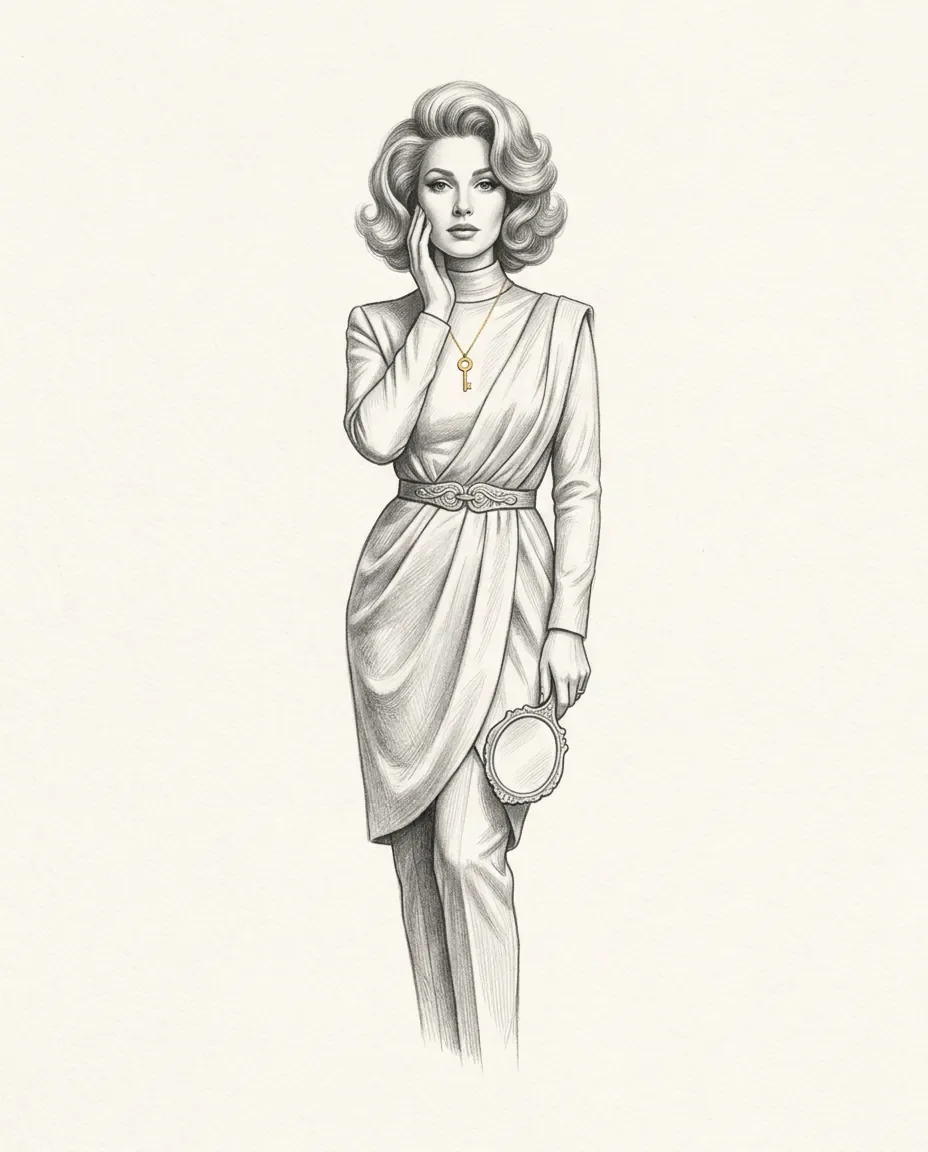
Bimbofication
Added 22 Jun 2026 · Updated 22 Aug 2026
A consensual transformation kink centered on arousal from adopting or imposing an exaggeratedly hyperfeminine "bimbo" persona: its look, behaviour, and mindset.
- Prevalence
- Uncommon
- Category
- Identity & Transformation
- Domain
- Sexual interest
- Confidence
- Low confidence
- Status
- Subcultural transformation kink, not a recognized DSM-5-TR/ICD-11 diagnosis; benign and clinically irrelevant between consenting adults absent distress or impairment.
- Also known as
- bimboification, bimbo transformation, becoming a bimbo, bimbo kink, bimbo play
- Added
- 22 Jun 2026
- Updated
- 22 Aug 2026
Featured in
Overview
Bimbofication (also spelled bimboification) is a consensual transformation kink built around arousal from adopting, or imposing on a partner, an exaggeratedly hyperfeminine "bimbo" persona: heavy glam styling, revealing dress, stylised behaviour, and a deliberately playful, simplified mindset. The fantasy centres on the transformation itself rather than any fixed end state, and it sits within the broader transformation ("TF") kink family. It is a named subcultural interest, not a clinical diagnosis, and appears in no edition of the DSM or ICD. This article covers where the kink came from, how it is expressed, its proposed psychology, its place within the much larger cultural "bimbo" moment, and the consent line between self-directed play and pressure imposed on a partner.
Definition & scope
Bimbofication describes eroticised transformation toward a hyperfeminine archetype, whether performed on oneself or negotiated with a partner. The emphasis is on process (styling, dressing, and adopting a persona) rather than on any permanent physical outcome. It should be separated from two neighbouring things it is often confused with. It is not the satirical BimboTok performance, which is a gender-politics aesthetic rather than a sexual practice, and it is not a recognised paraphilia; it has never been catalogued among those on Wikipedia's List of paraphilias. Within kink it overlaps heavily with forced-feminization and doll-transformation themes without being identical to either.
Examples
The kink is easiest to place by separating the transformation itself from the archetype it aims at, since almost every neighbouring interest shares one but not the other.
What the term covers. Glam styling and hyperfeminine dress adopted as an erotic act rather than as everyday wardrobe; persona and speech play sustained across a scene; suggestion-themed audio and captioned media borrowed from hypnokink; and, most of all, drawn art and written fiction, which is the form the kink was born in and still lives in. It may be entirely self-directed, or negotiated between adult partners with one directing and one transforming.
What the term does not cover. The satirical BimboTok performance is a gender-politics aesthetic, not a sexual practice, and conflating the two is the single most common error in popular coverage. Sissification turns on crossing a gender line, which bimbofication need not involve, and sissy hypno is a specific pornographic media genre rather than a scene. Dollification and the wider robot and doll interest transform a person toward the inanimate, and dronification toward machine-like obedience. Mindbreak is a hentai fiction trope of coerced psychological collapse, and the coercion is exactly what separates it from a negotiated kink. Breast expansion is a body-morph fantasy that often accompanies bimbofication artwork without being the same interest.
How the word is used. It is community vernacular from transformation fandom, spelled bimbofication or bimboification with neither form dominant, and it has no Greek-rooted clinical synonym because no clinician coined it. It appears in neither DSM-5-TR nor ICD-11, and is absent from Wikipedia's List of paraphilias; Dictionary.com added it as a slang entry only in April 2026.
History & origins
Bimbofication has two intertwined but distinct histories: the lineage of the word, and the much shorter lineage of the kink, which is a creature of the internet.
Where does the word "bimbo" come from?
The root term long predates the fetish. "Bimbo" derives from Italian bimbo ("baby, little child") and entered English in the early 1900s, at first denoting a stupid or contemptible man; only later did usage shift toward an attractive but unintelligent woman. By the late twentieth century it had hardened into a sexist insult, the backdrop against which both the later kink and the 2020s reclamation would form.
The kink as an internet phenomenon
The kink itself grew out of online fan-fiction and transformation-art communities rather than any clinical literature.
- 2009: Dictionary.com traces the earliest recorded online use of "bimbofication" to a "Weird Fanart Thread" on the SomethingAwful forums.
- 2013: the subreddit r/bimbofication launched as a hub for themed fan fiction and transformation art.
- 2010s: the interest spread across Tumblr, DeviantArt, Discord and Reddit within the wider transformation-art ecosystem, well before any mainstream visibility.
Because the kink originated in fandom rather than sexology, no clinician "coined" it and it carries no Greek-rooted clinical name.
From kink to cultural moment
Around 2021 the broader bimbo aesthetic, distinct from the fetish, surged into mainstream culture. i-D declared 2021 "the year of the bimbo," and Gen Z creators on "BimboTok" reframed the once-derogatory label as a self-aware, hyperfeminine performance, often paired with progressive politics. Rolling Stone profiled this reclamation (associated with creators such as Chrissy Chlapecka) as conscious, satirical empowerment rather than a sexual practice. The fetish sense re-entered headlines in April 2026, after reporting tied Bryon Noem, husband of U.S. Homeland Security Secretary Kristi Noem, to the scene; the attention prompted Dictionary.com to add a slang entry on April 2, 2026, and outlets including Newsweek to explain the subculture to general readers.
In practice
Expression is overwhelmingly aesthetic and role-play based. Citing the Progressive Therapeutic Sex Kink Dictionary, Newsweek describes it as "role-playing and transforming oneself into a stereotypical portrayal of a 'bimbo'" through hyperfeminine clothing, exaggerated makeup, props, and persona work. It overlaps with several adjacent interests: hypnokink (suggestion-themed mental "reprogramming"), sissification and forced-feminization scenes, and doll transformation. It may be self-directed or negotiated between partners. For some, the appeal includes eroticised objectification; for others it is playful identity exploration with no degradation element at all.
Psychology
What is the appeal of bimbofication?
Proposed accounts are largely non-clinical, because the interest has attracted almost no formal study. They link the appeal to surrender of control, escape from everyday responsibility, eroticised objectification, and the pleasure of self-reinvention through a heightened persona: motivations seen across the transformation and identity-kink family, including self-as-female arousal. Absent distress, impairment, or coercion it has no clinical significance and is not a disorder. The evidence base here is essentially anecdotal, drawn from community self-report rather than research.
Prevalence & culture
How common is bimbofication?
The kink itself is uncommon and has no dedicated prevalence survey. What is well documented is the surrounding cultural visibility: the 2021 "year of the bimbo" moment described by i-D and Rolling Stone, the active r/bimbofication community, and a sharp 2026 spike in mainstream coverage. The two must be kept apart: the satirical BimboTok performance is a gender-politics phenomenon, while bimbofication proper is a sexual transformation kink. Formal research attention on the fetish stays minimal.
Safety, consent & law
Between consenting adults the kink is legal and benign, with no inherent legal issues beyond those of any consensual adult activity. The salient ethical concern is consent: Newsweek reported partners feeling pressured, directly or indirectly, toward unwanted appearance changes. Responsible practice therefore centres on negotiation, enthusiastic and informed consent, and an unconditional right to withdraw, especially where the fantasy touches lasting changes to a partner's body or self-image.
Common questions
Is bimbofication the same as the bimbo trend on TikTok?
No, and they are routinely confused. The TikTok phenomenon, sometimes called BimboTok, is a self-aware reclamation of a sexist insult as hyperfeminine performance, often paired with progressive politics and profiled as satire by Rolling Stone. Bimbofication is a sexual transformation kink that predates it by roughly a decade. They share an archetype and nothing else.
Does bimbofication involve permanent body modification?
Usually not. The fantasy centres on the process of transformation rather than any fixed end state, and most expression is clothing, makeup, persona work, artwork and fiction. Some participants do pursue lasting cosmetic changes, and that is where the ethics get serious: a permanent decision taken to satisfy someone else's fantasy is the situation the consent guidance in this article is written for.
What is the difference between bimbofication and sissification?
Sissification is defined by crossing a gender line: typically a man directed into feminine presentation, with the crossing itself supplying the charge. Bimbofication is defined by an archetype, and a woman transforming into an exaggerated version of hyperfemininity is squarely within it. The two overlap heavily in practice, since a sissification scene often aims at precisely the bimbo persona, but the defining move differs.
Is bimbofication degrading to women?
It is genuinely contested, and honest answers vary. The archetype descends from a sexist insult, and for some participants eroticised objectification is explicitly part of the appeal. For others it is playful self-reinvention with no degradation element at all, and participants are not only women. What separates a kink from an insult here is that the person being transformed chose it and can stop.
Why did bimbofication suddenly appear in the news in 2026?
In April 2026, reporting tied Bryon Noem, husband of U.S. Homeland Security Secretary Kristi Noem, to the subculture. The attention drove enough lookup traffic that Dictionary.com added a slang entry on 2 April 2026, and outlets including Newsweek published explainers. The kink itself had existed online since roughly 2009 and was unchanged by the coverage.
Is bimbofication a paraphilia or a mental disorder?
No. It has never been catalogued as a paraphilia and appears in no edition of the DSM or ICD. Absent distress, impairment or coercion it carries no clinical significance whatsoever. It also has essentially no research literature: what is written about its psychology is inference from the wider transformation-kink family and community self-report, not evidence.
- Transformation Fetish33/100Metamorphophilia · Identity & TransformationA transformation fetish is an erotic or imaginative fascination with the process of a body changing form into something else. That might be an animal, an object, or another kind of being. The appeal centers on the metamorphosis itself rather than the end state.33
- Robot / Doll Fetish35/100Agalmatophilia · Identity & TransformationAn erotic interest in robots, androids, dolls, or in being or treating a person as an artificial, programmable, or immobile being. The community is often called ASFR (alt.sex.fetish.robots), and it overlaps with agalmatophilia.35
- Hypnokink44/100Power, Roles & ScenariosA consensual psychological power-exchange interest, usually called erotic hypnosis, in which arousal centers on trance and suggestion. The fantasy is of one partner influencing another's mind. It plays with surrender of will between adults using relaxation and suggestion techniques.44
- Sissification43/100Identity & TransformationA consensual power-exchange role-play in which one adult partner directs another, usually a cisgender man, to adopt feminine presentation. It is often combined with submission or humiliation themes. The word "forced" denotes a negotiated fantasy, not actual coercion.43
- Self-As-Female Arousal32/100Autogynephilia · Identity & TransformationAutogynephilia is a contested research construct describing sexual arousal at the thought or image of oneself as female. The proposed pattern concerns people assigned male. It appears in the DSM-5 only as a specifier for transvestic disorder, not as a stand-alone diagnosis.32
- Macrophilia41/100Macrophilia · Identity & TransformationA sexual interest in giants, or in fantasies of a partner, or oneself, being vastly larger than human scale. An imagination-driven size fetish (online: "giantess" or "GTS"), expressed almost entirely through art, fiction, and media rather than physical activity.41
The colloquial name combines "bimbo" + the suffix "-fication" ("the process of making into"). "Bimbo" derives from Italian bimbo ("baby, little child"); it entered English in the early 1900s, initially for a stupid or contemptible man and later for an attractive but unintelligent woman. The kink term and its variant "bimboification" arose in online transformation-fandom communities rather than in any clinical source.
forced feminization · transformation play · persona role-play · media-driven
Prevalence is computed from the entry's cited population estimate. Rows marked ESTare indicative editorial estimates scored against a fixed anchor rubric, not measured quantities. Method & anchors: methodology.
Uncommon · ≈ 1 in 100
- 01bimbofication, Dictionary.com Slangdefinition; origin timeline (2009 SomethingAwful, 2013 r/bimbofication, ~2021 TikTok); slang entry added April 2, 2026 after Bryon Noem coverage
- 02What Is Bimbofication? Inside Bryon Noem's Alleged Fetish Subculture, Newsweekdefinition as a kink/fetish involving role-play and transformation into the bimbo archetype; consent-pressure concerns; not framed as a clinical paraphilia
- 03Bimbo TikTok: People Who Engage in a Performance of Hyperfemininity, Rolling Stonecultural reclamation of 'bimbo' as self-aware hyperfeminine performance/empowerment distinct from the kink (Chrissy Chlapecka, BimboTok)
- 042021 is the year of the bimbo, i-D2021 mainstream cultural visibility surge ('year of the bimbo'); hyperfemininity reframed as gender performance and anti-capitalist critique
- 05List of paraphilias, Wikipediaframing within the transformation/identity kink family; bimbofication is not listed as a recognized paraphilia