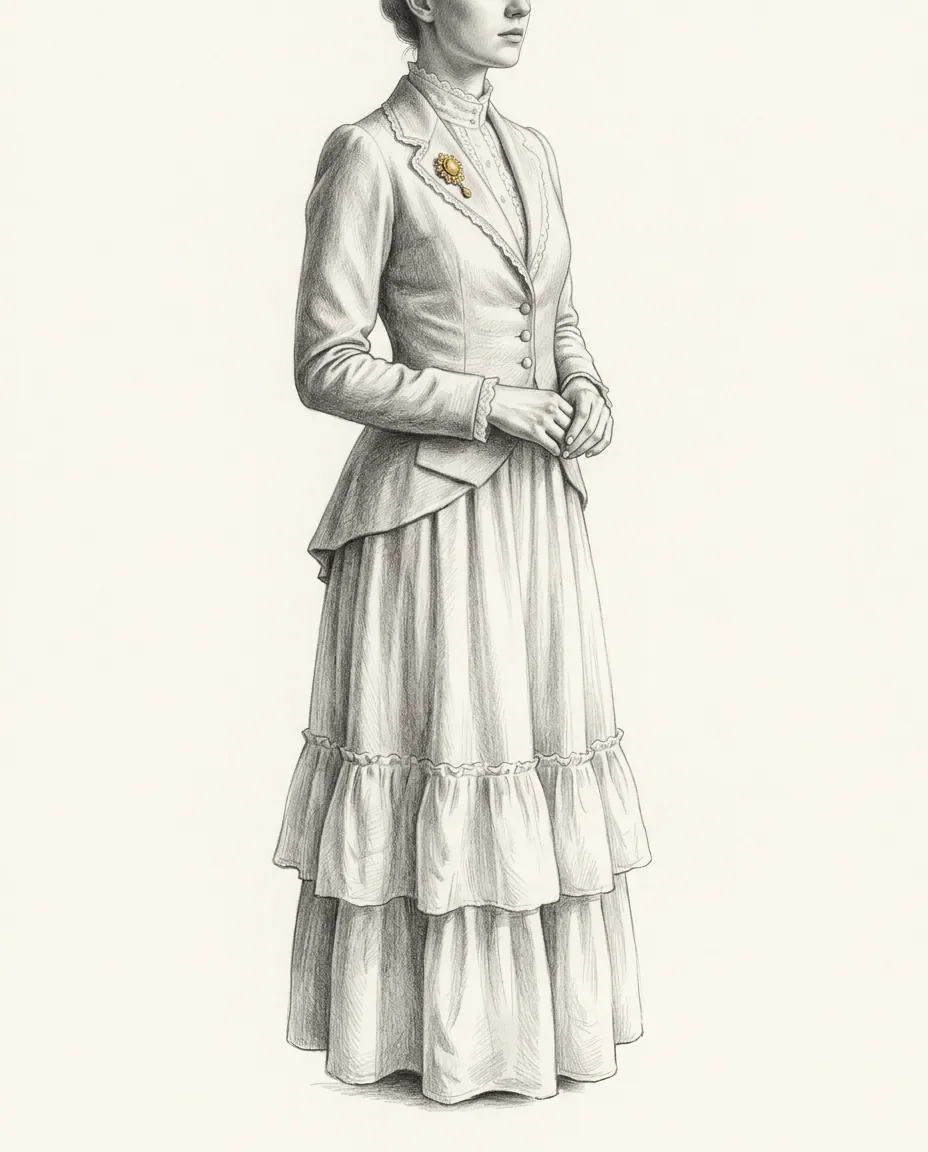
Sissification
Added 21 Jun 2026 · Updated 22 Aug 2026
A consensual power-exchange role-play in which one adult partner directs another, usually a cisgender man, to adopt feminine presentation. It is often combined with submission or humiliation themes. The word "forced" denotes a negotiated fantasy, not actual coercion.
- Prevalence
- Uncommon
- Category
- Identity & Transformation
- Domain
- Sexual interest
- Confidence
- Low confidence
- Status
- Consensual adult power-exchange role-play, not a clinical paraphilia; benign when negotiated between consenting adults.
- Also known as
- forced feminization, Forced feminization (Sissification role-play), sissy play, forced fem, feminization play, feminization, forcefem
- Added
- 21 Jun 2026
- Updated
- 22 Aug 2026
Featured in
Overview
Sissification, also called forced feminization, sissy play or forcefem, is a consensual, BDSM-adjacent role-play in which a dominant partner guides a typically male, usually cisgender submissive into a feminine-coded presentation as part of a power-exchange scene. Despite the word "forced," the dynamic is pre-negotiated and fully consensual; the apparent compulsion is the agreed theme of the fantasy rather than real coercion. It blends play with gender presentation, surrender of control, and, for many participants, eroticised humiliation. This article traces the practice's roots in early sexology, its emergence as a named scene vocabulary, and what is known about its psychology and reach.
Definition & scope
Two threads run through the practice and are worth separating. The first is presentation: dress, cosmetics, mannerism and voice coded as feminine. The second is the power-exchange frame: a dominant "assigns" that presentation, and the submissive receives it as an instruction. Sissification is defined by the pairing of the two. Wearing feminine clothing alone is plain cross-dressing; it becomes sissification when the transformation is staged as something done to the submissive within a scene. The role-play says nothing about the participant's gender identity: the submissive is usually a cisgender man who does not experience himself as a woman and treats the scene as fantasy, a point the encyclopedic account of feminization as a sexual activity makes explicitly.
Examples
What the term covers. A negotiated scene in which one adult assigns another a feminine-coded presentation and the other receives it as an instruction: dress and cosmetics, a chosen name or persona, manner, posture and voice, often with protocol, obedience training or a service role attached; the maid costume is a recurring staple. Tone varies enormously and follows whatever the partners agreed beforehand: some scenes lean hard on eroticised humiliation, others are warm and affirming with no put-down in them at all. All of it is between consenting adults, negotiated in advance, with limits and a safeword.
What the term does not cover. Plain cross-dressing has no power-exchange frame; it is someone wearing what they want to wear. Transvestic disorder is a narrow diagnosis reserved for cases where arousal from cross-dressing causes real distress or impairment, which a negotiated scene does not describe. Self-as-female arousal turns on the thought of oneself as female with nobody directing it; the gender-swap fantasy imagines a changed body rather than changed dress; female masking works through prosthetics; homeovestism runs the other way. Above all it is not a statement about identity: a role a partner assigns in a scene indicates nothing about whether someone is transgender, a trans woman or a femboy. And the "forced" in forced feminization is a theme, not a fact; the same scene without agreement is abuse, not a kink.
How the word is used. Scene vocabulary, out of fetish print media and then online kink communities: "sissification," "forced feminization," "forcefem," "sissy play." Outside those communities "sissy" is a plain insult, a nineteenth-century diminutive of sister turned pejorative, and many people who enjoy the practice dislike the word for exactly that reason. None of these terms appears in DSM-5-TR or ICD-11.
History & origins
Clinical lineage
The building blocks of the practice, cross-dressing and the eroticisation of feminine presentation, were documented in early sexology long before the scene acquired its modern slang. The lineage runs roughly:
- 1886: Richard von Krafft-Ebing's Psychopathia Sexualis catalogues cross-dressing and feminine-clothing arousal among the early sexual case studies.
- 1910: Magnus Hirschfeld coins transvestite (from Latin trans- + vestitus, "cross-dressed") in Die Transvestiten, deliberately separating the wearing of opposite-sex clothing from sexual orientation and identity.
- 1920: Havelock Ellis proposes eonism, named after the eighteenth-century French diplomat the Chevalier d'Éon (who lived publicly as a woman for decades), as an alternative term, disagreeing with Hirschfeld's framing.
- 1949–1968: David Cauldwell, John Money and Robert Stoller develop the vocabulary of "transsexualism," "gender role" and "gender identity," finally prising presentation apart from identity in clinical thought.
- DSM / ICD: twentieth-century manuals listed "fetishistic" and "dual-role" transvestism, and "transvestic disorder" only where it causes distress; the ICD-11 (2022) removes these categories entirely, reflecting the depathologisation of consensual cross-dressing.
None of these clinical terms name sissification. They matter because they are the point at which Western thought learned to treat feminine presentation as separable from both orientation and identity, the conceptual ground the later role-play stands on.
Cultural & subcultural evolution
The specific scene-based vocabulary of "forced feminization," "sissy," and "sissification" is a product of mid-to-late twentieth-century fetish and BDSM subcultures rather than the clinical literature. Its precise coinage is not well documented, but it crystallised through fetish print media and adult publishing and then spread rapidly through online kink communities from the 1990s onward. The sociologist Danielle Lindemann's Dominatrix (2012), an interview study of professional dominatrices in New York and San Francisco, records that about a third of one practitioner's 305 clients wanted to be made to cross-dress, situating feminization firmly within commercial as well as private kink practice. Modern manuals do not classify the role-play itself as a disorder: it is understood as consensual adult play, conceptually adjacent to transvestic interests but defined by its power-exchange framing.
In practice
The scene is expressed through clothing, cosmetics, grooming, manner, voice, and assigned personas, frequently blended with obedience training, protocol, or eroticised humiliation. Intensity and meaning vary widely, from playful and affirming to strongly humiliation-focused, according to what the partners negotiate in advance. It overlaps with adjacent interests such as general cross-dressing and transformation fantasies like self-as-female arousal.
Psychology
Common proposed drivers include the release found in surrendering control, the erotic charge of transgressing gender norms within a safe frame, and the appeal of transformation: of being "remade" by a partner. As the encyclopedic account and clinical commentary stress, the practice is distinct from gender identity: the submissive partners are typically cisgender men who do not identify as women and treat the scene as play, although it can overlap with broader cross-dressing or transformation interests. The evidence base is thin: most analysis is qualitative or drawn from professional-domination accounts rather than controlled study, and theories of mechanism remain contested.
Prevalence & culture
Formal prevalence research targeting sissification specifically is scarce, so estimates rely on community-size proxies and broader fantasy surveys. Lehmiller's 2018 survey of 4,175 Americans found dominance/submission and humiliation fantasies to be near-universal, the wider space within which forced-feminization fantasies sit. Lindemann's study of 305 professional-domination clients found about a third were interested in being made to cross-dress, indicating substantial demand within paid kink. Within kink communities it is a well-established theme with sizable online groups (a FetLife community-size proxy shows active forced-fem and sissy groups) and moderate visibility through adult media; the lay press, such as Glamour's A–Z of kinks, treats it as a recognised role-play.
Safety, consent & law
Between consenting adults the practice is legal and benign. Ethical practice centres on explicit negotiation, clearly distinguishing the consensual fantasy from genuine coercion, attentiveness to the emotional weight of humiliation elements, agreed limits, safewords, and aftercare: the humiliation dimension can carry real psychological charge, so check-ins and aftercare matter especially here.
Common questions
Does "forced feminization" mean someone is actually being forced?
No. The word names the theme of the fantasy, not the situation. These scenes are negotiated in advance between consenting adults, with agreed limits and a safeword, and the appearance of compulsion is the thing both people set out to produce. Feminising someone who has not agreed to it is not this practice at all: that is coercion, and depending on what it involves it may well be a crime.
Does enjoying sissification mean someone is transgender?
No. Participants are usually cisgender men who do not experience themselves as women and treat the scene as play. Being transgender concerns a person's own sense of their gender and persists outside any scene; a role assigned by a partner for an evening is not evidence of it. The two can coexist in one person, as any interest can coexist with any identity, but neither implies the other.
What is the difference between sissification and cross-dressing?
The power exchange. Cross-dressing is wearing clothes associated with another gender, for whatever reason the wearer has (comfort, arousal, self-expression) and needs no second person. Sissification is that same presentation staged as something a dominant partner directs and a submissive receives. Take the instruction away and what remains is cross-dressing; leave it in and the clothes become the instrument of a scene rather than the point of it.
Is sissification degrading?
It can be, deliberately, and that is what some participants want from it; eroticised humiliation is a common ingredient. It is not a required one: plenty of feminization play is affectionate or playful. What matters is whether the degrading elements were negotiated. Humiliation carries real psychological weight even when it is wanted, which is why explicit limits, safewords and aftercare matter more here than in gentler play.
Is sissification a paraphilia or a mental disorder?
No. It is consensual adult role-play and appears in neither DSM-5-TR nor ICD-11. The nearest diagnostic category, transvestic disorder, applies only where arousal from cross-dressing causes clinically significant distress or impairment, and ICD-11 removed the standalone transvestic categories in 2022 precisely to stop consensual variation being pathologised.
How common is sissification?
No survey targets it directly. It sits inside a very large fantasy space: Lehmiller's 2018 survey of 4,175 Americans found dominance, submission and humiliation fantasies to be near-universal. For the specific practice the best figure is commercial: the sociologist Danielle Lindemann recorded that about a third of one professional dominatrix's 305 clients wanted to be made to cross-dress, which indicates substantial paid demand rather than a general-population rate.
Is the word "sissy" offensive?
Outside the scene, yes. It is a straightforward insult aimed at men judged insufficiently masculine and has been used that way since the nineteenth century. Inside kink communities it is used deliberately and often self-applied, which is exactly what gives it its charge in a humiliation-flavoured scene. Neither fact cancels the other, and it is not a word to apply to anyone who has not chosen it.
- Cross-Dressing60/100Transvestism · Identity & TransformationWearing clothing associated with another gender, sometimes for erotic arousal and sometimes for comfort, self-expression, or relaxation. When arousal is persistent and causes distress it is diagnosed clinically as transvestic disorder; the interest itself is benign and distinct from transgender identity.60
- Gender Swap Fetish30/100Identity & TransformationAn erotic or imaginative interest in fantasy scenarios where a character changes sex or swaps bodies, rather than any real-world act. It is expressed mainly through fiction, art, captions, games, and role-play. A media-driven theme distinct from real gender identity.30
- Self-As-Female Arousal32/100Autogynephilia · Identity & TransformationAutogynephilia is a contested research construct describing sexual arousal at the thought or image of oneself as female. The proposed pattern concerns people assigned male. It appears in the DSM-5 only as a specifier for transvestic disorder, not as a stand-alone diagnosis.32
- Human Furniture27/100Forniphilia · Identity & TransformationA consensual power-exchange role-play in which a submissive adult takes the role of an object, such as a piece of furniture. A dominant partner then treats them as such. It is a negotiated dehumanization fantasy among consenting adults.27
- Cosplay Fetish43/100Identity & TransformationAn erotic interest in dressing as, or being with a partner dressed as, a specific fictional character, where costume and persona are both central to arousal. It blends costume, role-play, and fandom identity, and is a niche erotic facet of an otherwise non-sexual hobby.43
- Werewolf Attraction43/100Identity & TransformationAn erotic or romantic attraction to werewolves and other shapeshifters, a staple of paranormal and 'shifter' romance fiction. It is a media- and fantasy-driven interest in an imagined being, and is unrelated to clinical lycanthropy, the psychiatric delusion of becoming an animal.43
"Sissy" derives from a nineteenth-century diminutive of *sister*, later used pejoratively for an effeminate person; "sissification" is the colloquial action-noun built from it. "Forced feminization" is plain descriptive English, where *feminization* combines Latin *femina* ("woman") with the suffix *-ization*.
gender role-play · power exchange · humiliation play
Prevalence is computed from the entry's cited population estimate. Rows marked ESTare indicative editorial estimates scored against a fixed anchor rubric, not measured quantities. Method & anchors: methodology.
Uncommon · ≈ 1 in 100
- 01An A–Z of Kinks and Fetishes, Glamourlay framing of forced feminization/sissy play as a recognized BDSM role-play kink
- 02Lehmiller (2018), Tell Me What You Want, survey of 4,175 Americanssituates sissification within the near-universal dominance/submission and humiliation power-exchange fantasy space
- 03FetLife, kink community group sizes (community-size proxy)community-size proxy for sissification/forced-fem groups indicating an active niche
- 04Transvestism, Wikipedia (Hirschfeld 1910 coinage; Ellis's eonism; DSM/ICD lineage)historical lineage of cross-dressing terminology distinguishing presentation from identity; ICD-11 (2022) removal of transvestic categories
- 05Feminization (sexual activity), Wikipediadefinition of forced feminization/sissification as consensual BDSM role-play distinct from being transgender; Lindemann (2012) finding that ~a third of one dominatrix's 305 clients wanted to be made to cross-dress
- 06Richard von Krafft-Ebing, Psychopathia Sexualis (1886)early sexological documentation of cross-dressing and feminine-clothing arousal underpinning the practice
- 07Dominatrix: Gender, Eroticism, and Control in the Dungeon, Danielle J. Lindemann (University of Chicago Press, 2012)sociological interview study of professional dominatrices in New York and San Francisco; source for the finding that ~a third of one practitioner's 305 clients wanted to be made to cross-dress
- 08eonism, WiktionaryHavelock Ellis's 1920 coinage of eonism after the Chevalier d'Éon, an early alternative term for cross-dressing
- 09Chevalière d'Éon, Wikipediathe eighteenth-century French diplomat who lived publicly as a woman and after whom Ellis named eonism