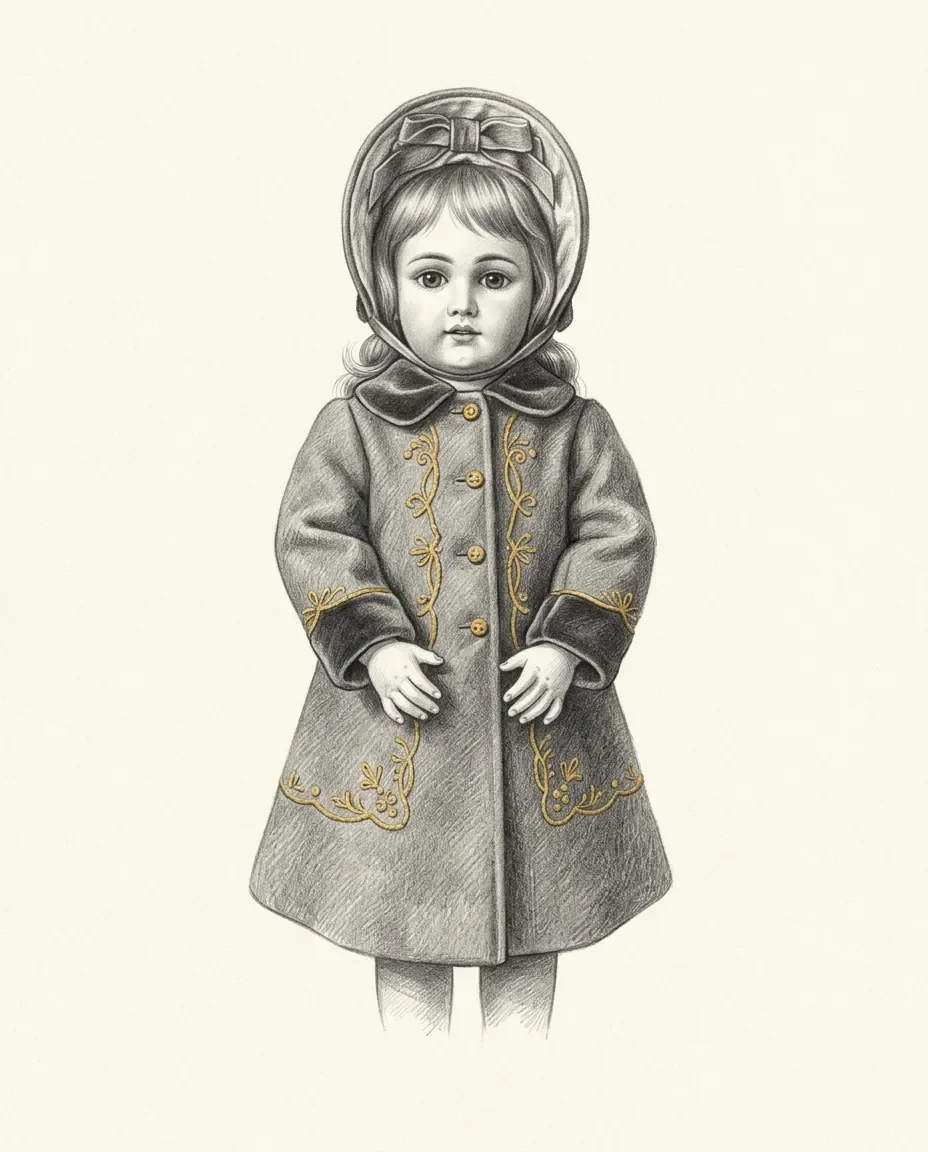
Dollification
Added 26 Jul 2026 · Updated 22 Aug 2026
A role-play and transformation kink in which one partner, the "doll", is styled, posed and treated as a lifelike human doll by a partner, the "maker". Costume, makeup, restrictive material or a doll-like persona create it. The charge comes from performing as a doll, not from attraction to an actual inanimate object.
- Prevalence
- Rare
- Category
- Identity & Transformation
- Domain
- Sexual interest
- Confidence
- Low confidence
- Status
- Not classified as a paraphilia or disorder in the DSM-5-TR or ICD-11 and not named in Wikipedia's List of paraphilias; a community role-play and transformation kink, benign between consenting adults.
- Also known as
- doll play, human doll play, doll transformation, doll and maker play
- Added
- 26 Jul 2026
- Updated
- 22 Aug 2026
Overview
Dollification is a role-play and transformation kink built around one partner adopting the look, posture and persona of a lifelike human doll while a second partner, called the maker, styles, poses and directs them. The person being transformed is called the doll. The relationship is explicitly a power exchange: the doll typically holds still poses, follows the maker's direction, and surrenders some ordinary autonomy, while the maker assembles the look and controls the scene. Dolls take many forms, from soft ragdolls and Barbie-style personas to poseable ball-jointed dolls, latex or rubber dolls, and even a science-fiction "AI fuckbot" persona, so the kink spans several materials and aesthetics rather than one fixed costume. This article covers the practice's terms and roles, how it differs from neighbouring interests it is often confused with, its psychology, and its standing in clinical and popular sources.
Definition & scope
Dollification centres on a person performing as a doll, not on attraction to an actual inanimate doll or statue. That distinction matters because it separates dollification from agalmatophilia, the clinical term for erotic or romantic attraction to statues, mannequins and dolls as objects in their own right. It also overlaps with, but is not identical to, female masking, which specifically involves a full-coverage silicone or latex prosthetic worn to conceal the wearer's own face and body; dollification can involve a mask and suit of that kind, but just as often uses ordinary costuming, makeup and posed stillness with no prosthetic at all. It shares its objectification logic with the broader objectification play family, and its transformation logic with kinks such as bimbofication and the robot/doll fetish (ASFR) community, where a person similarly adopts an artificial, programmable persona.
Examples
What the term covers. A maker dressing and making up a partner, then arranging them in held poses and photographing the result; a soft ragdoll or Barbie-style persona with a fixed expression and limp, arrangeable limbs; a poseable ball-jointed-doll persona that moves only when moved; a full-coverage latex or rubber doll; and the science-fiction "AI fuckbot" persona, in which the doll answers as a machine rather than as a person. Scenes range from a styling-and-photography session with no sexual contact at all to a sustained power-exchange scene in which stillness and compliance carry the whole dynamic.
What the term does not cover. Attraction to an actual doll, mannequin or statue as an object is agalmatophilia, and its wider form is object sexuality; dollification always has a person inside. Female masking and kigurumi masking are defined by the prosthetic mask and suit rather than by the doll persona, and a mask fetish is about the covering itself. Human furniture and pet play put a person into a different non-person role, an object of use or an animal, rather than a doll. Petrification is a fantasy of a body turning to stone, and the wider transformation fetish covers change of form in general.
How the word is used. "Dollification" is a community coinage built on the same "-ification" pattern as bimbofication, and the paired roles doll and maker are community vocabulary too. Neither the word nor the practice appears in DSM-5-TR or ICD-11, and it is absent from Wikipedia's List of paraphilias; the only clinical term anywhere near it names the object attraction it is not.
History & origins
Dollification has no single documented coinage or founding figure; like many contemporary kink labels, it consolidated informally within BDSM and fetish subcultures rather than emerging from a clinical source or a dated first use.
A community practice, not a clinical category
Unlike agalmatophilia, which entered the clinical vocabulary through nineteenth- and early-twentieth-century sexology (Krafft-Ebing's 1886 Psychopathia Sexualis, and the coinages pygmalionisme, 1891, and Statuenliebe, 1907), dollification as a role-play practice has never been catalogued as a paraphilia in its own right. It sits closer to the material- and persona-driven fetish scenes, such as latex and rubber fetishism, that grew through twentieth-century kink communities and, later, online forums and photo-sharing sites.
Documented practitioners and mainstream coverage
The clearest documentation comes from lifestyle journalism rather than research. Vice's 2016 feature "Come on Barbie, Let's Go Party: Inside the World of Dollification Kinksters" profiled several practitioners and fixed the terminology still used today: Danarama, self-described "Dean of Kink University" and a maker who calls himself "very empathetic and very artistic"; Despoena Calypso, a performer who takes on an "AI Fuckbot" doll persona; the photographer Kat Toronto, whose series Dolls in the House of Venus frames femininity itself as performance; and the adult performer Odette Delacroix, who engages in submissive doll role-play. The same piece catalogues doll varieties including ragdoll, ball-jointed/poseable doll, Barbie, rubber doll, kitten/puppy doll, and the AI fuckbot persona, and links the kink to the neighbouring bimbofication transformation fantasy. A related 2018 Vice profile of a full-body latex practitioner known as "Die Gummipuppe" ("the rubber doll") illustrates the latex-focused end of the spectrum: she describes wanting "every centimetre" of her body covered in tight-fitting rubber while insisting, "I don't have a latex fetish," locating her interest in the doll transformation itself rather than the material alone.
In practice
A session typically begins with the maker dressing, posing, and sometimes applying makeup or a mask to the doll, who holds still positions, follows directed movement, or is otherwise treated as an object to be arranged and displayed. Some scenes lean toward craft and visual composition, echoing the still-life aesthetic of statue and doll fetish; others foreground erotic power exchange, with the doll's compliance and stillness read as submission. Encasement materials such as latex or rubber, when used, add a further sensory and restrictive layer, connecting the practice to the wider objectification play family and to material fetishes more broadly. Duration and intensity are negotiated in advance, as in other structured power-exchange scenes.
Psychology
As Wikipedia's overview of doll fetishism frames it, gratification in doll-themed interests can come from imagining a transformation into a doll, transforming another person into one, or simply the aesthetic and erotic charge of the doll-like form itself. For the maker, the appeal often centres on creative control and craftsmanship, styling a living person into an idealised, doll-like image. For the doll, accounts emphasise the relief of surrendered agency, the meditative quality of sustained stillness, and playful, non-judgemental objectification rather than degradation. Because the interest has drawn essentially no dedicated academic study, these accounts remain descriptive and community-sourced rather than clinically established.
Prevalence & culture
Dollification has no dedicated prevalence survey and is not named in general surveys of atypical sexual interest. It is not listed as a distinct entry on Wikipedia's List of paraphilias, and doll fetishism itself is treated there only as a narrow subset of the broader, and itself rare, category of agalmatophilia. Community visibility runs through niche photography, fetish modelling, and periodic magazine or documentary coverage rather than large forums, placing it well into the long tail of kink interests by any reasonable estimate.
Safety, consent & law
Between consenting adults, dollification is legal and carries no inherent legal issues. It is not classified as a disorder under the DSM-5-TR or ICD-11, which reserve paraphilic-disorder status for patterns causing significant distress, impairment, or harm to a non-consenting party. Where costuming involves restrictive materials, masks, or prolonged stillness, the practical concerns mirror those of other encasement and bondage-adjacent play: managing temperature, breathing, circulation and hydration, and maintaining clear signals so the doll can end the scene at will. As with any negotiated power-exchange dynamic, ongoing, informed consent and aftercare that reaffirms the person behind the persona are what keep the practice healthy.
Common questions
What is the difference between dollification and agalmatophilia?
Dollification is something a person does; agalmatophilia is something a person feels toward an object. In dollification the doll is a living partner performing stillness, poses and a doll persona, and the erotic charge runs through that performance and the power exchange around it. Agalmatophilia is attraction to statues, mannequins or dolls as objects in their own right, with nobody inside them. A person can have both, but they are separate interests.
Do you need a mask or a latex suit for dollification?
No. Costuming runs from ordinary clothes, makeup and a wig to a full silicone mask and latex bodysuit, and plenty of scenes use none of it: held poses, directed movement and a doll persona are enough on their own. The material-heavy end overlaps with encasement and mask interests, but it is one style within dollification rather than a requirement of it.
What does the "maker" actually do?
The maker styles, dresses, poses and directs the doll, and usually controls how the scene runs and when it ends. Practitioners interviewed by Vice in 2016 describe the role in craft terms (assembling a look, composing an image, arranging a living person into an idealised form) as much as in dominant ones. It is a directing role, and like any dominant role it carries responsibility for the other person's comfort and safety.
Is dollification degrading?
Only if both people want it to be. Objectification is the mechanism, but practitioner accounts more often describe it as playful and non-judgemental than as humiliating; the reported appeal is the relief of surrendered choice and the meditative quality of stillness, not being demeaned. Where a scene is meant to sting, that is closer to degradation or humiliation play, which are separate interests that can be folded in or left out entirely.
Is dollification a paraphilia or a mental-health problem?
No. It is negotiated role-play between consenting adults and is not named as a disorder in DSM-5-TR or ICD-11, which reserve paraphilic-disorder status for patterns causing significant distress, impairment, or harm to someone who has not consented. It is not listed as a paraphilia in the reference literature either, and no dedicated clinical study of it exists.
What are the safety risks in a dollification scene?
They come from the costume and the stillness rather than from the role-play. Full-coverage latex and masks trap heat and can restrict breathing and vision, so temperature, airflow and hydration need watching. Long held poses restrict circulation and stiffen joints, and tight materials can hide numbness until it matters. Because a doll persona often involves not speaking, agree a non-verbal signal (a dropped object, a tap) that ends the scene instantly.
How is dollification different from bimbofication?
Both are transformation kinks, but they aim at different end states. Bimbofication is about becoming an exaggeratedly hyperfeminine persona that still talks, wants and acts. Dollification aims at object-ness: stillness, posability, and being arranged by someone else. The two overlap in appearance, since a Barbie-style doll persona sits between them, and people drawn to one often enjoy the other.
- Statue / Doll Fetish19/100Agalmatophilia · Objects & MaterialsAgalmatophilia is a sexual or romantic attraction to statues, mannequins, dolls, or other lifelike representations of the human form. A linked theme, Pygmalionism, centres on fantasies of such a figure coming to life, or of a living body turning to stone or freezing into immobility.19
- Female Masking17/100Identity & TransformationFemale masking is the practice of wearing a lifelike full-head silicone or latex mask to present as a woman or as an idealized doll-like figure. A matching body suit is usually worn with it. It centres on transformation, embodiment and total concealment of the wearer's own identity.17
- Robot / Doll Fetish35/100Agalmatophilia · Identity & TransformationAn erotic interest in robots, androids, dolls, or in being or treating a person as an artificial, programmable, or immobile being. The community is often called ASFR (alt.sex.fetish.robots), and it overlaps with agalmatophilia.35
- Objectification Play41/100Power, Roles & ScenariosA consensual power-exchange dynamic in which one partner is treated, by agreement, as an object or a possession. That can mean serving as a piece of "furniture," being addressed in object terms, or being framed as an owner's property. Arousal comes from the eroticized, negotiated loss of personhood.41
- Bimbofication41/100Identity & TransformationA consensual transformation kink centered on arousal from adopting or imposing an exaggeratedly hyperfeminine "bimbo" persona: its look, behaviour, and mindset.41
- Latex Fetish62/100Latex fetishism · Objects & MaterialsAn erotic interest in latex garments and their tight, glossy, second-skin qualities. A common material fetish involving the look, feel, sound, smell, and enveloping sensation of clinging latex on consenting adults.62
A modern community coinage combining "doll" with the suffix "-ification" ("the process of making into"), on the same pattern as related kink terms such as "bimbofication." It has no separate clinical or Greek-rooted name; the neighbouring clinical term for attraction to dolls as objects is agalmatophilia.
objectification · transformation play · doll play · power exchange
Prevalence is computed from the entry's cited population estimate. Rows marked ESTare indicative editorial estimates scored against a fixed anchor rubric, not measured quantities. Method & anchors: methodology.
Rare · ≈ 1 in 1,000
- 01Come on Barbie, Let's Go Party: Inside the World of Dollification Kinksters, Vice (2016)core definition, the doll/maker terminology, documented practitioners (Danarama, Despoena Calypso, Kat Toronto, Odette Delacroix), and doll variety types
- 02Doll fetishism, Wikipediaclassification of doll-themed attraction as a subset of agalmatophilia/object sexuality and the transformation-into-a-doll theme
- 03We Spent a Day With a 'Human Rubber Doll', Vice (2018)full-body latex "Die Gummipuppe" practitioner profile distinguishing the doll-transformation motive from a plain latex/material fetish
- 04Agalmatophilia, Wikipediathe clinical lineage of doll/statue attraction as a distinct object-attraction paraphilia, used here to draw the contrast with performative dollification
- 05List of paraphilias, Wikipediadollification is not itself listed as a recognized paraphilia; doll fetishism appears only as a narrow subset of agalmatophilia
- 06DSM-5-TR, American Psychiatric Associationconsensual role-play/transformation kinks are not paraphilic disorders absent distress, impairment or non-consent
- 07ICD-11, World Health Organizationconsensual role-play/transformation kinks are not classified as a disorder absent distress or harm