Chremastistophilia (Being Robbed)
Chremastistophilia
Added 21 Jun 2026 · Updated 22 Aug 2026
Chremastistophilia (more often spelled chrematistophilia) is a paraphilic interest in being robbed, held up, or coerced for money or sexual services. Where it is acted on at all, it takes the form of consensual, negotiated fear-play between trusted partners.
- Prevalence
- Rare
- Category
- Power, Roles & Scenarios
- Clinical term
- Chremastistophilia
- Domain
- Sexual interest · Paraphilia
- Confidence
- Low confidence
- Status
- Niche paraphilic interest noted in reference catalogues; not a standalone DSM-5-TR disorder and benign when practiced as consensual fear-play.
- Also known as
- chremastistophilia, robbery fetish, arousal at being robbed, held-up role-play, stick-up fantasy
- Added
- 21 Jun 2026
- Updated
- 22 Aug 2026
Featured in
Overview
Chremastistophilia, more commonly spelled chrematistophilia, is a paraphilic interest in which sexual arousal is tied to being robbed, held up, blackmailed, or coerced into surrendering money or possessions. The charge comes from the simulated threat and the surrender of control that a hold-up scenario stages, not from any real loss. It sits at the meeting point of fear-play and power-exchange, and it is documented here descriptively, without instruction, because in its only defensible form it is a piece of theatre agreed in advance between adults.
Definition & scope
The interest names a receiving position: arousal at being the victim of a staged robbery or extortion. Reference works gloss it plainly as "sexual arousal obtained from being robbed", and some glossaries extend it to arousal at being charged, overcharged, or financially exploited for sexual services. Its mirror term is kleptolagnia, arousal at committing theft rather than at suffering it.
Two boundaries matter. First, the interest is in the simulation: a real robbery is a crime and a trauma, not a scene. Second, it is distinct from consensual financial-domination play, where money genuinely changes hands by agreement; here the money is a prop and the threat is the point.
Examples
What the term covers. Most of it is fantasy and stays there. Where it is staged, the recurring shapes are a hold-up between partners with a demand and a prop weapon, a break-in scenario in which the "intruder" is expected, and an extortion or blackmail storyline built on threat rather than on any real leverage. Some glossaries stretch the term further, to arousal at being overcharged or financially taken advantage of in a sexual transaction; that reading is broader than the core sense, which is straightforwardly about being held up.
What the term does not cover. An actual robbery, theft, extortion or blackmail is a crime with a victim, and nothing here describes or excuses one; the interest is in the scenario, and it survives contact with reality only as theatre. Findom involves money genuinely changing hands by agreement, where the transfer rather than the menace is the point. Kleptophilia, sometimes called kleptolagnia, is the mirror position: arousal at doing the stealing. Consensual non-consent is the wider frame of pre-agreed resistance, fear play the wider family of staged threat, and interrogation play a sibling scenario within it.
How the word is used. It is catalogue vocabulary that almost nobody says out loud. Kink communities describe the scene (a "hold-up scene," a "home-invasion role-play") without ever reaching for the Greek label, which lives in appendices of named paraphilias and in no diagnostic manual: neither DSM-5-TR nor ICD-11 lists it.
History & origins
A late, glossary-born coinage
Unlike the body-part and clothing fetishes catalogued by Richard von Krafft-Ebing in Psychopathia Sexualis (1886), this is a modern label. It belongs to the wave of -philia terms produced in the second half of the twentieth century, above all by the American psychologist and sexologist John Money (1921–2006), who popularised the umbrella word paraphilia in clinical English and set out the lovemap framework in his book Lovemaps (1986), in which each paraphilia is described as a developmentally encoded template of arousal.
The name is built from the Greek stem chrēmatistēs (χρηματιστής, "money-dealer" or "money-maker") plus the combining form -philia, "love of, affinity for." Its written form never settled: the longer chremastistophilia and the shorter, more etymologically faithful chrematistophilia both circulate, which is itself a tell. Terms with an active research literature stabilise their spelling; terms that live in catalogues do not. Compendia in that catalogue tradition, such as Anil Aggrawal's Forensic and Medico-legal Aspects of Sexual Crimes and Unusual Sexual Practices (2009), append lists of several hundred named paraphilias, and it is in lists of that kind, rather than in primary studies, that this one mostly appears.
The one documented case
The interest acquired its best-known illustration through Money's collaboration with an incarcerated offender. In 1993 Money co-authored The Armed Robbery Orgasm: A Lovemap Autobiography of Masochism (Prometheus Books) with Ronald W. Keyes, who described becoming sexually aroused during a string of armed robberies he carried out under the domination of his partner. The book is read as a case study in how masochism, submission and the eroticization of danger can fuse, and it remains one of the very few long-form documents that touch the theme at all. The case is presented as pathology and crime, not as a template. Whatever benign version of this interest exists, exists only in simulation.
Older threads
The raw material, the eroticization of fear, threat and helplessness, is much older than the label. Money pointed to a literary antecedent in the Marquis de Sade, whose Juliette (1797–1801) gives a character who fuses theft with sexual climax. The label is new; the fantasy is not.
In practice
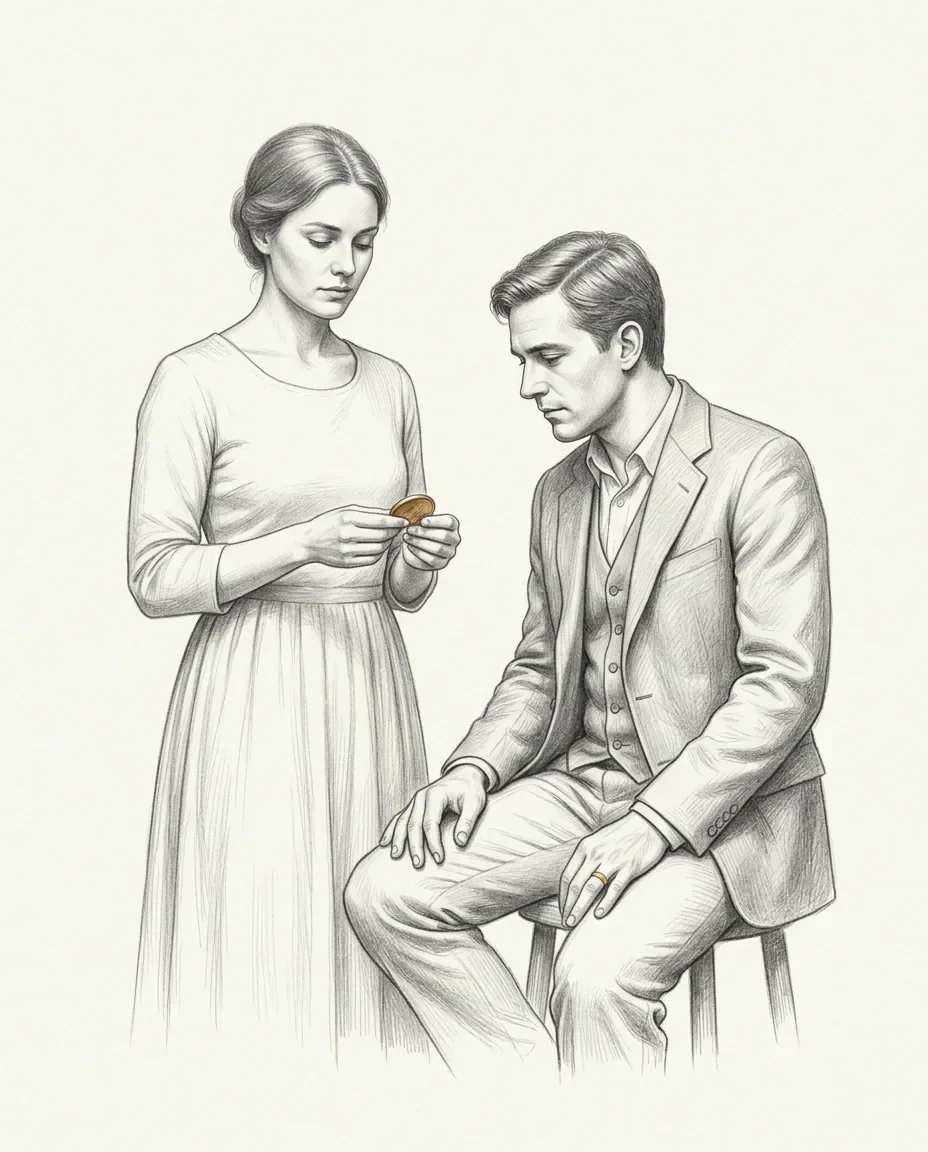
Where it is enacted, it is negotiated role-play: a staged hold-up, break-in or blackmail scene between trusted partners, with agreed limits, props, a safeword and aftercare. The eroticism rests on the theatre of menace and the rush of simulated helplessness, not on genuine deprivation. As with fear play generally, a great many people find the fantasy compelling in imagination and never stage it, which is an ordinary and unremarkable outcome.
Psychology
Proposed explanations run along familiar lines: the eroticization of fear and powerlessness, adrenaline and sensation-seeking, and the submission dynamics common to consensual non-consent play. In Money's lovemap account, an arousal template laid down early can attach erotic meaning to scenarios (threat, surrender) that would ordinarily read as aversive; the temporary loss of agency, held inside a safe frame, then registers as excitement rather than dread.
What causes it?
Nobody knows. There is no dedicated research on this interest, no case series beyond the Keyes account, and no developmental study. Every mechanism offered above is borrowed from the broader literature on masochism and fear-play and applied by analogy. That is worth stating plainly rather than dressing up.
Prevalence & culture
How common is chremastistophilia?
No prevalence figure exists. The interest is too rare and too narrowly specified to register in the major surveys of fetish and paraphilic interest, including Scorolli et al. (2007), which mined online fetish communities, and Joyal & Carpentier (2017), which surveyed a general population sample. Neither instrument asks about it. Its absence from both is the honest evidence for how uncommon it is.
Cultural visibility is correspondingly slight. The word turns up in catalogues of paraphilias and, within kink communities, as one scenario among many in the fear-play repertoire, rather than in mainstream media.
Safety, consent & law
The chief risk is psychological. Staged threat can be intense, can misfire, and can strand a partner in real fear, so it depends on prior enthusiastic consent, careful negotiation of limits, a workable safeword, and aftercare. Scenes involving replica weapons carry their own hazards, including how they may look to a neighbour or a passer-by.
Any genuine robbery, coercion, blackmail or threat against a non-consenting person is a serious crime, as the Keyes case underlines, and lies entirely outside the consensual interest described here. As with all paraphilic interests, the matter becomes clinically relevant only where it produces distress, impairment, or harm to someone.
Common questions
Does chremastistophilia mean someone wants to be robbed for real?
No, and that distinction is the whole of it. What is described is arousal at the scenario of being held up: the staged threat, the surrender of control, the theatre of menace. A real robbery is a crime and, for the person it happens to, usually a trauma. In any defensible form the interest exists only as simulation, with a partner who has agreed in advance to play it.
How is it different from financial domination?
In findom the money is real and the transfer is the point: someone gives, and the giving carries the charge. Here the money is a prop and the threat is what matters, a demand made under staged coercion, with nothing genuinely lost. One is an exchange both parties intend to complete; the other is a piece of theatre about being forced to hand something over.
Is a staged robbery role-play legal?
The private, consensual version between adults is lawful. The exposure comes from anything visible outside the scene: imitation and replica firearms are separately regulated in many countries, and a hold-up glimpsed by a neighbour or a passer-by can bring an armed police response with no opportunity to explain. Any genuine theft, threat or coercion directed at someone who has not agreed is a serious crime regardless of what either person calls it.
Is chremastistophilia a disorder?
No. It is a niche interest recorded in reference catalogues of paraphilias, not a standalone diagnosis in DSM-5-TR or ICD-11, and the consensual form harms nobody. The clinical threshold is the usual one: distress, impairment, or harm to another person. The best-known documented case involved actual armed robberies and was a matter for the criminal courts, which is not a description of the interest as most people hold it.
Is it normal to fantasise about being robbed or held up?
It is not unusual. Frightening and coercive scenarios recur throughout the research on sexual fantasy, and imagining one carries no implication that a person wants the real thing; the safety of the imagining is generally part of what makes it work at all. Many people who find this fantasy compelling never stage it and never intend to, which is an ordinary and unremarkable place to leave it.
Is it spelled chremastistophilia or chrematistophilia?
Both are in use and both name the same interest. Chrematistophilia is the more etymologically faithful, built cleanly on the Greek chrēmatistēs, "money-dealer." The longer chremastistophilia is the form that reached most catalogue lists and, from there, most search results. The instability is itself informative: terms with an active research literature settle on one spelling, and terms that live in glossaries do not.
Does enjoying this fantasy make someone a masochist?
Not necessarily, though the two sit close. The single long-form document on the theme framed its subject's arousal explicitly as masochism, and the mechanisms usually proposed (eroticised powerlessness, surrender held inside a safe frame) are borrowed wholesale from that literature. But a person can find a hold-up scenario compelling without any wider appetite for pain or submission, and no research has ever tested how often the two go together.
- Fear Play33/100Sensation & PainA consensual BDSM practice that deliberately evokes controlled fear, startle, or adrenaline within a negotiated scene to heighten arousal. It draws on the body's fight-or-flight response. A niche, psychologically intense form of edge play.33
- Consensual Non-Consent64/100Power, Roles & ScenariosA negotiated power-exchange scenario in which adults agree in advance to enact a scene of simulated non-consent. The fiction of resistance or being overpowered is staged while real, ongoing consent underlies the whole encounter. Categorically distinct from actual assault.64
- Interrogation Play23/100Power, Roles & ScenariosInterrogation play is a BDSM role-play in which one partner plays an interrogator and another a resisting captive. Questioning and psychological pressure drive the scene within a consensual power dynamic. It is a negotiated edge-play scenario, not a paraphilia.23
- Grossdom (Gross Domination)9/100Power, Roles & ScenariosAn informal online-community umbrella term for femdom/domination play themed around bodily substances and acts conventionally seen as "gross". Sweat, body odour, feet, saliva, flatulence and sometimes scat are the usual themes. Slang packaging of older paraphilias, not a clinical category.9
- Consensual Blackmail29/100Power, Roles & ScenariosA negotiated BDSM fantasy in which a submissive shares real personal information so a dominant can fictionally threaten exposure. It is practiced mostly within financial domination. The leverage is real; the threat and its consequences are staged, never carried out.29
- Martymachlia (Being Watched)5/100Martymachlia · Power, Roles & ScenariosMartymachlia is sexual arousal from having other people watch one's own sexual activity: the being-watched counterpart of voyeurism. It is treated here as a consensual subset of exhibitionism with a willing audience, not as a clinical disorder.5
From Greek chrēmatistēs (χρηματιστής, "money-dealer, money-maker") plus -philia ("love of, affinity for"), literally an affinity tied to money or to being robbed of it. The term belongs to the late-twentieth-century wave of sexological -philia coinages associated with John Money's lovemap nomenclature; the spelling chrematistophilia is more etymologically faithful than the variant chremastistophilia, and both remain in circulation.
fear-play · role-play · power-exchange
Prevalence is computed from the entry's cited population estimate. Rows marked ESTare indicative editorial estimates scored against a fixed anchor rubric, not measured quantities. Method & anchors: methodology.
Rare · ≈ 1 in 1,000
- 01List of paraphilias, Wikipediadefinition and existence of chremastistophilia as arousal at being robbed or held up; its place in catalogue-style paraphilia lists
- 02Psychopathia Sexualis (1886), Richard von Krafft-Ebinghistorical foundation of the -philia naming convention and the clinical framing of eroticized fear and powerlessness
- 03Chremastistophilia, Wikipediadefinition ('sexual arousal obtained from being robbed'), Greek etymology from chrematistes ('money-dealer/money-maker') plus -philia, and the mirror term kleptolagnia
- 04John Money, WikipediaJohn Money (1921-2006), his popularising of the term paraphilia and the lovemap framework (Lovemaps, 1986) within which late-20th-century -philia coinages such as this term arose
- 05The Armed Robbery Orgasm: A Lovemap Autobiography of Masochism (1993), Ronald W. Keyes & John Money (Internet Archive)documented case linking arousal during armed robbery to masochism and submission, the best-known illustration of the theme
- 06Forensic and Medico-legal Aspects of Sexual Crimes and Unusual Sexual Practices (2009), Anil Aggrawal, CRC Press (Library of Congress table of contents)forensic-sexology compendium whose appendix is a comprehensive catalogue list of named paraphilias, the glossary tradition in which this term chiefly appears
- 07Scorolli et al. (2007), Relative prevalence of different fetishes, Int. J. Impotence Research 19(4):432-437major fetish-prevalence survey of online communities that does not register so rare and narrow an interest, supporting the very-low prevalence framing
- 08Joyal & Carpentier (2017), The Prevalence of Paraphilic Interests and Behaviors in the General Population, J. Sex Research 54(2):161-171general-population paraphilia survey establishing which interests are common; chremastistophilia is too rare to appear, supporting low-prevalence framing