Consensual Non-Consent
Added 21 Jun 2026 · Updated 22 Aug 2026
A negotiated power-exchange scenario in which adults agree in advance to enact a scene of simulated non-consent. The fiction of resistance or being overpowered is staged while real, ongoing consent underlies the whole encounter. Categorically distinct from actual assault.
- Prevalence
- Ultra-common
- Category
- Power, Roles & Scenarios
- Domain
- Sexual interest
- Confidence
- Medium confidence
- Status
- Not a paraphilia or disorder; a negotiated edge-play dynamic among consenting adults, distinct from actual coercion.
- Also known as
- Consensual non-consent (CNC, ravishment role-play), CNC, ravishment fantasy, resistance play, consensual ravishment, rape fantasy, forced sex role-play
- Added
- 21 Jun 2026
- Updated
- 22 Aug 2026
Featured in
Overview
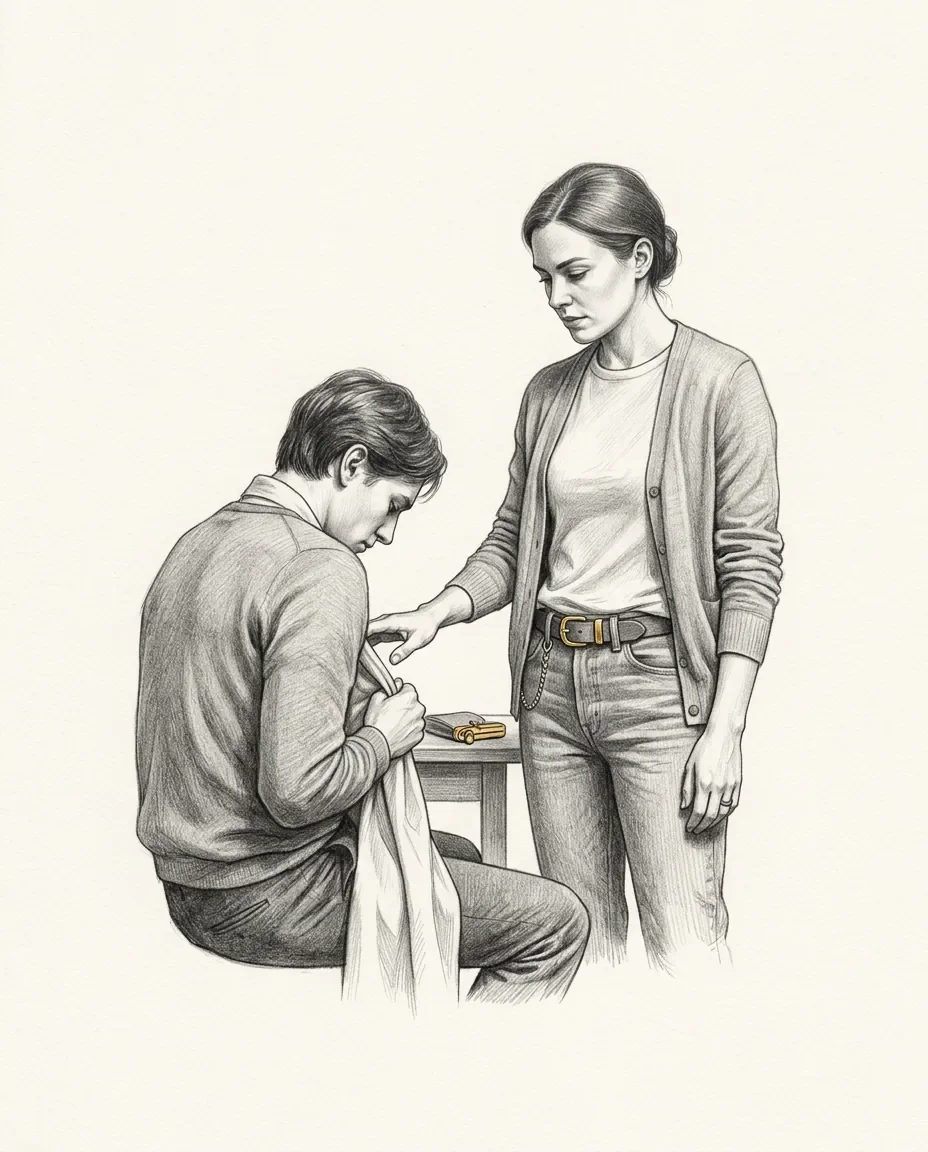
Consensual non-consent (CNC), also called ravishment, resistance or "force" play, is a negotiated power-exchange scenario in which consenting adults agree in advance to enact a scene of simulated non-consent. One partner plays at overpowering, the other at resisting or being taken, but because both have agreed to the activity beforehand the "non-consent" is entirely fictional: a frame around an encounter that real, ongoing consent governs throughout. CNC is therefore categorically distinct from any actual coercion, which it is expressly designed to exclude. This article describes the practice clinically and non-explicitly, with no instructional detail.
Examples
CNC is defined by the frame around a scene rather than by anything inside it, so the boundary that matters is between the fiction the partners perform and the agreement that contains it.
What the term covers. A scene arranged in advance in which one partner plays at resisting and the other at overpowering; a scripted capture or kidnapping narrative with an agreed beginning and end; a captor-and-captive or interrogation frame; a standing arrangement such as free use, in which one partner agrees ahead of time to be approached without being asked each time, inside limits both have set. In every case consent is given before the scene and stays live throughout. The refusal is performed; the agreement is not.
What the term does not cover. CNC is not an exception to consent, a loophole in it, or a lower standard of it. It is negotiated in advance and demands more explicit consent than ordinary intimacy, not less; an encounter in which no agreement was reached beforehand is assault, and calling it CNC afterward changes nothing. It is also distinct from biastophilia and coercion paraphilia, which name arousal to genuine non-consent and are clinical categories rather than practices. Nor is it primal play, which is rough and instinctive without staging a refusal, or degradation and humiliation play, which target status rather than agency.
How the word is used. "Consensual non-consent" and the abbreviation "CNC" are community terms; "ravishment" is the older literary word, and "rape fantasy" is the phrase the survey literature uses for the fantasy rather than for the negotiated practice. None of them appears in DSM-5-TR or ICD-11. Within kink communities CNC is classed as edge play.
History & origins
The fantasy is ancient; the negotiated practice is modern
The underlying fantasy (being "taken" or overpowered, or conversely overpowering a willing other) long predates any organised kink scene. So-called "ravishment" or "forced-seduction" plots run through centuries of literature and, conspicuously, through the bodice-ripper romance fiction of the 1970s and 1980s. What is comparatively recent is the deliberate, rule-bound enactment of that fantasy between partners under an explicit ethical framework.
The consent-ethics scaffolding
CNC only became articulable as a named practice once modern BDSM had developed an explicit vocabulary of consent:
- 1983: The slogan "safe, sane and consensual" (SSC) was coined in mid-1983 by David Stein with Martin Berkenwald and Bob Gillespie for the New York organisation Gay Male S/M Activists (GMSMA); it first appeared in print in GMSMA's statement of purpose on 17 August 1983. Stein framed it to distinguish negotiated S/M from "criminally abusive or neurotically self-destructive" behaviour.
- 1987 and 1993: SSC was popularised nationally through its use in the marches on Washington.
- 1990s to 2000s: The alternative framing "risk-aware consensual kink" (RACK), generally attributed to the writer Gary Switch, gained currency for forms of play whose risk cannot be fully eliminated: the family of "edge play" to which CNC belongs.
Within this scaffolding, the explicit term "consensual non-consent" and the abbreviation "CNC" are community coinages from online kink culture of the 1990s and 2000s, not clinical literature; their precise first attested use is not well documented.
Clinical framing
Negotiated CNC is not a paraphilia or disorder. The DSM-5-TR and ICD-11 pathologise consensual sadomasochistic interests only where they cause distress or harm to a non-consenting person, a threshold that genuinely consensual play does not meet. Across the 20th century, survey researchers from Kinsey onward repeatedly documented the high prevalence of force-themed fantasy, and the first systematic review of women's erotic rape fantasies by Critelli & Bivona (2008) consolidated this evidence while cautioning that such fantasy says nothing about real-world wishes.
In practice
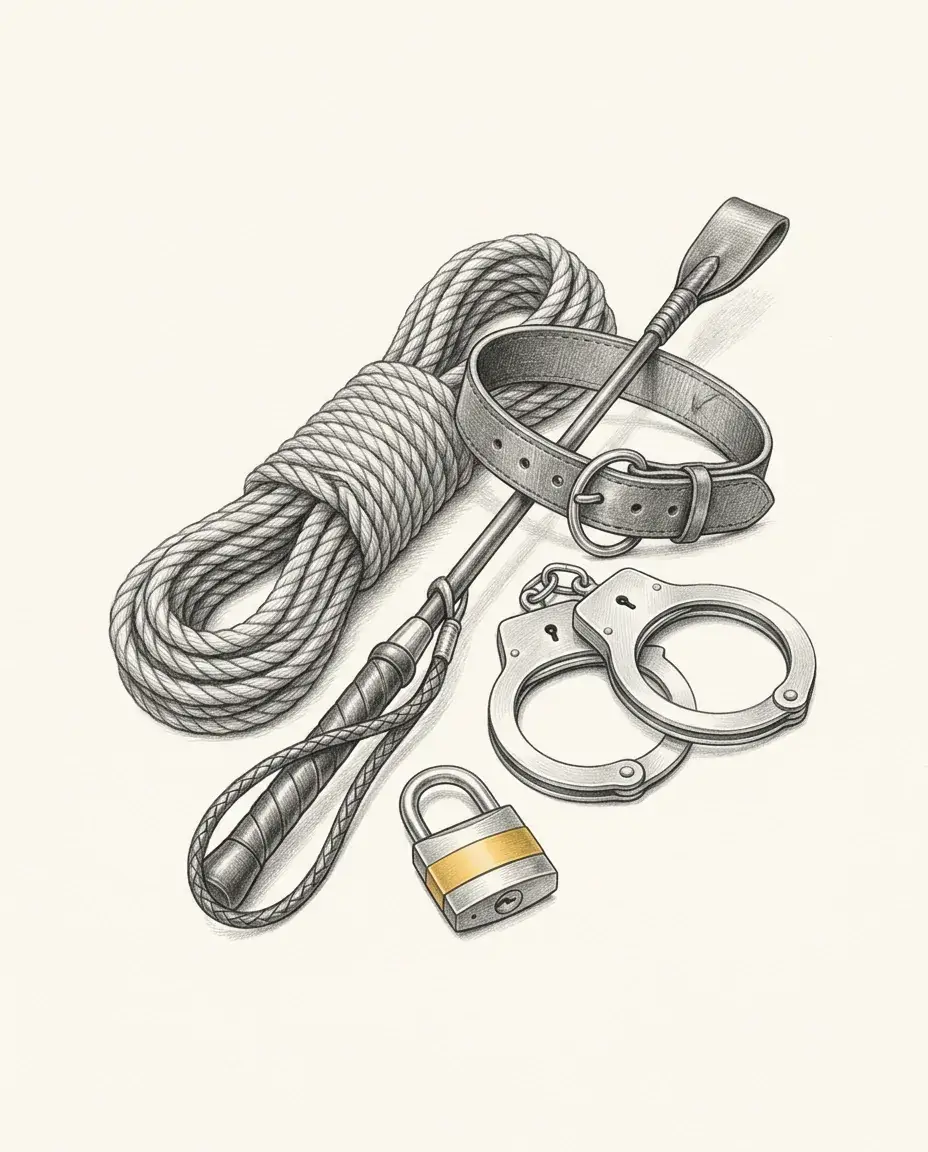
CNC is characterised less by any specific act than by its process: detailed advance negotiation of acts, limits and themes; an agreed safeword or non-verbal safe-signal that can halt the scene at any moment; sobriety and high trust between partners; and an understanding that the surface narrative of resistance never overrides that safe-signal. Scenes may incorporate restraint, dominance and submission, scripted struggle, or impact play such as spanking, and are typically closed with aftercare and a debrief. A pre-negotiated kidnapping or capture narrative (see kidnapping role-play) is one common framing.
Psychology
The appeal is generally understood through the intensity of total surrender or total control experienced within a safe frame: the fictional non-consent lets participants feel an extreme of relinquished or seized agency without any real danger or loss of agency. Proposed mechanisms for force fantasy include sexual-blame avoidance (the fiction removes responsibility), openness to a wide range of sexual experience, and heightened sympathetic arousal; Critelli & Bivona reviewed these and found none fully sufficient. The evidence base linking fantasy to enacted CNC specifically remains thin, and researchers stress that fantasising about being overpowered is unrelated to any wish to be genuinely victimised.
Prevalence & culture
Force- and submission-themed fantasies are among the most commonly reported in the literature, even though deliberately enacted CNC is far rarer:
- Critelli & Bivona (2008) found that 31 to 57% of women report fantasies of being forced into sex, with 9 to 17% describing them as a frequent or favourite fantasy.
- In Joyal, Cossette & Lapierre (2015), among 1,516 adults, about 64.6% of women and 53.5% of men fantasised about being dominated, and roughly 29% of women and 31% of men about being "forced" to have sex: common, not rare or deviant.
- Justin Lehmiller's survey of 4,175 Americans (2018) likewise found BDSM and power-exchange fantasies near-universal, with only about 4% of women and 7% of men reporting they had never had one.
Enacting these as deliberately negotiated CNC scenes is far less common and largely confined to kink-aware communities (for example FetLife discussion and dedicated subreddits), where it is treated as advanced edge play. Mainstream cultural visibility is moderate and rising alongside broader media coverage of BDSM.
Safety, consent & law
CNC is among the riskiest forms of consensual play, and is lawful and benign only when consent is genuine, informed, ongoing and clearly established before any scene begins. It demands rigorous negotiation, robust safewords, sobriety and deep trust, precisely because the staged narrative of refusal can blur ordinary signals. The surface fiction of non-consent never constitutes real consent to harm, and in many jurisdictions consent is not a legal defence to serious bodily injury regardless of prior agreement. CNC is categorically different from sexual assault (which is non-consensual, criminal and harmful), and the role-play must never be used to excuse, disguise or rationalise real coercion.
Common questions
Is consensual non-consent actually consensual?
Yes, entirely. The consent is real, it is negotiated in advance, and it remains in force for the whole encounter; only the refusal performed inside the scene is fictional. The name confuses people because it describes the fiction rather than the ethics. The acts, the limits and the way it ends are all agreed before anything begins, which is the opposite of an exception to consent.
What is the difference between CNC and sexual assault?
Agreement beforehand, and the power to end it at any moment. The difference is not intensity, not what is done, and not how the scene would look to an observer: it is that both people negotiated the encounter while nothing was happening, and that either can stop it instantly. Assault has neither of those things, and no encounter can be reclassified as CNC afterward by someone who did not ask first.
How can a safeword work when "no" and "stop" are part of the scene?
By agreeing a signal that sits outside the fiction. Partners usually choose a word nobody would say in character, or a non-verbal cue such as dropping a held object or tapping three times, since speech may be restricted or unreliable. Some pairs also agree a check-in phrase that pauses things without ending them. The point is that one channel stays literal no matter what the scene's script says.
Does fantasising about being forced mean I want to be assaulted?
No, and this is one of the better-established points in the area. Critelli and Bivona's 2008 review of research on women's erotic rape fantasies concluded that such fantasies are common and say nothing about real-world wishes. A fantasy is authored by the person having it, who controls every detail and can end it at will; an assault is defined by the absence of exactly that control.
Is CNC legal?
The underlying acts are lawful between consenting adults, and the prior agreement is what makes them so. Two limits matter. In many jurisdictions consent is not a defence to serious bodily injury, so no agreement licenses real harm. And consent is judged as it stood at the time, not by a script written earlier, so a past CNC arrangement is not a standing permission and cannot excuse a later non-consensual act.
Is CNC the same as rough sex?
No. Rough sex describes intensity (force, speed, impact) with no fiction attached to it. CNC is defined by the staged narrative of refusal, and can be physically gentle while still being CNC. The two frequently occur together, which is why they get conflated, but either can happen entirely without the other.
Do you need a written contract for CNC?
Not legally: a kink contract has no standing in court and creates no obligation on anyone. Many partners write one anyway, because drafting it forces both people to name limits, hard nos, and how a scene ends, which is exactly the conversation CNC depends on. Treat it as a negotiation aid and a record of what was agreed, never as permission that outlasts the moment.
Is CNC safe to try with a new partner?
Kink communities treat it as advanced play and generally advise against it early in a relationship. The physical risks are whatever the scene itself involves; the distinctive ones are psychological: unexpected panic, dissociation, or a heavy comedown afterward. Managing those depends on reading a partner's tells well enough to notice when something has stopped being play, which takes time to learn. Trust, honest limits and a debrief afterward matter more here than technique.
From the blog

Relationships8 min read
How to tell a partner about a kink, and how partners respond
How to tell a partner about a kink: 71% who shared a favourite fantasy got a positive response, and only 28% who never shared expected one.
Origins7 min read
Why do people have kinks? Where the evidence runs out
Why do people have kinks? What conditioning, excitation transfer and the trauma story each explain, and the point where the evidence stops.

Definitions8 min read
What BDSM stands for, and what it covers
What does BDSM stand for? Bondage and discipline, dominance and submission, sadism and masochism: what each pair means, how common it is, where the lines are.
Mental health7 min read
Is my kink normal? One answer from the surveys, another from the manuals
Is my kink normal? By the surveys, yes for nearly everyone: two fantasies of 55 are rare. By the DSM-5-TR and ICD-11, a disorder needs distress or harm.
- Kidnapping Roleplay47/100Power, Roles & ScenariosA consensual-non-consent role-play sub-genre in which adults stage a captivity, abduction, or interrogation scenario. Arousal is drawn from the imagined helplessness, suspense, and power gap between captor and captive, all bounded by negotiation and a safeword.47
- Dominance and Submission92/100Power, Roles & ScenariosA consensual erotic dynamic in which one partner takes a dominant role and the other a submissive role, exchanging power within agreed limits. It is one of the most widespread elements of BDSM and of human sexual fantasy.92
- Spanking78/100Sensation & PainAn interest in giving or receiving consensual, rhythmic blows to fleshy areas of the body, by hand or with implements such as paddles. People do it for erotic sensation, discipline themes, or power exchange between consenting adults.78
- Collaring63/100Power, Roles & ScenariosThe consensual act of placing a collar on a submissive partner as a negotiated symbol of ownership, commitment, protection or submission. It takes place within a Dominant/submissive relationship and is often likened to a wedding band.63
- Discipline65/100Power, Roles & ScenariosThe rules-and-consequences half of BDSM: a dominant sets expectations, a submissive agrees to follow them, and pre-negotiated punishments or rewards follow. It is about behaviour and structure rather than sensation, which is what separates it from sadomasochism even when the two use the same implements.65
- Praise Kink63/100Power, Roles & ScenariosAn erotic enjoyment of receiving verbal praise, affirmation, or encouragement from a partner, phrases such as "good girl/good boy" or "you're doing so well". The interest often, though not exclusively, sits within dominance and submission dynamics.63
A transparent English compound: "consensual" (from Latin "consentire," to feel together, to agree) qualifying "non-consent," naming the paradox of mutually agreed simulated non-consent. The phrase and its abbreviation CNC are community coinages from 1990s-2000s online kink culture rather than clinical Greek/Latin terminology; "ravishment" derives from Latin "rapere," to seize.
power exchange · edge play · pre-negotiated scenario
Prevalence is computed from the entry's cited population estimate. Rows marked ESTare indicative editorial estimates scored against a fixed anchor rubric, not measured quantities. Method & anchors: methodology.
Ultra-common · ≈ 1 in 5 or more
- 01Lehmiller (2018), Tell Me What You Want, survey of 4,175 Americansfantasy prevalence anchor, forced-sex/ravishment fantasies are among the most common, reported by a majority of women and many men
- 02List of paraphilias, Wikipediadefinition of consensual non-consent / ravishment as a pre-negotiated power-exchange scenario, not a paraphilia
- 03An A–Z of Kinks and Fetishes, Glamourlay framing of CNC / consensual ravishment as a mainstream BDSM scenario
- 04Safe, sane and consensual, Wikipediathe SSC/RACK consent-ethics framework of modern BDSM within which consensual non-consent is negotiated; the 1983 coinage by David Stein, Martin Berkenwald and Bob Gillespie for GMSMA, its 17 August 1983 first appearance, and the 1987/1993 marches popularising it
- 05Critelli & Bivona (2008), Women's Erotic Rape Fantasies: An Evaluation of Theory and Research, Journal of Sex Research 45(1):57-70the systematic review finding 31-57% of women report fantasies of being forced into sex (9-17% frequent/favourite), and the evaluation of proposed mechanisms (sexual-blame avoidance, openness, sympathetic arousal)
- 06Joyal, Cossette & Lapierre (2015), What Exactly Is an Unusual Sexual Fantasy?, J. Sexual Medicine 12(2):328-340in 1,516 adults, ~64.6% of women and 53.5% of men fantasised about being dominated and ~29% of women / 31% of men about being forced, establishing submission/force fantasy as common rather than rare or deviant