Masochism
Sexual Masochism Disorder
Added 21 Jun 2026 · Updated 22 Aug 2026
A DSM-5-TR paraphilic disorder defined by recurrent, intense arousal from being humiliated, beaten, bound, or otherwise made to suffer. It is diagnosed only when that arousal causes the person clinically significant distress or impairment. Consensual masochistic interest without distress is not a disorder.
- Prevalence
- Ultra-common
- Category
- Clinical Paraphilias
- Clinical term
- Sexual Masochism Disorder
- Domain
- Sexual interest · Paraphilia
- Confidence
- High confidence
- Status
- DSM-5-TR paraphilic disorder; diagnosed only with clinically significant distress or impairment. Consensual masochistic interest without distress is a common, non-disordered variation.
- Also known as
- Sexual Masochism Disorder, algolagnia (passive), submission to pain, receiving pain, pain play
- Added
- 21 Jun 2026
- Updated
- 22 Aug 2026
Featured in
Overview
Masochism is the deriving of sexual pleasure or gratification from being humiliated, beaten, bound, or otherwise made to suffer at the hands of another. In contemporary psychiatry the term names both a common, non-disordered erotic interest, woven through much of consensual BDSM, and, when it causes the individual clinically significant distress or impairment, the formal diagnosis of Sexual Masochism Disorder in the DSM-5-TR. This article traces the term's literary origin, its clinical lineage from Victorian sexology to modern depathologisation, and what surveys and community life reveal about how widely the interest is shared.
Definition & scope
Is masochism a disorder?
Masochistic interest on its own is not a disorder. Modern psychiatry draws a firm line between a widespread erotic interest in receiving sensation, restraint or humiliation and the narrow clinical disorder, which is diagnosed only when the same pattern causes the person genuine distress or impairs their functioning. Most people with masochistic desires fall on the benign side of that line. In kink settings the masochistic role is often called "bottoming" or submission, and it pairs with sadism, its active counterpart; the two together form sadomasochism. The behaviour is distinguished from harm by consent, negotiation and the bottom's ability to stop the scene.
Examples
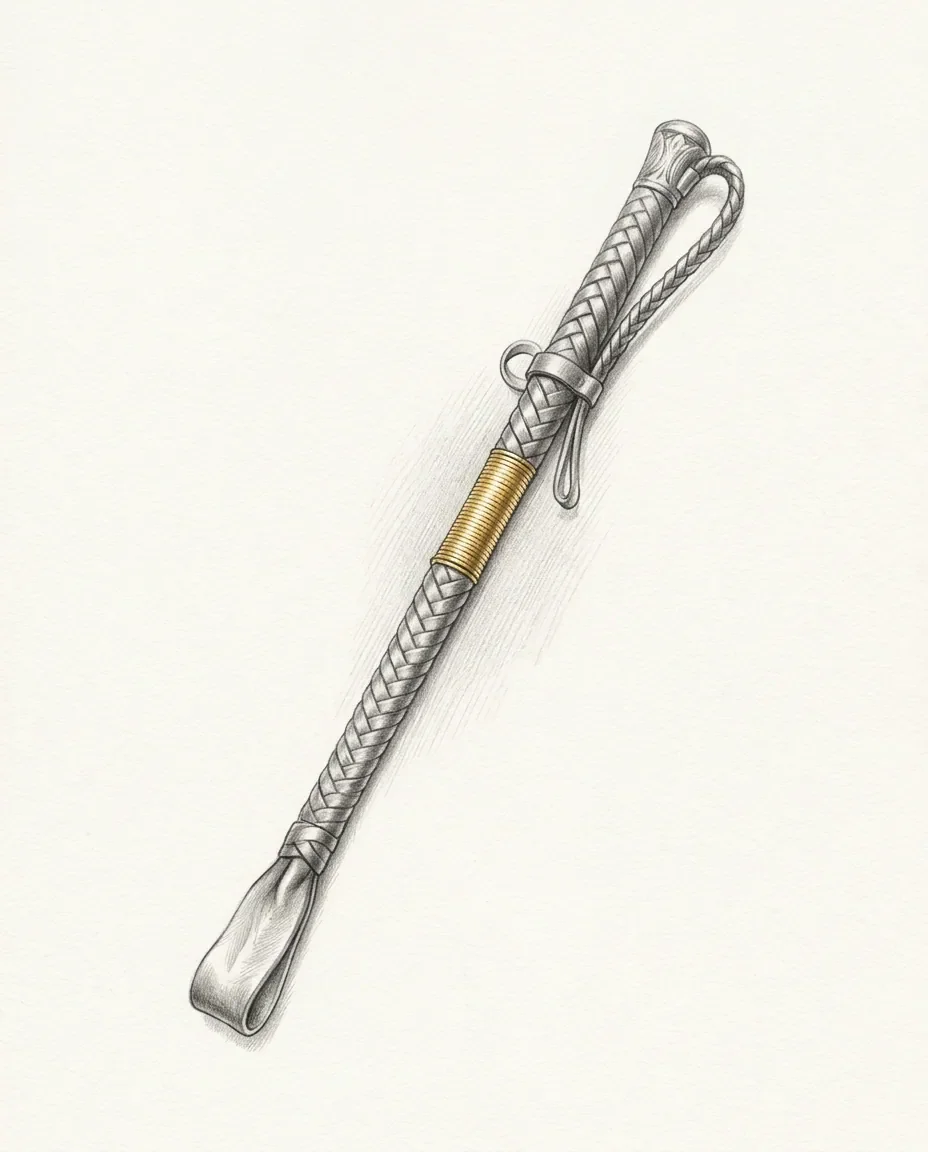
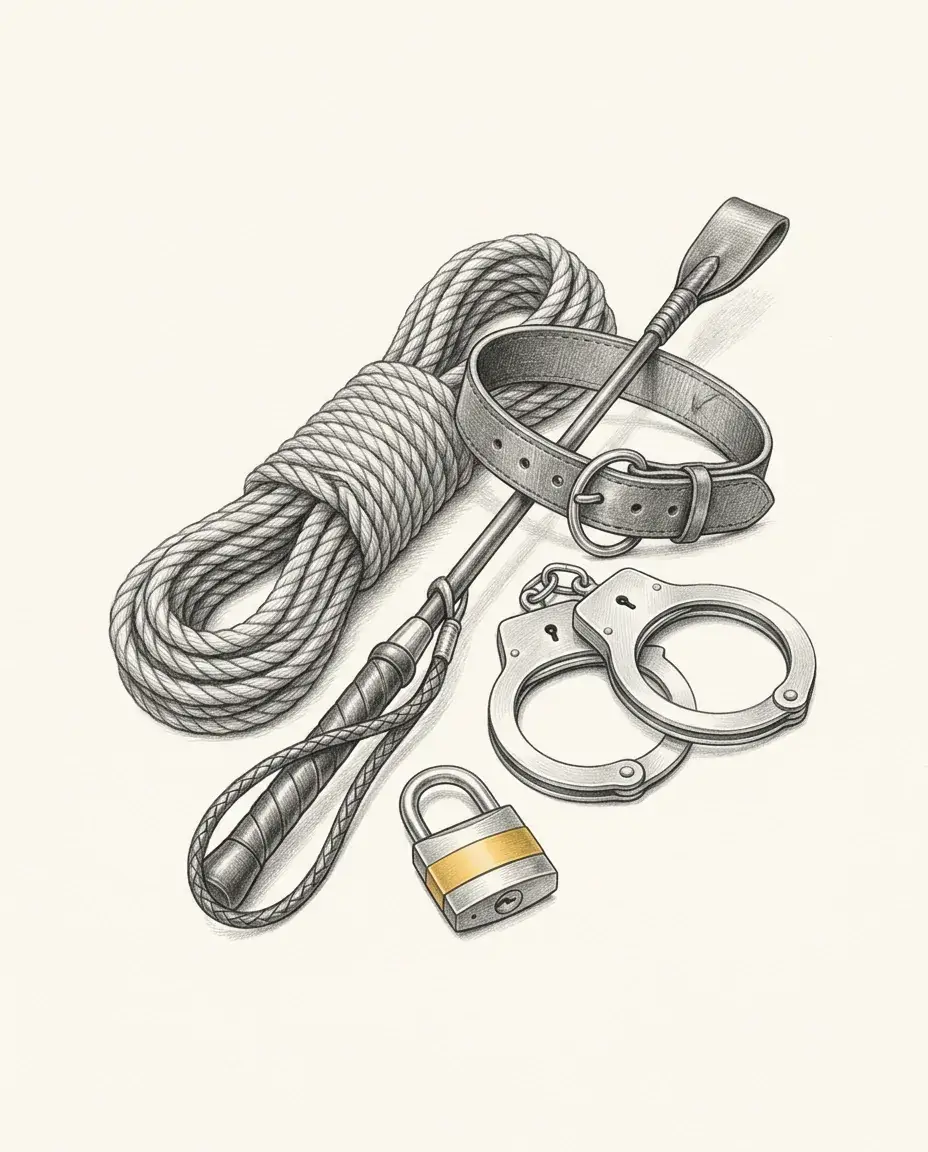
What the term covers. Arousal from receiving impact (spanking, flogging, caning) and from restraint, whether simple bondage or the patient rope work of shibari. It covers intense but non-injurious sensation such as wax play, temperature play and pinching and clamping, and it covers the psychological forms the diagnostic criteria name alongside the physical ones: being humiliated, ordered about, or made to serve. For a great many people the sensation is not really the object at all: what is wanted is the surrender it stages, which is why intensity so often matters less than who is administering it and why.
What the term does not cover. Its active counterpart is sadism; the two are separate interests that frequently, but not necessarily, pair up. It is also not the same thing as submission: a masochist wants sensation, a submissive wants to obey, and although most people who do one do the other, plenty want only the sensation and take no orders. Pain play names the activity while masochism names the disposition behind it, and algophilia is an archaic label for much the same ground. Most importantly it is not self-harm: non-suicidal self-injury is not erotic, is not negotiated, involves no partner and no consent framework, and is a genuine clinical concern rather than a variation.
How the word is used. In three registers at once. Clinically it names a specific DSM-5-TR diagnosis, Sexual Masochism Disorder, which most people described as masochists do not have. In kink communities "masochist" is a plain role description, usually paired with "bottom." And in everyday English it is metaphorical and mildly disparaging: someone who trains for marathons or reads the comments is called a masochist with no sexual meaning whatsoever.
History & origins
A name borrowed from a novelist
The word masochism is unusual in clinical vocabulary for being coined from a living author's surname. The German-Austrian psychiatrist Richard von Krafft-Ebing introduced it in Psychopathia Sexualis (1886), naming it after the Austrian novelist Leopold von Sacher-Masoch (1836–1895). Sacher-Masoch's 1870 novella Venus in Furs dramatised a man's voluntary submission and the pleasure of suffering and degradation at a beloved woman's hands; the author, who had lived out such arrangements, objected to having his name medicalised. Krafft-Ebing paired masochism with sadism, coined after the Marquis de Sade, and treated both as pathologies of the sexual instinct.
- 1870: Sacher-Masoch publishes Venus in Furs, the literary template for erotic submission.
- 1886: Krafft-Ebing names masochism in Psychopathia Sexualis, pairing it with sadism.
- 1892: the physician Albert von Schrenck-Notzing introduces algolagnia (Greek álgos, "pain," + lagneía, "lust") as a general term for the pleasure of pain, of which masochism is the passive form.
- 1905: Sigmund Freud, in Three Essays on the Theory of Sexuality, treats sadism and masochism as paired components of sexuality rather than wholly separate disorders.
- 1913: the Viennese analyst Isidor Sadger fuses the pair into the single compound sadomasochism.
Sexology beyond the clinic
The British sexologist Havelock Ellis, in his Studies in the Psychology of Sex, questioned a rigidly pain-centred reading and stressed the roles of emotion, surrender and love rather than suffering for its own sake, an early move away from viewing the interest purely as pathology.
Clinical lineage: from deviation to distress
Successive editions of the American Psychiatric Association's diagnostic manual steadily narrowed the clinical scope:
- DSM-I (1952) listed sexual sadism among the "sexual deviations" but did not separately name masochism.
- DSM-II (1968) added masochism as a sexual deviation.
- DSM-III (1980) through DSM-IV-TR (2000) used the label sexual masochism and emphasised real rather than merely fantasised pain or humiliation.
- DSM-5 (2013) renamed it Sexual Masochism Disorder (recurrent, intense arousal from being humiliated, beaten, bound, or otherwise made to suffer, over at least six months) and made the crucial distinction that a diagnosis requires clinically significant distress or functional impairment, with an asphyxiophilia specifier for the dangerous practice of restricting breathing for arousal.
- DSM-5-TR (2022) retained that framework, formalising the split between a widespread, benign masochistic interest and the disorder.
The World Health Organization's ICD-11 went further still: where ICD-10 had filed sadomasochism under "disorders of sexual preference," ICD-11 removed consensual masochism as a mental disorder entirely, on the principle that a private arousal pattern, absent distress or harm to others, is not in itself a disease. Together these revisions reflect a broad late-20th- and early-21st-century depathologisation of consensual kink.
| Classification | Status of masochism |
|---|---|
| DSM-5-TR (2022) | Sexual Masochism Disorder, diagnosed only with distress or impairment; the interest itself is non-disordered |
| ICD-11 (2018) | Consensual masochism removed as a diagnosis; only coercive or harmful patterns are classified |
In practice
In its non-disordered form the interest is expressed through negotiated scenes involving impact, restraint, intense sensation, or psychological surrender, in which, counter-intuitively to outsiders, the receiving ("bottoming") partner typically sets the limits and holds a safeword. It overlaps heavily with bondage, spanking and broader pain play. The clinical disorder is distinguished not by the activity itself but by associated distress, dysfunction, or escalation toward seriously self-endangering practices such as breath restriction, which carries the asphyxiophilia specifier.
Psychology
What causes masochism?
Proposed mechanisms for the appeal of masochistic experience include release from control and responsibility, an intense present-focused narrowing of attention sometimes likened to flow or "subspace," endorphin and sympathetic-arousal responses to managed sensation, and the symbolic meaning of trust, care and surrender within a chosen relationship. Why a minority experience associated distress or impairment is not well understood and likely reflects a mix of temperament, learning history, and personal or social conflict about the interest rather than the interest itself. The evidence base for any single causal account remains thin and contested.
Prevalence & culture
How common is masochism?
Masochistic interest is among the more commonly reported paraphilic interests, while the diagnosable disorder is far rarer.
| Study | Year | Population | Finding |
|---|---|---|---|
| Joyal & Carpentier | 2017 | 1,040 Quebec adults | Masochism exceeded the 15.9% threshold for statistical unusualness and was linked to higher sexual satisfaction |
| Lehmiller | 2018 | 4,175 Americans | About 65% had fantasised about receiving pain; BDSM fantasies were near-universal |
Notably, in Joyal & Carpentier (2017) masochistic interest was associated with greater satisfaction with one's own sex life rather than distress. Community presence is large and visible, with extensive masochism- and submission-themed groups on FetLife and kink forums, and the theme is deeply embedded in mainstream culture, from Venus in Furs to contemporary bestsellers and film. Research attention remains high owing to the interest's formal diagnostic status.
Safety, consent & law
Consensual masochistic activity between adults is legal in most jurisdictions and, absent distress or impairment, not a clinical concern. Safe practice centres on informed negotiation, explicit safewords, risk-aware technique and aftercare. Clinical attention is appropriate only when the interest causes the person genuine suffering, impairs functioning, or trends toward serious self-endangerment, and care is supportive rather than punitive. A persistent legal caveat is that in some jurisdictions consent does not extend to the infliction of serious bodily injury, so activity that causes lasting harm may attract liability regardless of agreement.
Common questions
How do you know if masochism has become a problem?
The clinical threshold in DSM-5-TR is not intensity or frequency but consequence: recurrent, intense masochistic arousal over at least six months that causes the person clinically significant distress or impairs their work, relationships or functioning. Distress arising purely from other people's disapproval does not count. In practice the warning signs are escalation toward genuinely dangerous acts, and a sense of compulsion in place of choice.
Are masochists just people who like pain?
Usually not, and most describe it the other way round. Ordinary pain (a stubbed toe, a dentist's drill) is no more pleasant to a masochist than to anyone else. What changes the experience is context: consent, arousal, a chosen partner, and a scene that can be stopped at any moment. Many say the sensation is a vehicle for surrender, attention or trust rather than the thing being sought.
What is subspace?
The altered, floaty state some people enter during intense play, described as narrowed attention, reduced sensitivity to pain and a strong sense of calm. It is usually attributed to a mix of adrenaline and endogenous opioids, though that is inferred rather than measured. It matters practically because someone in subspace may not judge their own limits accurately, which is why partners watch for it and why aftercare follows.
Is masochism caused by trauma or abuse?
No evidence supports that assumption, though it remains the most common thing said about masochists by people who are not one. The interest is far too widespread for a trauma explanation to account for it, and research on BDSM practitioners has not found them to be a psychologically distinct or damaged group. Some masochists have difficult histories, as some of everyone does; that is not the same as a cause.
Is it legal to consent to being hurt?
Consent to sexual activity is not in question; consent to injury sometimes is. Several jurisdictions hold that a person cannot legally consent to the infliction of actual bodily harm, so activity that leaves lasting injury can attract criminal liability even where everyone agreed to it beforehand. This rarely surfaces unless someone is hospitalised or a complaint is made, but it is why risk-aware practitioners keep marks well short of injury.
What is the difference between masochism and sadomasochism?
Masochism names one half of the pair, the receiving side, and sadism names the other. "Sadomasochism" and "SM" are umbrella terms for the whole territory and for relationships built around it. The compound is convenient but slightly misleading: many people are one and not the other, and the two words were joined by later theorists rather than because the interests always occur together.
Does a masochist have to be in pain to enjoy sex?
No. For most people masochistic interest is one register among several: it may feature strongly in fantasy, occasionally in play, and not at all in ordinary sex. Treating it as a requirement is a misreading that comes largely from fiction, where the masochist is written as unable to enjoy anything else. Exclusivity of that kind is uncommon, and where it does cause difficulty it is precisely what clinical attention addresses.
From the blog
Definitions5 min read
What a switch is, and how switching works
What is a switch in BDSM? A person who takes both dominant and submissive roles, estimated at 12 percent of adults, with survey shares and history.

How common6 min read
Do men and women have different kinks, and by how much
Do men and women have different kinks? Bondage appeals to 29.5% of men and 29.2% of women, threesomes to 34.1% and 11.1%. Where the surveys find a gap.
Origins7 min read
Why some people enjoy pain, and what the body does when they do
Why do people enjoy pain? Context can flip moderate pain to pleasant, and BDSM scenes raise cortisol and endocannabinoids in the partner receiving.

Definitions8 min read
What BDSM stands for, and what it covers
What does BDSM stand for? Bondage and discipline, dominance and submission, sadism and masochism: what each pair means, how common it is, where the lines are.
Mental health7 min read
Is my kink normal? One answer from the surveys, another from the manuals
Is my kink normal? By the surveys, yes for nearly everyone: two fantasies of 55 are rare. By the DSM-5-TR and ICD-11, a disorder needs distress or harm.
Definitions8 min read
Kink vs fetish, the difference and where the words come from
Kink is the everyday word for any unconventional sexual interest. Fetish means arousal tied to an object or body part. Where they overlap and where they part.
How common7 min read
The most common kinks, ranked by what the surveys found
The most common kinks, ranked by evidence: dominance and submission, bondage, foot fetish, roleplay and voyeurism lead 474 entries, read tier by tier.
- Pain Play58/100Algolagnia · Sensation & PainPain play (algolagnia) is a clinical umbrella term for sexual arousal connected to physical pain, whether that pain is received or inflicted. The received form is labelled active/masochistic, the inflicted form passive/sadistic. It frames pain itself, not any specific implement, as the source of erotic interest.58
- Sadism59/100Sexual Sadism Disorder · Clinical ParaphiliasRecurrent, intense sexual arousal from the physical or psychological suffering of another person. As the DSM-5-TR's Sexual Sadism Disorder it is diagnosed only when acted on with a non-consenting person or when it causes clinically significant distress or impairment; consensual dominance is not itself a disorder.59
- Spanking78/100Sensation & PainAn interest in giving or receiving consensual, rhythmic blows to fleshy areas of the body, by hand or with implements such as paddles. People do it for erotic sensation, discipline themes, or power exchange between consenting adults.78
- Fetishism64/100Fetishistic Disorder · Clinical ParaphiliasA DSM-5-TR paraphilic disorder defined by recurrent, intense arousal from nonliving objects or a strong focus on non-genital body parts. The body-part form is partialism, and the arousal must cause clinically significant distress or impairment. An object or body-part preference without distress is not a disorder.64
- Transvestic Disorder50/100Transvestic Disorder (Transvestic Fetishism) · Clinical ParaphiliasThe clinical diagnosis applied when recurrent sexual arousal from cross-dressing causes significant distress or impairment. It names the disordered presentation of an interest that is, in its non-distressing form, a common and benign variation.50
- Partialism46/100Partialism · Clinical ParaphiliasThe clinical term for an exclusive or near-exclusive sexual focus on a specific, usually non-genital body part: feet, hands, hair, legs, the navel. It is the umbrella concept under which interests such as foot or hand attraction are formally classified.46
Coined by the psychiatrist Richard von Krafft-Ebing in Psychopathia Sexualis (1886) after the Austrian novelist Leopold von Sacher-Masoch (1836–1895), whose 1870 novella Venus in Furs depicted erotic submission and suffering; a rare clinical term taken from a living author's surname. The related Greek-rooted synonym for its passive form, algolagnia (álgos 'pain' + lagneía 'lust'), was introduced by Albert von Schrenck-Notzing in 1892.
DSM-5-TR named disorder · algolagnic · BDSM clinical overlap
Prevalence is computed from the entry's cited population estimate. Rows marked ESTare indicative editorial estimates scored against a fixed anchor rubric, not measured quantities. Method & anchors: methodology.
Ultra-common · ≈ 1 in 5 or more
- 01Joyal & Carpentier (2017), The Prevalence of Paraphilic Interests and Behaviors in the General Population, J. Sex Research 54(2):161-171prevalence anchor (~23% general-population active interest in masochism/receiving pain)
- 02Lehmiller (2018), Tell Me What You Want, survey of 4,175 Americansmasochism fantasy prevalence ~65% in the BDSM umbrella
- 03DSM-5-TR, Paraphilic Disorders (American Psychiatric Association, 2022)Sexual Masochism Disorder as a clinically recognized named paraphilic disorder
- 04ICD-11, Paraphilic disorders (World Health Organization)clinical recognition of masochism within paraphilic disorders
- 05Richard von Krafft-Ebing, Psychopathia Sexualis (1886)original coinage of the term 'masochism' after Leopold von Sacher-Masoch
- 06Leopold von Sacher-Masoch, Wikipediathe novelist (1836–1895) whose name and novella Venus in Furs (1870) gave rise to the term masochism
- 07Sexual masochism disorder, WikipediaDSM-I (1952) through DSM-5-TR (2022) and ICD-10/ICD-11 lineage; interest-vs-disorder distinction; asphyxiophilia specifier
- 08Algolagnia, WikipediaSchrenck-Notzing's 1892 coinage of algolagnia (Greek álgos 'pain' + lagneía 'lust'); masochism as the passive form
- 09Sigmund Freud, WikipediaFreud's treatment of sadism and masochism as paired components of sexuality in Three Essays (1905)
- 10Havelock Ellis, WikipediaEllis's emphasis on emotion and surrender over pain in Studies in the Psychology of Sex
- 11Richard von Krafft-Ebing, Wikipediathe psychiatrist who coined 'masochism' in Psychopathia Sexualis (1886)
- 12Albert von Schrenck-Notzing, Wikipediaintroduced the term algolagnia in 1892, of which masochism is the passive form