Cross-Dressing
Transvestism
Added 21 Jun 2026 · Updated 22 Aug 2026
Wearing clothing associated with another gender, sometimes for erotic arousal and sometimes for comfort, self-expression, or relaxation. When arousal is persistent and causes distress it is diagnosed clinically as transvestic disorder; the interest itself is benign and distinct from transgender identity.
- Prevalence
- Common
- Category
- Identity & Transformation
- Clinical term
- Transvestism
- Domain
- Sexual interest · Paraphilia
- Confidence
- Medium confidence
- Status
- Recognized as transvestic disorder in DSM-5-TR/ICD-11 only when arousal causes distress or impairment; the interest itself is common and benign and is distinct from transgender identity.
- Also known as
- transvestic fetishism, fetishistic transvestism, crossdressing, femboy interest, en femme, transvestism, transvestic interest
- Added
- 21 Jun 2026
- Updated
- 22 Aug 2026
Featured in
Overview
Cross-dressing is the practice of wearing garments and adopting a presentation typically associated with a gender other than one's own. Motivations span a wide spectrum: for some the interest is primarily erotic, while for others it is about comfort, play, relaxation, or exploring a different self-presentation (sometimes described as going "en femme"). Crucially, cross-dressing as an interest is distinct from being transgender, which concerns a person's internal gender identity rather than the meaning attached to clothing. This article traces the term's clinical lineage, how it was untangled from related concepts, how the interest is expressed, and why the modern diagnosis covers only a narrow, distress-defined slice of the behaviour.
Examples
The word describes a behaviour, and that behaviour spans motives with almost nothing in common beyond the clothes themselves.
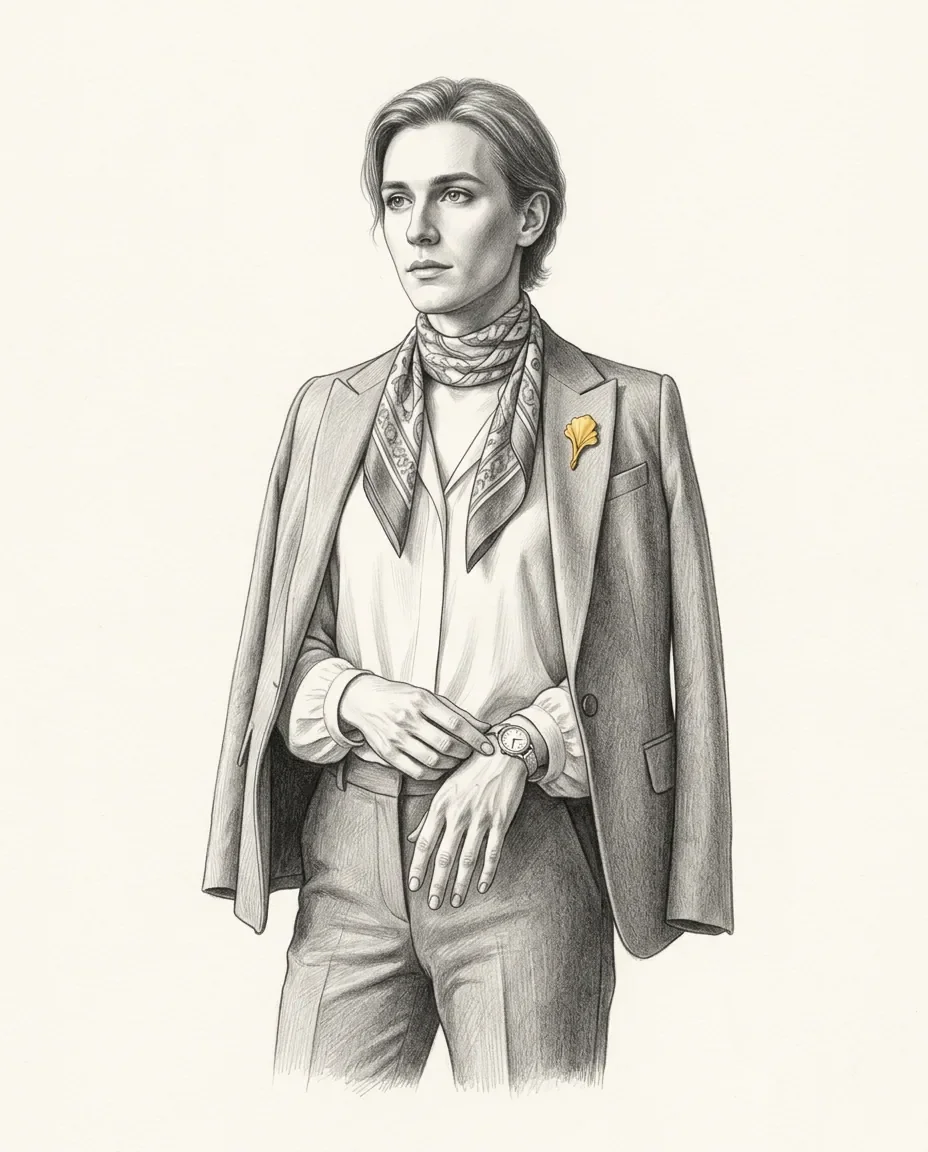
What the term covers. One drawer of women's clothing worn alone at home; a fully worked-out presentation with wig, makeup, voice and a chosen name, often described as going en femme; deliberately masculine tailoring worn by a woman; a single garment brought into partnered intimacy; and the long theatrical tradition of playing across gender lines on stage. The erotic and the purely expressive versions are both cross-dressing, and one person's practice commonly moves between them across a lifetime.
What the term does not cover. It is not the same as being transgender. Cross-dressing is about clothes; being transgender is about a person's own sense of their gender, and a trans woman in a dress is wearing her own clothes rather than another gender's. Most people who cross-dress identify with the gender they were assigned, and collapsing the two misdescribes both. Nor is it transvestic disorder, the narrow diagnosis reserved for cases with real distress or impairment. It is distinct from sissification, where feminine dress is the instrument of a power-exchange scene; from female masking, which works through prosthetics rather than clothing; from homeovestism, arousal from the clothing of one's own gender; and from the gender-swap fantasy, which imagines a changed body rather than changed dress.
How the word is used. Cross-dressing is the neutral modern term. Transvestism, Hirschfeld's 1910 coinage, survives mainly in clinical and historical writing, and transvestite is widely treated as dated or pejorative unless someone applies it to themselves. Community shorthand includes CD and en femme, while the newer online label femboy names a gender presentation rather than this practice. DSM-5-TR retains transvestic disorder; ICD-11 dropped the standalone category.
History & origins
People have worn clothing across gender lines for ceremonial, theatrical, religious and personal reasons throughout recorded history. The clinical vocabulary, however, is barely more than a century old, and much of its history is the gradual work of separating phenomena that early sexologists ran together.
Clinical lineage
- 1886: Richard von Krafft-Ebing described related cases of cross-gender dressing within his catalogue of sexual variation in Psychopathia Sexualis, though without a dedicated term and largely folded into broader notions of "inversion."
- 1910: The German physician and sexologist Magnus Hirschfeld coined the term transvestism in Die Transvestiten: Eine Untersuchung über den Erotischen Verkleidungstrieb ("Transvestites: an investigation of the erotic urge to disguise"). Building the word from Latin trans ("across") and vestire ("to clothe"), Hirschfeld used seventeen first-person case narratives to argue that the urge to dress in another gender's clothes was its own concept (distinct from homosexuality, fetishism and psychopathology) a deliberate disentangling described on Wikipedia.
- 1920s onward: Havelock Ellis, uncomfortable with the clothing-centred emphasis of "transvestism," proposed the alternative eonism, named after the 18th-century French diplomat the Chevalier d'Éon, who lived publicly in both masculine and feminine roles.
- 1980: The DSM-III formally introduced transvestism (later transvestic fetishism in DSM-III-R/DSM-IV), at that point restricted to heterosexual men.
- 2013 → present: As detailed on Wikipedia's transvestic disorder entry, the DSM-5/DSM-5-TR renamed the category transvestic disorder, removed the heterosexual-male restriction, and, like the ICD-11, applies it only when persistent arousal from cross-dressing causes clinically significant distress or impairment. The ICD-11 went further, deprecating the standalone label in favour of the broader "paraphilic disorder involving solitary behaviour or consenting individuals," explicitly to avoid stigmatising non-distressing variation. Ordinary cross-dressing now sits entirely outside the scope of pathology.
Cultural & subcultural evolution
In parallel with the clinical story, cross-dressing carried a rich public life through theatre (from Shakespearean boy-players to pantomime dames), through 20th-century drag performance, and, from the late 20th century onward, through dedicated print networks, conventions and, latterly, large online communities that circulate contemporary labels and aesthetics.
In practice
Expression ranges from the occasional private wearing of a single garment to detailed presentation involving makeup, styling, voice and a temporary persona. Some people integrate it into partnered intimacy, others keep it entirely private, and many describe it as one facet of a broader identity or hobby. Garment-specific interests frequently overlap with adjacent fetishes (the structured silhouette of a corset, the domestic symbolism of an apron, or the footwear of a boot fetish) and dedicated communities sustain a shared vocabulary, including newer online labels.
Psychology
Origins are not fully understood and likely involve a mix of conditioned arousal, temperament, and the personal meaning a person attaches to clothing and self-presentation; the evidence base remains thin and contested. Where the interest is erotic, the clothing itself often becomes the focus (overlapping conceptually with fetishism); where it is expressive, the relief or sense of authenticity in presenting differently tends to dominate. The two motivations frequently coexist and can shift across a lifetime, which is one reason the rigid mid-century categories proved unstable.
Prevalence & culture
Cross-dressing is one of the more prevalent paraphilia-adjacent interests in general-population survey data. In Joyal & Carpentier's (2017) representative Quebec sample of 1,040 adults, nearly half reported interest in at least one paraphilic category and clothing/fetishistic interests were common. Bártová et al. (2021), surveying a representative online sample of 10,044 Czech adults, found that 31.3% of men and 13.6% of women endorsed at least one paraphilic preference and places transvestic interest in the low single-digit percent range: consistent with this entry's roughly 3% anchor. Mainstream coverage such as Glamour's A–Z of kinks treats it as a recognised, common interest. Reported erotic prevalence is higher among men in clinical samples, but non-erotic, gender-expressive cross-dressing is widespread and not bounded by gender, and the practice enjoys substantial cultural visibility through history, theatre, drag and online communities.
Safety, consent & law
The practice is lawful self-expression and carries no inherent risk; the considerations are social and relational rather than legal. Disclosure to a partner tends to go better outside a sexual moment and better still when it separates what the practice is from what it is not, since partners often hear it as an announcement about gender or orientation. Public presentation carries real variation in social safety by place and setting even where the law is indifferent. Where distress does accompany the interest it deserves to be taken seriously, but current clinical thinking locates the source in stigma and secrecy far more often than in the interest itself, so support rather than suppression is the indicated response.
Common questions
Does cross-dressing mean someone is transgender?
No. Cross-dressing is about clothing; being transgender is about a person's own sense of their gender. The great majority of people who cross-dress identify with the gender they were assigned at birth and have no wish to change how they live outside those episodes. The two can coexist in one person, but neither one implies the other.
Is cross-dressing always sexual?
No. For some people the interest is erotic; for others it is about comfort, relaxation, aesthetic pleasure, or the relief of presenting differently for a while, and many describe both at different points in life. The clinical vocabulary was built around the erotic version, which is one reason it has consistently underdescribed the practice.
Is cross-dressing a mental disorder?
No. DSM-5-TR recognises transvestic disorder only where arousal from cross-dressing causes clinically significant distress or impairment, and ICD-11 dropped the standalone category in favour of a broader class that excludes consensual, non-distressing behaviour. Where distress is present it is increasingly attributed to social stigma rather than to the interest.
Does cross-dressing mean someone is gay?
No, and the point is old enough to be one of the field's founding claims. Magnus Hirschfeld's Die Transvestiten (1910) argued precisely that the urge to dress across gender lines is independent of who a person is attracted to. Later manuals briefly restricted the diagnostic label to heterosexual men, a restriction DSM-5 removed in 2013.
What is the difference between cross-dressing and drag?
Drag is a performance genre: stylised, exaggerated, played to an audience, and often a paid craft with its own conventions and competitions. Cross-dressing is a personal practice, frequently private, defined by what someone wears rather than by any show. Drag performers may or may not cross-dress off stage, and most people who cross-dress never perform.
How common is cross-dressing?
Low single-digit percentages of the general population on the best available data. Bártová and colleagues (2021) surveyed a representative sample of 10,044 Czech adults and placed transvestic interest in that range. Figures run higher in clinical and community samples and higher among men, and non-erotic, gender-expressive dressing is almost certainly undercounted because surveys ask about arousal.
How do I tell my partner I cross-dress?
Outside a sexual moment, in plain language, with room for questions. It helps to say what it means to you, whether comfort, arousal or both, and what you are and are not asking for, because a partner's first fear is often that the disclosure is really about leaving or transitioning. Describing the practical shape of it, how often and in what setting, gives them something concrete to respond to.
Is cross-dressing legal?
In most jurisdictions it is ordinary lawful self-expression and raises no legal question at all. The real constraint is social rather than statutory: hostility varies sharply by country, region and setting, so where and with whom someone presents matters far more in practice than anything in the law.
From the blog
Mental health7 min read
Is a fetish a mental disorder? What the DSM keeps and the ICD dropped
Is a fetish a mental disorder? Not by itself: the DSM-5-TR requires distress or impairment, and the ICD-11 dropped fetishism in 2022.
Mental health7 min read
Is my kink normal? One answer from the surveys, another from the manuals
Is my kink normal? By the surveys, yes for nearly everyone: two fantasies of 55 are rare. By the DSM-5-TR and ICD-11, a disorder needs distress or harm.
- Corset Fetish39/100Clothing & GarmentsAn erotic interest in corsets and structured foundation garments, focused on the dramatic hourglass shaping and the firm bodily compression they produce. Tightlacing (wearing a tightly laced corset, often to gradually reduce the waist) is a closely related expression. It is a clothing fetish, not a clinical disorder.39
- Apron Fetish20/100Apron Fetishism · Clothing & GarmentsAn erotic interest centered on aprons, including kitchen, household, and glossy PVC styles, valued for their domestic symbolism, texture, and coverage. It is a niche clothing fetish, not a clinical disorder.20
- Boot Fetish52/100Clothing & GarmentsA sexual interest in boots, from knee-high and thigh-high fashion styles through riding, work, combat, and military boots. They are valued for their silhouette, materials, and connotations of authority. It overlaps with shoe, leather, and uniform fetishism.52
- Anililagnia (Attraction to Older Women)57/100Anililagnia · Identity & TransformationA sexual attraction to women older than oneself, sometimes labelled anililagnia or graophilia. Where the age gap stays within the adult range it is a common, non-pathological preference, popularly framed by terms such as 'MILF' or 'cougar' rather than a clinical disorder.57
- Sapiosexuality56/100Identity & TransformationA self-applied identity for people who say intelligence is the trait they find most sexually or romantically attractive. Wit, knowledge and the way a mind works are what they mean, often ranked above physical appearance. Debated as an orientation versus a strong preference.56
- Body Modification55/100Identity & TransformationDeliberate, usually lasting alteration of the body (piercing, tattooing, branding, scarification) pursued for erotic meaning rather than only decoration. In kink it carries three overlapping functions: heightened sensation, a permanent mark of ownership or commitment, and identity made irreversible.55
From the plain-English compound "cross" + "dressing." The clinical synonym "transvestism" derives from Latin trans- ("across") + vestire ("to clothe"), coined by the sexologist Magnus Hirschfeld in Die Transvestiten (1910). Havelock Ellis later proposed the alternative "eonism" after the Chevalier d'Éon.
gender presentation · clothing-mediated identity · role exploration
Prevalence is computed from the entry's cited population estimate. Rows marked ESTare indicative editorial estimates scored against a fixed anchor rubric, not measured quantities. Method & anchors: methodology.
Common · ≈ 1 in 20
- 01Bártová et al. (2021), The Prevalence of Paraphilic Interests in the Czech Populationgeneral-population prevalence anchor for cross-dressing/transvestic interest in the low single-digit percent range
- 02Joyal & Carpentier (2017), The Prevalence of Paraphilic Interests and Behaviors in the General Population, J. Sex Research 54(2):161-171general-population interest data placing clothing/cross-dressing-related interest in the low-percent range
- 03An A–Z of Kinks and Fetishes, Glamourmainstream/lay framing of cross-dressing as a recognized common kink
- 04List of paraphilias, Wikipediadefinition/existence of transvestism as a non-disordered clothing-mediated interest
- 05Transvestism, WikipediaMagnus Hirschfeld coined the term 'transvestism' in Die Transvestiten (1910); Latin trans + vestire etymology and history of the concept
- 06Die Transvestiten: Eine Untersuchung über den Erotischen Verkleidungstrieb, Wikipedia1910 publication, full title and translation, seventeen case narratives, and Hirschfeld distinguishing transvestism from homosexuality, fetishism and psychopathology
- 07Transvestic disorder, WikipediaDSM diagnostic lineage (DSM-III transvestism 1980, transvestic fetishism, DSM-5 transvestic disorder), removal of the heterosexual-male restriction, and the distress/impairment requirement; distress increasingly attributed to external stigma
- 08Psychopathia Sexualis, WikipediaKrafft-Ebing's 1886 catalogue of sexual variation including early descriptions of cross-gender dressing
- 09ICD-11, World Health OrganizationICD-11 deprecates the standalone transvestic label in favour of 'paraphilic disorder involving solitary behaviour or consenting individuals', applied only where distress or harm is present