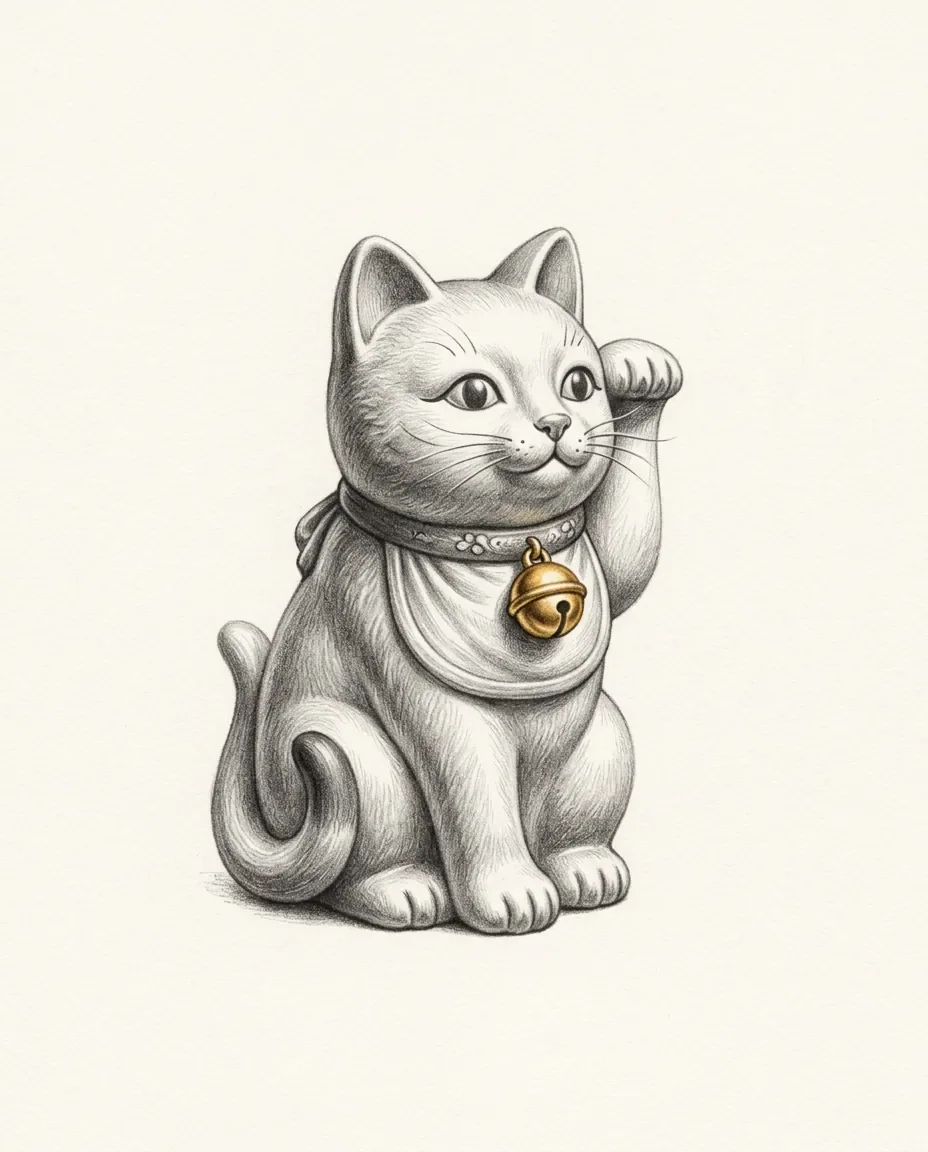
Lucky Charm
Added 21 Jun 2026 · Updated 22 Aug 2026
A non-sexual attachment to objects believed to carry protective, lucky, or supernatural power, such as amulets, talismans and charms. They are invested with personal or cultural meaning rather than erotic significance. This is the original anthropological sense of the word "fetish."
- Prevalence
- Very common
- Category
- Non-Sexual Fetishism
- Domain
- Non-sexual interest
- Confidence
- Medium confidence
- Status
- Non-clinical cultural and psychological phenomenon; not a disorder. Relevant only if embedded in OCD or delusional pathology.
- Also known as
- amulet & talisman attachment, apotropaic objects, talismanic object, protective amulet, good-luck object, lucky charm belief
- Added
- 21 Jun 2026
- Updated
- 22 Aug 2026
Overview
A lucky charm is an object invested with protective or fortune-bringing power: an amulet thought to ward off harm (apotropaic) or a talisman thought to attract benefit. Across cultures these objects are carried, worn, or kept close as quiet sources of reassurance. Crucially, this is the original anthropological sense of the word "fetish": an object treated as having agency or potency in its own right, with no sexual meaning whatsoever. This article traces that lineage, distinguishes it sharply from sexual fetishism, and surveys the psychology and near-universal cultural reach of good-luck objects.
Examples
What the term covers. The attachment takes as many forms as the objects do. A charm may be inherited (a grandmother's medal, a coin from a birth year) and carry the weight of a family line as much as of luck. It may be improvised: a stone picked up on a good day, a ticket stub from an evening that went well. It may be occasion-bound, produced only for exams, flights, interviews, surgery or a match, and otherwise left in a drawer. Athletes and performers supply the most public cases, keeping a fixed routine, an unwashed pair of socks, or one particular shirt through a winning run. The common thread is not what the object is made of but the story attached to it.
What the term does not cover. A power object is credited with spiritual potency inside a religious or ritual system and is usually consecrated by a specialist, where a lucky charm is personal folk practice needing nobody's authority. Relic veneration honours remains or belongings because of the holy person they came from, within an institutional church. Anthropological fetishism is the scholarly category all of these sit inside, and commodity fetishism is Marx's borrowed metaphor, which asserts no belief in any object's power at all. Collecting values completeness rather than potency. And this is emphatically not the erotic sense of the word: arousal directed at an object is object sexuality, an entirely separate interest.
How the word is used. "Lucky charm" is ordinary English, at home in sports commentary, travel writing and everyday conversation, and it carries no clinical weight: it appears in neither DSM-5-TR nor ICD-11, because carrying a charm is folklore rather than a symptom. Scholars write amulet, talisman and apotropaic; the psychological literature files the same behaviour under superstition.
History & origins
Belief in protective objects is among the oldest documented human practices. Amuletic items have been recovered from prehistoric burials, and the practice was richly developed in ancient Egypt, Mesopotamia, the classical Mediterranean, and far beyond; apotropaic evil-eye charms have been dated to roughly five thousand years ago. The interest therefore has no inventor and no coinage date: it is folklore, not a diagnosis.
A layered vocabulary
The words we use for these objects arrived through different routes, which is itself part of the history:
- Amulet: reaches English via Latin amuletum, a protective charm worn on the body.
- Talisman: comes through Arabic ṭilsam, from Greek télesma, a "consecration / completion rite," reflecting the idea that the object was ritually charged.
- Fetish: entered European languages through Portuguese feitiço ("charm, sorcery"), itself from Latin facticius, "made by art." Fifteenth- and sixteenth-century Portuguese traders on the West African coast used the word for the small religious objects they saw treated as potent in their own right.
Two senses of "fetish" split apart
The anthropological sense came first and was theorised by the Enlightenment scholar Charles de Brosses (1709–1777), who coined fétichisme for the religious veneration of material objects. Only much later did the word acquire its erotic meaning: the French psychologist Alfred Binet introduced sexual fetishism in 1887 in the Revue Philosophique, and Richard von Krafft-Ebing's Psychopathia Sexualis popularised it. The lucky charm belongs entirely to the earlier lineage and stays close to the psychology of superstition and folk belief: which is why this entry is filed under non-sexual fetishism alongside ideas such as commodity fetishism, and never among the paraphilias. Population studies of actual sexual interests, such as Joyal, Cossette & Lapierre (2015), concern erotic fantasy and have nothing to do with the talismanic attachment described here.
In practice
The attachment is expressed through everyday ritual: carrying a particular coin or stone, wearing a pendant or medal, keeping a charm in a pocket or car, or touching the object before exams, competitions, performances, interviews, or travel. People commonly report a sense of security in the object's presence and a mild unease when separated from it, even while acknowledging intellectually that the effect is symbolic rather than mechanical.
Psychology
The behaviour draws on magical thinking, the illusion of control, and emotional regulation. Investing an object with meaning can reduce anxiety and steady performance through a placebo-like boost in confidence and persistence. The most cited experimental support is Damisch, Stoberock & Mussweiler (2010), who reported that activating a lucky charm improved performance on golf, motor-dexterity, memory, and word tasks, with the effect mediated by raised self-efficacy: though it should be flagged that later replication attempts failed to reproduce the benefit, so the evidence that charms actually improve performance is contested. What is clearer is that family tradition, cultural learning, and personal narrative shape which objects come to matter.
Prevalence & culture
Apotropaic and good-luck objects are near-universal. Familiar examples include the hamsa hand, the nazar evil-eye bead, described as one of the most widespread protective objects in the world, saints' medals and scapulars, rabbits' feet, four-leaf clovers, horseshoes, maneki-neko cats, and birthstones. At least mild belief in lucky objects is common in the general population, though intensity varies enormously, from an idle habit kept "just in case" to a deeply held conviction passed down a family line.
Safety, consent & law
This interest is benign and non-sexual, with no consent or legal dimension at all. Clinical attention is warranted only in the rare case where the attachment becomes embedded in obsessive-compulsive ritual, compulsive hoarding, or a delusional belief that meaningfully impairs everyday functioning: and even then it is the surrounding disorder, not the charm, that is treated.
Common questions
Do lucky charms actually work?
There is no mechanism by which an object changes the odds. The interesting question is whether believing in one changes the person, and there the evidence is contested. Damisch, Stoberock and Mussweiler (2010) reported that activating a lucky charm improved performance on golf, dexterity, memory and word tasks by raising self-efficacy, but a later registered replication failed to reproduce the benefit. What survives is modest: a charm can steady nerves, which is not nothing.
Why is a lucky charm called a fetish?
Because that was the word's first meaning. "Fetish" reached European languages through Portuguese feitiço, "charm" or "sorcery," and fifteenth- and sixteenth-century traders on the West African coast applied it to small objects treated as potent in themselves. The Enlightenment scholar Charles de Brosses built fétichisme from it for the veneration of material objects. The erotic sense arrived more than a century later, when Alfred Binet coined sexual fetishism in 1887.
What is the difference between an amulet and a talisman?
Direction. An amulet is defensive, worn or carried to ward harm off, which is what scholars mean by apotropaic. A talisman is acquisitive: it is meant to draw something in (luck, love, victory, money), and the Greek root télesma points to the rite that charged it. In ordinary use the two words are interchangeable, and a great many objects are asked to do both jobs at once.
Is believing in a lucky charm a sign of a mental disorder?
No. At least mild belief in lucky objects is common, culturally transmitted, and perfectly compatible with knowing intellectually that the effect is symbolic. It becomes clinically relevant only in the rare case where it is embedded in something else: obsessive-compulsive ritual the person cannot stop and finds distressing, compulsive hoarding, or a delusional belief that impairs daily life. In those cases treatment addresses the surrounding disorder, not the charm.
How do people end up with a particular lucky charm?
Usually by accident, and then by retelling. An object happens to be present when something goes well, or is handed down by a relative who treated it the same way, and the association hardens each time the story is repeated. Cultural learning supplies the rest of the repertoire, deciding which shapes, saints, animals and colours a given community counts as lucky. Very few people set out to acquire a lucky charm; they notice afterwards that they have one.
Is a lucky charm the same thing as a superstition?
A charm is an object; a superstition is a belief, and the charm is one common way a belief takes physical form. Not every superstition has an object attached (avoiding the number thirteen or refusing to say a word does not), and not every kept object is superstitious, since plenty are held purely as keepsakes. The overlap is large enough that the psychology of the two is generally studied together.
- Commodity Fetishism34/100Non-Sexual FetishismA concept from Marxist economic and social theory describing how commodities appear to possess intrinsic value and social power. That appearance masks the human labor and social relations that actually produce them. It is a non-sexual, analytical use of the word "fetish."34
- Power Object30/100Non-Sexual FetishismIn anthropology and religious studies, a power object is a crafted or found item believed to hold spiritual power or agency. It is the original sense of the word "fetish", and is used in ritual to heal, protect, bind oaths, or influence events. The term is non-sexual and concerns material religion, not erotic interest.30
- Relic Veneration38/100Non-Sexual FetishismRelic veneration is the devotional honoring of sacred physical remains or objects as conduits of blessing or divine presence. The bones of a saint and items associated with holy figures are typical. It is a non-sexual religious practice, not an erotic interest.38
- Object Sexuality17/100Objectophilia · Objects & MaterialsObject sexuality (objectophilia, objectum sexuality, OS) is a romantic and sometimes sexual attraction directed at specific inanimate objects or structures. Those who identify with it describe committed, often reciprocal-feeling love for one particular object rather than a generic interest in things.17
- Audiophilia39/100Non-Sexual FetishismA non-sexual devotion to high-fidelity sound reproduction and the equipment behind it: amplifiers, speakers, turntables, headphones, and cables. It is a hobby and connoisseurship interest, not a clinical condition or sexual paraphilia.39
- Texture Fixation39/100Non-Sexual FetishismA non-sexual enjoyment of touching, stroking, or manipulating particular textures for comfort and sensory satisfaction. Soft, smooth, squishy, fuzzy, or grainy surfaces are the usual draw. It overlaps with fidgeting, stimming, and relaxation behaviour.39
"Amulet" derives from Latin *amuletum* (a protective charm); "talisman" comes via Arabic *ṭilsam* from Greek *télesma*, "completion / consecration rite"; and the anthropological "fetish" descends from Portuguese *feitiço*, "charm, made by art" (Latin *facticius*).
folk belief · material culture · superstition
Prevalence is computed from the entry's cited population estimate. Rows marked ESTare indicative editorial estimates scored against a fixed anchor rubric, not measured quantities. Method & anchors: methodology.
Very common · ≈ 1 in 7
- 01List of paraphilias, Wikipediadistinguishes non-sexual/anthropological fetishism (objects believed to hold power) from sexual fetishism
- 02Paraphilia, Wikipediacontext separating cultural/protective object attachment from clinical paraphilic interest
- 03Amulet, Wikipediahistory and etymology of amulets, talismans and apotropaic objects across cultures, and the psychology-of-superstition framing
- 04Fetishism, Wikipediaanthropological 'fetish' from Portuguese feitiço used by Portuguese traders for West African religious objects; de Brosses coining fétichisme
- 05Sexual fetishism, WikipediaAlfred Binet introduces the term sexual fetishism in 1887, separating the later erotic sense from the earlier anthropological/talismanic sense
- 06Psychopathia Sexualis, WikipediaKrafft-Ebing's Psychopathia Sexualis popularising the clinical/sexual sense of fetishism
- 07Evil eye, Wikipediaapotropaic evil-eye charms (nazar, hamsa) dated to roughly 5,000 years ago and described as among the most widespread protective objects in the world
- 08Damisch, Stoberock & Mussweiler (2010), Keep Your Fingers Crossed! How Superstition Improves Performance, Psychological Science 21(7):1014-1020experimental evidence that activating a lucky charm raised self-efficacy and improved task performance
- 09Calin-Jageman & Caldwell (2014), Replication of the Superstition and Performance Study by Damisch et al., Social Psychology 45(3):239-245registered replication that failed to reproduce the lucky-charm performance benefit, showing the effect is contested
- 10Joyal, Cossette & Lapierre (2015), What Exactly Is an Unusual Sexual Fantasy?, J. Sexual Medicine 12(2):328-340population study of erotic fantasy, cited to mark the contrast between sexual fetishism and the non-sexual talismanic attachment described here