
Compulsive Hoarding
hoarding disorder
Added 22 Jun 2026 · Updated 22 Aug 2026
A persistent difficulty discarding possessions, regardless of their value, that leads to clutter overwhelming living spaces and significant distress. It is a recognised mental-health condition and an object-attachment phenomenon, not a sexual interest.
- Prevalence
- Common
- Category
- Non-Sexual Fetishism
- Clinical term
- hoarding disorder
- Domain
- Non-sexual interest
- Confidence
- High confidence
- Status
- A recognised mental-health condition, not a paraphilia or sexual interest. Classified as hoarding disorder among obsessive-compulsive and related disorders in DSM-5 (2013) and ICD-11.
- Also known as
- hoarding disorder, pathological hoarding, syllogomania, disposophobia, Plyushkin's disorder, Diogenes syndrome (related senile self-neglect variant)
- Added
- 22 Jun 2026
- Updated
- 22 Aug 2026
Featured in
Overview
Compulsive hoarding, clinically termed hoarding disorder, is a persistent difficulty parting with possessions regardless of their actual value, driven by a perceived need to keep items and by genuine distress at the thought of discarding them. The accumulation produces clutter that congests and compromises active living spaces, impairing their intended use. This entry documents hoarding as a non-sexual object-attachment phenomenon (the involuntary, distressing counterpart to ordinary collecting and sentimental keeping) and explicitly not as an erotic interest. It is included for completeness within a directory that catalogues the full spectrum of human attachments to objects.
Examples
Hoarding is easiest to recognise by its consequences, and easiest to mistake for several other things.
What the term covers. The saved newspapers, junk mail, packaging, containers and clothing that fill a room until it can no longer be slept in or cooked in; free items taken because they might one day be useful; possessions kept for a repair, a project or a memory that never arrives. It covers animal hoarding, the keeping of far more animals than can be cared for, which the diagnostic literature treats as a special manifestation of the same disorder rather than a separate condition. And it covers items of real value as readily as worthless ones; the diagnosis turns on the difficulty discarding, never on what is kept.
What the term does not cover. It is not collecting, which is selective, ordered, displayed and pleasurable. It is not tsundoku, the unread books that accumulate in an otherwise tidy home, nor bibliomania. It is not compulsive shopping, where the acquiring rather than the keeping is the problem, though the two frequently occur together. Squalor and self-neglect are a different picture again: Diogenes syndrome, often offered as a synonym, properly names a late-life self-neglect syndrome that may or may not involve accumulation at all.
How the word is used. "Hoarder" is lay usage and often pejorative; the clinical name is hoarding disorder, a diagnosis in its own right in DSM-5 and listed among obsessive-compulsive and related disorders in ICD-11. Syllogomania is the Greek-derived synonym, disposophobia a popular coinage with no clinical standing, and "Plyushkin's disorder" a literary nickname rather than anything a clinician would write in a note.
History & origins
Literary and historical antecedents
Extreme accumulation has been depicted in literature for nearly two centuries, long before it had a clinical name. In Nikolai Gogol's 1842 novel Dead Souls, the decayed landowner Plyushkin amasses worthless objects to grotesque excess: which is why hoarding is occasionally nicknamed "Plyushkin's disorder." Honoré de Balzac's Le Cousin Pons (1846) and Charles Dickens's Bleak House (1852–53) feature comparable accumulators. The most cited real-world case is that of the Collyer brothers, Homer (1881–1947) and Langley (1885–1947) of New York, found dead amid an estimated 140 tons of material; their name became shorthand ("Collyer mansion") for a dangerously hoarded home.
Clinical lineage
- 1993: Randy O. Frost and Rachel Gross publish the first systematic empirical account of hoarding behaviour, at a time when fewer than a dozen scientific papers on the subject existed.
- 1996: Frost and Hartl articulate the influential cognitive-behavioural model of compulsive hoarding in Behaviour Research and Therapy, framing it as the product of interacting information-processing deficits, difficulty forming and tolerating emotional attachments to objects, behavioural avoidance, and erroneous beliefs about possessions. This model still organises most research and treatment.
- 1994–2000s: Under DSM-IV, hoarding was not a stand-alone diagnosis; it appeared only as a possible criterion of obsessive-compulsive personality disorder and was often treated as a symptom of OCD. Mounting evidence that hoarding responded poorly to standard OCD treatment, and differed neurologically, drove the case for separation.
- 2013: The DSM-5 recognised hoarding disorder as a distinct diagnosis within the new chapter "Obsessive-Compulsive and Related Disorders," with specifiers for excessive acquisition and for degree of insight.
- 2018–2022: The WHO's ICD-11 likewise lists hoarding disorder as its own entity among obsessive-compulsive and related disorders, cementing international consensus.
Cultural evolution
Public visibility surged in the 2000s and 2010s through reality television (most prominently Hoarders (A&E, from 2009) and Hoarding: Buried Alive) and the documentary Grey Gardens (1975). These broadened recognition but also drew criticism for sensationalising a serious, treatable condition.
In practice
Hoarding disorder manifests as the accumulation of, and inability to discard, large quantities of items (frequently ordinary objects such as newspapers, mail, packaging, clothing or containers) until rooms can no longer serve their function. Acquisition may be passive (failing to remove what arrives) or active, including compulsive buying or the taking of free items. A distinct and heavily studied variant is animal hoarding: keeping far more animals than one can adequately care for, typically with failure to recognise the resulting suffering. Insight varies widely, and many affected people experience real anguish when others attempt to remove their belongings.
Psychology
The leading framework remains the Frost–Hartl model, which locates hoarding in deficits of attention and categorisation, exaggerated emotional attachment to and anthropomorphism of objects, and beliefs that overvalue possessions (as memory aids, as potential utility, or as extensions of identity). A majority of patients link symptom onset to a stressful or traumatic life event. Hoarding is highly comorbid with depression, anxiety, ADHD and autism-spectrum traits as well as OCD, yet it is now understood as distinct from both OCD and from ordinary collecting, which is targeted, organised, pleasurable and non-distressing. The evidence base for any single causal mechanism remains incomplete, and twin and genome-wide studies suggest meaningful but partial heritability.
Prevalence & culture
Older figures placed prevalence at roughly 2–6% of adults. The most rigorous synthesis to date (the Postlethwaite, Kellett & Mataix-Cols systematic review and meta-analysis (2019), pooling 11 studies and 53,378 participants) estimated a prevalence of about 2.5% (95% CI 1.7–3.6%) among working-age adults, with negligible sex differences.
How common is it, and does it change with age?
Hoarding is uncommon in youth and grows steadily more common with age. Onset is typically in adolescence (around ages 11–15), but severity worsens across the lifespan. A large Dutch twin-register study by Cath, Nizar, Boomsma & Mathews (2017), covering 15,194 people aged 15 to 97, put the provisional prevalence at 2.12% overall and found it rose linearly by about 20% for every additional five years of age, with no difference between men and women; the increase was driven chiefly by growing difficulty discarding. Community presence is organised around support and decluttering networks rather than the kink-style communities found elsewhere in this directory, reflecting its status as a recognised disorder.
Safety, consent & law
Hoarding carries concrete risks: dense clutter sharply raises hazards of fire, falls, structural strain, pest infestation and unsanitary conditions, and severe cases can trigger housing-code enforcement, eviction or condemnation: and, in animal hoarding, neglect or animal-welfare proceedings. Clinically, it warrants compassionate professional assessment and evidence-based intervention (cognitive-behavioural therapy adapted for hoarding); coerced clear-outs typically deepen distress and rarely produce durable change.
Related interests
Hoarding sits alongside other non-erotic object-attachment phenomena catalogued here, including ordinary collecting and the distinct, animistic object sexuality, and is sometimes confused with sensory or affective conditions such as misophonia.
Common questions
Is hoarding just laziness or being untidy?
No. Untidiness is a matter of habit and effort; hoarding disorder is a recognised psychiatric condition in which parting with a possession provokes genuine distress and the decision to let something go is experienced as a real loss rather than a chore. People with the disorder frequently want their homes back and still cannot act on it. That gap between wanting and being able is what separates it from ordinary mess.
What is the difference between hoarding and collecting?
The distinction is not size. From the doorway a large collection and a hoarded home can look similar; what separates them is that a collection is chosen and kept in space set aside for it, while hoarding progressively takes over rooms until they can no longer serve their purpose. The emotional tone differs just as sharply: pride and pleasure on one side, distress and shame on the other.
Is hoarding a type of OCD?
Not any more. It was long treated as a symptom of obsessive-compulsive disorder, but it responded poorly to standard OCD treatment and differed neurologically, which is why it was separated out. The two still co-occur, as do hoarding and depression, anxiety, ADHD and autistic traits. Most people with hoarding disorder do not have OCD, and their attachment to possessions is not usually experienced as an unwanted intrusive thought.
Can hoarding disorder be treated?
Yes, though imperfectly. The best-supported approach is cognitive-behavioural therapy adapted specifically for hoarding, working on decision-making, on tolerating the distress of discarding, and on the beliefs that make objects hard to release. Progress is usually slow, and meaningful improvement rather than an empty house is the realistic goal. Insight varies a great deal between people, and treatment depends on the person being engaged in it rather than having it done to them.
How can I help a family member who hoards?
Not by clearing the house. Forced clear-outs, however well meant, tend to deepen distress and rarely produce lasting change. What helps is working with the person rather than around them: encouraging a professional assessment, agreeing small and specific decisions that they lead, dealing first with genuine safety hazards such as blocked exits and heat sources, and being careful to talk about the clutter rather than about their character.
Is animal hoarding the same condition?
It is treated as a variant of it. Animal hoarding means keeping far more animals than can be adequately cared for, typically alongside a failure to recognise the resulting suffering and the deterioration of the home. The underlying pattern of attachment and difficulty relinquishing is recognisably the same, but the consequences are more urgent, because living creatures are involved and animal-welfare law applies.
Can someone be evicted or forced to clear their home?
Yes. Hoarding is not itself illegal, but the conditions it produces can breach housing, fire and public-health codes, and severe cases have led to enforcement notices, eviction and condemnation. Authorities act on the hazard, not on the diagnosis. A clear-out ordered this way removes the clutter without touching the condition that produced it, which is why re-accumulation is common when no treatment follows.
From the blog
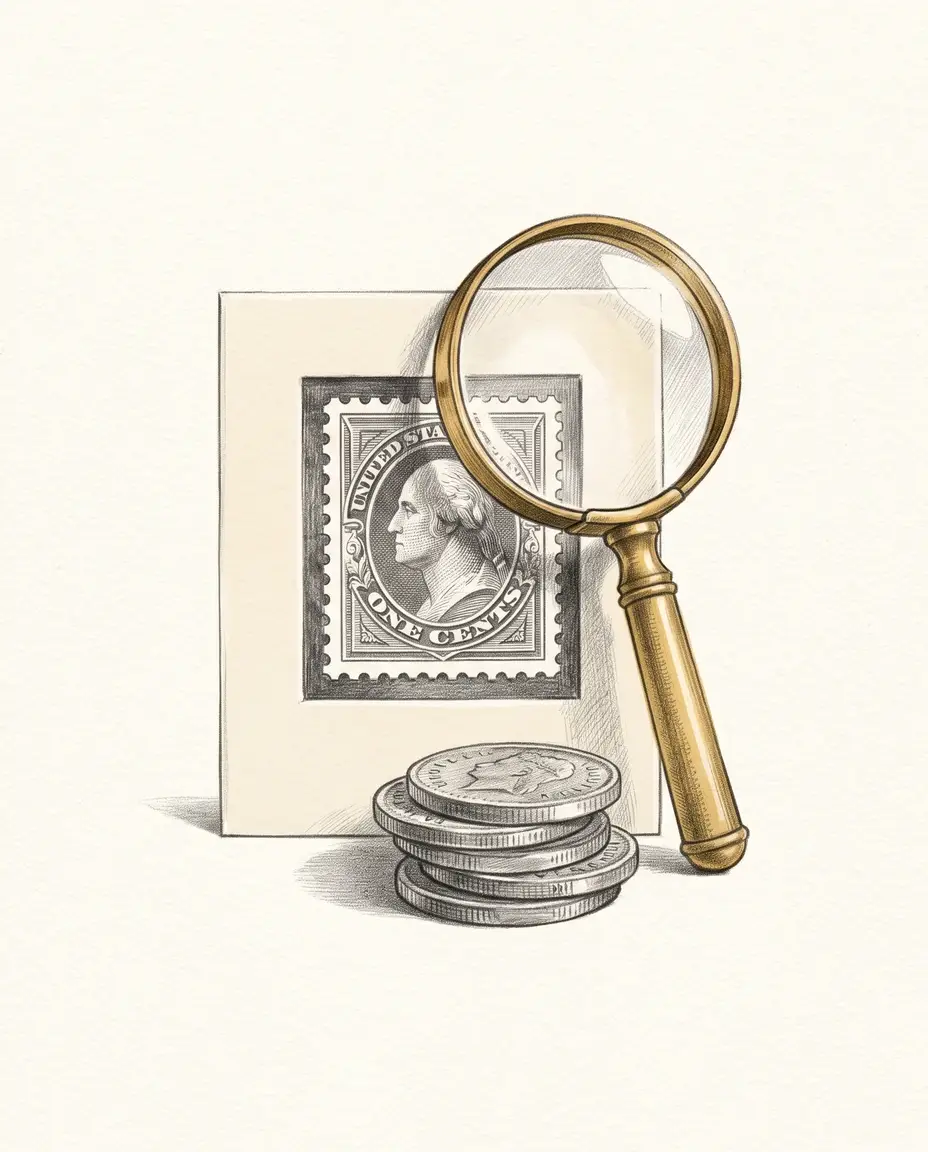
- Collecting57/100Non-Sexual FetishismA strong, non-sexual drive to acquire, organize, and complete sets of objects: from stamps and coins to figures, records, and memorabilia. It is a widespread hobby and behavioral pattern, not a clinical disorder, and is distinct from hoarding.57
- Object Sexuality17/100Objectophilia · Objects & MaterialsObject sexuality (objectophilia, objectum sexuality, OS) is a romantic and sometimes sexual attraction directed at specific inanimate objects or structures. Those who identify with it describe committed, often reciprocal-feeling love for one particular object rather than a generic interest in things.17
- Misophonia57/100misophonia · Non-Sexual FetishismA sound-tolerance condition in which specific repetitive trigger sounds provoke disproportionate irritation, anxiety, disgust or anger. Chewing, breathing, sniffing and tapping are common triggers. It is a non-sexual sensory aversion, not an erotic interest.57
- Limerence56/100Non-Sexual FetishismAn involuntary state of intense romantic infatuation centred on one person, marked by obsessive intrusive thoughts. It brings emotional dependency on that person's responses and an aching craving for reciprocation. It is an affective experience, not a fetish or a recognised disorder.56
- Synesthesia55/100synaesthesia · Non-Sexual FetishismA benign neurological trait in which one sense automatically and involuntarily triggers another: seeing colours in sounds or words, tasting shapes. A documented 'sexual' subtype attaches vivid cross-sensory perceptions to arousal and orgasm.55
- Car Enthusiasm57/100Non-Sexual FetishismA strong, non-sexual fascination with automobiles, including their engineering, aesthetics, performance, history, and the culture surrounding them. It is a widespread hobby and identity rather than a clinical condition.57
"Hoard" descends from Old English "hord" (a treasure or accumulated store); "compulsive" derives from Latin "compellere" (to drive or force together). The clinical synonym "syllogomania" combines Greek "sullogē" (a collecting or gathering) with "mania" (madness); "disposophobia" is a popular coinage from English "dispose" plus Greek "phobos" (fear). "Hoarding disorder" is the plain descriptive name adopted by the DSM-5 in 2013.
object attachment · compulsive behaviour · obsessive-compulsive related condition
Prevalence is computed from the entry's cited population estimate. Rows marked ESTare indicative editorial estimates scored against a fixed anchor rubric, not measured quantities. Method & anchors: methodology.
Common · ≈ 1 in 20
- 01Hoarding disorder, WikipediaDSM-IV-to-DSM-5 (2013) reclassification and ICD-11 recognition, the Plyushkin and Collyer references, animal hoarding, prevalence range, comorbidity, distinction from collecting, and safety hazards
- 02Frost & Hartl (1996), A cognitive-behavioral model of compulsive hoarding, Behaviour Research and Therapy 34(4):341-350the seminal cognitive-behavioural model attributing hoarding to information-processing deficits, emotional attachment to possessions, avoidance and erroneous beliefs
- 03Hoarding Disorder, American Psychiatric AssociationDSM-5 definition (persistent difficulty discarding regardless of value, distress, clutter limiting use of living spaces) and prevalence/onset framing
- 04The epidemiology of the proposed DSM-5 hoarding disorder, J. Clinical Psychiatry / PubMed (2010-2011)population prevalence estimates and the acquisition specifier and associated distress in hoarding disorder
- 05Postlethwaite, Kellett & Mataix-Cols (2019), Prevalence of Hoarding Disorder: A systematic review and meta-analysis, J. Affective Disorders 256:309-316the pooled prevalence estimate of ~2.5% (95% CI 1.7-3.6%) across 11 studies and 53,378 working-age adults, with negligible sex differences
- 06Cath, Nizar, Boomsma & Mathews (2017), Age-Specific Prevalence of Hoarding and Obsessive Compulsive Disorder: A Population-Based Study, Am. J. Geriatric Psychiatry 25(3):245-255provisional hoarding prevalence of 2.12% across 15,194 Netherlands Twin Register participants aged 15-97, rising ~20% every five years of age with no sex difference, driven mainly by difficulty discarding