Fetishism
Fetishistic Disorder
Added 21 Jun 2026 · Updated 22 Aug 2026
A DSM-5-TR paraphilic disorder defined by recurrent, intense arousal from nonliving objects or a strong focus on non-genital body parts. The body-part form is partialism, and the arousal must cause clinically significant distress or impairment. An object or body-part preference without distress is not a disorder.
- Prevalence
- Very common
- Category
- Clinical Paraphilias
- Clinical term
- Fetishistic Disorder
- Domain
- Sexual interest · Paraphilia
- Confidence
- Medium confidence
- Status
- DSM-5-TR paraphilic disorder; diagnosed only with clinically significant distress or impairment. Common object or body-part preferences without distress are non-disordered variations.
- Also known as
- fetishistic disorder, object fetishism, partialism, material fetishism, sexual fetishism
- Added
- 21 Jun 2026
- Updated
- 22 Aug 2026
Overview
Fetishistic Disorder is a named paraphilic disorder in the DSM-5-TR defined by recurrent, intense sexual arousal from either nonliving objects, specific garments or materials, or a highly focused interest in non-genital body parts, termed partialism, persisting for at least six months. As with the other paraphilias, the diagnosis is reserved for cases where the pattern causes clinically significant distress or functional impairment. The very common everyday preferences for particular materials, items of clothing, or body parts are not disorders in themselves; this article covers both the broad, non-pathological interest and the narrow clinical category that shares its name.
Examples
The word is broad by design, and nearly all the confusion around it comes from one ambiguity: in ordinary speech "fetish" names any strong sexual interest, while in the diagnostic manuals it names something far narrower.
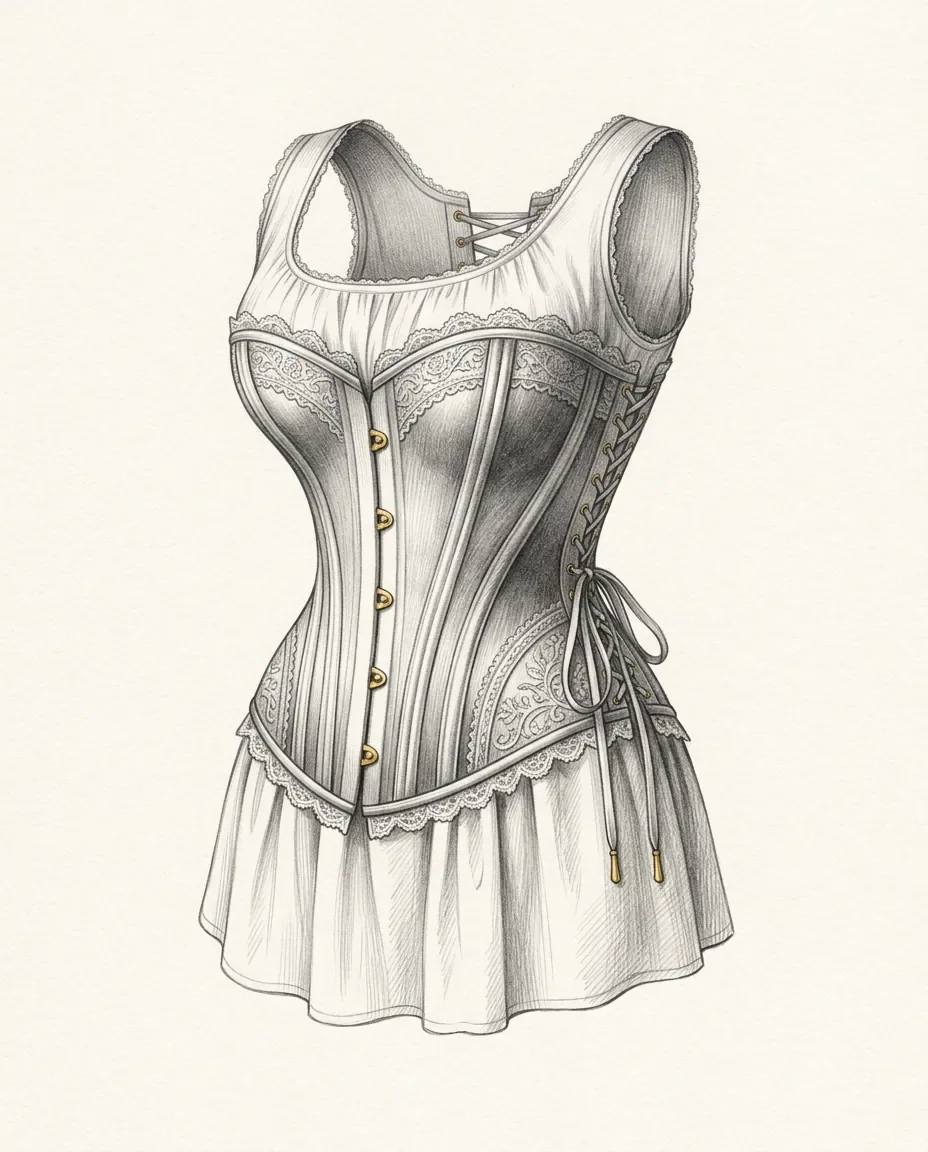
What the term covers. Materials above all: leather, latex and rubber, silk and satin, nylon, denim, fur, wool, PVC and spandex. Garments and worn objects: shoes, boots and high heels, stockings and pantyhose, gloves, lingerie, corsets, uniforms, panties and socks. And, under partialism, non-genital body parts: feet, hands, hair, legs, armpits, the navel.
What the term does not cover. Two unrelated senses share the word and nothing else: commodity fetishism is Marx's term for the value that appears to inhere in goods, and anthropological fetishism is the religious sense the word carried first. Object sexuality is also separate: the object is experienced as a partner rather than as a charged thing, which is a different relation altogether. Transvestic disorder involves garments but is its own DSM-5-TR category. And a preference, however strong, is not a disorder.
How the word is used. Vernacular "fetish" is loose and often approving; people say they have a fetish for a material or a body type without meaning anything clinical by it. The clinical term is Fetishistic Disorder, which exists only in DSM-5-TR, since ICD-11 carries no equivalent. Most everyday uses of the word, including most entries in this catalog, mean the broad non-clinical sense.
History & origins
Few sexual terms have travelled as far from their origin as fetish, and its lineage runs from anthropology through nineteenth-century neurology into the modern diagnostic manuals.
From sacred object to erotic concept
The word fetish entered European languages through the Portuguese feitiço, a charm or sorcery, which traders applied to West African ritual objects believed to hold power. The French philosopher Charles de Brosses (1709–1777) coined fétichisme to name the religious worship of material objects. The decisive move into sexology came in stages:
- 1882: The neurologists Jean-Martin Charcot and Valentin Magnan described patients with intense attachments to objects such as women's shoe nails, nightcaps, and white aprons in Inversion du sens génital (Archives de Neurologie), framing the pattern within degeneration theory but without naming it.
- 1886: Richard von Krafft-Ebing catalogued numerous such cases in Psychopathia Sexualis, treating fetishism as a pathology of association.
- 1887: The psychologist Alfred Binet, drawing on Charcot and Magnan's examples, coined the erotic sense of the term in his essay Le fétichisme dans l'amour (Revue Philosophique), arguing such interests arise from chance associations formed early in life. That essay is the foundational statement of the field.
- 1905: Sigmund Freud, in his Three Essays on the Theory of Sexuality, placed fetishism on a continuum with ordinary erotic life, while Havelock Ellis likewise treated it as an exaggeration of normal selectivity rather than a discrete disease.
The diagnostic lineage
Across successive editions of the DSM the clinical term steadily narrowed:
- DSM-III (1980) excluded arousal from body parts from the fetishism criteria, restricting it to nonliving objects.
- DSM-III-R (1987) introduced partialism, a focus on a non-genital body part, as a separate category.
- DSM-IV maintained that distinction.
- DSM-5 (2013) and the DSM-5-TR (2022) reversed it, folding partialism back into Fetishistic Disorder and formalising the split between a harmless interest and a diagnosable disorder requiring distress or impairment.
Internationally, the ICD-11 (adopted 2019, in force 2022) went further still, removing fetishism and fetishistic transvestism as diagnoses entirely: a clear marker of the broad depathologisation of consensual kink in contemporary classification.
In practice
In its non-disordered form the interest is usually expressed quietly and without ceremony: in what someone chooses to wear or asks a partner to wear, in the imagery and media they seek out, in collecting the material or garment itself, and in communities that form around one specific object rather than around the umbrella idea. For most people it is a preference a partner accommodates rather than a requirement placed on them, and it is frequently never named as a fetish at all. The clinical threshold is crossed only when the fetish object becomes effectively required for arousal in a way that distresses the person or interferes with intimate relationships and everyday functioning.
Psychology
Fetishistic interests are most often understood through early association and classical conditioning, the salience of particular sensory cues (texture, smell, sheen), and individual erotic learning histories: the lineage of Binet's chance-association hypothesis. Most people with a fetish integrate it comfortably into their sexuality; the minority who meet criteria for the disorder typically do so because of conflict, rigidity, shame, or impairment around the interest rather than because of the interest itself. The mechanistic evidence base remains modest, and no single causal account is established.
Prevalence & culture
Fetishes for objects and body parts are among the most prevalent atypical interests in fantasy and behaviour surveys. In Scorolli et al. (2007), an analysis of 381 internet fetish groups, preferences for body parts or features (about 33%) and for objects associated with the body (about 30%) dominated all categories, with feet and footwear by far the single most common target. In the general-population survey by Joyal & Carpentier (2017), fetishism was one of several interests reported above the 15.9% threshold the authors used to define a fantasy as statistically "unusual," meaning broad fetishistic interest is in fact statistically common, far exceeding the rate of the diagnosable disorder. The clinical literature consistently notes that Fetishistic Disorder itself is rare relative to this widespread non-pathological interest. Cultural visibility is substantial and research attention is high given the disorder's formal status, though dedicated communities tend to organise around a specific object or material rather than the umbrella concept.
Safety, consent & law
Fetishistic interests involving one's own items or consenting adult partners are legal and benign. Clinical attention is appropriate only where the interest causes genuine distress or impairment, and treatment is supportive: helping the person integrate the interest or reduce associated distress rather than eliminate a harmless preference. Acquiring objects through theft, or using them with or against non-consenting people, are separate legal matters and fall outside the consensual practice described here.
Common questions
What is the difference between a kink and a fetish?
Kink is the umbrella term: any consensual sexual interest outside the conventional script, including roles, dynamics and activities. A fetish is narrower and more specific: arousal attached to a particular object, material, or non-genital body part. In strict clinical use a fetish is also strongly preferred or effectively required for arousal, while in everyday speech people apply the word to any focused interest. Every fetish is a kink; most kinks are not fetishes.
Is a fetish the same thing as a paraphilia?
Not quite. Paraphilia is the broad clinical class for erotic interests outside genital stimulation with a consenting adult partner, and fetishism is one named member of that class. So a fetish is a paraphilia in the technical sense, but the reverse does not hold: voyeurism and exhibitionism, for instance, are paraphilias without being fetishes. Neither word implies harm on its own.
Is it normal to have a fetish?
Statistically, yes. Fetishistic interests are among the most commonly reported atypical interests in general-population surveys, and they carry no association with harm or dysfunction. Most people who have one integrate it into an ordinary sexual life without ever seeking help or, frequently, ever using the word about themselves. The clinical category is not about having the interest; it is about whether the interest is causing the person a problem.
When does a fetish become a disorder?
When it causes marked distress or interferes with the person's functioning or relationships, persistently; DSM-5-TR sets the duration at six months. The question a clinician asks is whether the interest is costing someone their intimate life, their work, or their peace of mind, not whether it is unusual. Measured on that threshold, the diagnosable disorder is rare next to the very common interest.
Can you enjoy sex without your fetish?
Most people can, and do. The pattern in which the object is effectively required, so that arousal is unreliable or absent without it, describes a minority, and it is one of the things that can tip an interest into clinical territory if the person finds it distressing. For everyone else the fetish enhances rather than gates, and its absence makes for a narrower sex life rather than none.
Can you have more than one fetish?
Nothing in the definition limits anyone to one, and the categories overlap by construction: an interest in high heels touches footwear, leather and feet at once, so where one interest ends and another begins is often a labelling question rather than a real boundary. A catalogue like this one separates them for navigation, not because people experience them separately.
Why did ICD-11 remove fetishism as a diagnosis?
As part of a broad revision of its sexual-health chapter, the World Health Organization restricted paraphilic diagnoses to patterns involving non-consenting people or serious distress, and dropped fetishism and fetishistic transvestism altogether. DSM-5-TR kept Fetishistic Disorder. The two manuals therefore disagree, which is worth knowing if you meet conflicting claims about whether fetishism is a recognised disorder: internationally, since ICD-11 came into force in 2022, it is not.
Is it illegal to have a fetish?
No jurisdiction criminalises an interest, and interests involving your own possessions or a consenting adult partner raise no legal question at all. What can be illegal is conduct: acquiring objects by theft, involving someone who has not agreed, or any activity that would be an offence whatever the motive behind it. The interest is never the offence; the act can be.
From the blog
Mental health7 min read
Is a fetish a mental disorder? What the DSM keeps and the ICD dropped
Is a fetish a mental disorder? Not by itself: the DSM-5-TR requires distress or impairment, and the ICD-11 dropped fetishism in 2022.
Origins5 min read
Can you develop a fetish later in life? What the evidence allows
Can you develop a fetish later in life? What onset studies, conditioning experiments and acquired-preference cases say about when interests form.

How common6 min read
Do men and women have different kinks, and by how much
Do men and women have different kinks? Bondage appeals to 29.5% of men and 29.2% of women, threesomes to 34.1% and 11.1%. Where the surveys find a gap.
Origins7 min read
Why do people have kinks? Where the evidence runs out
Why do people have kinks? What conditioning, excitation transfer and the trauma story each explain, and the point where the evidence stops.
Mental health7 min read
Is my kink normal? One answer from the surveys, another from the manuals
Is my kink normal? By the surveys, yes for nearly everyone: two fantasies of 55 are rare. By the DSM-5-TR and ICD-11, a disorder needs distress or harm.
Definitions8 min read
Kink vs fetish, the difference and where the words come from
Kink is the everyday word for any unconventional sexual interest. Fetish means arousal tied to an object or body part. Where they overlap and where they part.
How common7 min read
The most common kinks, ranked by what the surveys found
The most common kinks, ranked by evidence: dominance and submission, bondage, foot fetish, roleplay and voyeurism lead 474 entries, read tier by tier.
- Foot Fetish83/100Podophilia · Body Parts & PartialismA focused erotic interest in feet (their shape, soles, toes, arches, or grooming) as a primary source of attraction. Within partialism (erotic focus on a non-genital body part) it is the example people report most, by a wide margin.83
- Leather Fetish65/100Leather fetishism · Objects & MaterialsAn erotic attraction to leather as a material: its look, smell, creak, shine, and feel when worn. It overlaps strongly with BDSM gear and is bound up with a recognised, organised leather subculture with its own bars, codes, and titles.65
- Latex Fetish62/100Latex fetishism · Objects & MaterialsAn erotic interest in latex garments and their tight, glossy, second-skin qualities. A common material fetish involving the look, feel, sound, smell, and enveloping sensation of clinging latex on consenting adults.62
- Partialism46/100Partialism · Clinical ParaphiliasThe clinical term for an exclusive or near-exclusive sexual focus on a specific, usually non-genital body part: feet, hands, hair, legs, the navel. It is the umbrella concept under which interests such as foot or hand attraction are formally classified.46
- Masochism69/100Sexual Masochism Disorder · Clinical ParaphiliasA DSM-5-TR paraphilic disorder defined by recurrent, intense arousal from being humiliated, beaten, bound, or otherwise made to suffer. It is diagnosed only when that arousal causes the person clinically significant distress or impairment. Consensual masochistic interest without distress is not a disorder.69
- Sadism59/100Sexual Sadism Disorder · Clinical ParaphiliasRecurrent, intense sexual arousal from the physical or psychological suffering of another person. As the DSM-5-TR's Sexual Sadism Disorder it is diagnosed only when acted on with a non-consenting person or when it causes clinically significant distress or impairment; consensual dominance is not itself a disorder.59
From Portuguese feitiço ("charm, sorcery," from Latin facticius, "artificial, made by art"), applied by traders to West African ritual objects; the French philosopher Charles de Brosses coined fétichisme for object-worship in religion, and the psychologist Alfred Binet coined the erotic sense in his 1887 essay Le fétichisme dans l'amour.
DSM-5-TR named disorder · object/material focus · partialism
Prevalence is computed from the entry's cited population estimate. Rows marked ESTare indicative editorial estimates scored against a fixed anchor rubric, not measured quantities. Method & anchors: methodology.
Very common · ≈ 1 in 7
- 01DSM-5-TR, Paraphilic Disorders (American Psychiatric Association, 2022)Fetishistic Disorder as a formally named DSM-5-TR paraphilic disorder (object/non-genital body-part focus)
- 02Joyal & Carpentier (2017), The Prevalence of Paraphilic Interests and Behaviors in the General Population, J. Sex Research 54(2):161-171general-population interest anchor: ~44% report fetishistic interest in objects/materials, far exceeding the diagnosable-disorder rate
- 03Scorolli et al. (2007), Relative prevalence of different fetishes, Int. J. Impotence Research 19(4):432-437relative-frequency structure of fetish objects/materials underpinning the object-focus definition
- 04Paraphilia, StatPearls, NCBI Bookshelfclinical recognition and lower diagnosable prevalence of fetishistic disorder vs. broad fetish interest
- 05Krafft-Ebing, Psychopathia Sexualis (1886)early clinical cataloguing of fetishism as a pathology of association in 19th-century sexology
- 06Sexual fetishism, Wikipediaetymology (Portuguese feitiço, de Brosses), Alfred Binet's 1887 coinage of the erotic sense, the DSM-III/III-R/5 lineage, and ICD-11 removal of fetishism
- 07The Origins of the Theory of Sexual Fetishism: Articles by Charcot and Magnan (1882) and Alfred Binet (1887), SpringerCharcot & Magnan's 1882 clinical descriptions that Binet drew on to coin the erotic sense of fetishism in 1887
- 08Three Essays on the Theory of Sexuality (Freud, 1905), WikipediaFreud's 1905 placement of fetishism on a continuum with ordinary erotic life
- 09ICD-11, World Health OrganizationICD-11 (adopted 2019, in force 2022) removed fetishism and fetishistic transvestism as diagnoses