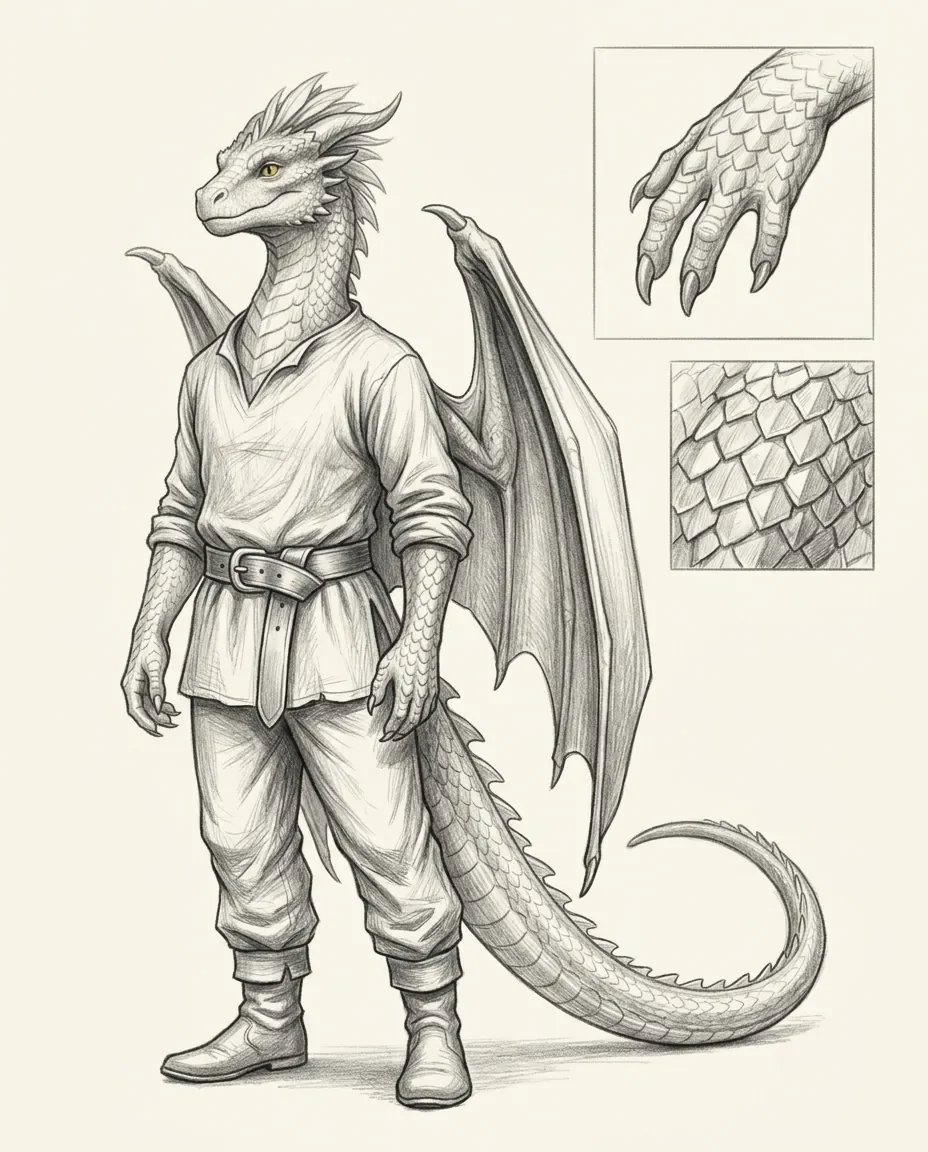
Scalie
Added 26 Jun 2026 · Updated 22 Aug 2026
Within the furry fandom, a scalie is a fan whose interest centres on anthropomorphic reptiles, amphibians and dragons rather than furred mammals. The term covers both the characters and the people who favour them, and includes an optional erotic dimension for some.
- Prevalence
- Uncommon
- Category
- Identity & Transformation
- Domain
- Sexual interest
- Confidence
- Low confidence
- Status
- Not a clinical paraphilia and not in the DSM-5-TR or ICD-11; a sub-identity within the furry fandom focused on reptilian and draconic characters, benign, with an optional adult dimension among consenting adults.
- Also known as
- dragon fetish, anthro-reptile, draconic attraction, scaly
- Added
- 26 Jun 2026
- Updated
- 22 Aug 2026
Featured in
Overview
A scalie (also spelled scaly) is, within the furry fandom, a fan whose interest centres on scaled anthropomorphic characters, reptiles, amphibians and especially dragons, rather than the furred mammals that dominate the wider community. The word names both the characters and the people who prefer them. As with the fandom generally, most engagement is creative and social; an erotic dimension is present for some but is not the defining feature. This article covers what a scalie is, where the term sits inside furry culture, and what is and is not known about its scale.
Definition & scope
"Scalie" is furspeech, community jargon, for two overlapping things: anthropomorphic creatures of the reptile or amphibian kind, and furries who identify with or prefer such characters over furred ones, per the WikiFur entry. The most common scalie character is the dragon, alongside anthro-dragons, snakes, naga, lizards (geckos, chameleons, monitors), crocodilians, and amphibians such as frogs and salamanders. Amphibians are usually grouped in despite often lacking literal scales, on the grounds of shared informal classification with reptiles.
The distinction from a plain "furry" is one of taste, not category: a scalie is a furry whose fursona and aesthetic preference lean reptilian or draconic. The two are not mutually exclusive, and the broader furry identity, community, and norms described in the furry fandom entry apply throughout. This interest concerns fictional anthropomorphic characters, not real reptiles.
Examples
What the term covers. A fan whose personal character (the fursona they commission art of, write about, or build a costume around) is a dragon, a lizard, a naga, a crocodilian or a frog rather than a wolf or a fox. It equally covers the characters themselves: a scaled anthro design is a scalie whether or not the artist who drew it identifies as one. Both senses are current, and which is meant is usually obvious from context.
What the term does not cover. It is not an interest in living reptiles; scalie characters are drawn, written and costumed, and the fandom is explicit about that boundary. It is not therianthropy or being otherkin, both of which concern identifying as a non-human being rather than preferring a kind of character. Kemonomimi and monster girl are anime archetypes with conventions of their own, and teratophilia names attraction to the monstrous as such, which is a different appeal from the draconic. A tail or a fursuit is kit a scalie may or may not own, not the thing that makes someone one.
How the word is used. "Scalie" is furspeech (jargon internal to the furry fandom, spelled "scaly" about as often), and it works as a taste label, roughly the way "wolf" or "avian" does. It has no clinical form and appears in neither DSM-5-TR nor ICD-11. Outside the fandom the word is largely unrecognised, which is why the phrases people search for tend to be descriptive instead: "dragon fetish," "anthro-reptile."
History & origins
Scalie has no clinical lineage; it is a sub-identity that emerged inside furry culture as that fandom organised itself from the 1980s onward (see the dated history in the furry fandom entry). Dragons in particular have deep roots in world mythology, and their long standing as objects of fascination and power fed naturally into anthropomorphic art. As the fandom's species vocabulary expanded online through the 1990s and 2000s, "scalie" settled in as the standard label for the reptile-and-dragon contingent, distinguishing it from the mammalian mainstream without separating it from the community.
In practice
Scalie participation looks like furry participation generally: commissioning and making character art, writing and reading fiction, designing a reptilian or draconic fursona with a reference sheet, attending conventions, and building online community. Where the interest carries an erotic dimension, it is expressed through adult art and role-play involving adult anthropomorphic characters, kept to adults-only spaces, exactly as the wider fandom separates all-ages from adult material.
Psychology
There is no dedicated research base on scalie attraction specifically, so explanation is interpretive. Community accounts point to the appeal of the exotic and powerful (dragons as emblems of strength and antiquity), the aesthetic draw of scales, crests and sinuous forms, and the same belonging and creative-identity motivators that the Furscience / IARP program documents for furries at large, where sexual interest is one factor among several rather than the dominant one. The interest overlaps conceptually with dragon and monster fantasy and with transformation fantasy.
Prevalence & culture
How common is scalie interest?
No representative figure exists for scalie interest; like the fandom as a whole it is measured by community survey and online footprint, not probability sampling. What the surveys do measure is species preference, and there dragons rank near the top. In the Furscience 2020 international online survey, the dragon was the second most common single fursona species at 16.0%, behind only the wolf (20.7%) and ahead of the fox, an increase from earlier years when foxes held that slot. Reptiles proper accounted for a smaller share (about 1.7%), so the scalie contingent is carried mainly by dragons. That popularity is why scalies are described as one of the fandom's larger sub-tribes despite the reptile-and-amphibian core being modest on its own. The dragon's broad cultural visibility gives the aesthetic reach well beyond the fandom, even though the scalie label itself remains community-internal.
Variations & related interests
- Dragon / anthro-dragon: the prototypical scalie subject.
- Naga and serpentine characters: snake-bodied or part-snake designs.
- Amphibian fans: frogs and salamanders, included by convention despite lacking scales.
The interest sits beside the broader furry fandom, the costume craft of fursuiting, and the fantasy-creature attraction of teratophilia and monster fetish.
Safety, consent & law
The interest is benign and legal. It concerns fictional anthropomorphic characters and a human creative community; adult content is restricted to consenting adults and adults-only spaces. It has no connection to real animals.
Common questions
Is a scalie the same thing as a furry?
A scalie is a furry: the word marks a preference within the fandom, not a separate one. Where most of the furry fandom builds characters from mammals, a scalie's lean reptilian or draconic. The two are not exclusive: people keep more than one character, and plenty of scalies also have a mammalian fursona. There is no schism behind the term, only a species preference.
Is being a scalie sexual?
For some people, partly. The fandom's own research programme, Furscience, consistently finds sexual interest to be one motivation among several rather than the dominant one, with art, creativity and belonging ranking at least as high. Where an erotic dimension is present it is expressed through adult art and role-play involving adult anthropomorphic characters, kept to adults-only spaces exactly as the wider fandom separates all-ages from adult material.
Do amphibians count as scalies?
By convention, yes, even though frogs, newts and salamanders have no scales. The category follows the informal grouping of "reptiles and amphibians" rather than strict zoology, so amphibians sit alongside geckos, monitors, snakes and crocodilians without much argument. Dragons stretch the definition in the other direction, being mythological rather than zoological, and they are nonetheless the prototypical scalie subject.
Does being a scalie mean you're attracted to real reptiles?
No, and the distinction is not a fine one. Scalie interest is directed at anthropomorphic characters (designed, drawn, written and sometimes costumed) that happen to be scaled. No live animal is involved at any point, and the fandom's own norms are explicit about it. Conflating the two mistakes a style of fictional character for something the community does not practise.
Is scalie a fetish or an identity?
Mostly it is a taste. Most people using the word are describing which kind of character they like to make, read about and commission, which is why it sits in this index under identity and transformation rather than under an erotic focus. For a minority the interest does carry a fetishistic charge, and the alternative phrasings people search for ("dragon fetish," "draconic attraction") reflect that end of it.
Is being a scalie a paraphilia or a disorder?
No. Neither DSM-5-TR nor ICD-11 names it, and there would be nothing to name: a preference for scaled anthropomorphic characters is a creative taste inside a hobby community. It would become clinically relevant on the same terms as anything else in this catalog (genuine distress, functional impairment, or a non-consenting person), and none of those is inherent to it.
- Furry Fandom54/100Identity & TransformationMembership in the furry fandom, the community organised around anthropomorphic animal characters that blend human and animal traits. It spans fan art, writing, costuming and conventions and centres on creating a character, a fursona. Most participation is social and creative; an erotic dimension is optional for some.54
- Fursuiting37/100Identity & TransformationWearing a full or partial animal costume, a fursuit, to physically embody an anthropomorphic character, typically one's own fursona. It is predominantly a performative, playful, craft-driven and social activity within the furry fandom rather than a sexual one.37
- Teratophilia35/100teratophilia · Identity & TransformationAn erotic or romantic attraction to beings perceived as monstrous, deformed, or non-human, ranging from fictional creatures to real people. Werewolves and demons sit at one end, people with unusual physical features at the other. It is mostly fantasy- and media-driven.35
- Monster Fetish38/100Teratophilia · Identity & TransformationAn erotic or romantic attraction to monstrous, mythical, alien, or otherwise non-human creatures as portrayed in fiction, art, games, and film. Sometimes called teratophilia, it centers on imagined fantasy beings rather than any real person or animal.38
- Transformation Fetish33/100Metamorphophilia · Identity & TransformationA transformation fetish is an erotic or imaginative fascination with the process of a body changing form into something else. That might be an animal, an object, or another kind of being. The appeal centers on the metamorphosis itself rather than the end state.33
- Littlespace36/100Identity & TransformationA non-sexual practice of temporarily shifting into a younger, childlike headspace for comfort, relaxation, and stress relief. It often uses childhood-associated activities and comfort objects. A self-soothing coping and identity state, explicitly distinguished from erotic age-play.36
From English 'scaly / scale', formed on the model of furry: a '-y/-ie' fandom term for fans of scaled anthropomorphic characters. A colloquial furspeech coinage, not a clinical term.
furry sub-identity · reptile and dragon characters · anthropomorphism
Prevalence is computed from the entry's cited population estimate. Rows marked ESTare indicative editorial estimates scored against a fixed anchor rubric, not measured quantities. Method & anchors: methodology.
Uncommon · ≈ 1 in 100
- 01Scalie, WikiFur, the furry encyclopediadefinition of scalie as anthropomorphic reptiles/amphibians and the furries who prefer them, dragons as the most common type, inclusion of naga, lizards, crocodilians and amphibians
- 02Furry fandom, Wikipediafurry fandom history and demographics, popular fursona species including dragons, and the community context in which the scalie sub-identity sits
- 03Furscience / International Anthropomorphic Research Project, research findingssurvey program on furry motivation and demographics, sexual interest as one factor among several, and species-preference data placing dragons among the most popular fursonas
- 04Furscience, 3.1 Species Popularity2020 international online survey figures: dragon the second most common single fursona species at 16.0% (behind the wolf at 20.7%, ahead of the fox), reptiles about 1.7%