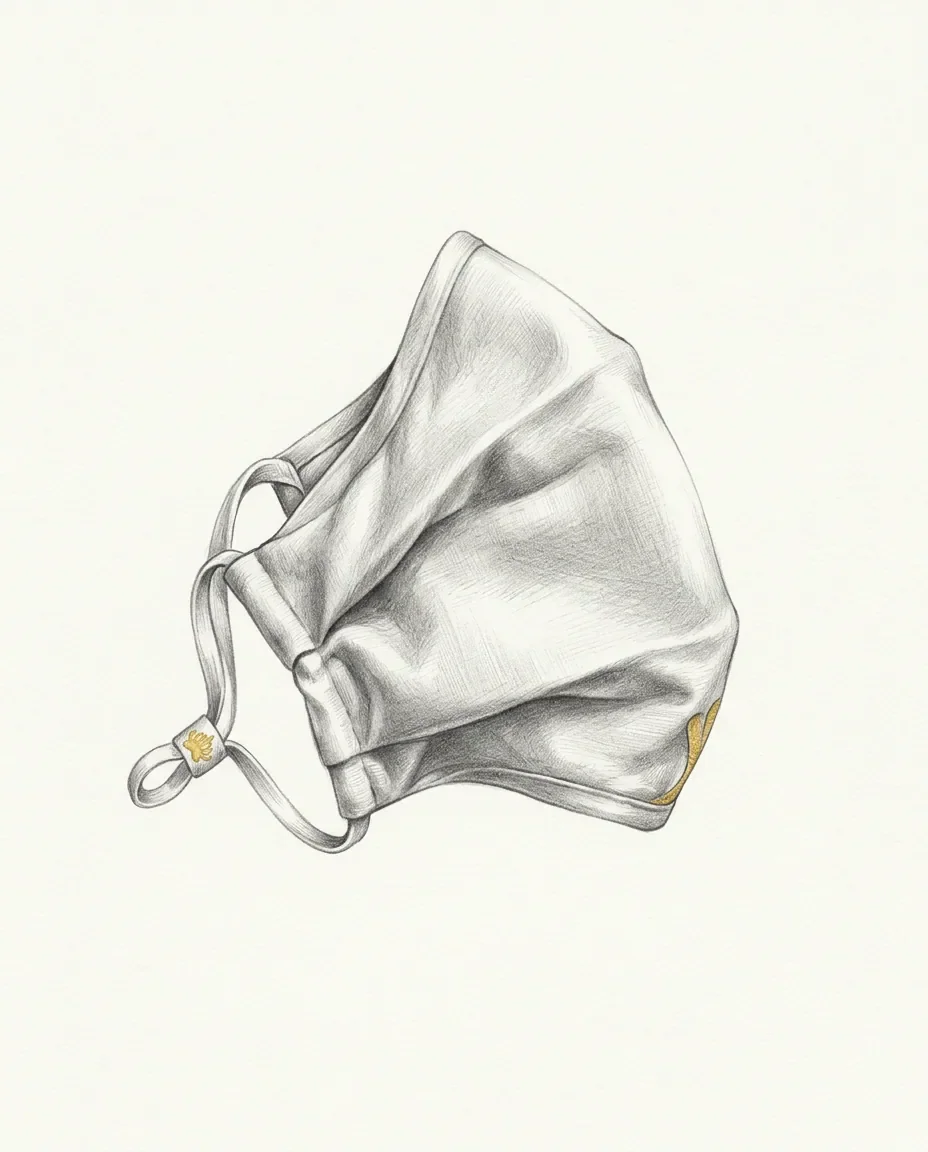
Mask Fetish
Mask Fetishism
Added 21 Jun 2026 · Updated 22 Aug 2026
An erotic interest in masks, hoods, and other face coverings, often tied to themes of anonymity, transformation, and concealed or altered identity. It is an uncommon clothing-and-material fetish rather than a clinical disorder.
- Prevalence
- Uncommon
- Category
- Clothing & Garments
- Clinical term
- Mask Fetishism
- Domain
- Sexual interest
- Confidence
- Low confidence
- Status
- Niche clothing/identity fetish; a normal variation, not a disorder unless it causes distress or impairment.
- Also known as
- mask fetishism, masking, hood fetish, anonymity kink, face covering fetish
- Added
- 21 Jun 2026
- Updated
- 22 Aug 2026
Featured in
Overview
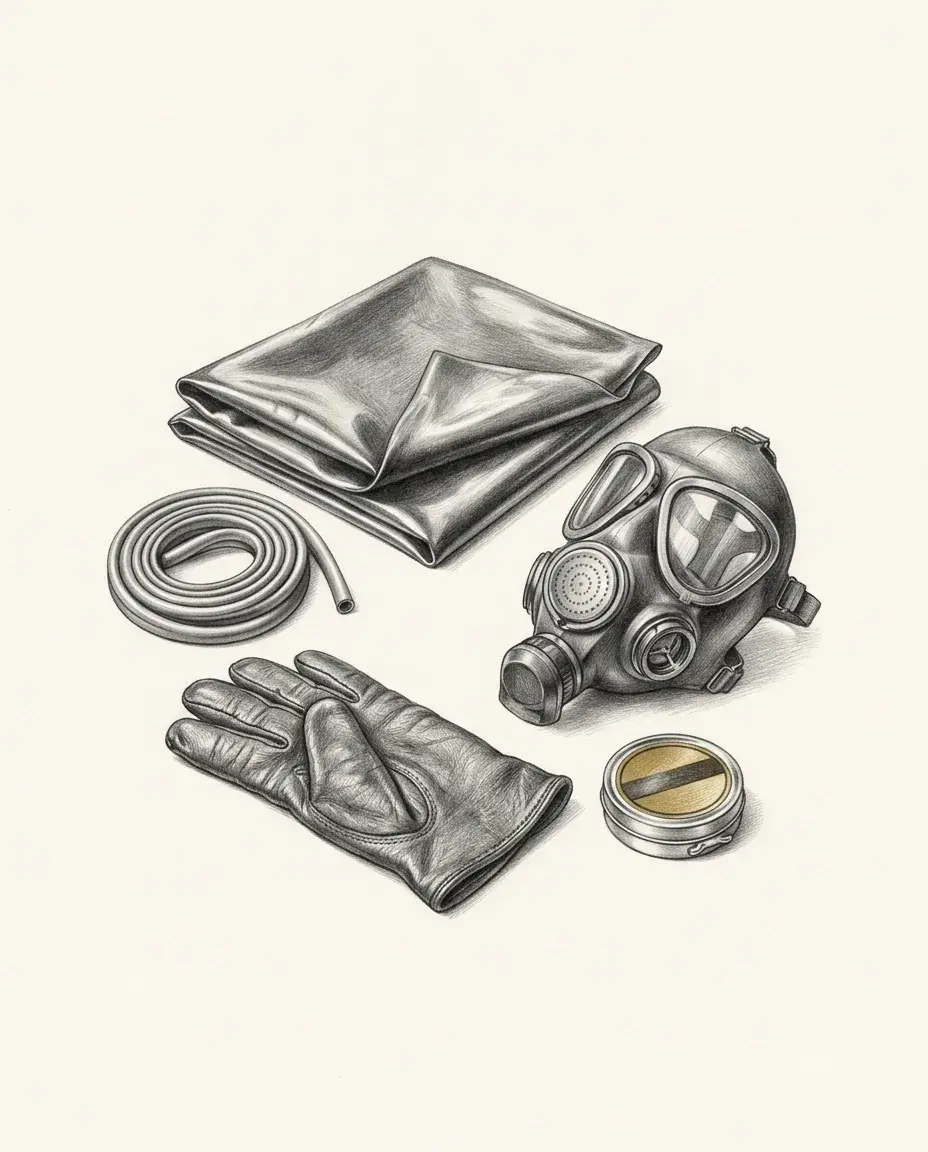
Mask fetishism is an erotic interest in which arousal is tied to masks and other face coverings: latex and rubber hoods, theatrical and character masks, gas masks, and full-head enclosures among them. The appeal frequently centres on the obscured face: anonymity, the loss or change of personal identity, and transformation into another persona, as well as the tactile and sensory experience of enclosure. It is best understood as an uncommon clothing-and-material fetish, a normal variation rather than a clinical disorder.
Examples
What the term covers. Latex and rubber hoods that enclose the whole head; theatrical, character and animal masks; smooth blank or featureless faces; the hood of a zentai suit; and the practice some call masking, in which the head stays covered for the length of a scene or an evening. The draw may be visual (the mask on a partner, or in photographs), tactile, in the grip, warmth and smell of the material, or psychological: being unseen, or being someone else for a while.
What the term does not cover. A gas mask fetish narrows to industrial breathing apparatus and the altered airflow that comes with it. Female masking uses a lifelike silicone face to present as a woman or a doll, so the mask is a means to an identity rather than the object of the interest. Kigurumi masking is a non-sexual cosplay style built on anime-styled hard masks, and fursuiting a non-sexual costume hobby. Coulrophilia attaches to the clown persona rather than to the makeup or mask as such, dollification to being treated as a doll, and sensory deprivation uses blindfolds and hoods instrumentally, to take a sense away, with no particular interest in the object doing it.
How the word is used. "Masking" is community vernacular and, confusingly, means different things in different scenes. Sexology has never made the mask a category of its own: DSM-5-TR and ICD-11 recognise fetishistic interest in general, with face coverings folded into the broader clothing-and-garment tradition catalogued since the 1880s, and neither manual treats such an interest as a disorder absent distress or impairment.
History & origins
The mask as an ancient cultural object
The mask long predates any erotic vocabulary. The mask is among humanity's oldest cultural artefacts: anthropomorphic, possibly masked figures appear in Palaeolithic cave art, and a contested flint "face" from the Roche-Cotard site in France is tens of thousands of years old. In ancient Greece masks were central to theatre and to the masked rituals of the Dionysus cult, where "ordinary controls on behaviour were temporarily suspended"; in Rome the very word persona originally meant a mask. This deep reservoir gave the mask its enduring charge of concealment, licence and disguise, the same symbolic core the fetish draws on.
Carnival, anonymity and disguise
The association of masks with permitted anonymity crystallised in the Carnival of Venice, traditionally dated to 1268. Its standardised mask types make the point concretely: the full white bauta, shaped so the wearer could eat, drink and talk while staying anonymous; the moretta or servetta muta ("mute servant woman"), a small black velvet oval held in place by biting a hidden button, which silenced the wearer; the all-covering volto or larva; and the long-beaked medico della peste (plague-doctor) mask attributed to the 17th-century physician Charles de Lorme. "All are equal behind their masks" became the carnival's defining social form: anonymity, role-play and transformation that the modern fetish echoes.
Entry into the clinical literature
The specifically erotic interest reached sexology only as a sub-theme of garment and material fetishism. The concept of sexual fetishism was given its foundational psychological treatment by Alfred Binet in his 1887 article Le fétichisme dans l'amour, applying a term Charles de Brosses had earlier coined for religious object-worship. Richard von Krafft-Ebing's Psychopathia Sexualis (1886) then catalogued arousal attached to clothing and worn objects, shoes and certain fabrics among his cases, and Havelock Ellis extended the survey of object- and garment-directed eroticism. None of these isolated the mask as a distinct category; face coverings sit within the broader garment-fetish tradition they established.
The modern masking scene
The contemporary scene took shape much later, alongside the twentieth-century rubber and latex subcultures. Rubber enthusiasm grew out of the practical mackintosh raincoat era and went underground through mid-century fetish magazines, with a boom in latex catsuits, gloves and hoods in the 1960s BDSM scene; the full-head hood made "masking" a recognisable practice nested in that world. The precise coinage of the modern term is not well documented, it circulates through community usage rather than formal nomenclature.
In practice
The interest is expressed through wearing or viewing masks and the sensory experience of enclosure and altered perception. Common, non-explicit forms include:
- latex or rubber hoods that fully cover the head;
- theatrical, character, or animal masks;
- gas masks and other industrial-styled coverings;
- the broader practice of "masking," adopting a wholly concealed look.
It overlaps substantially with latex fetishism and with identity-transformation interests more broadly.
Psychology
Psychologically, the interest draws on the symbolic power of the hidden face. Concealment can reduce inhibition and self-consciousness, the same disinhibition the Venetian carnival institutionalised, while the eroticism of mystery and the freedom of becoming someone or something else add further appeal. As with fetishes generally, associative learning is the most commonly proposed mechanism, and the strong presence of masks in costume, ritual and media gives the interest ample cultural material to attach to. The evidence base specific to masks is thin: it is studied as a component of wider clothing and material fetishism rather than in its own right.
Prevalence & culture
Mask fetishism is niche but benefits from broad cultural familiarity with masks through theatre, festivals and film. In Scorolli et al. (2007), the large online study of relative fetish frequency drawn from some 5,000 fetish-group members, preferences for objects usually associated with the body accounted for about 30% of the total, with clothing a substantial part of that. Within the clothing groups, however, the great majority concerned legwear and footwear (about 33% legs/buttocks garments and 32% footwear), and only around 9% whole-body wear such as jackets; masks and head coverings form a smaller sub-set still, consistent with the uncommon tier assigned here. Dedicated communities are modest and usually nested within latex, rubber and transformation scenes rather than standing alone.
Safety, consent & law
Mask fetishism among consenting adults is benign and legal. Practical considerations centre on safety with full-head or restrictive coverings: ensuring adequate breathing, heat regulation, visibility and a reliable way to communicate or remove the covering. In some public contexts the wearing of concealing masks may be socially or legally restricted, so the activity is appropriately kept to private, consensual settings.
Common questions
Why is wearing a mask arousing for some people?
The hidden face does two things at once. It removes you (anonymity lowers self-consciousness and inhibition, the effect the Venetian carnival institutionalised for centuries), and it replaces you, licensing a persona that is not quite your own. Add the physical experience of enclosure and the narrowing of sight and sound, and the mask is both a costume and a sensory event. Associative learning, the usual explanation offered for fetishes generally, does the rest.
What is "masking" in a fetish context?
Wearing a full-head covering, usually latex or rubber, so that face and hair are entirely concealed, often with a matching suit. It grew out of the twentieth-century rubber scene alongside catsuits, hoods and gloves. Note that the word is used differently elsewhere: female masking specifically means silicone masks worn to present as a woman, and kigurumi masking means anime-styled cosplay masks.
Is a mask fetish a disorder?
No. It is an uncommon but ordinary variation, and no diagnostic manual lists masks as a category at all; face coverings sit inside the wider clothing and garment fetishism that sexology has recognised since Binet's 1887 paper. A fetishistic interest becomes a disorder in DSM-5-TR or ICD-11 terms only where it causes the person real distress or impairment, or where it overrides someone's consent.
Are latex hoods safe to wear?
With care. The real concerns are breathing, heat and communication. A hood should not seal the nose and mouth; the wearer should be able to remove it unaided, or have someone present who can; and long wear traps heat and sweat. Hearing and vision are both reduced, so agree a signal that works without speech, and avoid combining full-head enclosure with restraint unless a sober person is watching throughout.
What is the difference between a mask fetish and a gas mask fetish?
Breathing, and aesthetics. A gas mask fetish turns on a specific piece of industrial apparatus (filter, hose, rubber, the military look), and frequently on the sensation of breathing through it, which carries genuine physical risk. A mask fetish is broader and usually has no breathing component at all: it is about the covered face, whatever the mask happens to be made of.
Is it legal to wear a mask in public?
It depends where you are. Owning and wearing masks privately is legal, but some jurisdictions restrict concealing the face in public places or at public gatherings, and enforcement varies widely. Nothing about the interest requires a public setting, so in practice it stays in private, consensual contexts between adults.
- Latex Fetish62/100Latex fetishism · Objects & MaterialsAn erotic interest in latex garments and their tight, glossy, second-skin qualities. A common material fetish involving the look, feel, sound, smell, and enveloping sensation of clinging latex on consenting adults.62
- Gas Mask Fetish37/100Objects & MaterialsAn erotic interest in gas masks and respirators, valued for the rubber enclosure of the face, anonymity, and altered breathing. An uncommon object fetish tied to rubber/latex culture and breath play, carrying real physical risk when airflow is restricted.37
- Zentai38/100Clothing & GarmentsZentai is a seamless skin-tight suit, usually nylon-spandex, that covers the entire body including the face and hands. The name is Japanese, from zenshin taitsu, "full-body tights". Wearing or being attracted to zentai centres on smooth full-body encasement and the anonymity it creates.38
- Clown Fetish25/100Coulrophilia · Identity & TransformationCoulrophilia is an erotic or imaginative attraction to clowns or the clown persona, including the makeup, costume, and theatrical character. It is an uncommon interest, not a recognized clinical diagnosis.25
- Female Masking17/100Identity & TransformationFemale masking is the practice of wearing a lifelike full-head silicone or latex mask to present as a woman or as an idealized doll-like figure. A matching body suit is usually worn with it. It centres on transformation, embodiment and total concealment of the wearer's own identity.17
- Corset Fetish39/100Clothing & GarmentsAn erotic interest in corsets and structured foundation garments, focused on the dramatic hourglass shaping and the firm bodily compression they produce. Tightlacing (wearing a tightly laced corset, often to gradually reduce the waist) is a closely related expression. It is a clothing fetish, not a clinical disorder.39
From English "mask," via French masque and Italian maschera, ultimately of uncertain origin (possibly via Arabic maskhara, "buffoon, mockery," or a Latin/Romance root); the Roman word persona likewise originally meant a theatrical mask. The "-fetish" framing derives from Portuguese feitiço, "charm, sorcery."
face coverings · anonymity · garment fetishism
Prevalence is computed from the entry's cited population estimate. Rows marked ESTare indicative editorial estimates scored against a fixed anchor rubric, not measured quantities. Method & anchors: methodology.
Uncommon · ≈ 1 in 100
- 01List of paraphilias, Wikipediadefinition/existence of mask and face-covering fetishism as a garment-directed interest
- 02Scorolli et al. (2007), Relative prevalence of different fetishes, Int. J. Impotence Research 19(4):432-437relative-frequency framing: objects associated with the body ~30%; within clothing groups legwear (~33%) and footwear (~32%) dominate and whole-body wear is ~9%, so masks specifically are a minor sub-category keeping prevalence low
- 03FetLife, kink community group sizes (community-size proxy)community-size proxy: masking/hood groups exist but are niche relative to mainstream garment fetishes
- 04Richard von Krafft-Ebing, Psychopathia Sexualis (1886)early clinical cataloguing of garment- and object-directed fetishism, of which face coverings are an extension
- 05Mask, Wikipediahistorical and cultural background of masks: Palaeolithic art, Roche-Cotard flint face, Greek theatre and Dionysian ritual, Roman persona
- 06Carnival of Venice, Wikipediatraditional Venetian mask types (bauta, moretta/servetta muta, volto/larva, medico della peste) and the 1268 dating; anonymity and equality behind the mask
- 07The Origins of the Theory of Sexual Fetishism: Charcot, Magnan (1882) and Binet (1887), SpringerAlfred Binet's 1887 'Le fétichisme dans l'amour' as the foundational psychological treatment of sexual fetishism
- 08Fetishism, WikipediaCharles de Brosses originally coined 'fétichisme' for religious object-worship, later applied to sexuality by Binet
- 09Studies in the Psychology of Sex (Havelock Ellis), WikipediaHavelock Ellis's survey of object- and garment-directed eroticism within early sexology
- 10Rubber and PVC fetishism, Wikipediatwentieth-century rubber/latex subculture in which full-head hoods and 'masking' became a recognisable practice