Vampire Fetish
Vampirism
Added 21 Jun 2026 · Updated 22 Aug 2026
A vampire fetish is an erotic or aesthetic fascination with vampire imagery, mythology, and persona: fangs, pallor and the bite. Themes of seduction, immortality and power exchange run through it. The clinical-style label 'vampirism' is also used for arousal tied to blood, which carries real health risks.
- Prevalence
- Uncommon
- Category
- Identity & Transformation
- Clinical term
- Vampirism
- Domain
- Sexual interest
- Confidence
- Low confidence
- Status
- Aesthetic/persona interest, not a recognized DSM-5-TR or ICD-11 diagnosis; the informal 'clinical vampirism'/Renfield's syndrome label is not a formal diagnosis. Benign absent distress; the blood-related subset carries medical risk.
- Also known as
- vampirism, vampire lifestyle, vampire kink, sanguine fetish
- Added
- 21 Jun 2026
- Updated
- 22 Aug 2026
Featured in
Overview
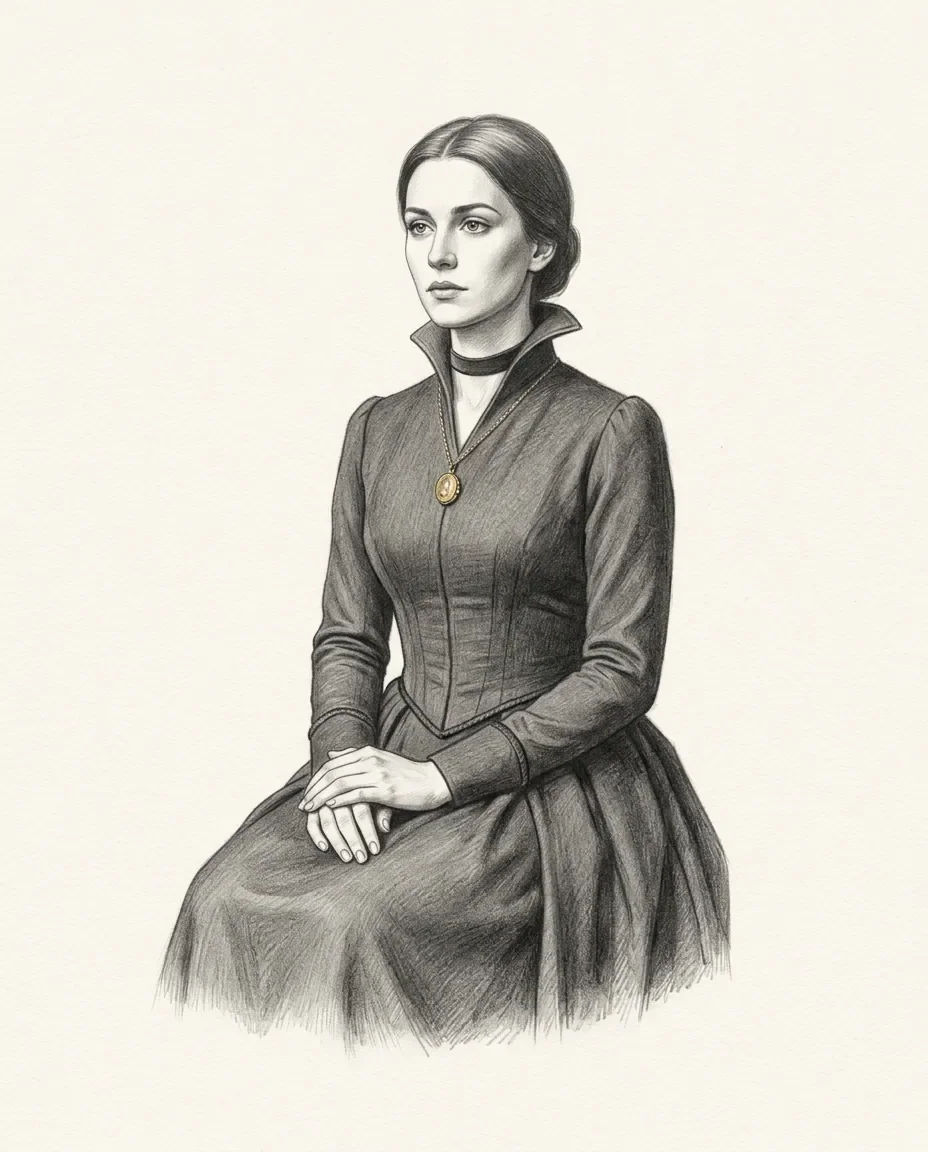
A vampire fetish is an erotic, romantic, or aesthetic fascination with the vampire: its mythology, iconography, and persona. The appeal commonly centres on the costume and aesthetic (fangs, pallor, gothic dress), the eroticised symbolism of the bite, and themes of seduction, immortality, surrender, and power exchange. The term vampirism is sometimes applied more narrowly to arousal connected with blood; that blood-linked variant carries genuine health risks and is the part of this subject that warrants clinical care. This article traces how the figure became eroticised, how the clinical and subcultural threads diverge, and where the real safety line falls.
Examples
Because the vampire is a character before it is anything else, the interest is easiest to bound by asking what part of the figure is doing the work.
What the term covers. Gothic and period costume, pallor, high collars and theatrical fang prosthetics worn for their own sake or for a scene; role-play of the seduction-and-surrender script the fiction supplies, between consenting adults; an eroticised bite, usually simulated or expressed as ordinary biting that leaves no more than a temporary mark; and sustained persona work, which in the lifestyle community can extend from a scene into a social identity. A minority interest attaches to blood itself, where this overlaps the blood fetish.
What the term does not cover. Clinical vampirism, nicknamed Renfield's syndrome, is a contested label for a compulsion to obtain and ingest blood; it is a psychiatric description, not a costume interest, and the two are routinely conflated. Autovampirism is the separate, rarer practice of drinking one's own blood. Werewolf attraction, monster fetish and teratophilia cover attraction to non-human beings in general, whereas the vampire's pull is specifically its human beauty and aristocratic menace; succubus and incubus attraction is the demonic neighbour. Dressing as one named vampire character is cosplay. A neck fetish shares the body part and none of the mythology.
How the word is used. It is vernacular and subcultural. "Vampire fetish" and "vampire kink" are everyday terms; "vampirism" is ambiguous, doing duty for the folklore, the subculture and the pseudo-clinical label at once, which is why this article separates them. Neither the persona interest nor any of its blood-linked variants appears in DSM-5-TR or ICD-11.
History & origins
Folklore and literary eroticisation
The vampire is an old folkloric figure across Slavic and Southeastern European traditions, but its eroticised modern form was largely shaped by nineteenth-century literature. The lineage runs through John Polidori's The Vampyre (1819), which recast the revenant as an aristocratic seducer; Sheridan Le Fanu's Carmilla (1872), a foundational novella credited with popularising the lesbian-vampire trope and predating its more famous successor by a quarter-century; and above all Bram Stoker's Dracula (1897), which fused dread with seduction and made the bite an unmistakable erotic metaphor. By the twentieth century, Anne Rice's Interview with the Vampire (1976) reframed the vampire as a sympathetic, introspective and sensual figure, an archetype that later mass-market franchises amplified further.
Clinical lineage
Early sexology engaged the blood theme rather than the persona. The Austrian forensic psychiatrist Richard von Krafft-Ebing, whose Psychopathia Sexualis (first edition 1886) catalogued the paraphilias of his era, documented blood-drinking and blood-linked arousal in his case literature. A 1964 psychoanalytic case study is often cited as the first modern clinical presentation. The popular label Renfield's syndrome (after the blood-craving character in Dracula) is frequently treated as a diagnosis but is not one. The psychologist Richard Noll introduced it in his 1992 book Vampires, Werewolves, and Demons as a deliberate parody of 1980s "checklist" psychiatric diagnosis, then watched popular culture adopt it in earnest, a trajectory he later described as an accident of his own satire. Neither clinical vampirism nor Renfield's syndrome has ever appeared as a valid diagnosis in the DSM, and neither the costume-and-persona fetish nor the informal syndrome is recognised in the DSM-5-TR or ICD-11; documented cases are instead classified under conventional categories such as schizophrenia or paraphilia.
Cultural & subcultural evolution
As a self-described vampire lifestyle, the contemporary subculture took shape from the late-twentieth-century Goth scene, absorbing elements of sadomasochism and role-play, with the tabletop game Vampire: The Masquerade (1991) a notable influence on its self-image and practices.
In practice
Most expression is aesthetic and theatrical: gothic and vampire costume, fang prosthetics, role-play of seduction and dominance, and persona-driven scenes between consenting adults: overlapping with transformation play and with biting as an eroticised act. Within the broader lifestyle community a vocabulary has emerged: sanguinarians describe a felt need to consume blood, drawn from voluntary donors ("black swans") under donor-ethics guidelines; psychic vampires frame their identity around energy rather than blood and involve no physical risk; and self-described blood fetishists overlap with the blood fetish more generally.
Psychology
Proposed accounts link the appeal to the vampire's potent symbolic load: eroticised power exchange and surrender, transgression and the forbidden, immortality and transformation, and the romanticised danger of the bite. It overlaps with gothic aesthetics, dominance-and-submission dynamics, and persona or transformation interests. Where blood is involved, arousal may attach to its intensity and taboo; this is uncommon and clinically noteworthy mainly for its risks. These accounts are interpretive rather than the product of dedicated empirical study of the fetish itself.
Prevalence & culture
The aesthetic interest is moderately visible thanks to the enduring popularity of vampire fiction, film, and the Goth subculture, and it supports active online and offline communities. There is no rigorous prevalence survey isolating a vampire fetish; broad population studies of unusual interests such as Joyal, Cossette & Lapierre (2015) do not single it out, so any figure is an estimate. Literal blood-focused vampirism is rare. Cultural visibility is high relative to actual prevalence because vampire media is so pervasive.
Safety, consent & law
Costume, persona, and role-play between consenting adults are benign. The real concern is blood: any consensual blood-letting carries serious risks of bloodborne infection (such as HIV and hepatitis), wound infection, and injury, and requires sterile single-use equipment that is never shared, informed consent, and current testing on both sides. The donor-ethics conventions circulated within the lifestyle community are self-imposed norms, not medical standards, and testing reduces this risk without removing it. Non-consensual blood-taking or wounding is assault and illegal in every jurisdiction. Anyone whose blood-related urges cause distress or risk should seek medical guidance.
Common questions
Is a vampire fetish a real fetish, or just liking vampire films?
Both exist, and the difference is where the arousal sits. Enjoying vampire fiction is an ordinary aesthetic taste shared by millions. A vampire fetish means the imagery, persona or bite is itself a reliable source of erotic charge, rather than a story someone happens to like. In practice the two shade into each other, and plenty of people move between them without the label mattering.
Is Renfield's syndrome a real diagnosis?
No. The psychologist Richard Noll coined the name in his 1992 book Vampires, Werewolves, and Demons as a deliberate parody of checklist-style psychiatry, then watched it be adopted in earnest. It has never appeared in any edition of the DSM, and the documented cases behind it are classified under conventional categories instead. See clinical vampirism for the label's history.
Do people with a vampire fetish actually drink blood?
Most do not. The overwhelming majority of the interest is costume, persona and role-play, and involves no blood at all. Within the wider vampire lifestyle a minority describe themselves as sanguinarians and consume small quantities from voluntary donors, while self-described psychic vampires frame their identity around energy and involve no physical risk whatsoever.
Is drinking a partner's blood safe?
No. Blood carries bloodborne infections including HIV and hepatitis B and C, and any cut adds wound-infection and injury risk on top. Sterile single-use blades that are never shared, and current testing on both sides, reduce that risk substantially but do not remove it. Anyone considering it should treat it as a medical decision, not a scene detail, and take non-consensual blood-taking as what it is: assault.
What is the difference between the vampire lifestyle and a vampire fetish?
The lifestyle is an identity and a community, grown out of the late-twentieth-century Goth scene, with its own vocabulary of sanguinarians, psychic vampires and donors. A vampire fetish is an erotic interest, which may be expressed entirely in the bedroom by someone with no connection to that community. They overlap, but one is a social world and the other is an attraction.
Why is the vampire bite treated as erotic?
Nineteenth-century literature made it so deliberately. Sheridan Le Fanu's Carmilla (1872) and Bram Stoker's Dracula (1897) fused dread with seduction and staged the bite as a penetration the Victorian novel could not otherwise depict, and Anne Rice's Interview with the Vampire (1976) recast the vampire as sympathetic and sensual. The bite arrives pre-loaded with surrender, intimacy and transgression before anyone attaches a fetish to it.
Is a vampire fetish a paraphilia or a disorder?
No. Neither the persona interest nor the informal "clinical vampirism" label is a recognised diagnosis in DSM-5-TR or ICD-11, and costume and role-play between consenting adults raise no clinical question at all. Blood-related urges are the exception worth attention, not because they are diagnosable but because acting on them carries real medical risk and, without consent, real criminal exposure.
- Blood Fetish29/100Hematolagnia · Body Functions & FluidsAn erotic interest in blood, in its sight, scent, warmth, or symbolic links to vitality, danger, and intimate bonding. Consensual blood play is one form it sometimes takes. It is rare and carries serious bloodborne-infection risk.29
- Transformation Fetish33/100Metamorphophilia · Identity & TransformationA transformation fetish is an erotic or imaginative fascination with the process of a body changing form into something else. That might be an animal, an object, or another kind of being. The appeal centers on the metamorphosis itself rather than the end state.33
- Biting Kink51/100Odaxelagnia · Sensation & PainOdaxelagnia is a consensual interest in arousal from biting or being bitten, ranging from gentle nibbling to firmer bites that may leave a temporary mark. It blends strong sensation, intimacy, and a mild element of marking, and sits at the gentle end of sensation play.51
- Adult Baby / Diaper Lover42/100Autonepiophilia · Identity & TransformationAutonepiophilia, also called paraphilic infantilism, is the interest in adopting the role, mindset or self-image of an infant or very young child. Combined with a diaper-focused interest it forms the broader ABDL (adult baby / diaper lover) identity. It is regression to a childlike role, not attraction to children.42
- Futanari42/100Identity & TransformationFutanari is a drawn fiction genre, and the attraction to it, depicting feminine-bodied characters who have both female and male genitalia. The word is Japanese for 'dual form'. It is a fantasy trope of anime, manga and hentai, distinct from real intersex people.42
- Kitten Play42/100Identity & TransformationA consensual adult role-play in which a person adopts the persona, mannerisms, and relaxed headspace of a kitten or cat. A partner often acts as owner or caretaker within a gentle power-exchange dynamic. It is symbolic human role-play with no connection to real animals.42
From 'vampire' (English, 18th c.), via French *vampire* and German *Vampir* from Serbian/Slavic *vampir*, a folkloric undead being; the clinical-style label 'vampirism' adds the '-ism' suffix to denote the associated behaviour or attraction. The informal 'Renfield's syndrome' is named for the blood-craving character in Bram Stoker's *Dracula* and was coined by psychologist Richard Noll in his 1992 book *Vampires, Werewolves, and Demons*.
persona play · gothic aesthetic · blood-related (risk subset)
Prevalence is computed from the entry's cited population estimate. Rows marked ESTare indicative editorial estimates scored against a fixed anchor rubric, not measured quantities. Method & anchors: methodology.
Uncommon · ≈ 1 in 100
- 01Vampire lifestyle, Wikipediaexistence of the vampire lifestyle/subculture, sanguine and psychic vampire subgroups, and its Goth-scene roots
- 02Dracula, WikipediaBram Stoker's Dracula (1897) and the literary eroticization of the vampire bite
- 03Clinical vampirism (Renfield's syndrome), Wikipediathe informal clinical-vampirism/Renfield's syndrome label, Richard Noll's 1992 satirical coinage in Vampires, Werewolves, and Demons, the 1964 case study, and its absence from the DSM
- 04Carmilla, WikipediaSheridan Le Fanu's Carmilla (1872) as a foundational erotic vampire novella that popularised the lesbian-vampire trope and predated Dracula
- 05Interview with the Vampire, WikipediaAnne Rice's Interview with the Vampire (1976) and its role in establishing the sympathetic, sensual modern vampire archetype
- 06Krafft-Ebing, Psychopathia Sexualis (1886), WikipediaKrafft-Ebing's Psychopathia Sexualis (1886) cataloguing paraphilias of the era, including blood-linked arousal
- 07Joyal, Cossette & Lapierre (2015), What Exactly Is an Unusual Sexual Fantasy?general population study of unusual sexual fantasies that does not isolate a vampire fetish, supporting the point that no rigorous prevalence figure exists