Plane Spotting
Added 26 Jul 2026 · Updated 22 Aug 2026
A hobby centred on observing, identifying, photographing and logging aircraft, often from airport perimeters or dedicated viewing spots. It is a mainstream, non-sexual enthusiasm rooted in wartime aircraft-recognition training rather than a clinical interest.
- Prevalence
- Uncommon
- Category
- Non-Sexual Fetishism
- Domain
- Non-sexual interest
- Confidence
- Low confidence
- Status
- Not a paraphilia or disorder; a mainstream, benign hobby with no clinical or psychiatric literature treating it as pathological.
- Also known as
- aircraft spotting, planespotting, avgeek, aviation spotting, spotter
- Added
- 26 Jul 2026
- Updated
- 22 Aug 2026
Featured in

Overview
Plane spotting (aircraft spotting) is the pastime of watching, identifying, photographing and logging aircraft: their types, registrations, liveries and routes. Enthusiasts, often called "avgeeks," gather at airport perimeter fences, dedicated viewing platforms, or air shows, and increasingly track movements online through services such as Flightradar24. Like car enthusiasm, it is a "fetish" only in the loose, everyday sense of a devoted fixation: a hobby and a form of collecting (sightings and logbook entries stand in for physical objects), not an erotic paraphilia. This article traces the hobby's roots in wartime recognition training, its post-war civilian growth, a notorious 2001 legal collision with Greek security law, and its place in the wider ecosystem of enthusiast pastimes.
Examples
What the hobby covers. Standing at a perimeter fence, a viewing mound or a terminal terrace and recording what arrives: type, registration, operator and often the route flown. Photographing liveries, special schemes and airframes about to be retired. Travelling to airshows, museum open days and airport-run "spotting days". Cross-referencing callsigns against a flight-tracking service or, where it is lawful to do so, an air-band radio. Underneath all of it is a logbook, the completionist pleasure of a list with gaps in it.
What it is not. Plane spotting is not an erotic interest of any kind. It appears in lay "A to Z of kinks" round-ups only because such lists use "fetish" loosely, in the everyday sense of a devoted fixation, and it is catalogued here the way other non-sexual enthusiasms are. Trainspotting is its closest relative, the same number-taking discipline applied to railways, and birdwatching the same impulse applied to wildlife. Collecting proper accumulates objects, where a spotter accumulates sightings, and car enthusiasm shares the engineering fascination without the observation-and-logging habit.
How the words are used. "Aircraft spotting" is the formal term and predates the leisure activity: it came out of wartime recognition duty, and the trade paper The Aeroplane Spotter, launched in January 1940, fixed the name in English. "Plane spotting" and "planespotting" are the everyday forms, a participant is a "spotter", and "avgeek" is the wider self-applied label for aviation enthusiasts online. No diagnostic manual lists any of it, and none has reason to.
History & origins
Wartime recognition roots
Spotting aircraft did not begin as leisure. During the Second World War, distinguishing a friendly bomber from an enemy one by silhouette was a matter of survival, and governments actively trained and organised civilian observers for it. Britain's Royal Observer Corps, founded in 1925, recruited volunteers to watch the skies and report aircraft movements, work that continued into the Cold War as the threat shifted from bombers to missiles. The trade publication The Aeroplane Spotter began in January 1940, giving the wartime activity its lasting English name and putting aircraft silhouettes and identification tables in front of an eager civilian readership.
From security duty to civilian hobby
As the direct wartime rationale faded, the skills and enthusiasm it had cultivated carried over into peacetime. Amateur enthusiasts kept logging aircraft registrations and squadron markings at airfields and air shows through the 1950s to 1970s, largely as a paper-and-binoculars pursuit organised around club newsletters and swapped photographs. The arrival of affordable telephoto lenses, and later digital cameras and internet forums, transformed the hobby from a solitary logbook exercise into a connected global community that shares sightings within minutes. Contemporary flight-tracking platforms such as Flightradar24 and FlightAware layer real-time position data onto the older visual-identification tradition.
The 2001 Kalamata case
The hobby's most consequential brush with the law came in November 2001, when fourteen aircraft spotters, twelve British and two Dutch, were arrested by Greek authorities after attending an open day at the Hellenic Air Force base in Kalamata, southern Greece, an event to which they had been openly invited. Greece, whose military maintains tight secrecy amid long-running territorial disputes with Turkey, charged the group with espionage; CNN reported that prosecutors presented the spotters' own detailed notebooks of aircraft serial numbers as courtroom evidence. On 26 April 2002, a Greek court convicted the group, jailing eight for three years for espionage and six others for one year for aiding and abetting, while insisting plane spotting was "virtually unknown" and effectively illegal in Greece, a claim the defendants said contradicted the hobby's open, well-established status in Britain (CNN, 26 April 2002). The case strained diplomatic relations between the United Kingdom, the Netherlands and Greece, all European Union members, and every defendant who returned for the appeal was acquitted on 6 November 2002.
Clinical framing
Plane spotting has never been treated in clinical or psychiatric literature as a disorder or paraphilia. It falls, like most enthusiast hobbies catalogued alongside sexual fetishes in lay round-ups, entirely outside the paraphilia framework used in clinical sexology: there is no erotic content, and no diagnostic manual lists it.
In practice
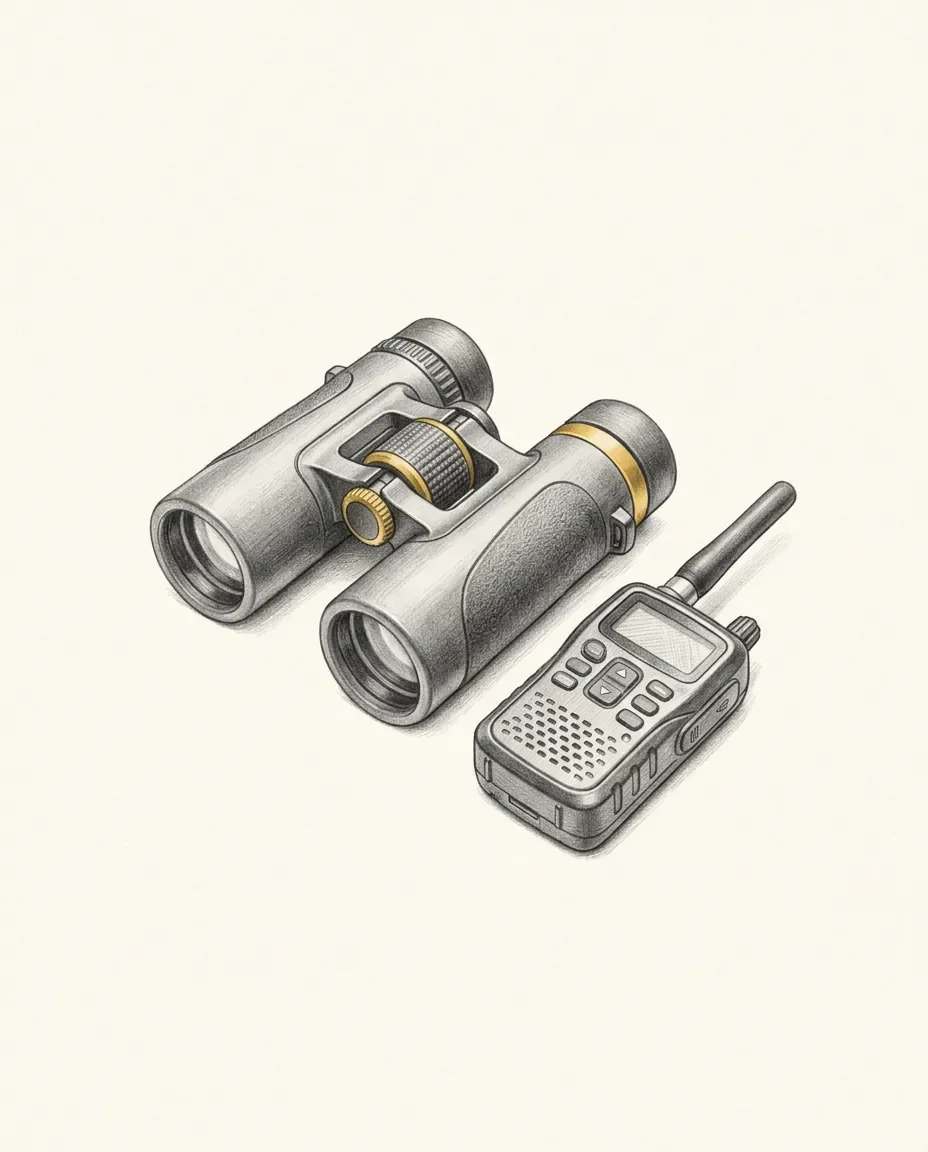
Spotters typically work from fixed vantage points near runways, perimeter roads, or elevated terminal viewing areas, equipped with binoculars, telephoto cameras, and increasingly a radio scanner or a flight-tracking app to cross-reference callsigns with registrations. Activities include logging aircraft by type and tail number, photographing liveries and rare or retiring airframes, and travelling to air shows or "spotting days" organised by airports and museums. Much of the modern hobby happens online, in forums and social-media groups where sightings, photographs and rare-aircraft alerts are traded instantly.
Psychology
The appeal draws on several familiar enthusiast mechanisms: the satisfaction of precise identification and completionist logging (ticking off a rare registration functions much like collecting a hard-to-find item), technical and mechanical curiosity about aviation engineering, nostalgia tied to childhood exposure to flight, and the social bond of a shared, highly specific expertise. As with car enthusiasm, no meaningful body of psychological research treats it as anything other than a benign, identity-affirming hobby, and its low profile in the clinical literature reflects that ordinariness rather than neglect.
Prevalence & culture
Plane spotting sits among the more visible niche enthusiast hobbies, sustained by dedicated online communities, aviation photography competitions, museum-run "spotting days," and an extensive market in flight-tracking apps and aviation media. It is far smaller than mainstream hobbies like car enthusiasm but has a distinct, internationally recognisable identity, reflected in its own slang ("avgeek"), documentary coverage of events like the Kalamata case, and steady if modest search interest around major aircraft types, airshows and new airliner deliveries.
Safety, consent & law
The hobby itself is legal almost everywhere and raises no consent questions, since it involves observing public airspace rather than any interaction with other people. Its chief legal exposure is jurisdictional: photographing near military airfields, government aircraft, or other security-sensitive sites can trigger local anti-espionage, counter-terrorism or restricted-photography laws, as the 2001–2002 Kalamata case showed. Enthusiasts are generally advised to check local rules before photographing military or government aircraft and to avoid restricted perimeters.
Common questions
Is plane spotting illegal?
Almost nowhere, in itself. Watching and photographing civil aircraft from public land is lawful in most countries and involves no interaction with anyone. The exposure is jurisdictional: photographing military airfields, government aircraft or other security-sensitive sites can engage anti-espionage, counter-terrorism or restricted-photography laws, and those differ enormously between countries. Checking the local position before pointing a long lens at anything military is the standing advice among enthusiasts.
What happened to the plane spotters arrested in Greece?
Fourteen spotters (twelve British, two Dutch) were arrested in November 2001 after attending an open day they had been openly invited to at the Hellenic Air Force base at Kalamata. Greek prosecutors charged them with espionage and produced their own aircraft notebooks as evidence. On 26 April 2002 a court jailed eight for three years and six for one year. Every defendant who returned for the appeal was acquitted on 6 November 2002.
Do you need permission to photograph aircraft at an airport?
It depends where you are standing. From public roads and land outside the boundary, generally no. Inside the terminal or on airport property you are on private land and bound by the operator's rules, which some airports publish and a few formalise with permits or dedicated viewing areas. Military installations are a different matter entirely and are best assumed restricted unless you have been told otherwise in writing.
What equipment do you need to start plane spotting?
Very little. Binoculars, something to write in, and a camera with a moderate telephoto lens cover most of it, while a phone running a flight-tracking service will identify what you are looking at. Serious photographers move to long lenses. Some spotters add an air-band radio to follow tower traffic, though owning or using one is regulated differently from country to country and is not lawful everywhere.
What does "avgeek" mean?
It is the self-applied label for an aviation enthusiast, popularised as a hashtag and now used well beyond spotting, by people who follow airline fleets, route networks, aircraft orders and airport development without ever standing at a fence with binoculars. Spotters are avgeeks; not all avgeeks are spotters.
Is plane spotting a fetish?
Not in any clinical or sexual sense. It has no erotic content and has never been described in psychiatric literature as a paraphilia or a disorder. It appears in this catalog for the same reason trainspotting and birdwatching do: popular lists of "fetishes" routinely fold in intense non-sexual enthusiasms, and it is more useful to document that distinction than to leave it implied.
What is the difference between plane spotting and trainspotting?
The vehicle, mainly. Both grew out of mid-twentieth-century British enthusiast culture, both are built on identifying an individual machine by its number and recording it, and both have moved substantially online. Trainspotting supplied the wider public's stereotype of the notebook-carrying enthusiast, while plane spotting inherited its method from wartime aircraft recognition rather than from railway culture.
- Car Enthusiasm57/100Non-Sexual FetishismA strong, non-sexual fascination with automobiles, including their engineering, aesthetics, performance, history, and the culture surrounding them. It is a widespread hobby and identity rather than a clinical condition.57
- Collecting57/100Non-Sexual FetishismA strong, non-sexual drive to acquire, organize, and complete sets of objects: from stamps and coins to figures, records, and memorabilia. It is a widespread hobby and behavioral pattern, not a clinical disorder, and is distinct from hoarding.57
- Watch Collecting41/100Horological Fixation · Non-Sexual FetishismAn intense, non-sexual fascination with mechanical timepieces and luxury watches, centered on craftsmanship, brand heritage, and the act of collecting. It is a hobby and consumer-culture interest rather than a clinical condition.41
- Rockhounding42/100Non-Sexual FetishismA non-sexual hobby of searching for, collecting, and studying rocks, minerals, gemstones, and fossils gathered from the natural environment. Cutting and polishing, known as lapidary work, often follows. It centers on outdoor discovery, identification, and the aesthetics of stone.42
- Sneakerhead55/100Non-Sexual FetishismA non-sexual collecting subculture centred on athletic and designer sneakers, whose enthusiasts pursue rare, limited, and historically significant footwear. Such enthusiasts are known as "sneakerheads". The shoes are prized as collectibles, art objects, and identity markers rather than as sources of arousal.55
- Trainspotting37/100Non-Sexual FetishismA hobby centered on observing, identifying and recording railway locomotives and rolling stock, historically by noting their numbers in a reference booklet. It grew into a broader railway-enthusiast culture of photography, travel and preservation.37
A plain-English compound of "plane" (clipped from "aeroplane," itself from French aéroplane, Greek aero- "air" + French planer "to glide") and "spotting" (from Middle Low German spot, "a mark, blemish," extended in English to the sense of noticing or picking out). The term inherited its structure from the earlier wartime coinage "aircraft spotting" and the 1940 magazine title The Aeroplane Spotter.
hobby · aviation · collecting · subculture
Prevalence is computed from the entry's cited population estimate. Rows marked ESTare indicative editorial estimates scored against a fixed anchor rubric, not measured quantities. Method & anchors: methodology.
Uncommon · ≈ 1 in 100
- 01Aircraft spotting, Wikipediadefinition, Royal Observer Corps founding (1925), The Aeroplane Spotter (Jan 1940), post-war civilian growth, modern flight-tracking tools, and the outline of the 2001 Kalamata arrests
- 02Court shown 'plane spotter' notes, CNN, 25 April 2002trial detail: prosecutors presenting the spotters' own aircraft-identification notebooks as evidence
- 03Plane spotters convicted of spying, CNN, 26 April 200226 April 2002 convictions (eight sentenced to three years, six to one year), the diplomatic strain between the UK, Netherlands and Greece, and the hobby's near-nonexistence in Greek culture
- 04Paraphilia, Wikipediadefinitional contrast establishing plane spotting as a non-paraphilic, non-sexual interest
- 05Google Trends, relative search interest (search-interest proxy)modest, steady relative search interest around aircraft types, airshows and new airliner deliveries