Trainspotting
Added 26 Jul 2026 · Updated 22 Aug 2026
A hobby centered on observing, identifying and recording railway locomotives and rolling stock, historically by noting their numbers in a reference booklet. It grew into a broader railway-enthusiast culture of photography, travel and preservation.
- Prevalence
- Common
- Category
- Non-Sexual Fetishism
- Domain
- Non-sexual interest
- Confidence
- Low confidence
- Status
- Not a clinical entity; treated as an ordinary hobby and collecting behavior, with no DSM-5-TR or ICD-11 classification.
- Also known as
- railfanning, gricing, loco-spotting, engine-spotting, railway enthusiasm
- Added
- 26 Jul 2026
- Updated
- 22 Aug 2026
Featured in

Overview
Trainspotting is the pastime of watching trains to identify and record the individual locomotives or units that pass, traditionally by noting each vehicle's running number against a printed reference list and ticking it off once "copped." Practiced mostly at stations, junctions, and known vantage points, it is the best-known strand of the wider hobby of railway enthusiasm, sometimes called railfanning internationally. In Britain the participant is a "trainspotter" or, in older slang, a "gricer"; the pursuit sits alongside other collecting-driven hobbies such as coin and stamp collecting and rockhounding as a non-sexual fixation built on gathering, cataloguing and completing a set.
Definition & scope
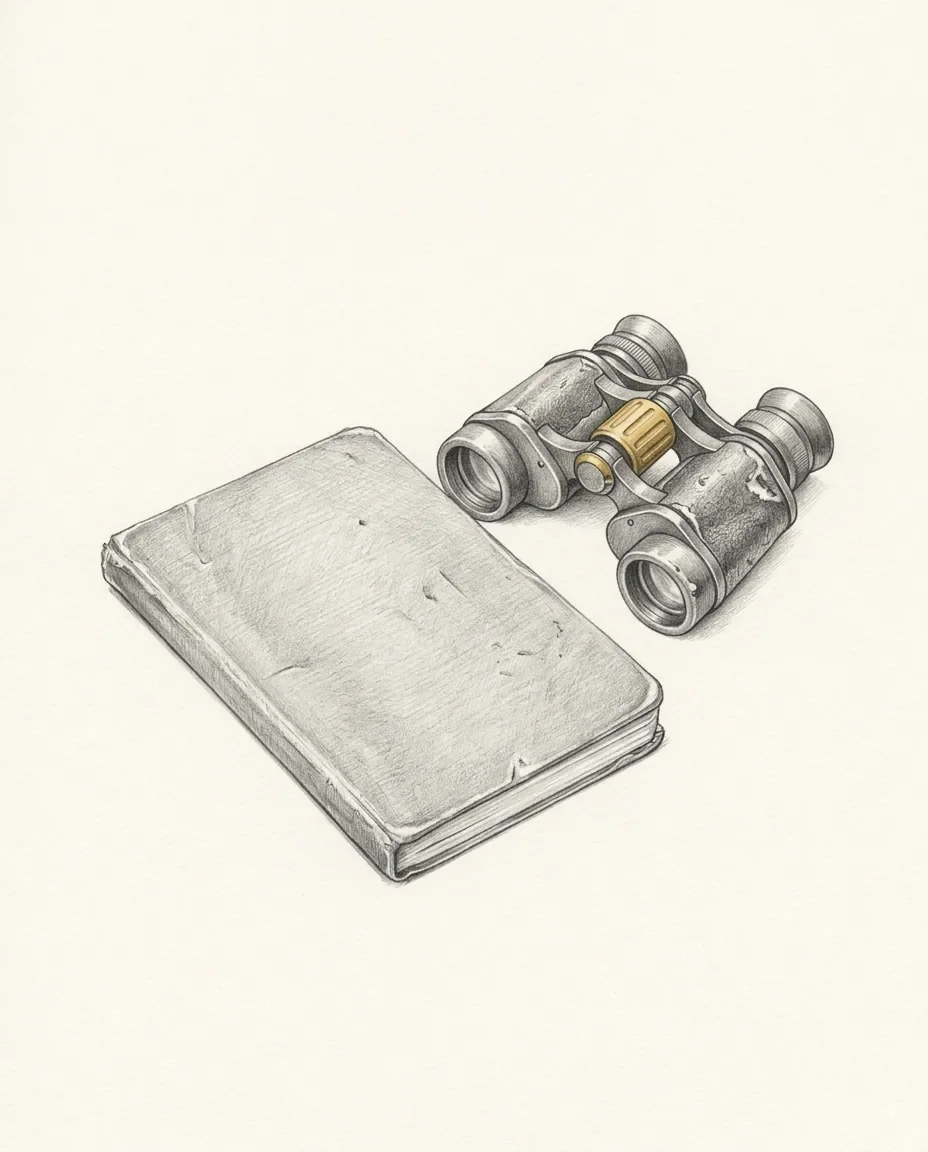
At its narrowest, trainspotting means logging locomotive numbers, but the term has stretched to cover the whole culture around it: photographing trains, recording radio traffic between signallers and drivers, visiting engine sheds, riding rare stretches of track for the mileage, and building or collecting models. A trainspotter's core tool was traditionally a small pocket reference book listing every locomotive in a class or region, used as a checklist. The hobby has counterparts worldwide, called densha otaku in Japan (with sub-types such as toritetsu, who focus on photography, and nori-tetsu, who focus on riding) and "foamers" or railfans in North America, per Wikipedia's overview of the practice.
Examples
What the practice looks like. A spotter at the end of a platform noting a locomotive's running number and ticking it off a printed list; a number seen for the first time is "copped," and an enthusiast may travel a long way for the few in a class that remain uncopped. Around that core the same completist habit reappears in other shapes: photographing every member of a class, riding behind each one to "clear" it, listening to signalling traffic on a scanner, or visiting depots to see engines standing still. The unifying object is a record: of what was seen, where, and when.
What it is not. Trainspotting is not a sexual interest of any kind. It is catalogued here as a non-sexual enthusiasm alongside collecting, plane spotting, birdwatching, coin and stamp collecting and vinyl record collecting, all of which run on the same appetite for identification and completion. Nor is it compulsive hoarding, a recognised clinical condition defined by distress and unusable living space rather than by a hobby's satisfactions. Railway enthusiasm generally (modelling, preservation volunteering, riding heritage lines) overlaps with trainspotting but is broader than it.
How the word is used. In Britain the practitioner is a trainspotter, or in older slang a "gricer"; North America says "railfan," or less kindly "foamer"; Japan has densha otaku. The word also does duty far from any railway as a general term for pedantic obsession with detail, a metaphorical sense now more widely recognised than the literal one.
History & origins
Early sightings
Watching and noting trains predates any organized hobby. One of the earliest documented enthusiasts was 14-year-old Fanny Gordon, who in 1861 recorded the locomotives passing Westbourne Park station on the Great Western main line, and the pastime already had enough cultural presence by 1905 to feature in E. Nesbit's children's novel The Railway Children (Wikipedia).
Ian Allan and the ABC booklets
The hobby's modern, organized form dates to 1942, when the 19-year-old Ian Allan, then a clerk in the Southern Railway's public-relations office at Waterloo, grew tired of individually answering enthusiasts' letters asking for locomotive details and instead had a simple reference booklet printed listing the railway's engines. The pamphlet sold out quickly, and Allan's company went on to publish an "ABC" booklet for each of Britain's regional railway companies, later gathered into a single "Combined Volume" covering the whole country (National Railway Museum blog). The craze the booklets set off soon needed policing of its own. The Ian Allan Locospotters' Club was formed in 1948 to impose a code of conduct on it, and the scale of the following can be read from a single closure: when London's Willesden Junction was shut to spotters in June 1954, the closure was said to affect as many as half a million of them (National Railway Museum). By 1955 the club had 230,000 members and Allan was publishing lists of almost every mechanical moving object in the country (Ian Jack, The Railway Hobby, London Review of Books).
The end of steam and "bashing"
British Railways withdrew mainline steam traction in 1968, ending the era the ABC books had been built around. A new generation of enthusiasts turned to "bashing," trips built around riding behind particular diesel or electric locomotive classes to accumulate mileage or "clear" a class by riding every example, a variant of the same collecting impulse redirected at traction rather than sightings (Wikipedia). "Shed bashing," visiting locomotive depots to see engines up close, was especially popular through the 1950s and 60s, though depots required permits and many visits by keen spotters were technically unauthorized trespass.
Cultural visibility and the name's second life
The word "trainspotting" reached its widest audience through Irvine Welsh's 1993 novel of the same name and Danny Boyle's 1996 film adaptation, neither about the hobby itself; the title instead uses trainspotting as British shorthand for a solitary, faintly absurd obsession, a usage that has since overtaken the literal hobby in everyday recognition. The pursuit's more earnest image survives in institutions such as the UK's National Railway Museum and in the ongoing British and Japanese enthusiast press.
In practice
Modern trainspotters still gather at stations and lineside vantage points, but activity has broadened to photography and videography, radio scanning of railway communications, collecting artifacts such as tickets, timetables and builder's plates, railway modelling, and organized "fantrips" on preserved or rarely used lines. The equipment has changed more than the habit: a camera, a phone timetable app and a radio scanner have largely displaced the pocket ABC, but the underlying activity, watching, identifying and recording, is the same one Fanny Gordon was doing in 1861, and the range of pursuits it now spans is documented in Wikipedia's overview of railfan practice.
Psychology
Trainspotting is usually discussed, when discussed clinically at all, as an instance of ordinary collecting behavior: the satisfaction of completing a set, the comfort of a fixed, rule-bound system, and a narrow, deeply pursued special interest. It has no dedicated psychiatric literature and carries no DSM-5-TR or ICD-11 classification; it is a mainstream, if often mocked, hobby rather than a clinical entity. Popular stereotype (embodied in the British slang "anorak") long treated trainspotting as a byword for social awkwardness, and this stereotype, more than any clinical finding, shaped its reputation.
Prevalence & culture
Trainspotting is a niche but enduring hobby, strongest in the United Kingdom, with active but smaller communities elsewhere in Europe, North America and especially Japan, where densha otaku culture supports dedicated magazines, merchandise and even television coverage. Membership figures for Ian Allan's Locospotters' Club (230,000 at its height) and estimates of up to half a million active spotters in Britain's 1950s peak suggest a much larger following mid-century than survives today, though enthusiast societies, dedicated periodicals, and a substantial second-hand market in old ABC booklets keep the hobby visible.
Safety, consent & law
Trainspotting raises none of the consent questions that attach to interpersonal interests: it is an observational hobby, practiced in public, involving no other participant. What it does raise are questions of physical safety and of access to land that is not public.
Lineside and platform safety
The standing hazard is proximity to moving trains. Network Rail, which owns Britain's rail infrastructure and its principal stations, publishes guidance on how enthusiasts should conduct themselves on platforms and at lineside locations, and the enthusiast record contains genuine near-misses: in May 2010 a photographer absorbed in an approaching steam locomotive failed to notice an express closing at around 70 mph on the nearer track and came within inches of being struck (Wikipedia). Staying behind the platform edge, keeping off ballast and never crossing running lines are the basic expectations, and the risk is compounded by the very thing that draws spotters to a location, an unobstructed sightline, which usually means an unobstructed path for a train as well.
Depots, trespass and access
Locomotive depots have required a permit since the shed-bashing era, and visits made without one were trespass then as they are now; a good deal of 1950s and 1960s shed bashing was, on that basis, unlawful. Trackside access outside designated viewing points is likewise an offence in most jurisdictions, and preserved railways and heritage lines generally run their own permit schemes for behind-the-scenes access.
Photography rules
Photography is the one area where an otherwise unremarkable hobby has repeatedly met the law, and the rules vary by operator and by country. In the United Kingdom photography is permitted at all National Rail stations for non-commercial purposes, with separate permission required for commercial work. Italy prohibited photography and filming around railways outright until the restriction was repealed by legislative decree in March 2010, and Deutsche Bahn permits non-commercial photography in Germany so long as no additional equipment such as a tripod is used. In the United States, security concerns after 2001 prompted several transit agencies to propose photography bans; New York's 2004 attempt met sustained opposition and was ultimately dropped (Wikipedia).
Common questions
Is trainspotting a sexual interest?
No. It is an ordinary, entirely non-sexual hobby, and it appears in this index because the index covers non-sexual fixations and collecting cultures alongside sexual interests. Nothing in the enthusiast record, the hobby press or the clinical literature treats it as erotic. The family it sits in here uses "fetish" in its older, pre-sexual sense of an object invested with unusual significance.
Why is it called trainspotting?
From "to spot," meaning to catch sight of and identify. The name became current in Britain in the 1940s alongside the pocket reference booklets that turned casual watching into a checklist activity: you spotted a locomotive, matched its number against the list, and marked it off. "Copped," the spotter's word for a first sighting, comes from the same everyday register.
What is the difference between trainspotting and railfanning?
Mostly geography and breadth. "Trainspotting" is the British term and carries its narrow original sense of logging numbers; "railfan" is the North American word and covers the whole enthusiast field (photography, riding, modelling, preservation) without the number-taking connotation. In practice modern British spotters do all of those things too, so the distinction is now more about vocabulary than about behaviour.
Is trainspotting illegal?
Watching and photographing trains from a public platform or vantage point is lawful in most countries, and in the United Kingdom photography is permitted at National Rail stations for non-commercial purposes. What is not lawful is going where you may not: trackside access outside designated points is an offence in most jurisdictions, and locomotive depots have required a permit since the shed-bashing era. Photography rules vary by operator and by country.
Is trainspotting connected to autism?
The link is asserted far more often than it is evidenced. There is no dedicated research base on trainspotters, and the hobby has no classification in DSM-5-TR or ICD-11. What exists instead is a long-standing British stereotype, embodied in the slang "anorak," that treated the pastime as a marker of social awkwardness. Deep, rule-bound special interests are common among autistic people and also common among people who are not; a hobby is not a diagnostic sign.
Do people still go trainspotting?
Yes, though the crowds are long gone. Mid-century Britain supported a following in the hundreds of thousands; today it is a niche but durable hobby, strongest in the UK, with smaller communities across Europe and North America and a large, well-organised one in Japan. Enthusiast societies, specialist magazines, organised trips on preserved lines and a brisk second-hand trade in old reference booklets keep it going. The kit has changed more than the habit.
- Coin & Stamp Collecting38/100Non-Sexual FetishismA non-sexual, focused interest in acquiring, organizing, and studying coins, banknotes, and postage stamps (numismatics and philately). It centers on heritage, completeness, and the tactile and historical appeal of small physical artifacts.38
- Rockhounding42/100Non-Sexual FetishismA non-sexual hobby of searching for, collecting, and studying rocks, minerals, gemstones, and fossils gathered from the natural environment. Cutting and polishing, known as lapidary work, often follows. It centers on outdoor discovery, identification, and the aesthetics of stone.42
- Collecting57/100Non-Sexual FetishismA strong, non-sexual drive to acquire, organize, and complete sets of objects: from stamps and coins to figures, records, and memorabilia. It is a widespread hobby and behavioral pattern, not a clinical disorder, and is distinct from hoarding.57
- Car Enthusiasm57/100Non-Sexual FetishismA strong, non-sexual fascination with automobiles, including their engineering, aesthetics, performance, history, and the culture surrounding them. It is a widespread hobby and identity rather than a clinical condition.57
- Watch Collecting41/100Horological Fixation · Non-Sexual FetishismAn intense, non-sexual fascination with mechanical timepieces and luxury watches, centered on craftsmanship, brand heritage, and the act of collecting. It is a hobby and consumer-culture interest rather than a clinical condition.41
- Antiquing53/100Non-Sexual FetishismA non-sexual hobby of shopping for, sourcing, identifying, and collecting antiques: old furniture, decorative objects, and everyday artifacts. They are valued for age, craftsmanship, and history. It centers on the hunt, connoisseurship, and the tactile appeal of aged material.53
A plain English compound of "train" and "spotting" (from "to spot," meaning to notice or catch sight of), first current in the UK from the 1940s alongside the rise of the Ian Allan ABC booklets that gave the pastime its organized form.
collecting · hobby · enthusiasm · railways
Prevalence is computed from the entry's cited population estimate. Rows marked ESTare indicative editorial estimates scored against a fixed anchor rubric, not measured quantities. Method & anchors: methodology.
Common · ≈ 1 in 20
- 01Trainspotting (hobby), WikipediaDefinition, 1861 Fanny Gordon anecdote, The Railway Children (1905), the 1968 end of mainline steam and rise of bashing, and the term's use in Welsh's 1993 novel and its 1996 film adaptation.
- 02Railfan, WikipediaInternational terminology (densha otaku, foamers), scope of related activities (photography, radio scanning, modelling, fantrips), Network Rail's enthusiast guidance and the May 2010 lineside near-miss, shed-bashing permits and trespass, and country-by-country railway photography rules (UK, Italy's 2010 repeal, Deutsche Bahn, the abandoned 2004 New York subway ban).
- 03The ABC of trainspotting literature: adventure, pedantry and fun, National Railway Museum blogHistory of Ian Allan's 1942 ABC booklets and the later Combined Volume covering all British regions.
- 04Ian Jack, The Railway Hobby, London Review of BooksThe Ian Allan Locospotters' Club's 230,000 members by 1955 and the breadth of Allan's published listings.
- 05Trainspotting, National Railway MuseumThe 1948 formation of the Ian Allan Locospotters' Club to control the craze, the June 1954 closure of Willesden Junction to spotters, the estimate that it affected up to half a million enthusiasts, and police being called to keep order at busy spotting stations.
- 06List of paraphilias, WikipediaGeneral reference distinguishing non-sexual collecting/enthusiast hobbies from clinical paraphilias, supporting the entry's non-sexual, non-clinical framing.
- 07DSM-5-TR, Paraphilic Disorders (American Psychiatric Association, 2022)Confirms trainspotting has no clinical classification as a paraphilia or disorder.