Statue / Doll Fetish
Agalmatophilia
Added 21 Jun 2026 · Updated 22 Aug 2026
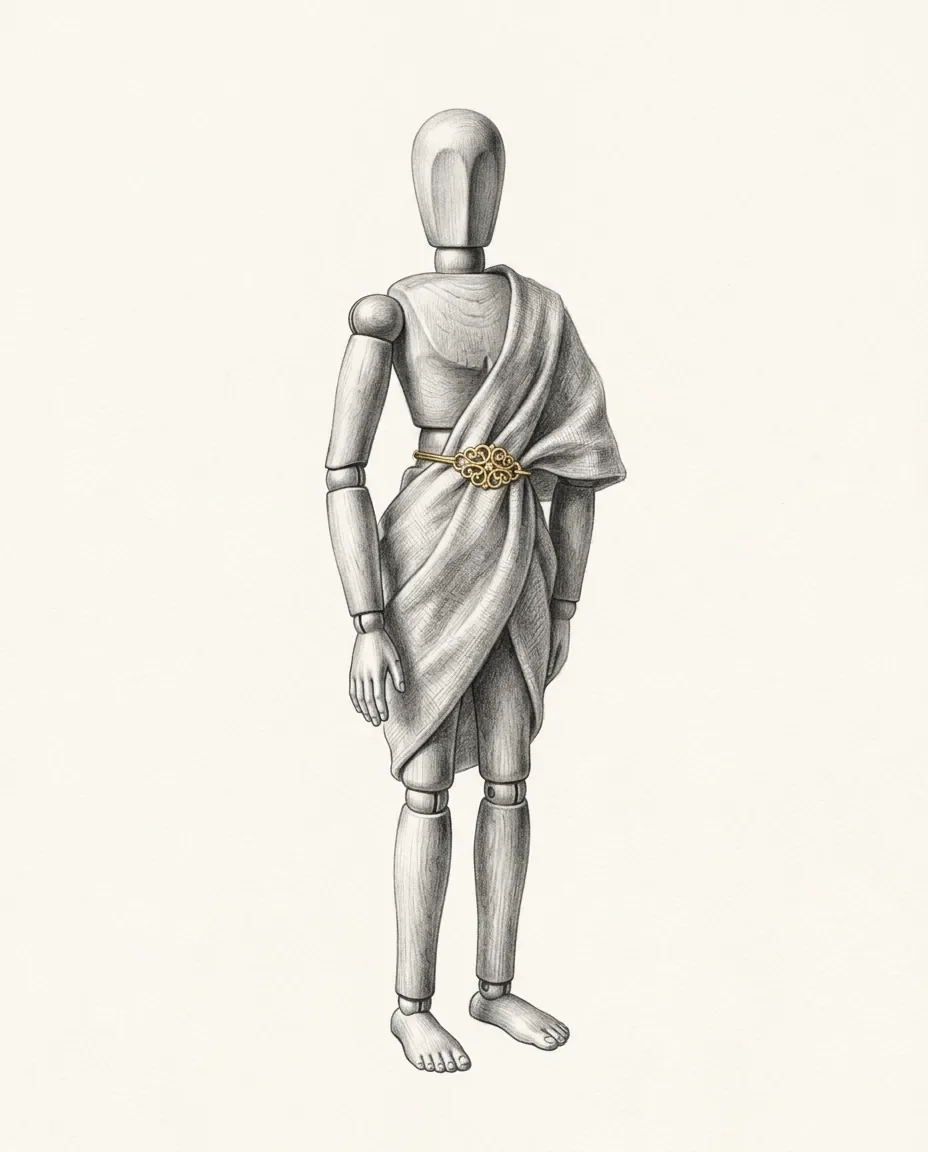
Agalmatophilia is a sexual or romantic attraction to statues, mannequins, dolls, or other lifelike representations of the human form. A linked theme, Pygmalionism, centres on fantasies of such a figure coming to life, or of a living body turning to stone or freezing into immobility.
- Prevalence
- Rare
- Category
- Objects & Materials
- Clinical term
- Agalmatophilia
- Domain
- Sexual interest · Paraphilia
- Confidence
- Low confidence
- Status
- Rare object paraphilia catalogued in clinical literature; not a stand-alone DSM-5-TR/ICD-11 diagnosis absent distress or impairment.
- Also known as
- agalmatophilia (statue / mannequin / doll attraction), agalmatophilia, statue fetish, mannequin fetish, doll fetish, Pygmalionism, pygmalionism
- Added
- 21 Jun 2026
- Updated
- 22 Aug 2026
Featured in
Overview
Agalmatophilia is an erotic or romantic attraction to statues, mannequins, dolls, and other inanimate representations of the human form. A closely linked idea, usually called Pygmalionism, centres on fantasies of such a figure becoming animate, or, conversely, of a living body turning to stone or freezing into perfect stillness. The attraction may be aesthetic, emotional, sexual, or a mix of all three, and it is generally grouped with object sexuality. This article traces the theme's deep mythological and clinical lineage, how it is expressed, the proposed psychology, and its standing in modern diagnostic manuals.
Examples
What the term covers. Erotic or romantic response to classical statuary and the body rendered in marble or bronze; to shop mannequins and display figures; to lifelike companion dolls and ball-jointed dolls kept, dressed and posed. It also covers both directions the Pygmalion fantasy runs in: the figure that wakes, and the living body that stiffens into stone. What binds these together is immobility, and the human form rendered in something other than flesh.
What the term does not cover. Several neighbouring entries carve up ground that genuinely overlaps this one. Robot fetish is directed at machines and androids that move, speak and follow instructions: animacy, not stillness. Robot / doll fetish is the umbrella that gathers both strands together with the fantasy of a person being treated as artificial, and it carries the same clinical label as this entry; where the figure is also programmable, that entry fits better than this one. Dollification is the specific role-play of styling and posing a living partner as a doll, and objectification play the wider consensual dynamic of being treated as a thing. Petrification fetish isolates the turning-to-stone half of Pygmalionism as an interest of its own, and transformation fetish covers changes of form in general. Object sexuality is attraction to particular real objects, such as a bridge or an instrument, which are not shaped like people at all. Kigurumi masking produces a doll-like appearance through mask and bodysuit, but it is a costume practice first.
How the word is used. Agalmatophilia is reference-book vocabulary, surviving in encyclopedic catalogues of paraphilias and absent from the DSM-5-TR and ICD-11. Pygmalionism has far wider currency, because the myth behind it does, and art criticism uses it loosely for love directed at one's own creation, sexual or not, a sense that outnumbers the clinical one.
History & origins
Mythological and classical roots
The theme is far older than any clinical label. Its founding story is the Greek myth of Pygmalion, a Cypriot sculptor who carves an ivory woman so lifelike that he falls in love with her and prays to the goddess Aphrodite to bring her to life. The tale received its enduring literary form in Ovid's Metamorphoses (c. 8 CE), and it gives Pygmalionism its meaning: love directed at one's own idealised creation, as catalogued in the modern overview of agalmatophilia. Antiquity also preserved cautionary tales of men enamoured of public sculpture. The best known attached to the Aphrodite of Knidos, Praxiteles' mid-fourth-century-BCE marble widely held to be the first life-size female nude in Greek art: Pliny the Elder recorded a young man so besotted that he hid in the temple overnight to embrace it, leaving a stain that betrayed the act. Sexologists later cited such legends as the earliest "case material" for statue-directed desire.
Clinical lineage
The pseudo-clinical vocabulary is comparatively recent, and it arrived through several competing coinages rather than one landmark term. Nineteenth-century forensic medicine gathered scattered reports of statue-eroticism: an oft-cited 1877 incident recorded a gardener discovered attempting coitus with a copy of the Venus de Milo. Richard von Krafft-Ebing's Psychopathia Sexualis (1886) placed object- and statue-directed desire among the rarer fixations of fetishism. The French novelist Joris-Karl Huysmans used pygmalionisme in 1891, and the German physician Iwan Bloch catalogued the interest as Venus statuaria and Statuenliebe in 1907; the Latinate Statuophilie is recorded by 1910. The term agalmatophilia itself (from Greek ágalma, "statue" or "votive offering," plus -philia, "love") is later still: its earliest documented appearance is dated to 1930, in Italian philology, per the modern survey of the topic. The word survives mainly in encyclopedic catalogues of paraphilias rather than in current diagnostic manuals.
Cultural evolution
Across the modern era the motif migrated from clinical curiosity to a recognised strand of art and popular culture: the living statue, the uncanny mannequin, the doll that wakes. That long cultural presence predates, and helps explain, the more recent lifelike-companion-doll subculture, which gave the attraction a contemporary, communal expression alongside related interests such as the robot/android fetish.
In practice
Expression ranges from purely aesthetic admiration of idealised, motionless figures to durable emotional or erotic bonds with a particular doll or mannequin. Recurring sub-themes include a fascination with perfect stillness, the uncanny contrast between lifelike appearance and inanimacy, and "coming to life" or "freezing into stone" fantasies. Much of the activity is private and imaginative, and it overlaps at the edges with broader object sexuality and the machine-directed attraction seen in the car/machine fetish.
Psychology
Proposed explanations emphasise the appeal of an idealised, non-judgmental, and entirely controllable companion; the emotional safety of a figure that makes no demands and cannot reject or abandon; and the symbolic power of the human form rendered as art rather than as flesh. The immobility theme connects it to a wider erotic interest in stillness and statuesque posing. The documentation is overwhelmingly historical and case-based; the modern empirical base is thin, and agalmatophilia has attracted almost no systematic study.
Prevalence & culture
How common is agalmatophilia?
Agalmatophilia is rare and sits in the long tail of object paraphilias. The large fetish-frequency survey by Scorolli and colleagues (2007), which ranked the relative popularity of fetishes from online community data, found attraction to inanimate objects to be a small fraction of all fetish interest. Yet statues, mannequins, and dolls recur as erotic and uncanny motifs across art history, literature, ballet (the doll Coppélia), and film, giving the theme a cultural footprint far larger than its clinical frequency. It is catalogued in encyclopedic lists of paraphilias but is not a stand-alone diagnosis.
Safety, consent & law
The interest is generally harmless. Because it is directed at inanimate objects rather than people, the partner-consent issues that govern interpersonal kink do not arise. It is not a stand-alone disorder under the DSM-5-TR or ICD-11 unless it causes the person clinically significant distress or functional impairment, in which case it would fall under the residual "other specified paraphilic disorder" category. The only routine practical consideration is ordinary respect for public and museum property.
Common questions
What is the difference between agalmatophilia and Pygmalionism?
Agalmatophilia names the attraction: erotic or romantic response to statues, mannequins and dolls as they are. Pygmalionism names a fantasy about them: the figure coming to life, or, inverted, a living body turning to stone. The two travel together and are often used interchangeably, but one is a direction of desire and the other a narrative. Pygmalionism is also used well outside sexology, for love directed at anything a person has made themselves.
Is a statue or doll fetish a paraphilia or a disorder?
It is catalogued as a rare paraphilia, and it is not a disorder. Neither the DSM-5-TR nor the ICD-11 lists agalmatophilia as a stand-alone diagnosis; it would be captured only under the residual "other specified paraphilic disorder" heading, and only where it caused the person clinically significant distress or impairment. Because the interest is directed at inanimate objects, the consent questions that govern interpersonal kink do not arise at all.
Is a doll fetish the same as a robot fetish?
No, though this catalog's own terms blur here and it is worth knowing why. The dividing line is agency. A doll or statue interest centres on a figure that is still and unresponsive, and the stillness is frequently the appeal; a robot fetish centres on something that moves, speaks and obeys instructions. Because many people hold both, a third entry, robot / doll fetish, covers the overlap where a figure is doll-like and programmable.
Why would someone be attracted to a statue or a mannequin?
The accounts on offer are proposed rather than demonstrated, since the interest has attracted almost no systematic study. They emphasise an idealised figure that makes no demands and cannot reject or abandon anyone; the emotional safety of a companion who is entirely predictable; the specific appeal of perfect stillness; and the uncanny charge of a form that looks alive and is not. Long cultural familiarity with the erotic statue, from Ovid onward, plausibly does some of the work too.
Does owning a companion doll mean someone has agalmatophilia?
No. Owning a lifelike doll says nothing on its own: people keep them for company, for photography, for art, for sex, or for reasons they owe nobody. Agalmatophilia describes an attraction in which the inanimate, idealised figure is itself the erotic focus. Someone can have that attraction and own nothing at all, and someone can own a doll without having it.
What is the "freeze" or living-statue fantasy?
It is the inverted half of the Pygmalion story: instead of a statue waking, a living body stiffens into stone or is held in absolute immobility. It appears in fiction, art and role-play, and this catalog gives the stone-specific version its own entry as petrification fetish. Where the interest is in a partner posing motionless rather than in any transformation, it shades into objectification play.
- Object Sexuality17/100Objectophilia · Objects & MaterialsObject sexuality (objectophilia, objectum sexuality, OS) is a romantic and sometimes sexual attraction directed at specific inanimate objects or structures. Those who identify with it describe committed, often reciprocal-feeling love for one particular object rather than a generic interest in things.17
- Robot Fetish26/100Technosexuality · Objects & MaterialsRobot fetishism, also called technosexuality or ASFR, is an erotic attraction to robots and androids, or to people behaving as artificial beings. It commonly centres on mechanical movement, control, and the blurred line between human and machine.26
- Car & Machine Fetish20/100Mechanophilia · Objects & MaterialsMechanophilia (mechaphilia) is a rare sexual or romantic attraction to machines, most often motor vehicles such as cars, motorcycles, or aircraft. A machine's form, sound, vibration or attributed personality is eroticized. It is distinct from ordinary car enthusiasm.20
- Mysophilia (Dirtiness & Soiled Items)19/100Mysophilia · Objects & MaterialsA paraphilic interest in which arousal is tied to dirtiness, filth, or soiled and unwashed items, typically worn clothing. The appeal rests on the impurity, lingering scent, and used quality of the object rather than on it when clean.19
- Wool Fetish20/100Objects & MaterialsAn erotic attraction to wool, angora, and soft knitted garments, centered on their fuzzy, warm, and enveloping texture. Often expressed through a fondness for sweaters and other cozy knitwear.20
- Inflatable Fetish21/100Inflatophilia · Objects & MaterialsAn erotic interest in inflatable objects such as pool toys, swim rings, rafts, and inflatable suits, valued for their vinyl material. Rounded shape, squeak and buoyancy, and the act of inflation are part of the appeal. It is a benign novelty-object fetish, closely tied to the balloon-fetish (looner) community.21
From the Ancient Greek ágalma ('statue, image, votive offering') plus the suffix -philia ('love, affinity'), literally 'love of statues'; its earliest documented use dates to about 1930. The related term Pygmalionism derives from the mythical sculptor Pygmalion in Ovid's Metamorphoses, who fell in love with his own ivory carving.
inanimate figures · statues & mannequins · object-directed attraction
Prevalence is computed from the entry's cited population estimate. Rows marked ESTare indicative editorial estimates scored against a fixed anchor rubric, not measured quantities. Method & anchors: methodology.
Rare · ≈ 1 in 1,000
- 01List of paraphilias, Wikipediadefinition/existence of agalmatophilia (attraction to statues, mannequins and dolls)
- 02Scorolli et al. (2007), Relative prevalence of different fetishes, Int. J. Impotence Research 19(4):432-437framing within inanimate-object fetishes, a small fraction of all fetish interest
- 03Sexual fetishism, Wikipedia (carries the Scorolli 2007 relative-frequency table)object/material fetish context (Scorolli relative-frequency table)
- 04Agalmatophilia, WikipediaGreek etymology (agalma 'statue'), the Pygmalion myth via Ovid, Pygmalionism, the 1877 statue case, and historical framing as object sexuality
- 05Aphrodite of Knidos, WikipediaPraxiteles' mid-4th-century-BCE marble as the first life-size female nude and Pliny the Elder's legend of the man who left a stain embracing the statue
- 06Pygmalion (mythology), Wikipediathe Cypriot sculptor Pygmalion who falls in love with his ivory carving, the root of the term Pygmalionism
- 07Metamorphoses, Ovid, WikipediaOvid's Metamorphoses (c. 8 CE) as the enduring literary form of the Pygmalion story
- 08Joris-Karl Huysmans, WikipediaFrench novelist credited with the term pygmalionisme (1891) in the terminology lineage of statue-directed desire
- 09Iwan Bloch, WikipediaGerman physician who catalogued the interest as Venus statuaria and Statuenliebe (1907)
- 10Psychopathia Sexualis, WikipediaKrafft-Ebing's 1886 taxonomy of fetishism and rarer object/statue-directed fixations
- 11Magnus Hirschfeld, Wikipediaearly-20th-century sexologist associated with the near-synonym statuophilia in Sexual Pathology (1917-1920)
- 12DSM-5-TR, American Psychiatric Associationnot a stand-alone diagnosis; would fall under 'other specified paraphilic disorder' only with distress/impairment
- 13ICD-11, World Health Organizationnot a stand-alone diagnosis absent distress or impairment