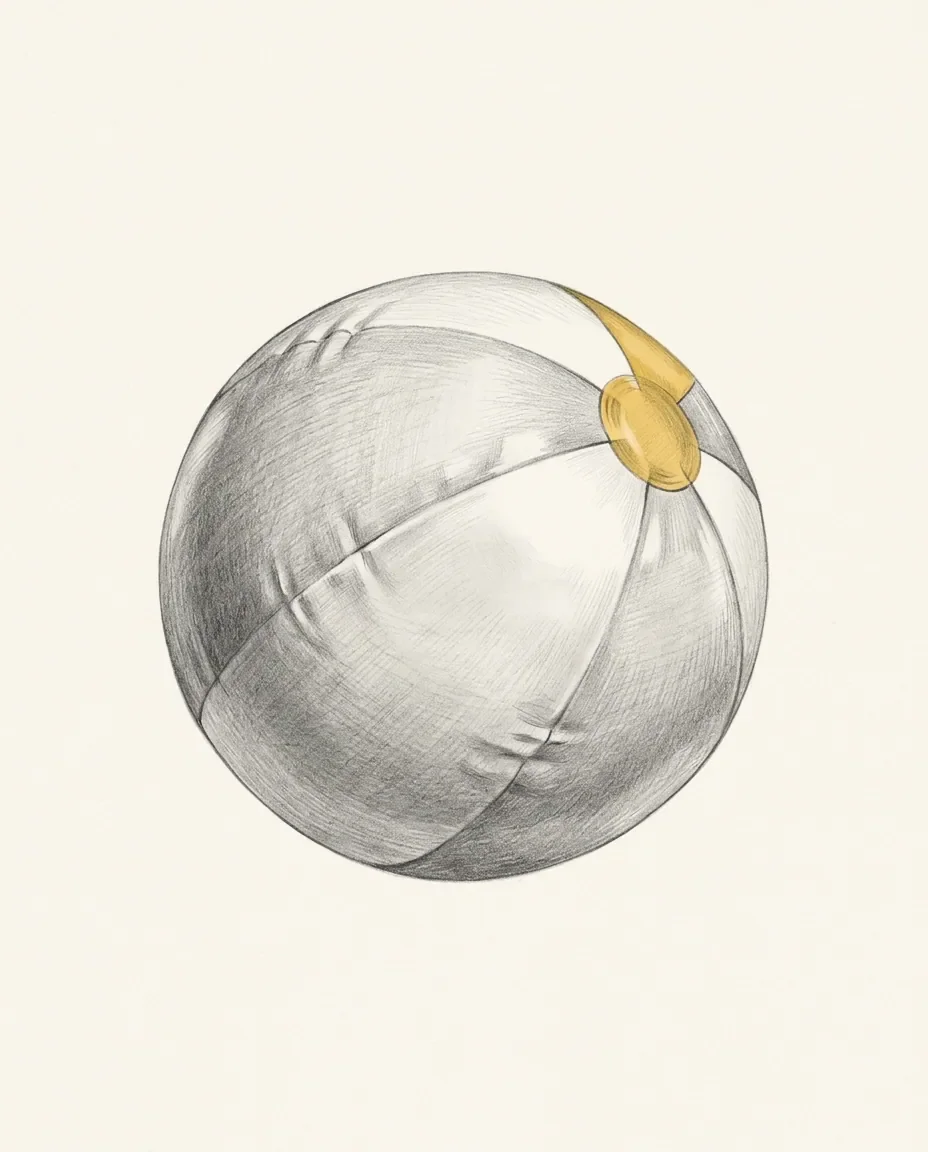
Inflatable Fetish
Inflatophilia
Added 21 Jun 2026 · Updated 22 Aug 2026
An erotic interest in inflatable objects such as pool toys, swim rings, rafts, and inflatable suits, valued for their vinyl material. Rounded shape, squeak and buoyancy, and the act of inflation are part of the appeal. It is a benign novelty-object fetish, closely tied to the balloon-fetish (looner) community.
- Prevalence
- Rare
- Category
- Objects & Materials
- Clinical term
- Inflatophilia
- Domain
- Sexual interest
- Confidence
- Low confidence
- Status
- Niche novelty-object fetish; a normal variation, not a disorder absent distress or impairment.
- Also known as
- inflatophilia, inflatable fetishism, pool-toy fetish, inflatable-object fetish, looner-adjacent
- Added
- 21 Jun 2026
- Updated
- 22 Aug 2026
Featured in
Overview
Inflatable fetishism, informally called inflatophilia, is a niche material- and object-focused interest in inflatable items: pool toys, swim rings, rafts, beach balls, and inflatable suits or costumes. Arousal can stem from the smooth vinyl or rubber surface, the rounded full shapes, the squeak and elastic resistance of inflated material, and the process of inflating or deflating. It belongs to the broad family of object and material fetishes rather than to any clinically recognised disorder, and is closely entangled with the better-known balloon fetish ("looner") world. This article covers its documented lineage, how it is expressed, the proposed psychology, its prevalence, and its safety framing.
Examples
What the term covers. Pool toys, swim rings, rafts, beach balls, inflatable animals, and inflatable suits or costumes. The appeal may sit in the taut vinyl surface and its squeak, in the rounded volume an inflated object takes on, in the act of inflating or deflating one, or in the even, hug-like pressure of being held against or partly inside a large inflatable. Many enthusiasts collect particular models, and much of the culture is art, humour and photography rather than anything more.
What the term does not cover. Balloon fetish, the looner scene this one grew up alongside, centres on party balloons, their latex feel and often the tension around popping them; inflatables are larger, reusable, and not meant to burst. Body inflation is a fantasy of a body swelling, expressed in art and fiction, with no physical object involved. Latex and rubber fetishes take the material without the air. A vacuum bed applies the opposite pressure, with air pumped out rather than in. Inflatable dolls belong with statue and doll attraction, where human likeness is the point, and object sexuality is a claim of romantic attachment to one specific object, which is a different kind of claim from a material preference. The nearest comfort-object neighbour is the plushie fetish, soft where this is taut.
How the word is used. Informal throughout. Inflatophilia is an online coinage assembled on the -philia pattern rather than a clinical term, and it appears in no diagnostic manual; the community mostly just says "inflatables", and often positions itself beside rather than inside the looner world.
History & origins
Clinical lineage of object fetishism
Object and material fetishism has been part of the sexological literature since the late nineteenth century. Alfred Binet introduced the term fétichisme into psychology in his 1887 essay Le fétichisme dans l'amour ("Fetishism in love"), framing it as the eroticisation of a specific object or quality formed through early associative experience, an account close to what we would now call classical conditioning. Around the same period, Richard von Krafft-Ebing catalogued fetishistic attachments to materials in Psychopathia Sexualis (1886). Modern nosology classes sexual fetishism as a disorder only where it causes distress or impairment, so an inflatable interest in a content adult is treated as a benign variation.
A distinctly modern object
Inflatable fetishism is a twentieth-century offshoot, because it depends on mass-produced vinyl and synthetic-rubber consumer goods (beach toys, rafts, and inflatable costumes) that only became widely available after the mid-1900s. It therefore has no single documented coiner, and the lay term inflatophilia arose informally within online communities rather than in clinical texts. Reference compilations such as Wikipedia's List of paraphilias record inflatable-object fetishism among recognised object fetishes, but dedicated academic study is essentially absent.
Relationship to the looner community
Much of the culture and vocabulary is borrowed from, and historically tangled with, balloon fetishism. The first documented looner community was a pen-pal club established in 1976, predating the internet, as noted in Wikipedia's account of balloon fetishism; online forums and listservs followed from the 1990s onward. Within that wider world, inflatable enthusiasts focus on large, sculptural vinyl toys rather than party balloons, and the scene overlaps with furry "balloonie" and body-inflation interests. A 2021 Vice feature documented this small subculture, including its handful of specialist makers and its emphasis on humour, art, and consent.
In practice
Expression typically involves enjoying the look and feel of inflatable objects, incorporating them into solo or partnered play, collecting particular items, or appreciating the buoyant, full forms they create. Some enthusiasts focus on the act and sound of inflation and deflation; others on the texture and sheen of the vinyl, or on the all-over pressure of being held against or inside a large inflatable, which some describe as a comforting, hug-like sensation. It overlaps with balloon fetishism but centres on larger, reusable inflatables rather than balloons specifically. This is a non-explicit, non-instructional overview.
Psychology
The interest is generally understood through associative learning, Binet's original mechanism, and the sensory appeal of distinctive synthetic textures, sheens, rounded shapes, and squeaks, sometimes linked to summer, water, or nostalgic childhood-play associations. The strong material element connects it to wider latex and rubber interests, where the surface and feel of the substance are central to the appeal, and the desire to hold or cuddle the object links it to comfort-object interests such as the plushie fetish. The evidence base specific to inflatables is anecdotal rather than experimental, and no formal aetiological account has been established.
Prevalence & culture
This is a small, specialised interest with niche but enthusiastic online communities, low overall prevalence, and very little dedicated academic study. General-population research finds that object and material fetishism in the broad sense is surprisingly common, Joyal & Carpentier (2017) found fetishism interest above the threshold for statistical unusualness in both sexes, while clinical fetish surveys such as Scorolli et al. (2007) show that any single object niche accounts for only a small share of interest, consistent with a sub-1% prevalence for inflatables specifically. Cultural visibility is minimal, surfacing mainly in passing references within wider fetish discussions and occasional journalism such as the Vice report.
Safety, consent & law
The interest involves ordinary consumer products and consenting adults and is not harmful or illegal. Safety considerations are the everyday product ones rather than concerns specific to the interest: not obstructing the airway when inflating by mouth, and observing basic water-safety precautions. One genuine hazard arises at the extreme of being fully enclosed inside a sealed inflatable suit or toy, where suffocation and entrapment are real risks; practitioners in the Vice feature stressed never doing this alone and using quick-release and breathing provisions. With those ordinary precautions it is a benign novelty interest.
Common questions
What is the difference between an inflatable fetish and a balloon fetish?
The object, mostly. Balloon fetishism ("looning") centres on party balloons, their latex feel, and often the tension around popping them. Inflatable fetishism centres on larger vinyl goods: pool toys, rafts, rings, suits. The two scenes share history, vocabulary and a good deal of membership, and the looner community, documented from a 1976 pen-pal club, is the older of the two. But a burst balloon and a deflating raft are not the same appeal.
Is inflatophilia a real clinical term?
No. It is an informal coinage assembled online from "inflate" plus the Greek -philia, on the pattern of the classical paraphilia names. No sexologist proposed it and it appears in no diagnostic manual. Reference compilations list inflatable-object fetishism among recognised object fetishes, but there is essentially no dedicated academic literature, so the word has the shape of a clinical term without the history behind one.
Is an inflatable fetish a disorder?
No. Modern classification treats fetishism as a disorder only where it causes the person marked distress or impairment, or involves someone who has not consented. An adult who enjoys inflatables, alone or with a willing partner, meets none of that. The objects are ordinary consumer goods, and there is nothing about the interest itself that calls for clinical attention.
What makes inflatables appealing?
Accounts cluster on a few things: the smooth, taut vinyl and its squeak; the rounded, full shapes an inflated object takes; the process of inflation and deflation; and the even, enveloping pressure of being held against or partly inside a large one, which enthusiasts often describe as hug-like. Summer, water and childhood-play associations recur too. As with material fetishes generally the usual explanation is associative learning, but nothing specific to inflatables has been tested.
Is being sealed inside an inflatable dangerous?
Yes, and it is the one part of this interest carrying real risk. A sealed inflatable can restrict or exhaust the air available and can be hard to get out of quickly, so suffocation and entrapment are genuine hazards rather than theoretical ones. Enthusiasts interviewed in Vice's 2021 report were emphatic about never doing it alone and about arranging breathing and quick-release provisions beforehand.
Is an inflatable fetish the same as body inflation?
No, though the names invite the confusion. Body inflation is a fantasy about a body swelling or expanding to impossible proportions, and it lives almost entirely in art, animation and fiction because the event it depicts cannot actually happen. An inflatable fetish is about physical objects that really do inflate. Some people are drawn to both and the communities overlap online, but the object of interest differs in kind.
How common is an inflatable fetish?
Rare, and the figure is an estimate rather than a measurement, since no survey asks about inflatables. Broad object and material fetishism is common: Joyal and Carpentier's 2017 general-population survey found fetishistic interest above their threshold for statistical unusualness. But Scorolli and colleagues (2007) show any single object niche accounts for only a small share of that, which is the basis for a sub-1% figure here.
- Balloon Fetish29/100Globophilia · Objects & MaterialsAn erotic or playful fixation on balloons: their look, feel, smell, sound, inflation, and sometimes their popping. Enthusiasts call themselves looners; it is a benign novelty-object fetish related to latex and inflatable interests.29
- Latex Fetish62/100Latex fetishism · Objects & MaterialsAn erotic interest in latex garments and their tight, glossy, second-skin qualities. A common material fetish involving the look, feel, sound, smell, and enveloping sensation of clinging latex on consenting adults.62
- Plushie Fetish30/100Plushophilia · Objects & MaterialsAn erotic or affectional interest in plush toys and stuffed animals, valued for their softness, comfort, and anthropomorphic forms. Clinically a subgenre of object sexuality (plushophilia), it is a benign niche interest often adjacent to furry culture.30
- Car & Machine Fetish20/100Mechanophilia · Objects & MaterialsMechanophilia (mechaphilia) is a rare sexual or romantic attraction to machines, most often motor vehicles such as cars, motorcycles, or aircraft. A machine's form, sound, vibration or attributed personality is eroticized. It is distinct from ordinary car enthusiasm.20
- Wool Fetish20/100Objects & MaterialsAn erotic attraction to wool, angora, and soft knitted garments, centered on their fuzzy, warm, and enveloping texture. Often expressed through a fondness for sweaters and other cozy knitwear.20
- Mysophilia (Dirtiness & Soiled Items)19/100Mysophilia · Objects & MaterialsA paraphilic interest in which arousal is tied to dirtiness, filth, or soiled and unwashed items, typically worn clothing. The appeal rests on the impurity, lingering scent, and used quality of the object rather than on it when clean.19
"Inflatophilia" is an informal modern coinage joining English "inflate" (from Latin *inflare*, "to blow into," from *in-* + *flare*, "to blow") with the Greek *-philia* ("love of"). It arose in online communities, not in the clinical literature.
inflatables · novelty objects · synthetic materials
Prevalence is computed from the entry's cited population estimate. Rows marked ESTare indicative editorial estimates scored against a fixed anchor rubric, not measured quantities. Method & anchors: methodology.
Rare · ≈ 1 in 1,000
- 01List of paraphilias, Wikipediadocuments inflatable-object fetishism as a recognized object fetish
- 02Joyal & Carpentier (2017), The Prevalence of Paraphilic Interests and Behaviors in the General Population, J. Sex Research 54(2):161-171general-population object/material fetishism interest (~44%) as the broad umbrella
- 03Scorolli et al. (2007), Relative prevalence of different fetishes, Int. J. Impotence Research 19(4):432-437object fetishes are a small share of fetish interests, supporting a sub-1% niche prevalence
- 04Sexual fetishism, Wikipediahistory of fetishism in sexology and the modern view that fetishism is a disorder only with distress or impairment
- 05Alfred Binet, WikipediaBinet introduced the term fétichisme in his 1887 essay Le fétichisme dans l'amour, framing fetishism as eroticisation formed through early association
- 06Psychopathia Sexualis (1886), WikipediaKrafft-Ebing's late-19th-century documentation of fetishistic attachments to materials
- 07Richard von Krafft-Ebing, Wikipediabiographical and clinical context for the early cataloguing of material fetishism
- 08Balloon fetish, Wikipediathe looner community, the 1976 pen-pal club origin, and the explicit distinction of inflatable fetishism and body inflation from balloon fetishism
- 09'It Is Very Risky': The People With a Fetish for Being Inside Inflatable Pool Toys, Vice (2021)the small inflatable-pool-toy subculture, its overlap with looners, the vinyl/material and hug-like pressure appeal, and the enclosure suffocation/entrapment safety risks