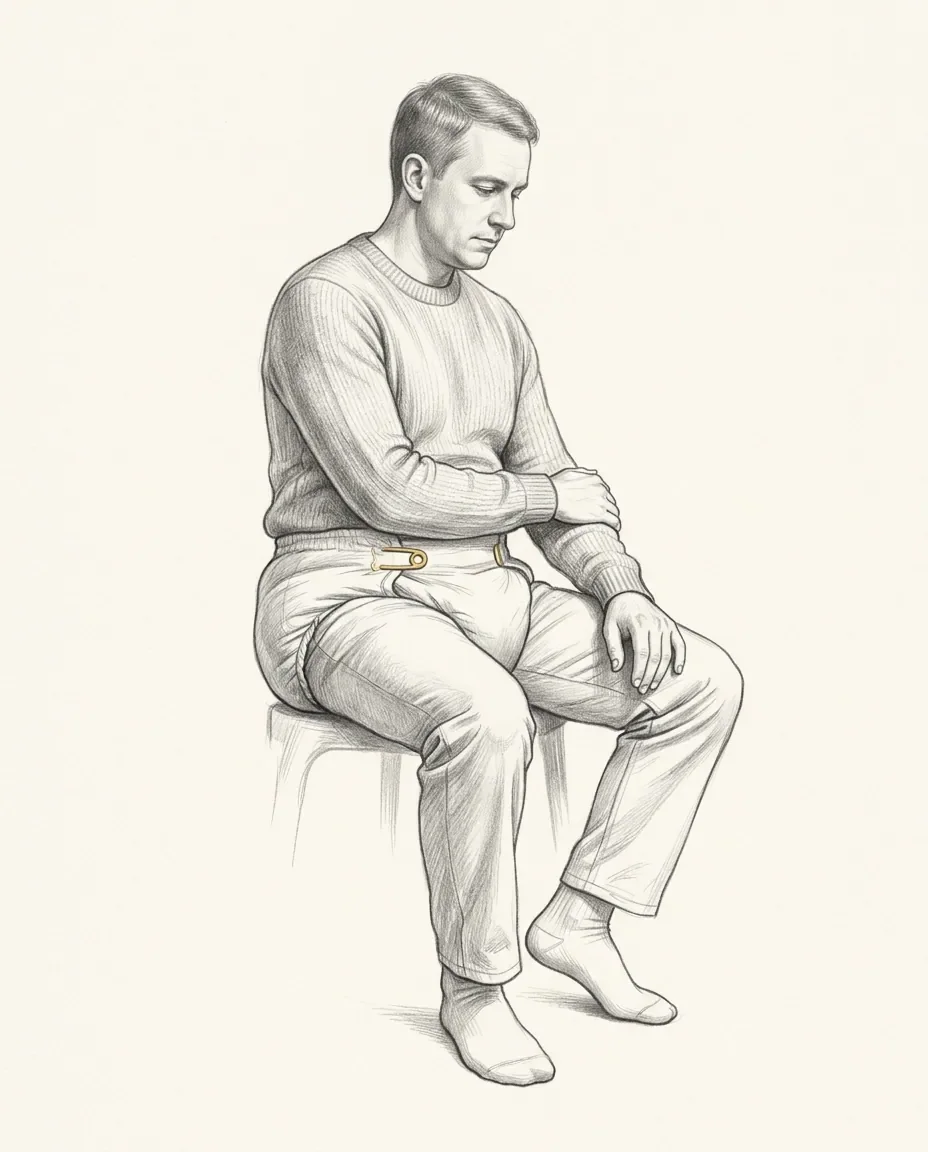
Adult Baby / Diaper Lover
Autonepiophilia
Added 21 Jun 2026 · Updated 22 Aug 2026
Autonepiophilia, also called paraphilic infantilism, is the interest in adopting the role, mindset or self-image of an infant or very young child. Combined with a diaper-focused interest it forms the broader ABDL (adult baby / diaper lover) identity. It is regression to a childlike role, not attraction to children.
- Prevalence
- Uncommon
- Category
- Identity & Transformation
- Clinical term
- Autonepiophilia
- Domain
- Sexual interest · Paraphilia
- Confidence
- Low confidence
- Status
- Paraphilic infantilism (autonepiophilia) recognized in clinical literature; benign and not a disorder unless it causes distress, impairment, or harm.
- Also known as
- autonepiophilia, adult baby, ABDL, infantilism, paraphilic infantilism, diaper lover, Adult baby / Diaper identity (Autonepiophilia, ABDL), age play
- Added
- 21 Jun 2026
- Updated
- 22 Aug 2026
Featured in
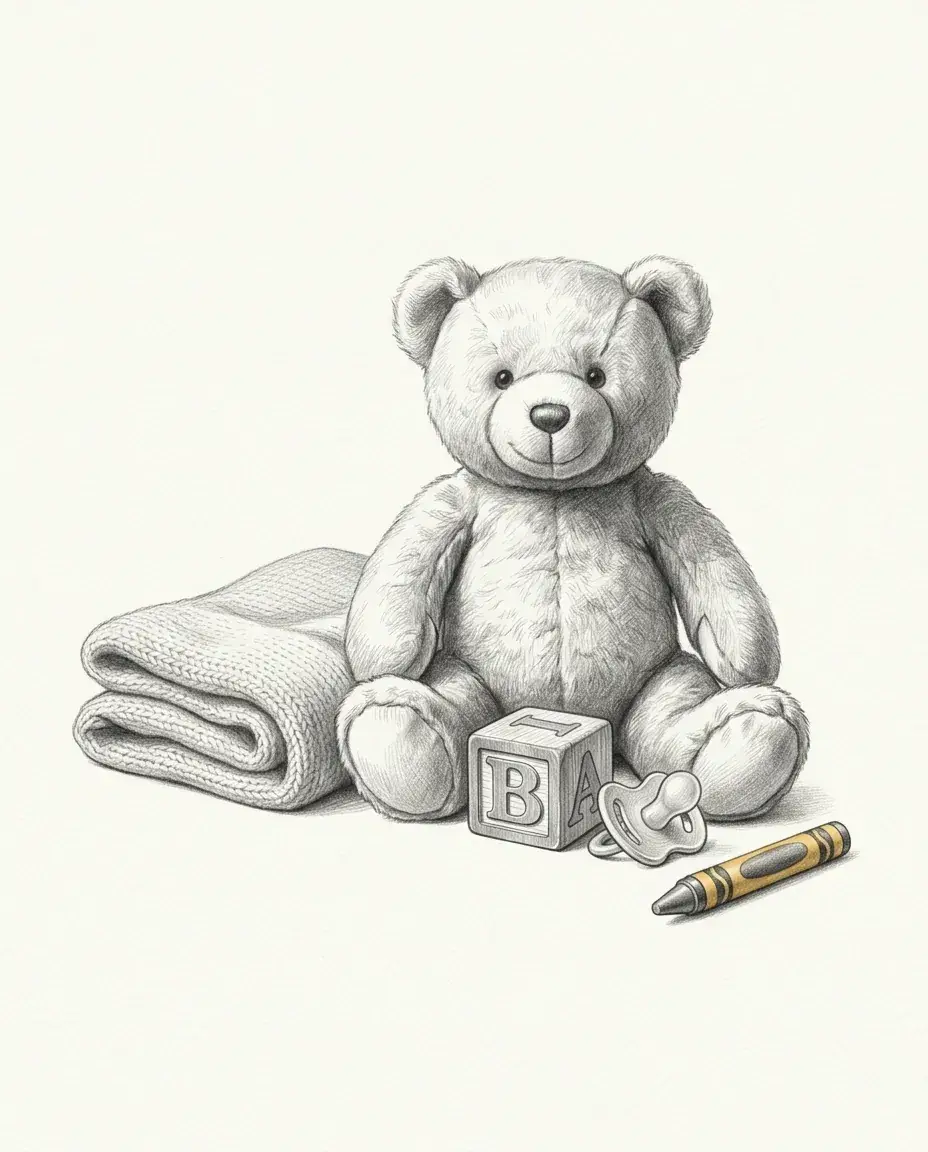
Overview
Autonepiophilia: popularly known through the community acronym ABDL (adult baby / diaper lover): is an interest in perceiving, presenting or being treated as a baby or toddler. The "adult baby" strand centres on infantile role-play and being nurtured; the "diaper lover" strand centres on the diaper itself as a comfort or erotic object. The defining theme is voluntary age regression to early childhood as a role or identity. It must not be confused with sexual interest in actual children, which is an entirely separate, harmful and illegal phenomenon: pedophilia runs in the opposite direction, since ABDL adults imagine themselves as infants rather than being attracted to them. For many adherents the experience is rooted in comfort, safety and stress relief as much as, or more than, sexuality.
Examples
What the term covers. Everyone involved is an adult. In its diaper-focused form, an adult wears a diaper privately or with a partner for the feel, bulk and containment of the garment and the calm it produces. In its adult-baby form, an adult adopts an infant or toddler persona, with soft clothing, a pacifier, a bottle or a nursery-styled room, often with a consenting partner taking a caregiver or "Mommy/Daddy" role, and frequently with no erotic content at all: many participants describe littlespace as an emotional refuge from adult pressure rather than as sex. Most of it is private, most of the community life is online, and the two strands mix freely in the same person.
What the term does not cover. It has nothing whatever to do with children. ABDL is an adult imagining themselves as an infant; pedophilia and nepiophilia are sexual attraction to real children and real infants, are harmful and illegal, and are the opposite direction of interest rather than a milder version of it. No minor is involved in any recognised form of this practice, and the community polices that boundary explicitly. Among the adjacent adult interests, age-play is the wider umbrella of enacted age difference and need not involve infancy at all, DD/lg names a caregiver-and-little relationship dynamic, diaper fetish is the garment interest standing on its own, and omorashi concerns the sensation of desperation and wetting rather than the diaper or the role.
How the word is used. "ABDL" is community vernacular, assembled online and now the standard self-description. The clinical labels are autonepiophilia and paraphilic infantilism, and they are descriptive rather than diagnostic: neither DSM-5-TR nor ICD-11 lists infantilism as a disorder in its own right. "Adult baby syndrome" is narrower still, a label from a 2003 case report reserved for rare, impairing presentations rather than for the community at large.
History & origins
Clinical lineage
The idea of an adult eroticising the role of an infant was foreshadowed in the founding catalogues of sexology, Richard von Krafft-Ebing's Psychopathia Sexualis (1886) and Havelock Ellis's Studies in the Psychology of Sex described unusual erotic patterns and supplied the descriptive groundwork, though neither named this specific interest.
- 1986: The American sexologist John Money, who built much of the modern paraphilia vocabulary, set out a family of age-impersonation paraphilias in Lovemaps (1986) and coined the reciprocal term nepiophilia (from Greek nepios, "infant") for sexual attraction to actual infants: a harmful condition that is the opposite of, and unrelated to, autonepiophilia.
- 1984: According to the Wikipedia account of paraphilic infantilism, Money coined autonepiophilia itself (Greek autos ("self") + nepios ("infant") + -philia ("love"), literally "love of oneself as an infant") for the desire to impersonate and be treated as a baby, with no attraction to children.
- 2003: Psychiatrists Jennifer Pate and Glen Gabbard published "Adult Baby Syndrome" in the American Journal of Psychiatry (160:11, 1932–1936), a clinical case conference on an extreme presentation; the label adult baby syndrome is reserved for such rare, impairing cases rather than the benign community at large.
- 2014: Kaitlyn Hawkinson and Brian Zamboni's exploratory survey of 1,795 male and 139 female ABDL members in Archives of Sexual Behavior (43:5, 863–877) examined mood, parental relationships and attachment, and identified two overlapping subgroups: people centred on role-play and people centred on the diaper as an object of arousal, confirming that the "AB" and "DL" strands are distinct but linked.
Modern clinical literature folds the interest under paraphilic infantilism. Like other paraphilias in the DSM-5-TR and ICD-11, it is not a disorder in itself; it becomes a diagnosable paraphilic disorder only when it causes the person marked distress or impairment, or involves harm to others.
Cultural & subcultural evolution
The acronym AB/DL and its "adult baby" and "diaper lover" branches are products of the internet era; their precise origins are, as Wikipedia notes, "difficult to determine." Usenet groups, dedicated forums and later FetLife let geographically dispersed individuals find one another and articulate a shared identity distinct from the clinical framing: often emphasising littlespace, caregiving and comfort over pathology. The community overlaps with, but is not identical to, age-play and DD/lg dynamics, and its signature object connects it to the standalone diaper fetish.
In practice
Expression is typically private and role-based, and is highly individual:
- role-play and props associated with infancy or toddlerhood;
- soft, nurturing routines of being cared for, sometimes with a partner in a "caregiver" or "Mommy/Daddy" role;
- for the diaper-lover strand, a focus on the garment itself as a comfort or arousal object;
- an overarching emphasis on comfort, escape and self-soothing.
The Hawkinson–Zamboni subgroups capture the spread: for some the interest is primarily a regressive, emotional refuge, and for others it is more overtly erotic, and the two often coexist in the same person.
Psychology
Proposed accounts emphasise regression as a route to relaxation, escape from adult pressures and a sense of being unconditionally cared for; these themes are frequently linked to attachment and self-soothing. Some researchers have explored "erotic target identity inversion", desiring to be the thing one is drawn to, as one framework for the role-play strand; Hsu and Bailey (2023) reported a pattern consistent with this idea in a male ABDL sample, while noting that the evidence base remains small and contested, drawn largely from self-selected online samples. There is no good evidence that ABDL interests stem from abuse or signal a risk to children; surveys describe a largely well-adjusted, predominantly male population (in the 2014 study about 93% of participants were male).
Prevalence & culture
ABDL interests are uncommon but sustain large, well-organised online communities and draw periodic mainstream-media attention. Rigorous population prevalence figures are scarce, research has concentrated on the psychology of self-selected community samples rather than on incidence, so any single percentage should be read as indicative rather than definitive. The most cited modern data point is the size and activity of online communities such as FetLife groups, which serve as a community-size proxy for a niche but durable interest.
Safety, consent & law
Among consenting adults the interest is legal and, practised privately, harmless; practical considerations are ordinary ones: hygiene, honest communication and clear consent, with aftercare valuable when regression is emotionally intense. Crucially, autonepiophilia concerns adults exclusively and must never, in any form, involve actual minors; that boundary is what separates it categorically from the harmful conditions Money named alongside it.
Common questions
Is ABDL related to pedophilia?
No, and the two run in opposite directions. An ABDL adult imagines themselves as an infant; pedophilia is sexual attraction to actual children and nepiophilia to actual infants. John Money, who named both, drew that line explicitly when he coined autonepiophilia in the 1980s. There is no evidence that an ABDL interest indicates any risk to children, and no recognised form of the practice involves a minor in any way.
Is ABDL always sexual?
No. Hawkinson and Zamboni's 2014 survey of 1,795 male and 139 female community members found two overlapping subgroups: people whose interest centres on role-play and regression, and people for whom the diaper itself is the object of arousal. Many participants describe the appeal principally as comfort, stress relief and being cared for, with little or no erotic element, and the balance often shifts within a single person over time.
What is the difference between an adult baby and a diaper lover?
The adult-baby strand is about the role: being, and being treated as, a baby or toddler, often with a partner taking a caregiver part. The diaper-lover strand is about the garment, its feel and bulk and containment, and requires no persona at all. The acronym joins them because the two communities grew up together, but the interests are separable and many people have only one of them.
Is ABDL a mental disorder?
Not in itself. The clinical literature classes it as paraphilic infantilism, and under both DSM-5-TR and ICD-11 a paraphilic interest becomes a disorder only when it causes the person marked distress or impairment, or harms someone else. A private, consensual interest meets none of those conditions. The narrower label 'adult baby syndrome', from a 2003 case report, was coined for a rare and severely impairing presentation.
What is the difference between ABDL, age-play and DDLG?
Age-play is the umbrella term: any consensual role-play between adults in which someone enacts an age other than their own, anywhere from toddler to teenager. DD/lg names a specific relationship shape, a caregiver paired with a little. ABDL is the infancy end of that spectrum in particular, and is the only one of the three defined partly by an object, the diaper.
Does ABDL come from childhood trauma or abuse?
There is no good evidence for it. Surveys of community members describe a broadly well-adjusted population and have not found the pattern of abuse history that the assumption predicts. Proposed explanations lean instead on regression as a route to relaxation, on attachment and self-soothing, and on erotic target identity inversion, the idea of wanting to be the thing one is drawn to. All of it rests on small, self-selected online samples.
Is ABDL mostly a male interest?
The research samples are heavily male: roughly 93% of participants in the 2014 Hawkinson and Zamboni study were men. That figure describes who joined an online community and answered a survey rather than who holds the interest, and self-selected samples systematically under-count people who stay private, on whom stigma falls unevenly. The honest answer is that the sex ratio in the general population is not known.
Is ABDL legal?
Yes, between consenting adults and in private. The interest concerns adults exclusively and there is nothing in it that any jurisdiction prohibits. The absolute condition is the one the community enforces on itself: no actual minor is involved in any way, at any point. Beyond that the considerations are ordinary ones, meaning hygiene and skin care, honest negotiation with a partner, and aftercare when regression has been emotionally intense.
From the blog
- Diaper Fetish44/100Autonepiophilia · Clothing & GarmentsAn erotic or comfort-oriented adult interest in wearing or using diapers. It overlaps with but is distinct from paraphilic infantilism; when centred on the garment and on perceiving oneself as an infant it is termed autonepiophilia. Adherents often call themselves diaper lovers (DL) within the ABDL community.44
- DDlg49/100Power, Roles & ScenariosA consensual caregiver/little relationship dynamic between adults that pairs a nurturing, authoritative caregiver with a dependent partner. That partner adopts a younger, "little" headspace. It is a specific, popular branch of age-play involving only consenting adults.49
- Age-Play49/100Power, Roles & ScenariosA consensual role-play between adults in which one or more partners adopt an age different from their own, often a younger persona, within a negotiated dynamic. An umbrella term for many caregiver, mentor, or peer scenarios; it never involves actual minors.49
- Futanari42/100Identity & TransformationFutanari is a drawn fiction genre, and the attraction to it, depicting feminine-bodied characters who have both female and male genitalia. The word is Japanese for 'dual form'. It is a fantasy trope of anime, manga and hentai, distinct from real intersex people.42
- Kitten Play42/100Identity & TransformationA consensual adult role-play in which a person adopts the persona, mannerisms, and relaxed headspace of a kitten or cat. A partner often acts as owner or caretaker within a gentle power-exchange dynamic. It is symbolic human role-play with no connection to real animals.42
- Vampire Fetish42/100Vampirism · Identity & TransformationA vampire fetish is an erotic or aesthetic fascination with vampire imagery, mythology, and persona: fangs, pallor and the bite. Themes of seduction, immortality and power exchange run through it. The clinical-style label 'vampirism' is also used for arousal tied to blood, which carries real health risks.42
Coined by the sexologist John Money (c. 1984) from Greek *autos* ("self") + *nepios* ("infant") + *-philia* ("love of"), literally "love of oneself as an infant"; its harmful reciprocal, *nepiophilia*, denotes attraction to actual infants.
age regression · identity regression · nurturing role
Prevalence is computed from the entry's cited population estimate. Rows marked ESTare indicative editorial estimates scored against a fixed anchor rubric, not measured quantities. Method & anchors: methodology.
Uncommon · ≈ 1 in 100
- 01List of paraphilias, Wikipediadefinition/existence of autonepiophilia (paraphilic infantilism) as a listed paraphilia
- 02Paraphilia, StatPearls, NCBI Bookshelfclinical recognition of infantilism among paraphilic interests
- 03FetLife, kink community group sizes (community-size proxy)ABDL/adult-baby community group sizes as a community-size proxy for its niche prevalence
- 04Paraphilic infantilism, WikipediaDocuments John Money's coinage of autonepiophilia, the term's etymology, the difficult-to-trace origins of the AB/DL nicknames, and the distinction from pedophilia.
- 05John Money, WikipediaMoney's role in naming age-impersonation paraphilias and coining nepiophilia, and his 1986 book Lovemaps.
- 06Psychopathia Sexualis, WikipediaKrafft-Ebing's 1886 catalogue of atypical erotic patterns that supplied the descriptive groundwork of early sexology
- 07Pate & Gabbard (2003), Adult Baby Syndrome, American Journal of Psychiatry 160:11, 1932–1936clinical case conference introducing the label 'adult baby syndrome' for an extreme, impairing presentation
- 08Hawkinson & Zamboni (2014), Adult Baby/Diaper Lovers: An Exploratory Study of an Online Community Sample, Archives of Sexual Behavior 43:5, 863–877survey of 1,795 male and 139 female ABDL members; two subgroups (role-play vs diaper arousal), attachment/mood findings, predominantly male sample
- 09Hsu & Bailey (2023), Sexual Orientation, Sexual Motivation, and Erotic Target Identity Inversions in Male Adult Baby/Diaper Lovers, Archives of Sexual Behaviorevidence consistent with an erotic target identity inversion pattern in a male ABDL sample
- 10Paraphilia, WikipediaDSM-5-TR framing: a paraphilia becomes a disorder only with distress, impairment, or harm to others
- 11ICD-11, World Health OrganizationICD-11 framework distinguishing benign atypical interest from a diagnosable paraphilic disorder