DDlg
Added 21 Jun 2026 · Updated 22 Aug 2026
A consensual caregiver/little relationship dynamic between adults that pairs a nurturing, authoritative caregiver with a dependent partner. That partner adopts a younger, "little" headspace. It is a specific, popular branch of age-play involving only consenting adults.
- Prevalence
- Uncommon
- Category
- Power, Roles & Scenarios
- Domain
- Sexual interest
- Confidence
- Medium confidence
- Status
- Consensual adult relationship dynamic, not a clinical paraphilia; benign when confined to consenting adults.
- Also known as
- DDlg (caregiver/little dynamic), DD/lg, daddy dom little girl, CGl, CG/l, caregiver/little, MDlb, mommy dom little boy, littlespace, little space
- Added
- 21 Jun 2026
- Updated
- 22 Aug 2026
Featured in
Overview
DDlg, short for "Daddy Dom/little girl," is a consensual adult relationship dynamic that combines caregiving with power exchange: one partner takes a nurturing yet authoritative caregiver role and the other adopts a playful, dependent "little" headspace often called little space. The acronym is one of several gender-neutral variants, such as CGl (caregiver/little) or MDlb (Mommy Dom/little boy), and the dynamic is best understood as a specific, well-known subtype of age-play involving only consenting adults. The roles are symbolic and emphatically unrelated to any interest in actual minors. This article covers the dynamic's lineage, how it is practised, the psychology proposed for its appeal, and the consent and legal framing that surround it.
Examples
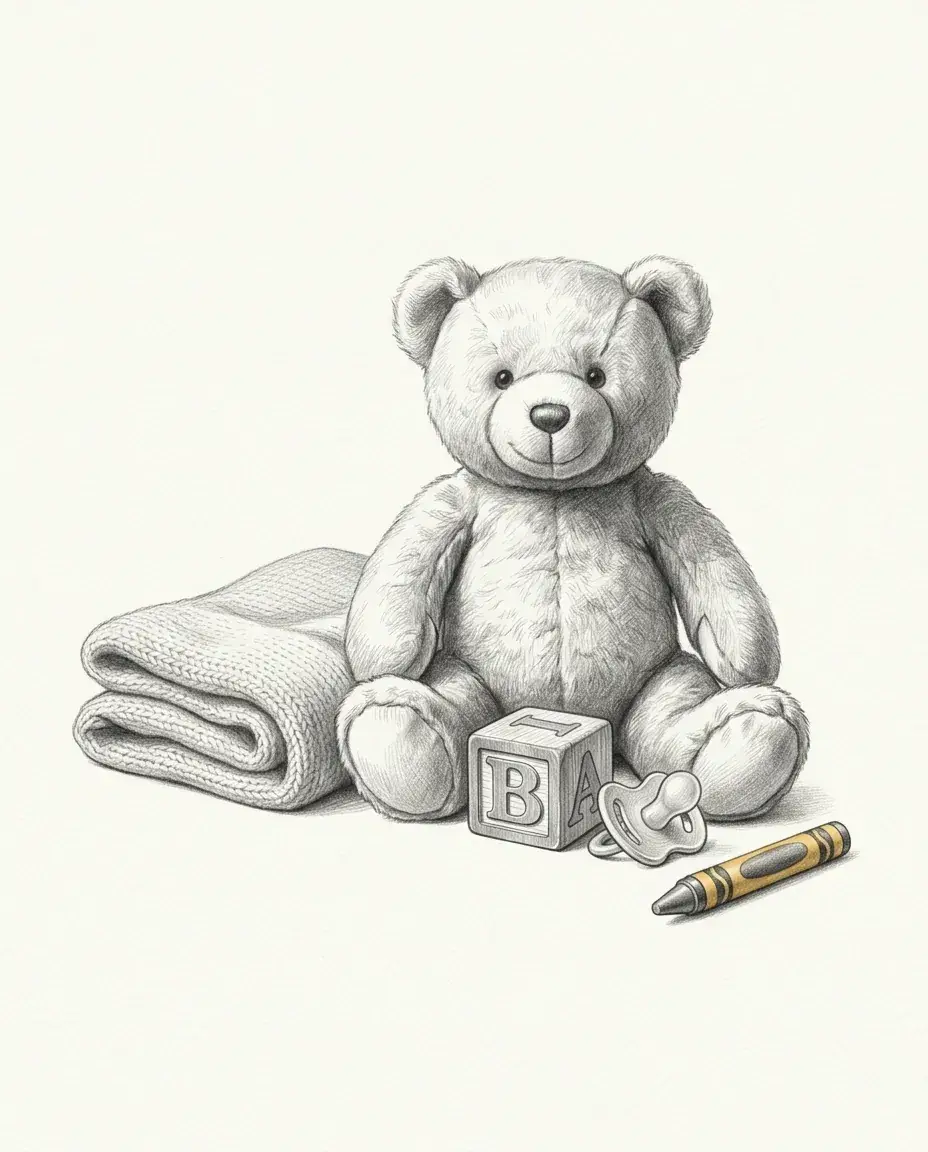
What the term covers. An ongoing relationship rather than an isolated scene: terms of address and pet names, a routine with bedtimes and small rules, praise and rewards, comfort objects and shared play, and a caregiver who checks in and carries responsibility for structure. The letters change with the roles: DDlg for Daddy Dom and little girl, MDlb for Mommy Dom and little boy, CGl (caregiver/little) as the gender-neutral form the community increasingly prefers. But the shape is the same in each, and the littlespace the little enters may or may not carry any erotic charge.
What the term does not cover. Everyone in a DDlg dynamic is an adult. "Daddy" is a form of address marking authority and care, used between adults in power-exchange vocabulary long before this acronym existed; it is not a reference to anyone's parent, and role-play that does invoke family framing is a separate interest catalogued as incest fantasy. "Little" names a headspace, not a child. No part of the dynamic involves minors or any interest in minors, and the forensic literature on age-play states as much directly. DDlg is also narrower than age-play, which spans many other age-based scenarios; it is not ABDL, the infant end of that range; and it is not the animal-persona play of pet play or the instinct-driven primal play.
How the word is used. DDlg is community shorthand, born on forums and image-led platforms through the 2000s and 2010s, and the lowercase lg is written deliberately, marking the asymmetry of the roles. It is not clinical vocabulary and appears in no diagnostic manual. Outside kink spaces the acronym is largely unfamiliar, and caregiver/little is the phrase most people reach for instead.
History & origins
DDlg is a young, vernacular formation layered on top of a much older practice, so its history splits cleanly into a clinical thread and a community thread.
Clinical lineage
- 1886: Krafft-Ebing's Psychopathia Sexualis and later sexology documented adults eroticising symbolic regression and infantile roles, the conceptual ancestor of modern age-play. A distinct strand, paraphilic infantilism (the "adult baby" interest), was described clinically in the twentieth century but is not a listed disorder in the DSM-5.
- Distinguishing from harm: forensic and clinical writers are explicit that age-play is not pedophilia. The forensic psychiatrist Anil Aggrawal and others stress that age-play concerns consenting adults and is "not related to pedophilia or any form of sex abuse"; caregiver/little dynamics are framed as being about care, not the re-enactment of abuse.
- 2019–2022: depathologisation: the ICD-11 narrowed paraphilic disorders to arousal patterns focused on non-consenting others or involving substantial distress or risk, and removed fetishism and sadomasochism from disorder status; Reed et al. (2016) set out the rationale. Benign adult caregiver/little dynamics therefore sit firmly outside the scope of disorder.
Cultural & subcultural evolution
The conceptual groundwork, adults adopting symbolic younger or caregiver roles, sits within the power-exchange traditions long discussed in BDSM literature and the organised leather/kink communities of the mid-twentieth century. The specific acronym-based vocabulary (DDlg, CGl, MDlb, "littlespace") is, by contrast, a product of internet-era communities, and its precise coinage is not well documented. Online forums, image-led platforms such as Tumblr, and kink-networking sites such as FetLife accelerated its spread through the 2000s and 2010s, giving the dynamic a recognisable name, an identifiable soft pastel aesthetic, and large dedicated groups. The first qualitative academic study of the subculture, Tiidenberg & Paasonen's "Littles" (2019), grew out of long-term ethnographic immersion in an online community and documents "littles" moving fluidly across a range of roles and self-identifications.
In practice
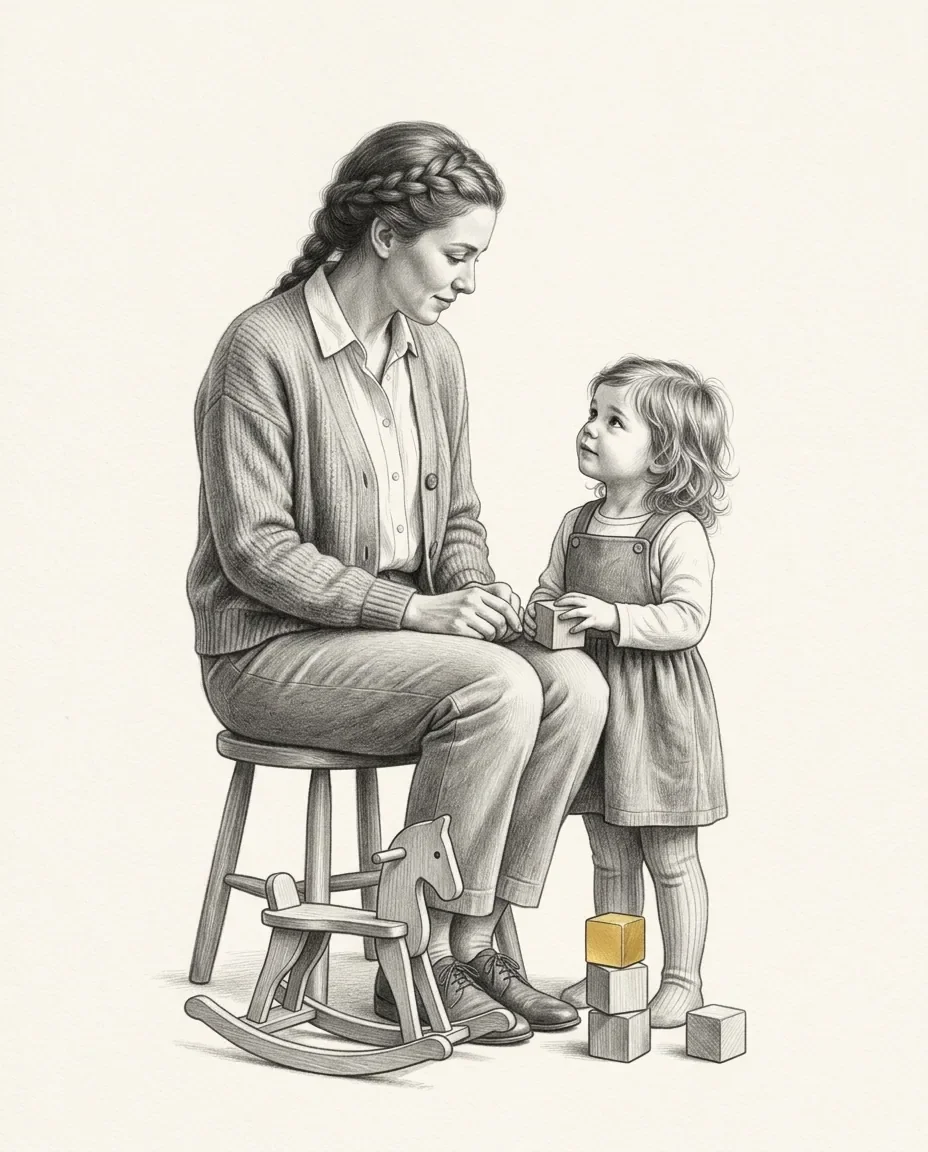
DDlg is expressed through ongoing roles rather than isolated scenes. The caregiver may set rules, offer praise and structure, and provide comfort, while the little enjoys play, affection, and the security of being looked after. Common elements include pet names, comfort objects, routines, and rewards. The blend of warmth and authority distinguishes it from purely disciplinary dynamics and from the financial focus of findom. Importantly, age-play (a conscious, often erotic role) is distinct from involuntary age regression as a coping or trauma response, though community vocabulary sometimes blurs the two.
Psychology
The dynamic appeals to needs for nurturing, attachment, structure, and stress relief. Entering little space can function as emotional regulation and a release from adult burdens, while caregivers often report fulfilment from protectiveness and gentle leadership. The interest can be strongly erotic, primarily emotional, or a mixture; Tiidenberg & Paasonen (2019) emphasise that for participants it "can be a preference, an interest, a like, a point of identification, and anything beyond." The evidence base is qualitative and thin, and the dynamic is not by itself a sign of any disorder.
Prevalence & culture
No survey isolates DDlg specifically, so prevalence is inferred. Lehmiller's (2018) survey of 4,175 Americans found BDSM and power-exchange fantasies to be near-universal, with caregiver/nurturing themes among them, which suggests the broad appetite the dynamic draws on is common even if the specific label is niche. Community footprint is the stronger signal: DDlg, CGl and littlespace groups on FetLife and adjacent platforms are large, and the aesthetic, merchandise and vocabulary have spread well into wider internet culture. Formal research remains sparse, so estimates lean on fantasy surveys and community presence rather than dedicated studies.
Safety, consent & law
The dynamic is legal and considered benign between consenting adults. Responsible practice centres on negotiation, ongoing and revocable consent, a clear separation of role-play from reality, and aftercare. A firm, non-negotiable boundary excludes any involvement of actual minors, which is illegal and harmful and is wholly distinct from this adults-only symbolic role-play.
Common questions
Does DDlg have anything to do with children?
No. Both partners are adults, the roles are symbolic, and no minor is involved in any part of it, a boundary the community treats as non-negotiable and states first whenever the dynamic is described. The attraction, where the dynamic is sexual at all, is to an adult partner. Involving an actual child is abuse, is criminal, and bears no relationship to this practice beyond a superficial resemblance of vocabulary.
Why is it called "Daddy" if it has nothing to do with family?
Because "Daddy" has served as an address of authority and protection in power-exchange vocabulary far longer than the acronym has existed, much as "Sir" or "Ma'am" does. It names a role, not a relation. The parallel forms make the point: Mommy Dom and the deliberately neutral CGl, for caregiver/little, describe the same structure under different labels. Role-play that genuinely invokes family relationships is a separate interest, incest fantasy.
What does it mean to be in little space?
Littlespace is the headspace the little shifts into: relaxed, playful, dependent, and relieved for a while of adult decision-making. People describe it as a rest rather than a performance. It can be quiet and drowsy or giggly and energetic, it can arise inside a caregiver dynamic or entirely alone, and it frequently carries no sexual content whatsoever.
Is DDlg always sexual?
No. Some couples treat it as a sexual dynamic, some as an emotional and domestic one with no erotic element, and many as both at different times. The qualitative research on the subculture found participants describing it as anything from a passing preference to a settled point of identification, which is a fair summary of how variable it is in practice.
Is DDlg abusive, or a red flag?
Not inherently, and the distinction is structural rather than aesthetic. In a functioning dynamic the little is an adult with full authority to renegotiate or end it at any moment, the rules are agreed in advance rather than imposed, and the caregiver's role is care rather than control for its own sake. Where those conditions fail (consent that cannot be withdrawn, isolation, financial control), the problem is abuse, and the caregiver framing is a cover for it.
Is DDlg a mental disorder?
No. ICD-11 narrowed paraphilic disorders to arousal patterns involving non-consenting people or causing substantial distress or risk, which puts consensual adult caregiver/little dynamics outside the scope entirely. Nothing about wanting to be looked after, or wanting to look after someone, is pathological. Where a person is distressed by their own interest, the distress is what deserves attention, not the dynamic.
What is the difference between DDlg and age-play?
Age-play is the umbrella term for any adult role-play organised around an enacted age difference, including school and mentor scenarios and the ABDL end of the range. DDlg is one particular relationship shape inside it, defined by pairing a nurturing authority figure with a little. It is the most visible branch online, which is why the two words are so often used as though they were interchangeable.
- Age-Play49/100Power, Roles & ScenariosA consensual role-play between adults in which one or more partners adopt an age different from their own, often a younger persona, within a negotiated dynamic. An umbrella term for many caregiver, mentor, or peer scenarios; it never involves actual minors.49
- Pony Play34/100Power, Roles & ScenariosA consensual adult role-play in which one partner adopts the persona, posture, and movement of a horse while another acts as handler, trainer, or rider. It is a specialized branch of animal role-play emphasizing equestrian tack and trained behaviour.34
- Findom41/100Power, Roles & ScenariosA consensual power-exchange dynamic in which a financial submissive derives arousal from sending money or gifts to a dominant who controls their spending. Such a submissive is called a "paypig" or "money slave". The surrender of resources, not any goods received, is the erotic charge.41
- Cuckolding66/100Troilism · Power, Roles & ScenariosA consensual erotic interest, sometimes termed troilism, in which a person is aroused by their committed partner's intimacy with someone else. The arousal can come from watching, knowing about, or imagining it. It ranges from humiliation play to affirming compersion.66
- Brat Play48/100Power, Roles & ScenariosA submissive style within power exchange in which one partner playfully resists, teases, or defies a dominant partner. That dominant, the "brat tamer", responds by reasserting control. Both the cheek and its taming are consensually scripted between adults.48
- Female-Led Relationship (FLR)48/100Power, Roles & ScenariosAn ongoing relationship structure in which the woman holds primary decision-making authority over shared life, from finances to household duties. Power is not confined to a single scene. Related to, but broader and more continuous than, femdom.48
DDlg is an initialism for 'Daddy Dom/little girl', with parallel community variants such as CGl ('caregiver/little') and MDlb ('Mommy Dom/little boy'). It is a vernacular acronym from internet-era kink communities rather than a clinical coinage.
age-play subtype · caregiver dynamic · nurturing power exchange
Prevalence is computed from the entry's cited population estimate. Rows marked ESTare indicative editorial estimates scored against a fixed anchor rubric, not measured quantities. Method & anchors: methodology.
Uncommon · ≈ 1 in 100
- 01Lehmiller (2018), Tell Me What You Want, survey of 4,175 Americansage-play and caregiver/nurturing power-exchange fantasies documented within the BDSM survey data
- 02FetLife, kink community group sizes (community-size proxy)large DDlg/CGl and littlespace community groups (community-size proxy)
- 03An A–Z of Kinks and Fetishes, GlamourDDlg/caregiver-little dynamic described as a recognized kink (lay framing)
- 04ICD-11, Paraphilic disorders (WHO)modern diagnostic framing limiting paraphilic disorders to non-consenting parties or significant distress, placing benign consensual adult caregiver/little dynamics outside the scope of disorder
- 05Age play, Wikipediadefinition of age-play and caregiver/little dynamics, and the forensic-psychiatry distinction (Aggrawal) that age-play involves consenting adults and is not related to pedophilia or abuse
- 06Tiidenberg & Paasonen (2019), Littles: Affects and Aesthetics in Sexual Age-Play, Sexuality & Culture 23(2):375-393qualitative ethnographic study of the littles/age-play subculture; participants move fluidly across roles and self-identifications
- 07ICD-11, Paraphilic disorders (World Health Organization)canonical ICD-11 browser; narrowed paraphilic disorders to non-consenting or distressing patterns, placing benign adult caregiver/little dynamics outside the scope of disorder
- 08Richard von Krafft-Ebing, Psychopathia Sexualis (1886)early sexological documentation of eroticised symbolic regression and infantile roles, the conceptual ancestor of modern age-play
- 09Paraphilic infantilism, Wikipediathe distinct adult-baby strand described clinically in the 20th century yet not a listed disorder in the DSM-5, contextualising age-play's clinical lineage
- 10Reed et al. (2016), Disorders related to sexuality and gender identity in the ICD-11, World Psychiatry 15(3):205-221rationale for removing fetishism and sadomasochism from disorder status and restricting paraphilic disorders to non-consenting or distressing patterns