Kitten Play
Added 22 Jun 2026 · Updated 22 Aug 2026
A consensual adult role-play in which a person adopts the persona, mannerisms, and relaxed headspace of a kitten or cat. A partner often acts as owner or caretaker within a gentle power-exchange dynamic. It is symbolic human role-play with no connection to real animals.
- Prevalence
- Uncommon
- Category
- Identity & Transformation
- Domain
- Sexual interest
- Confidence
- Medium confidence
- Status
- Consensual adult role-play, not a clinical paraphilia; benign between consenting adults and unrelated to any interest in real animals.
- Also known as
- kitten play, kittenplay, cat play, feline role-play, kitten petplay, neko play
- Added
- 22 Jun 2026
- Updated
- 22 Aug 2026
Featured in
Overview
Kitten play is a form of consensual adult animal role-play in which one participant takes on the persona, body language, and headspace of a kitten or cat, while a partner may act as an owner, handler, or caretaker. It sits alongside puppy play and pony play as one of the most recognisable branches of pet play, and it draws heavily on "cat-girl" or neko aesthetics. Like all pet play, it involves humans performing a symbolic animal role and has nothing to do with real animals or zoophilia. This article traces its lineage, how it is practised, why it appeals, and how common it is.
Examples
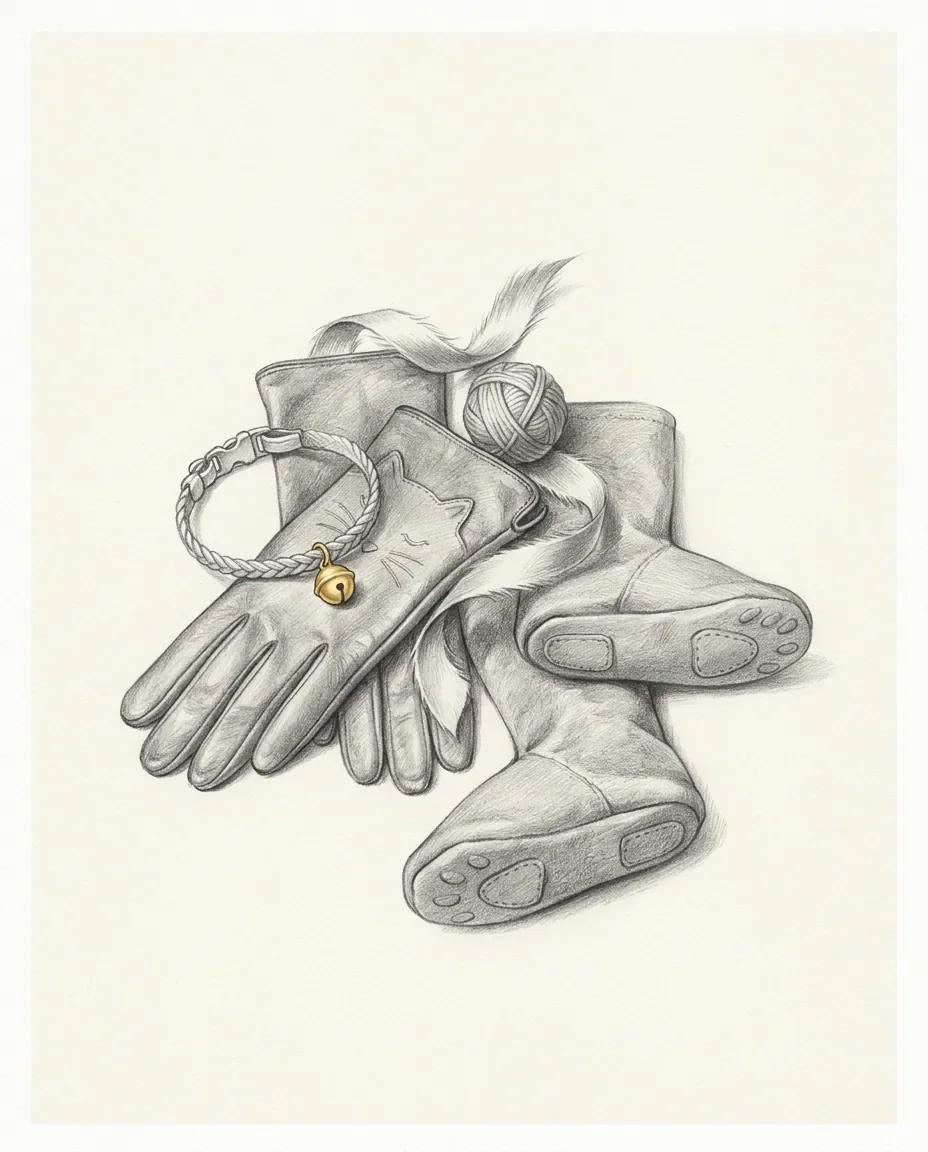
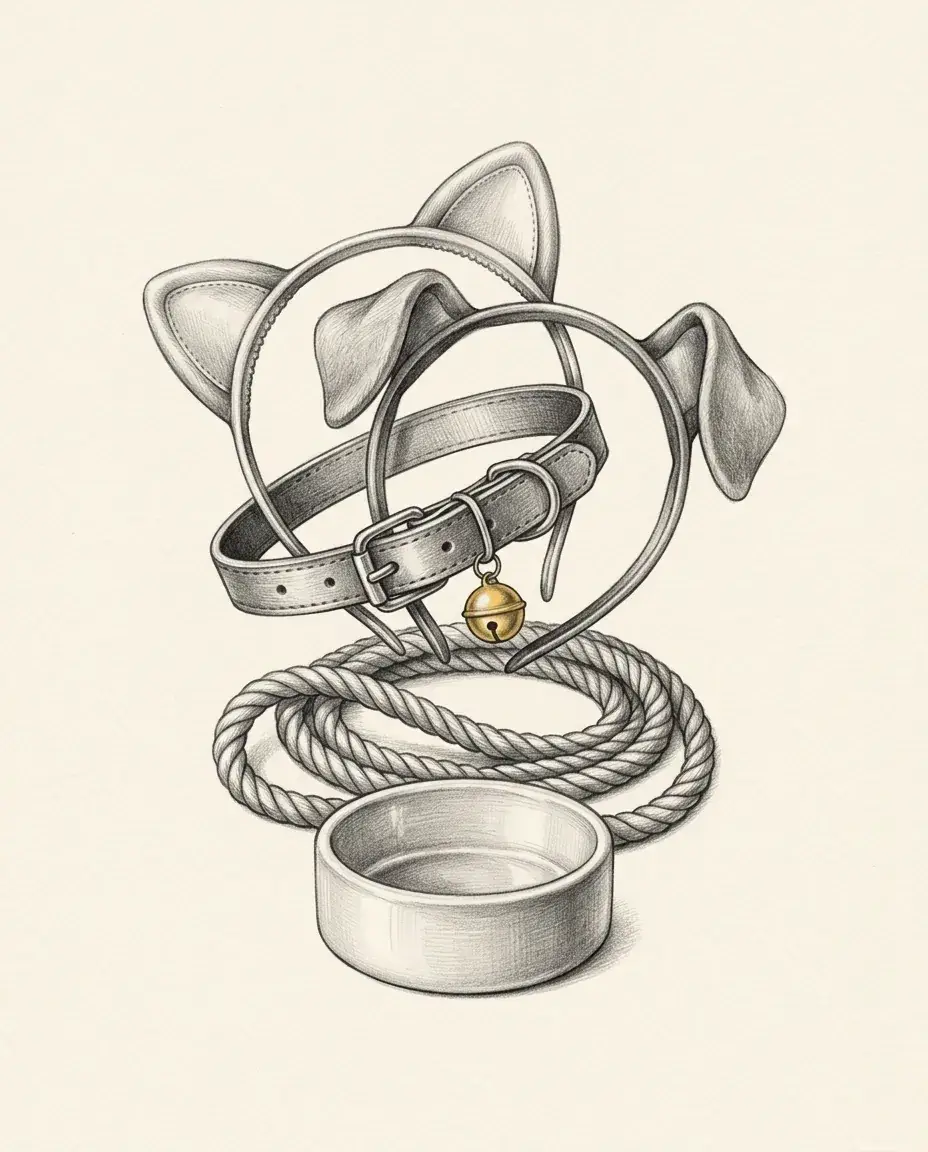
What the term covers. Behaviour first: purring, nuzzling, kneading, arching into a stroke, batting at a toy, curling up somewhere warm, and the flashes of playful aloofness that make the feline role distinctive. Gear supports the persona rather than defining it (a cat-ear headband, a plush tail, a bell collar, soft loungewear), and a session may be a quiet half-hour of being petted on a sofa, a negotiated power-exchange scene with a designated owner or handler, or a solitary retreat into the mindset practitioners call "kitten space."
What the term does not cover. It is one branch of pet play, alongside puppy play and pony play, all three of which sit under animal role-play. It is not furry fandom or fursuiting, which centre on an anthropomorphic character with a name and a history rather than on being an animal; not kemonomimi, which is appreciation of cat-eared characters rather than performing the role oneself; not therianthropy, a non-sexual identity in which a person experiences themselves as genuinely non-human; and not age-play or littlespace, which shift age rather than species. Above all it has nothing to do with real animals: zoophilia concerns actual animals and is a different subject entirely.
How the word is used. Vernacular, and community-coined. "Kitten play," "kittenplay," "cat play" and "neko play" are used interchangeably online; neko is simply the Japanese word for cat, and nekomimi names the cat-ear look the aesthetic borrows. None of these terms appears in DSM-5-TR or ICD-11, neither of which has any category for consensual role-play between adults.
History & origins
Kitten play has no single documented coiner or datable origin point; it is a plain-English descriptor that spread through online kink communities from the 2000s onward. Its history is best understood as two converging streams: the older fetish-subculture lineage of animal role-play, and the pop-culture lineage of the Japanese catgirl.
Fetish & subcultural lineage
- 1945–1956: the Animal roleplay record on Wikipedia credits John Willie's fetish magazine Bizarre with publishing some of the earliest images of animal play, especially pony play, establishing the visual grammar of human-as-animal performance.
- Late 20th century: puppy/pup play crystallised within the gay leather scene, giving pet play an organised community and an etiquette of collars, handlers, and "headspace."
- 2000s onward: kitten play emerged as a distinct, named branch, but unlike the leather-rooted pup community it took much of its imagery from anime and manga rather than from the dungeon. Wikipedia notes a defining feature of the kitten role: the cat "keeps some independence and, as part of the fantasy, might retaliate against the partner trying to tame/train them," distinguishing it from the more eager-to-please pup. An uncollared kitten persona may be called a "stray."
The neko / catgirl stream
The feline imagery kitten play borrows is far older than BDSM. As the Catgirl entry on Wikipedia records, the nekomusume ("cat girl") trope descends from Edo- and Shōwa-period tales of shapeshifting cat spirits such as the bakeneko and nekomata; postwar and later anime rehabilitated the figure into the cute, moe catgirl with ears and tail. The Japanese word neko ("cat") also became modern slang in some contexts, and the nekomimi (cat-ear) aesthetic crossed into Western fandom, furry culture, and ultimately kink, supplying kitten play with its recognisable look.
In practice
Expression is non-explicit and centres on persona and behaviour: purring, nuzzling, batting at toys, arching the back when stroked, kneading, or playful aloofness. Gear is part of the aesthetic and an aid to headspace: ears, a tail, a bell collar, and soft "cat-girl" clothing are common. Many practitioners describe entering a relaxed mental state often called "kitten space." Kitten play may be purely affectionate and playful, erotic, or a blend; as in BDSM generally, sex is not required, and many engage in it primarily for comfort, bonding, and stress relief.
Psychology
The appeal often lies in escapism, nurturing, and permission to set aside an adult self-image: participants frequently report feeling carefree, cute, and free of everyday pressures, a regression-and-relief dynamic that overlaps conceptually with age play. For the caretaker, the draw is typically care, affection, and a gentle power-exchange bond; the cat's built-in independence also leaves room for playful defiance reminiscent of brat play.
The closest research base is on puppy play, kitten play's better-studied sibling in the pet-play family. In the first academic study of the practice, Wignall & McCormack (2017) interviewed 30 UK participants and classified pup play as a kink and a form of "leisure sex," finding both sexual satisfaction and a distinctive relaxed "headspace," and no evidence for framing it as zoophilia. A later phenomenological study by Wignall, McCormack and colleagues (2019) reported that relaxation, therapy, and escape from the self were the most common themes, more so than sexual pleasure. Those findings map closely onto how kitten-play practitioners describe "kitten space," even though the feline role carries its own note of independence.
Clinically, the practice is regarded as a benign variation rather than a sign of any disorder: it involves a consenting adult performing a role, with no interest in actual animals, so it falls entirely outside the paraphilic categories of the DSM-5-TR and ICD-11, and is not classed as zoophilia, which concerns real animals. Direct empirical study of kitten play specifically is limited, so psychological accounts remain largely descriptive and community-derived.
Prevalence & culture
Kitten play is uncommon as a regular practice but visible within kink communities, supported by online groups, gear-makers, and a strong aesthetic overlap with anime catgirl and furry fandoms. Direct prevalence research is sparse, so estimates rely on general kink and fantasy surveys and on community-size proxies. Pet play sits within the broad family of dominance/submission and role-play interests that population surveys find to be common (Joyal, Cossette & Lapierre (2015) reported submission and domination fantasies in roughly 64.6% of women and 53.5% of men), and Justin Lehmiller's survey of 4,175 US adults in Tell Me What You Want (2018) likewise found role-play and pet-play themes among the fantasies people commonly report. Kitten play specifically is a niche subset of that umbrella, with FetLife groups serving as the main community-size proxy. Lay kink guides such as Glamour's A–Z of kinks routinely list pet and kitten play as recognised, non-pathological interests, and the List of paraphilias on Wikipedia places zoomimetic role-play in the landscape of kink terminology as consensual role-play rather than a disorder.
Safety, consent & law
The practice is legal and benign between consenting adults. Responsible practice emphasises negotiated limits, safewords, and aftercare, with attention to comfort, breathing, and circulation whenever collars or restraint are used, and care to exit "kitten space" gently. The roles are symbolic human role-play and are entirely separate from any contact with real animals.
Common questions
What is the difference between kitten play and puppy play?
Temperament, mostly. A pup persona is typically eager, boisterous and keen to please a handler; a kitten keeps its independence and may, as part of the game, resist being trained at all. The two also come from different places: puppy play grew up in the gay leather scene with its collars, handlers and public gatherings, while kitten play took its look from anime catgirl imagery and spread mainly online. The gear differs accordingly: hoods and knee pads on one side, ears, tails and bell collars on the other.
Does kitten play mean you are a furry?
No, though plenty of people are both. Furry fandom is organised around an anthropomorphic character (a fursona with a name, a species and sometimes a fursuit), and much of it is social and creative rather than sexual. Kitten play is about occupying an animal headspace as yourself, usually with a partner and usually in private. The overlap is real, and kemonomimi, the taste for human characters given cat ears and a tail, sits somewhere between the two.
Is kitten play connected to zoophilia?
No. Kitten play is adults performing a symbolic role for one another; no animal is involved at any point, and the academic work on its better-studied sibling puppy play found nothing to support the comparison. Zoophilia means a sexual interest in actual animals, which cannot consent, and it is a separate and legally serious matter. The two are connected only by the word "animal."
Do you need a partner to do kitten play?
No. Many people do it alone: putting on ears, curling up somewhere comfortable and letting the mindset arrive is a common way of using it for rest and stress relief. Where there is a partner, they usually take an owner, handler or caretaker role, which adds a gentle power-exchange layer and gives someone the job of bringing the kitten back out again afterwards. Both versions are entirely ordinary within the community.
What gear do you need to start kitten play?
None, strictly. Ears, a tail and a bell collar are aids to headspace rather than requirements, and people manage without any of them. If gear is used, the usual cautions apply: a collar should admit two fingers and should never be worn asleep or unsupervised, a worn tail should be body-safe and kept clean, and anything restricting movement should come off easily. Comfortable clothing and an undisturbed hour do more for the mindset than expensive equipment.
Is kitten play the same as being a "little" or DDlg?
No, though they can look similar from outside and some people do both. DDlg and littlespace involve shifting into a younger human headspace, with the caregiver dynamic and comfort objects that go with it. Kitten play shifts species rather than age: the persona is an animal, the mannerisms are feline, and no age is implied at all. Both are role-play between consenting adults, and both are unrelated to real children.
How do you come out of kitten space?
Gently and deliberately. Practitioners describe the state as absorbing, and dropping out of it abruptly can leave someone flat or tearful for a day or two afterwards, the same subdrop that follows other intense scenes. The usual routine is aftercare: removing gear slowly, water and food, warmth, quiet conversation in ordinary voices, and a check-in the following day. Where there is a partner, bringing the kitten back is understood to be their responsibility.
Is kitten play a fetish or a disorder?
Neither psychiatric manual has a category for it. DSM-5-TR and ICD-11 reserve paraphilic diagnoses for interests that cause the person distress or impairment, or that involve someone who has not consented, and consensual role-play between adults meets none of those tests. Whether an individual calls it a fetish, a kink or simply a way of switching off is a matter of personal vocabulary rather than of classification.
- Animal Role-Play50/100Zoomimetic Role-Play · Identity & TransformationA consensual adult role-play in which a person adopts the persona, body language, and headspace of an animal, most often a puppy, kitten, or pony. It is frequently set within a power-exchange dynamic with a handler. It is humans playing animals and has no connection to real animals or zoophilia.50
- Human Pup Play49/100Identity & TransformationA consensual adult role-play in which a participant adopts the mannerisms, body language, and headspace of a dog, usually a puppy. Participants are often paired with a handler or trainer. It is a form of animal role-play involving humans only and is explicitly distinct from any interest in real animals.49
- Age-Play49/100Power, Roles & ScenariosA consensual role-play between adults in which one or more partners adopt an age different from their own, often a younger persona, within a negotiated dynamic. An umbrella term for many caregiver, mentor, or peer scenarios; it never involves actual minors.49
- Collaring63/100Power, Roles & ScenariosThe consensual act of placing a collar on a submissive partner as a negotiated symbol of ownership, commitment, protection or submission. It takes place within a Dominant/submissive relationship and is often likened to a wedding band.63
- Brat Play48/100Power, Roles & ScenariosA submissive style within power exchange in which one partner playfully resists, teases, or defies a dominant partner. That dominant, the "brat tamer", responds by reasserting control. Both the cheek and its taming are consensually scripted between adults.48
- Adult Baby / Diaper Lover42/100Autonepiophilia · Identity & TransformationAutonepiophilia, also called paraphilic infantilism, is the interest in adopting the role, mindset or self-image of an infant or very young child. Combined with a diaper-focused interest it forms the broader ABDL (adult baby / diaper lover) identity. It is regression to a childlike role, not attraction to children.42
A plain-English descriptive term: "kitten play" simply names role-play built around the persona of a kitten or cat. The variant "neko play" borrows the Japanese word neko ("cat"), and the cat-ear look it draws on is the nekomimi aesthetic, reflecting the practice's strong overlap with anime catgirl (nekomusume) imagery rather than any clinical coinage.
animal role-play · pet play · power exchange · embodiment
Prevalence is computed from the entry's cited population estimate. Rows marked ESTare indicative editorial estimates scored against a fixed anchor rubric, not measured quantities. Method & anchors: methodology.
Uncommon · ≈ 1 in 100
- 01Animal roleplay, Wikipediadocuments kitten play as a recognised sub-type of consensual animal role-play, its defining 'independence/might retaliate' trait, the 'stray' label, gear, the John Willie Bizarre (1946-59) lineage, and the distinction from bestiality/zoophilia
- 02List of paraphilias, Wikipediaplaces animal/zoomimetic role-play in the broader landscape of kink terminology as consensual role-play rather than a disorder
- 03An A–Z of Kinks and Fetishes, Glamourlay framing of pet play and kitten play as a recognised, non-pathological kink
- 04FetLife, kink community group sizes (community-size proxy)community-size proxy for kitten play and broader pet-play groups
- 05Catgirl, Wikipediahistory of the nekomusume/catgirl and nekomimi (cat-ear) aesthetic from Edo/Showa bakeneko and nekomata tales to modern moe anime, the visual lineage kitten play borrows
- 06Bizarre (American fetish magazine), WikipediaJohn Willie's Bizarre (1945-1956) as a source of the earliest published animal-play imagery, the fetish-subculture root of pet play
- 07Joyal, Cossette & Lapierre (2015), What Exactly Is an Unusual Sexual Fantasy?, J. Sexual Medicine (PubMed)submission/domination and role-play fantasies are common (~64.6% of women, 53.5% of men), the broad umbrella within which kitten play is a niche subset
- 08Wignall & McCormack (2017), An Exploratory Study of a New Kink Activity: 'Pup Play', Archives of Sexual Behavior 46:801-811first academic study of pet/pup play (30 UK participants), classifying it as a kink and 'leisure sex' with a distinctive relaxed headspace and no evidence for zoophilia, the closest research base informing kitten play
- 09Wignall et al. (2019), The Psychology of Puppy Play: A Phenomenological Investigation, Archives of Sexual Behaviorrelaxation, therapy and escape from the self were the most common themes in pet/pup play, more than sexual pleasure, paralleling how kitten-play practitioners describe 'kitten space'
- 10Fantasy Island: Research Probes the Science of Sexual Desire (Lehmiller, Tell Me What You Want, 2018), Psychology TodayLehmiller's survey of 4,175 US adults, the largest US sexual-fantasy survey, situating role-play and pet-play among commonly reported fantasy themes
- 11DSM-5-TR, American Psychiatric Associationconsensual adult role-play with no interest in real animals falls outside paraphilic disorder categories and is distinct from zoophilia
- 12ICD-11, World Health OrganizationICD-11 paraphilic categories are limited to non-consent/risk; consensual zoomimetic role-play is not classified as a disorder