Balloon Fetish
Globophilia
Added 21 Jun 2026 · Updated 22 Aug 2026
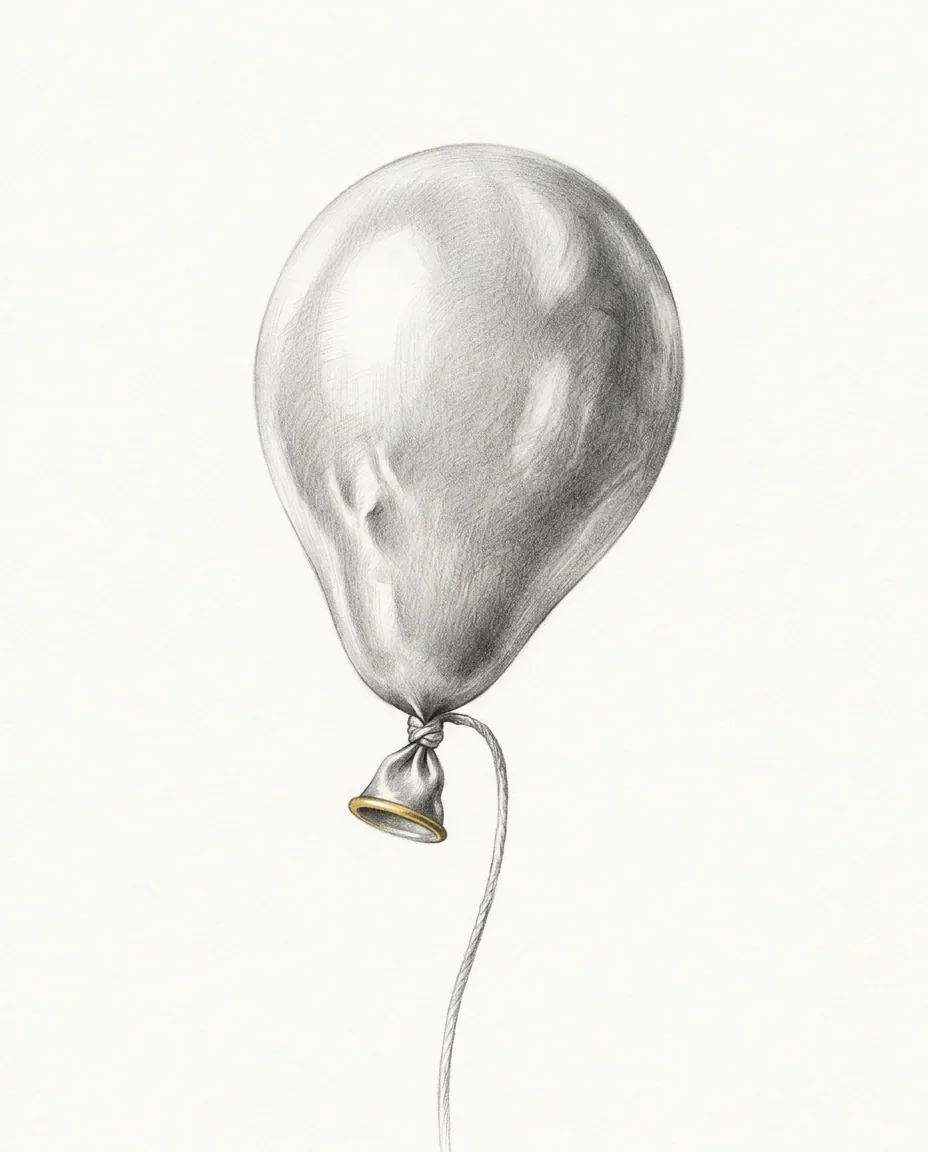
An erotic or playful fixation on balloons: their look, feel, smell, sound, inflation, and sometimes their popping. Enthusiasts call themselves looners; it is a benign novelty-object fetish related to latex and inflatable interests.
- Prevalence
- Rare
- Category
- Objects & Materials
- Clinical term
- Globophilia
- Domain
- Sexual interest
- Confidence
- Low confidence
- Status
- Niche novelty-object fetish; a normal variation, not a disorder unless it causes distress or impairment.
- Also known as
- balloon fetishism, looning, balloonophilia, globophilia, looner
- Added
- 21 Jun 2026
- Updated
- 22 Aug 2026
Featured in
Overview
Balloon fetishism, known within its own community as looning, is an erotic or playful fixation on balloons: their look, feel, smell, the drama of inflation, the tension of a stretched membrane, and for some the moment they burst. The pseudo-clinical synonyms globophilia and balloonophilia are folk coinages rather than terms drawn from the sexological literature, which never gave the interest a diagnosis of its own. For many enthusiasts the pull is as much about atmosphere and childhood nostalgia as about arousal. This article covers the subculture's documented origins, how the interest is expressed, its proposed psychology, and its modest prevalence.
Examples
What the term covers. Inflating a balloon and holding, sitting on or riding it; the squeak and give of stretched latex under the hands, its smell, and the sight of a membrane pulled taut; a preference for particular shapes, sizes, thicknesses and colours; and, for some enthusiasts, the burst itself. Much looning is solitary, and a good deal of it sits closer to atmosphere and nostalgia than to arousal, which is why the community's own accounts describe looning as an interest rather than as an act.
What it does not cover. Inflatable fetish covers vinyl pool toys, rings and rafts, a neighbouring but distinct class of object. Body inflation is a drawn fantasy of a body swelling, not of an object under pressure. A latex or rubber fetish is about material worn against the skin, where looning is about material stretched around air. Plushie fetish shares the object-comfort logic and none of the tension. And globophobia, a fear of balloons, is the opposite phenomenon, though the dread a non-popper feels at an imminent burst can look similar from the outside.
How the word is used. Looner is the community's own word, standardised in 1990s newsgroups and early websites, and it is the term members actually use. Globophilia and balloonophilia are folk pseudo-clinical coinages that appear in encyclopedic lists of paraphilias rather than in sexology; neither DSM-5-TR nor ICD-11 has any balloon category at all. Inside the subculture "she's a non-popper" is instantly meaningful and needs no gloss; outside it the sentence is opaque, which is a fair measure of how self-contained the vocabulary is.
History & origins
Balloon fetishism is a clear example of an interest whose history is a community history rather than a clinical one. The classic sexological catalogues never named it, it has no diagnostic label, and what documentation exists comes from the fan subculture and a thin scattering of recent academic and press attention.
Clinical lineage
The foundational surveys, Krafft-Ebing's Psychopathia Sexualis (1886) and Havelock Ellis's Studies in the Psychology of Sex, catalogued many object and material fetishes but a balloon-specific interest is absent from both. Neither the DSM-5-TR nor the ICD-11 recognises a balloon paraphilia; in modern reference works it sits under the broad heading of object and material fetishes, alongside interests in latex and rubber, and is treated as a benign variation rather than a disorder. Formal clinical research is scarce, a point the Wikipedia overview of balloon fetishism makes plainly when it notes that targeted study of looning remains limited.
Cultural & subcultural evolution
The subculture's own timeline is unusually concrete for so niche an interest:
- 1976: the first documented looner community is recorded, organised before the internet as a postal pen-pal club through which geographically scattered enthusiasts could correspond, per the Wikipedia account.
- 1990s: Usenet newsgroups and early dedicated websites let dispersed enthusiasts find one another at scale, and the shared vocabulary (looner, popper, non-popper) settled into common use.
- 2000s onward: forums and later social platforms grew the community into the recognisable subculture of today, with its own etiquette and norms. Many looners report first discovering that others share the interest through these online spaces.
- 2020s: the interest draws occasional journalistic notice. The adult-content marketplace Clips4Sale reported that "balloons" ranked as the single most-searched kink term in Utah, Switzerland, and Estonia during 2024, an illustration of how regional and unpredictable the interest's visibility can be (per the Wikipedia overview).
The community term looner is itself a plain coinage, simply balloon plus the agentive -er, rather than a Greek or Latin clinical construction.
In practice
Expression ranges from simple enjoyment of balloons in a sensual or festive setting to elaborate solo or partnered play. The community's central organising distinction is the relationship to popping:
- Non-poppers keep balloons intact and may feel genuine anxiety or dread at the prospect of a burst, engaging only in inflating, sitting, deflating, or holding.
- Semi-poppers generally avoid popping but find it thrilling under particular circumstances, such as an unexpected or partner-initiated burst.
- Poppers specifically relish the build-up and the sudden burst.
Many enthusiasts also collect or prefer particular shapes, sizes, colours, thicknesses, or materials, and the sensory dimension (the squeak of stretched latex, its scent, the resistance of a membrane under pressure) is often as important as any single act.
Psychology
Why balloons?
Looning is most often explained through associative learning: balloons are bound up with childhood, parties, celebration and excitement, and that early emotional charge can become eroticised. The latex element links it to the wider latex and rubber material interests and to inflatable objects more broadly. The pronounced popper and non-popper divide is itself telling: it shows how anticipation and the startle response can drive an erotic experience in opposite directions, with one group seeking the release of the burst and the other savouring sustained, unresolved tension. As with most niche object fetishes, the evidence base for any single mechanism is thin and largely inferential.
Prevalence & culture
How common is balloon fetishism?
It is a recognised but uncommon interest, and no robust population figure exists specifically for it. Large surveys instead bound it from above: Joyal & Carpentier (2017) found that object and material fetishism as a broad category is common in the general population, but a balloon-specific interest sits far below that umbrella. Community-size proxies such as dedicated FetLife groups and forums show an active but small population relative to mainstream kinks. Its wider cultural footprint comes mainly from periodic curiosity pieces in the press rather than from sustained mainstream visibility.
Safety, consent & law
The interest involves ordinary objects and consenting adults and is neither harmful nor illegal. The precautions are the everyday ones, and they are real rather than nominal. Latex allergy is the most likely problem and can range from a rash to a serious systemic reaction, which is why non-latex balloons exist. Fragments of a burst balloon are a well-documented choking hazard and should be cleared away rather than left underfoot, especially where children or pets are present. Helium and other inflation gases should never be inhaled: they displace oxygen in the lungs and can cause dizziness, fainting or asphyxia. These are general product-safety notes rather than features of the interest itself, which carries no inherent risk to anyone else. Within the community, the one genuinely interpersonal rule is that poppers and non-poppers want opposite things, so a balloon is never popped near someone without asking first.
Common questions
Is a balloon fetish normal?
It is uncommon but unremarkable. Neither DSM-5-TR nor ICD-11 recognises a balloon paraphilia, and modern reference works treat looning as a benign object interest rather than a disorder. Like any interest, it would warrant clinical attention only if it caused the person genuine distress or impairment. On its own it involves ordinary party supplies, no one else's body, and no one else's consent.
What does "looner" mean?
It is what people with a balloon interest call themselves: balloon plus the agentive -er, coined inside the community rather than by any clinician. It settled into standard use through 1990s Usenet groups and early dedicated websites, along with the rest of the subculture's vocabulary. The pseudo-Greek alternatives globophilia and balloonophilia are later folk constructions and are rarely used by looners about themselves.
Do all looners pop balloons?
No, and it is the community's main dividing line. Non-poppers keep balloons intact and often feel real dread at the prospect of a burst, taking their pleasure from inflation and sustained tension. Poppers want the release of the bang. Semi-poppers avoid it except in particular circumstances. Because the two ends of that spectrum want opposite things, popping someone else's balloon uninvited is treated as a genuine breach rather than a joke.
Is looning the same as a latex or inflatable fetish?
No, though they overlap. A latex fetish is about the material worn against the skin, and an inflatable fetish covers vinyl pool toys, rings and rafts. Looning is specific to balloons and to what happens as one fills, stretches and either holds or fails to hold its pressure. Plenty of looners have no interest in latex clothing whatsoever.
Is playing with balloons dangerous?
Only in the ordinary ways balloons are. Latex allergy is the most likely problem and can range from a rash to a serious reaction. Fragments of a burst balloon are a well-documented choking hazard, particularly around children and pets. Helium and other inflation gases should never be inhaled, because they displace oxygen in the lungs. Nothing about the interest itself adds risk to another person.
Is a balloon fetish always sexual?
Not necessarily. Many looners describe the appeal as sensory and nostalgic, in the smell and squeak of latex, the tension of a stretched membrane and the party associations of childhood, with arousal a variable part of the mix rather than the whole of it. Others experience it as straightforwardly erotic. Both descriptions are common in the community's own writing, and the interest does not require one answer.
- Inflatable Fetish21/100Inflatophilia · Objects & MaterialsAn erotic interest in inflatable objects such as pool toys, swim rings, rafts, and inflatable suits, valued for their vinyl material. Rounded shape, squeak and buoyancy, and the act of inflation are part of the appeal. It is a benign novelty-object fetish, closely tied to the balloon-fetish (looner) community.21
- Latex Fetish62/100Latex fetishism · Objects & MaterialsAn erotic interest in latex garments and their tight, glossy, second-skin qualities. A common material fetish involving the look, feel, sound, smell, and enveloping sensation of clinging latex on consenting adults.62
- Plushie Fetish30/100Plushophilia · Objects & MaterialsAn erotic or affectional interest in plush toys and stuffed animals, valued for their softness, comfort, and anthropomorphic forms. Clinically a subgenre of object sexuality (plushophilia), it is a benign niche interest often adjacent to furry culture.30
- Denim Fetish27/100Denim Fetishism · Objects & MaterialsAn erotic or aesthetic interest centred on denim garments, most often jeans, but also jackets, skirts and overalls. They are valued for their coarse texture, body-shaping fit, scent, and rugged, casual associations. It is a common-variation material and clothing fetish, not a clinical disorder.27
- Satin Fetish31/100Objects & MaterialsAn erotic attraction to satin centred on its smooth, slippery feel and characteristic sheen, a benign soft-textile material interest. It is not a clinically defined paraphilia, and it overlaps closely with silk and other shiny-fabric preferences.31
- Vacuum Bed / Encasement Fetish27/100Objects & MaterialsAn interest in being sealed inside an airtight latex envelope from which the air is pumped out, shrink-wrapping and immobilising the body. It sits within total-enclosure fetishism and is a higher-risk form of bondage and sensory deprivation.27
The community term "looner" is simply "balloon" plus the agentive suffix "-er"; it was standardised in 1990s online communities and is not a clinical coinage. The pseudo-clinical synonyms "globophilia" and "balloonophilia" graft Latin globus / English "balloon" onto Greek -philia ("love, attraction"), literally "love of balloons."
inflatables · novelty objects · popping vs. non-popping
Prevalence is computed from the entry's cited population estimate. Rows marked ESTare indicative editorial estimates scored against a fixed anchor rubric, not measured quantities. Method & anchors: methodology.
Rare · ≈ 1 in 1,000
- 01List of paraphilias, Wikipediadefinition/existence of balloon fetishism (looning) as an object-focused interest
- 02Joyal & Carpentier (2017), The Prevalence of Paraphilic Interests and Behaviors in the General Population, J. Sex Research 54(2):161-171general-population object/material fetishism interest (~44%) sets the broad umbrella this niche falls far below
- 03FetLife, kink community group sizes (community-size proxy)community-size proxy: an active but small looner community relative to mainstream kinks
- 04Balloon fetishism, Wikipediahistory of the looner subculture, the 1976 first documented pen-pal community, popper / semi-popper / non-popper distinction, online-community origins, the Clips4Sale 2024 regional search-ranking, and the note that clinical research is limited
- 05Psychopathia Sexualis, WikipediaKrafft-Ebing's 1886 sexological catalogue, which documented object/material fetishes but did not name a balloon-specific interest
- 06Studies in the Psychology of Sex, WikipediaHavelock Ellis's early survey of object fetishism, part of the clinical lineage that never singled out balloons
- 07DSM-5-TR, Paraphilic Disorders (American Psychiatric Association, 2022)no recognised balloon paraphilia; benign object fetish absent distress or impairment
- 08ICD-11, Paraphilic disorders (World Health Organization)no diagnostic category for balloon fetishism in the international classification