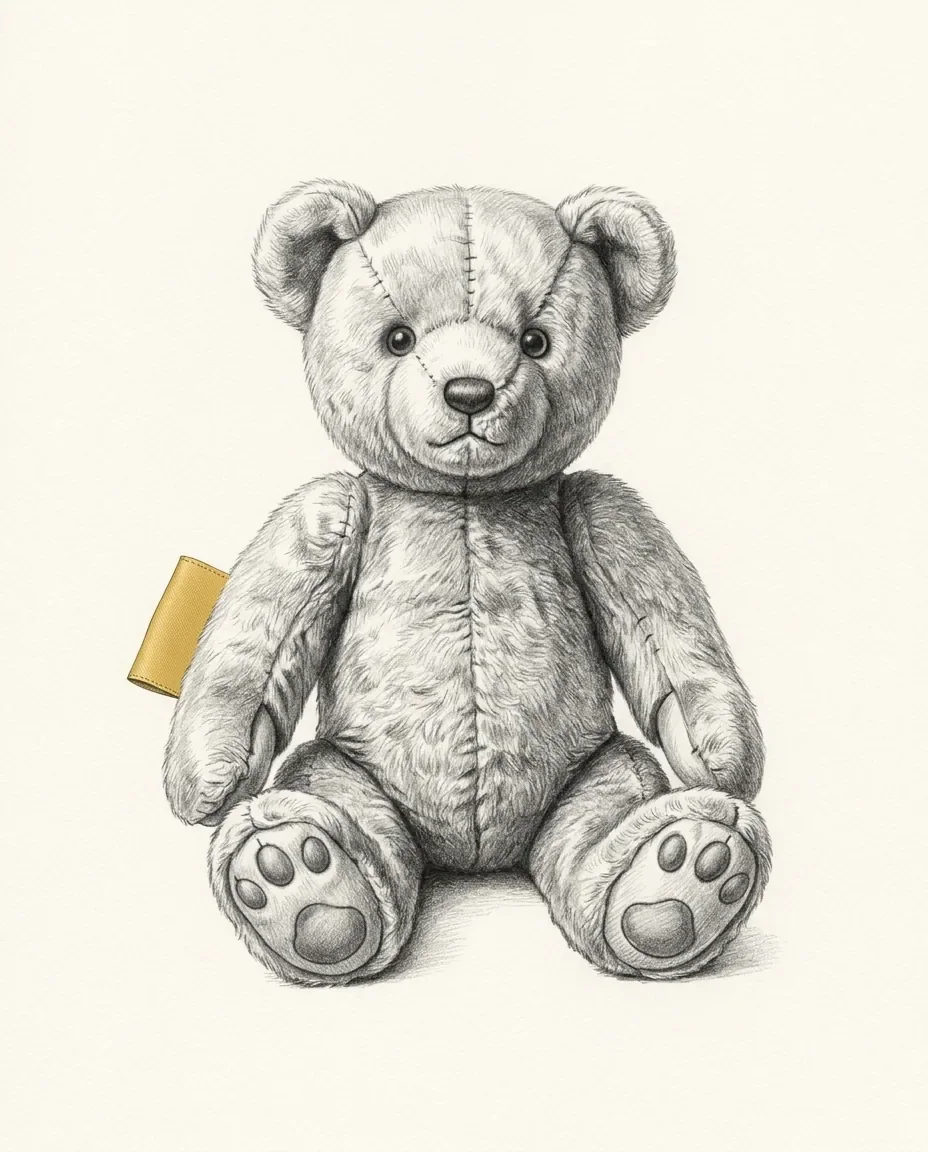
Plushie Fetish
Plushophilia
Added 21 Jun 2026 · Updated 22 Aug 2026
An erotic or affectional interest in plush toys and stuffed animals, valued for their softness, comfort, and anthropomorphic forms. Clinically a subgenre of object sexuality (plushophilia), it is a benign niche interest often adjacent to furry culture.
- Prevalence
- Rare
- Category
- Objects & Materials
- Clinical term
- Plushophilia
- Domain
- Sexual interest
- Confidence
- Low confidence
- Status
- Niche soft-object interest (plushophilia); a normal variation, not a disorder absent distress or impairment.
- Also known as
- plushophilia, plush fetishism, stuffed-animal fetish, plush-toy fetish, autoplushophilia
- Added
- 21 Jun 2026
- Updated
- 22 Aug 2026
Featured in
Overview
Plush fetishism, or plushophilia, is an interest in plush toys and stuffed animals ("plushies") as objects of arousal, affection, or comfort. The appeal often centres on the soft, huggable texture of the materials, the cuddly anthropomorphic forms, and the emotional warmth and security plush objects evoke: with arousal, where present, layered onto strong feelings of comfort and attachment. It is usually described as a subgenre of object sexuality rather than a classical clinical paraphilia, and many who identify with it foreground affection and softness over anything explicitly sexual. This article traces the term's origins in 1990s internet culture, how the interest is expressed, the psychology proposed for it, and its small but visible subcultural presence.
Examples
What the term covers. Keeping, collecting, commissioning or customising plush toys as objects of affection and comfort, with no sexual element at all, which is how many people using the label describe it; a bond with one particular plush companion carried from childhood into adult life; and an explicitly erotic interest in the plush object, which is the sense plushophilia was coined for. Autoplushophilia, in Anne Lawrence's terminology, names the inward-facing variant: arousal at the thought of being a plush creature oneself rather than at the toy in front of you.
What the term does not cover. Furry fandom is a community organised around anthropomorphic characters, and most furries are not plushophiles; the 2001 Vanity Fair coverage described below is the main reason the two are still conflated. Fursuiting is wearing a costume to embody a character, not an interest in a toy. Fur fetish attaches to the material, real or faux, rather than to a cuddly figure, and texture fixation is the non-sexual pleasure of handling a soft surface. Statue and doll interests centre on lifelike human forms, and dollification is a person being treated as a doll. In littlespace and DDlg a stuffed animal is a prop of the headspace rather than the object of the interest, and collecting is the non-sexual completionist drive that sometimes takes plush as its subject.
How the word is used. Plushophilia is community vocabulary wearing an academic-looking suffix: it was coined online in the early 1990s, not in a clinic, and ursusagalmatophilia is the rarer, narrower coinage for teddy bears specifically. Neither term appears in DSM-5-TR or ICD-11, which describe object-focused arousal only in general terms. In ordinary use "plushie" simply means a soft toy and carries no erotic sense whatever.
History & origins
A community-coined, internet-era term
Unlike most fetishes that carry a 19th-century Greco-Latin clinical name, plushophilia is a recent, community-coined word with a traceable digital paper trail. According to the Plushophilia article on Wikipedia, some of the earliest surviving online mentions appear in 1993 on the furry Usenet newsgroup alt.fan.furry, and two dedicated newsgroups followed in 1994: the German-language de.alt.fan.pluesch (created 4 January 1994) and the English-language alt.sex.plushies (created 9 August 1994). The word itself fuses "plushie" with the Greek-derived suffix -philia ("love, affinity"); "plush" reaches English through the French peluche, ultimately from Latin pilus, "hair."
Clinical and sexological framing
Plushophilia does not appear in the historical sexological canon, it is absent from Krafft-Ebing's Psychopathia Sexualis (1886) and from Havelock Ellis's surveys, and it is not a named diagnosis in the DSM-5-TR (2022) or the ICD-11, both of which treat object-focused arousal only under the broad heading of fetishistic interest and reserve any diagnosis for cases marked by distress, impairment, or harm. The most cited scholarly engagement is the sexologist Anne Lawrence's Erotic Target Location Errors (Lawrence, 2009, Journal of Sex Research 46(2–3):194–215), which proposed the related concepts of autoplushophilia (arousal at the thought of being a plush creature oneself) and fursuitism, situating the topic within object-sexuality and erotic-target theory rather than treating it as a disorder.
Cultural & subcultural evolution
Public awareness was heavily shaped, and distorted, by George Gurley's 2001 Vanity Fair article on the furry hobby, which was widely criticised by furries for portraying the fandom as inherently sexual and for over-associating it with plushophilia; the Wikipedia article notes the interest has "erroneously been described as a common occurrence within the furry fandom" as a result. Within the fandom, plushophilia (alongside "pool-toy" interests) was one of the practices opposed by the late-1990s Burned Fur movement, which sought to distance furry from overtly sexual sub-interests. From the 2010s the topic became less obscure online, with dedicated communities such as the subreddits r/plushlove and r/plushophile giving it a small, self-identified presence. A specialised term, ursusagalmatophilia, is sometimes used for an attraction focused specifically on teddy bears.
In practice
Expression ranges widely, from a tender, comfort-oriented bond with plush companions to a more explicitly erotic interest. Practitioners may collect, commission, customise, or simply cuddle plush figures, and many keep the interest entirely private. There is notable overlap with furry fandom, since both engage with anthropomorphic animal characters, though the two are distinct: not all furries are plushophiles, and not all plushophiles are furries.
Psychology
Plushophilia is frequently linked to the comfort and tactile associations of soft objects, sometimes connected to transitional-object attachment in early childhood (the classic "security blanket" or stuffed companion), alongside ordinary associative learning in which softness, warmth, and safety become eroticised. Lawrence's erotic-target-location framework adds a further dimension, distinguishing those drawn to plush objects from those who fantasise about being one. The anthropomorphic, character-driven element separates it from purely material soft-texture interests such as a fur fetish or fabric fetish, where the appeal is the substance itself rather than a cuddly persona. The evidence base remains thin: there are no dedicated prevalence studies and most discussion is theoretical or community-derived.
Prevalence & culture
It is a small interest with a recognisable subcultural identity and active online communities, especially within and adjacent to furry fandom, but low overall prevalence and very limited dedicated research. No population survey measures plushophilia directly; it sits within the much larger category of object/material fetishism, which is itself common, in Joyal & Carpentier (2017) fetishism exceeded the threshold of statistical unusualness for both sexes, though that figure aggregates many interests and should not be read as a rate for plush objects specifically. Cultural visibility is modest and often filtered through coverage of furry conventions and online communities.
Safety, consent & law
The interest involves toys and consenting adults and is not harmful or illegal. As with any object-focused interest, the only relevant considerations are personal privacy and ordinary mutual respect between adults; it is regarded clinically as a normal variation absent distress or impairment. Related benign interests include the inflatable fetish, which similarly centres on soft, yielding objects.
Common questions
Is a plushie fetish the same as being a furry?
No. Furry fandom is a creative community built around anthropomorphic animal characters, and for most members it has nothing to do with plush toys or with sex. The two get confused because both involve animal-shaped characters and because early press coverage, notably a 2001 Vanity Fair article, presented plushophilia as typical of the fandom. Some people are both; most are one or neither.
Is a plushie fetish always sexual?
No, and many who use the label say the sexual element is minor or absent. The reported appeal is usually led by softness, warmth, safety and attachment, with arousal layered on where it appears at all. That is unusual among interests catalogued as fetishes, and it is why the term sits awkwardly: it covers a spectrum running from tender companionship through to something explicitly erotic.
Is plushophilia a disorder?
No. It is named in neither DSM-5-TR nor ICD-11, which treat object-focused arousal only in general terms and reserve any diagnosis for cases involving distress, impairment or harm. Since the interest involves toys and no other person, it clears the usual concerns easily. Clinically it counts as a normal variation, and the distress people do report is generally about anticipated ridicule rather than the interest itself.
Is it normal for an adult to sleep with a stuffed animal?
Yes, and it is common. Attachment to a soft companion object begins in early childhood, where it is well described as transitional-object attachment, and there is nothing pathological about it persisting into adult life. For most adults it is a comfort habit with no erotic dimension and no relation to plushophilia, which is a distinct and much rarer interest.
Is a plushie fetish harmful or illegal?
Neither. It involves manufactured objects and consenting adults, so there is no other party whose consent could be at issue and nothing any law addresses. The practical considerations are ordinary ones: privacy, and the same mutual respect any preference calls for once a partner is involved. The real cost people report is social stigma rather than any consequence of the interest.
Should I tell a partner about a plushie fetish?
That depends on how much room it takes up. If it is a private comfort that never touches a shared bed, it is on a par with any other solitary preference and needs no disclosure. If plush objects are something you want present, or a partner will notice and misread, saying so plainly is easier than being found out. Framing it as affection and texture, which is what most people report, usually lands better than the word fetish.
- Fur Fetish32/100Doraphilia · Objects & MaterialsAn erotic interest in fur, animal skins, or hides, real or faux, valued for their softness, warmth, scent, and sensory feel against the body. Clinically termed doraphilia, it is generally a benign material fetish rather than a disorder.32
- Furry Fandom54/100Identity & TransformationMembership in the furry fandom, the community organised around anthropomorphic animal characters that blend human and animal traits. It spans fan art, writing, costuming and conventions and centres on creating a character, a fursona. Most participation is social and creative; an erotic dimension is optional for some.54
- Inflatable Fetish21/100Inflatophilia · Objects & MaterialsAn erotic interest in inflatable objects such as pool toys, swim rings, rafts, and inflatable suits, valued for their vinyl material. Rounded shape, squeak and buoyancy, and the act of inflation are part of the appeal. It is a benign novelty-object fetish, closely tied to the balloon-fetish (looner) community.21
- Balloon Fetish29/100Globophilia · Objects & MaterialsAn erotic or playful fixation on balloons: their look, feel, smell, sound, inflation, and sometimes their popping. Enthusiasts call themselves looners; it is a benign novelty-object fetish related to latex and inflatable interests.29
- Satin Fetish31/100Objects & MaterialsAn erotic attraction to satin centred on its smooth, slippery feel and characteristic sheen, a benign soft-textile material interest. It is not a clinically defined paraphilia, and it overlaps closely with silk and other shiny-fabric preferences.31
- Denim Fetish27/100Denim Fetishism · Objects & MaterialsAn erotic or aesthetic interest centred on denim garments, most often jeans, but also jackets, skirts and overalls. They are valued for their coarse texture, body-shaping fit, scent, and rugged, casual associations. It is a common-variation material and clothing fetish, not a clinical disorder.27
From English "plushie" (a plush toy; "plush" via French peluche, ultimately Latin pilus, "hair") plus the Greek-derived suffix -philia (philia, "love, affinity"): literally "love of plush." A community-coined term traceable to early-1990s furry internet subcultures (the newsgroup alt.fan.furry, 1993) rather than the classical sexological literature.
soft objects · toy objects · furry-adjacent
Prevalence is computed from the entry's cited population estimate. Rows marked ESTare indicative editorial estimates scored against a fixed anchor rubric, not measured quantities. Method & anchors: methodology.
Rare · ≈ 1 in 1,000
- 01List of paraphilias, Wikipediadefinition/existence of plushophilia
- 02Joyal & Carpentier (2017), The Prevalence of Paraphilic Interests and Behaviors in the General Population, J. Sex Research 54(2):161-171broad object/material fetishism interest (~44%) as the larger category this rare sub-fetish sits within
- 03FetLife, kink community group sizes (community-size proxy)community-size proxy: small but distinct plushie/furry-adjacent groups
- 04Plushophilia, Wikipediadocumented term history: 1993 alt.fan.furry mention, de.alt.fan.pluesch (Jan 1994) and alt.sex.plushies (Aug 1994) newsgroups, Gurley 2001 Vanity Fair article, Burned Fur, ursusagalmatophilia (teddy bears), autoplushophilia
- 05alt.sex.plushies, WikiFur, the furry encyclopediacreation of the English-language alt.sex.plushies newsgroup (9 August 1994) and its role as an early plushophile community
- 06Object sexuality, Wikipediaplushophilia framed as a subgenre of object sexuality / objectophilia
- 07Lawrence (2009), Erotic Target Location Errors, Journal of Sex Research 46(2-3):194-215scholarly framing of plushophilia within erotic-target theory; proposes autoplushophilia and fursuitism
- 08DSM-5-TR, Paraphilic Disorders (American Psychiatric Association, 2022)object-focused arousal recognised only as fetishistic interest; no plushophilia diagnosis absent distress/impairment
- 09ICD-11, Paraphilic disorders (World Health Organization)no diagnosis for consensual object-focused interest absent distress or harm
- 10Psychopathia Sexualis, Wikipediaabsence of plushophilia from the historical sexological canon (Krafft-Ebing, 1886)