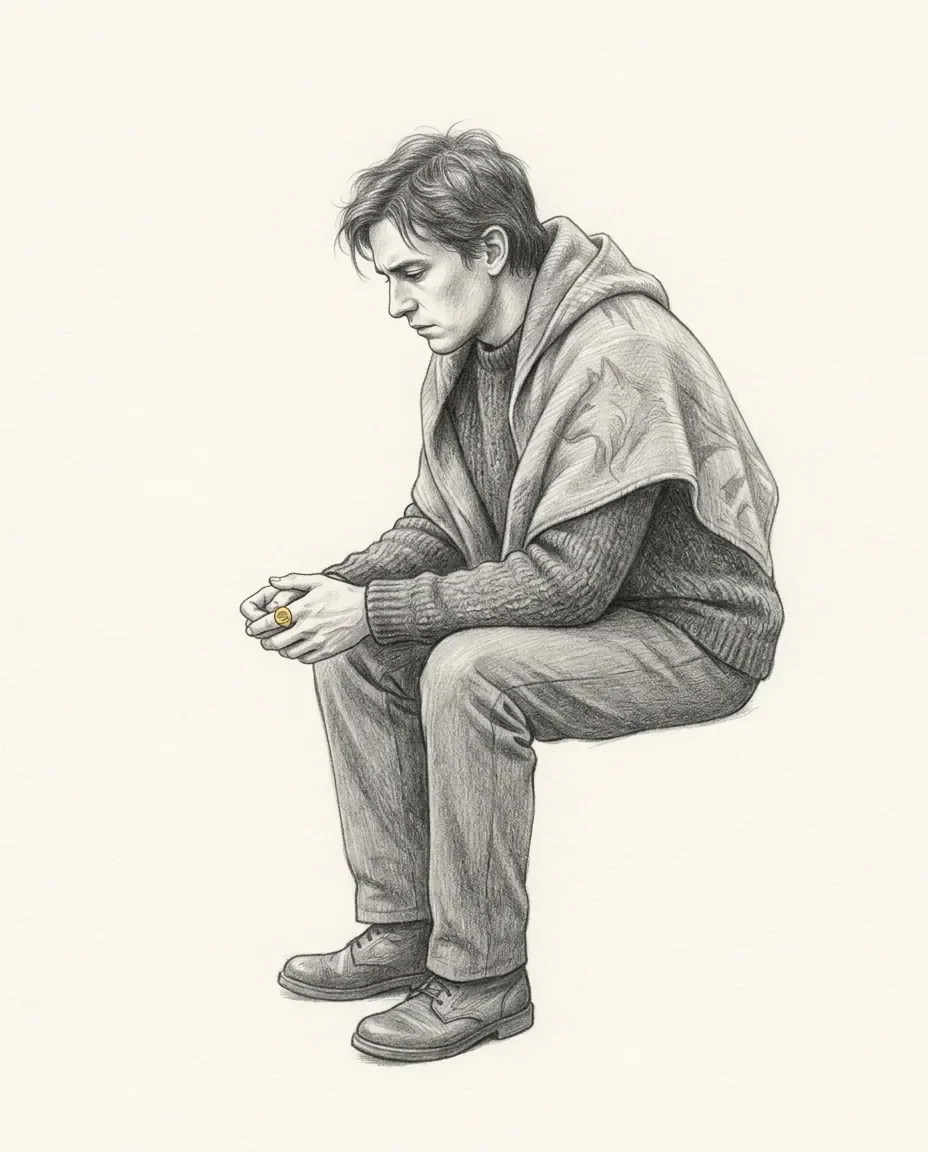
Clinical Lycanthropy
Clinical lycanthropy
Added 26 Jul 2026 · Updated 22 Aug 2026
A rare psychiatric syndrome defined by the delusional belief that one is transforming, has transformed, or can transform into a non-human animal. It is not a kink or a sexual interest; it is a symptom of psychosis, most often schizophrenia, bipolar disorder or severe depression.
- Prevalence
- Very rare
- Category
- Identity & Transformation
- Clinical term
- Clinical lycanthropy
- Domain
- Non-sexual interest
- Confidence
- Low confidence
- Status
- A rare, well-documented psychiatric symptom, not a standalone DSM-5-TR or ICD-11 diagnosis; treated as an idiosyncratic delusional theme occurring within an underlying psychotic, mood or organic disorder.
- Also known as
- lycanthropy delusion, zoanthropy, werewolf delusion, kynanthropy
- Added
- 26 Jul 2026
- Updated
- 22 Aug 2026
Overview
Clinical lycanthropy is not a kink, a fetish or a lifestyle identity. It is a rare psychiatric syndrome: a delusional belief, occurring during a psychotic episode, that one is transforming into, has transformed into, or is capable of transforming into a non-human animal. It appears here for clinical completeness, as the diagnostic counterpart to therianthropy, the non-delusional subcultural identity with which it is often confused. The two are not the same phenomenon and should never be conflated: a therian retains full awareness that their body is human, while a person in a lycanthropic episode has lost that reality-testing altogether.
Definition & scope
The working definition in use today comes from the founding modern case series: a patient qualifies if, during at least part of the episode, they report the feeling of being an animal, and if they display animal-like behaviour such as howling, growling or crawling on all fours (Keck et al., 1988). Both limbs matter: a metaphorical remark about feeling like a beast is not the syndrome, and neither is theatrical behaviour without the accompanying belief.
The scope is broader than the wolf the name advertises. Because published cases describe transformation into cats, horses, birds, tigers, hyenas, frogs, bees and snakes as often as into canines, the umbrella term zoanthropy is frequently preferred, with kynanthropy reserved for the specifically canine variant. What the entries in this literature share is not the animal but the structure: a fixed, unshakeable belief in one's own bodily transformation, held with full conviction and immune to contrary evidence, arising in the course of a psychotic episode.
Neither the DSM-5-TR nor the ICD-11 lists clinical lycanthropy as a distinct diagnosis. It is treated as an idiosyncratic symptom or delusional theme that can appear within an existing psychotic, mood or organic disorder, in much the same way as other rare delusional misidentification syndromes; the diagnosis recorded in a patient's file is the underlying illness, with lycanthropy noted as the content of the delusion rather than as the disorder itself.
Examples
What the term covers. Published cases in which a patient states, during a psychotic episode, that their body is turning into an animal's (fur growing, teeth or nails lengthening, the sensation of running on four legs) and acts the belief out by howling, growling, crawling or biting. The animal is usually a wolf or a dog in Western case reports, but the literature also records cats, horses, birds, tigers, hyenas, frogs, bees and snakes, which is why zoanthropy is often preferred as the umbrella term and kynanthropy reserved for the canine variant.
What the term does not cover. Therianthropy is a subcultural identity held with full awareness that one's body is human, and otherkin is its non-animal counterpart; neither involves a delusion, and reading either as clinical lycanthropy is the category error this entry exists to prevent. Pet play and pony play are consensual role-play, furry fandom is a fan community organised around anthropomorphic characters, and a transformation fetish is an erotic fascination with the idea of changing form, none of them a belief that it is happening. Body integrity dysphoria is a felt mismatch about one's own human body rather than a conviction of changing species, and clinical vampirism is a separate and equally contested case-report label. The folkloric werewolf is not the syndrome either; it only supplies the name.
How the word is used. It is clinical vocabulary used descriptively, and it names the content of a delusion rather than a diagnosis. Neither DSM-5-TR nor ICD-11 lists it, so a chart records the underlying illness (schizophrenia, psychotic depression, bipolar disorder) with lycanthropy noted as the theme the delusion took. Journalistic use as a synonym for werewolf folklore, or as shorthand for any animal-related identity, has no clinical warrant and reverses what the case literature shows.
History & origins
The name borrows the Greek lykos (wolf) and anthropos (human), the same root behind the folkloric werewolf, but clinicians distinguish the myth from the medical picture. Early physicians already read animal-transformation beliefs as a form of melancholia rather than sorcery: in the fourth century the Greek physician Oribasius, personal physician to the emperor Julian, attributed lycanthropic behaviour to an excess of black bile, and centuries later the physician Johann Weyer made the same humoral argument in 1563 to push back against the era's demonological explanations. Even King James VI of Scotland, in his 1597 treatise Daemonologie, allowed that some professed werewolves were suffering from "a natural superabundance of melancholy" rather than genuine transformation, according to the summary of this history on Wikipedia's clinical lycanthropy article. Some scholars have retrospectively read older sources through the same lens, including the neurologist Andrew Larner's suggestion that Circe's transformation of Odysseus's crew reflects an early literary encounter with the idea, and the theologian Catherine Clark Kroeger's proposal that the Book of Daniel's account of Nebuchadnezzar living as a beast describes something similar.
The modern case literature
The syndrome entered systematic psychiatric study with Keck, Pope, Hudson, McElroy and Kulick's 1988 paper in Psychological Medicine, which reviewed twelve cases seen at McLean Hospital since 1974 and proposed two working criteria: the patient reports feeling like an animal during at least part of the episode, and the patient displays animal-like behavior such as howling, growling or crawling. Episodes in that series ranged from a single day to thirteen years and were tied to severe psychosis generally rather than to any one diagnosis; the authors concluded that lycanthropy is "a rare but colourful presentation of psychosis," not a disorder in its own right. A larger review by Garlipp and colleagues (2004) in Acta Psychiatrica Scandinavica surveyed more than thirty published cases and found that wolves and dogs were, in fact, a minority; patients have also described transforming into cats, horses, birds, tigers, hyenas, frogs, bees and snakes, which is why the broader clinical term zoanthropy is sometimes preferred. Most recently, Guessoum and colleagues' 2021 systematic review in Frontiers in Psychiatry catalogued forty-three documented cases of lycanthropy and kynanthropy (canine-transformation delusion) published between 1852 and 2020, most from the last fifty years, and described the syndrome as culture-bound in the sense that its content, wolves in the West, other animals elsewhere, tracks local folklore and, increasingly, film and internet imagery.
In practice
Across the published case literature, clinical lycanthropy shows up as one symptom nested inside a broader psychotic illness rather than as a stand-alone condition. During an episode a patient may insist their skin is growing fur, that their teeth or nails are lengthening, or that they can feel themselves running on four legs, and may act this out through growling, crawling or biting. The Guessoum review records that such reports frequently begin as cenesthopathy (pathological bodily sensations, in one case an experience of increased hair growth and a "hardening" of the jaws and facial musculature), which the patient then reads as evidence that a transformation is under way. Episode length varies widely: the McLean series recorded durations from a single day to thirteen years, so the presentation is not reliably brief, and clinicians attend to the illness generating the belief rather than to the animal that furnishes its content.
Psychology
The mechanism proposed in the current review literature is a two-factor one: an abnormal bodily perception supplies the raw anomalous experience, and an impaired belief-evaluation system fails to reject the explanation the patient reaches for. On that account the delusion is not a fantasy the patient elects to hold but the output of a reasoning process working on faulty input without its usual corrective. Guessoum and colleagues situate it alongside the delusional misidentification syndromes more broadly, noting the role right-hemisphere anomalies are thought to play in disorders of the sense of self.
The belief rarely stands alone. That same review found lycanthropy most often accompanying schizophrenia, psychotic depression, or bipolar disorder in a manic or mixed episode, with a smaller share tied to epilepsy, brain injury, dementia, delirium or substance intoxication and withdrawal, and observed that it can surface during a first psychiatric episode in adolescence or young adulthood as readily as in chronic psychosis. Which animal appears is shaped by culture rather than by pathology: the review stresses that delusional content is personally, environmentally and culturally relevant, which is why wolves dominate Western cases while other animals recur elsewhere, and why film, television and internet imagery increasingly furnish the material.
The reality-testing line
The most important clinical point is the one this entry exists to make: clinical lycanthropy and therianthropy are not points on the same spectrum. Therians describe a stable, non-distressing sense of partial animal identity that coexists with full awareness of their human body; nothing about the identity depends on believing a physical transformation is underway. Clinical lycanthropy, by contrast, is defined by a break in exactly that awareness during an active psychotic episode: the patient does not experience the animal as a metaphor, a felt affinity or an identity, but as a fact about their body that no argument or mirror will dislodge. Confusing the two, treating an online subculture as evidence of a psychiatric epidemic, or treating a rare delusion as representative of therian identity, is a category error the clinical and community literatures both reject.
Prevalence & culture
The condition is exceptionally rare. Guessoum's 2021 review found only forty-three published cases across roughly a century and a half of medical literature, and Keck's founding 1988 series is built on just twelve. There is no general-population prevalence estimate, because the condition is understood almost entirely through individual case reports and small case series rather than epidemiological surveys.
Safety, consent & law
Nothing here is a matter of negotiated consent, because nothing here is a practice. The relevant safety question is clinical: an active lycanthropic delusion signals a psychotic episode, and the appropriate response is psychiatric assessment of the underlying illness. Because lycanthropy is not a disorder in its own right, treatment targets that illness. Published cases describe remission or partial remission with antipsychotic medication, with antidepressants or mood stabilizers added where the underlying condition is psychotic depression or bipolar disorder, and the 2021 systematic review reports that most documented cases improved on that footing. As with any acute psychosis, care may be delivered without the patient's agreement under whichever mental-health legislation governs the jurisdiction, since a person convinced their body is changing species is by definition not in a position to appraise the belief.
The syndrome is not a legal category anywhere, and it confers no special status. It is also not, in general, associated with violence: the published series describe distressed and frightened patients far more often than dangerous ones. Rare forensic cases exist and are assessed individually on the ordinary criteria for criminal responsibility. The most discussed is that of Austin Harrouff, a Florida man whose 2016 attack on a stranger was assessed by the forensic psychiatrist Phillip Resnick as involving a lycanthropic delusion that he was part horse or part dog. Such cases attract disproportionate coverage precisely because they are exceptional, and reading them as typical of the syndrome, or of anyone with an animal-related identity, reverses what the case literature actually shows.
Common questions
Is clinical lycanthropy a real condition?
Yes, though it is exceptionally rare. It is a documented delusional theme that appears during psychotic episodes, described in a small case literature: Keck and colleagues' founding 1988 series covered twelve patients at McLean Hospital, and Guessoum and colleagues' 2021 systematic review found only forty-three published cases between 1852 and 2020. What is real is the delusion and the illness producing it, not any transformation.
What is the difference between clinical lycanthropy and being a therian?
Reality-testing. A therian describes a stable, usually non-distressing sense of partial animal identity while knowing perfectly well that their body is human. A person in a lycanthropic episode has lost that awareness and holds the transformation as a physical fact that no mirror or argument will shift. One is a subcultural identity, the other a symptom of psychosis, and the clinical and community literatures both reject the conflation.
Does clinical lycanthropy always involve wolves?
No, despite the name. Garlipp and colleagues' 2004 review of more than thirty published cases found wolves and dogs to be a minority; patients have also described becoming cats, horses, birds, tigers, hyenas, frogs, bees and snakes. Clinicians therefore often use zoanthropy for the general syndrome and reserve kynanthropy for canine cases. Which animal appears tracks local folklore and, increasingly, film and internet imagery rather than anything about the illness itself.
What causes someone to believe they are turning into an animal?
The account in the current review literature is a two-factor one. An abnormal bodily sensation supplies the raw anomalous experience (patients often report a feeling of hair growth or a hardening of the jaw before the belief forms), and an impaired belief-evaluation system fails to reject the explanation they reach for. The delusion is not chosen. It usually arises within schizophrenia, psychotic depression or bipolar disorder, and sometimes alongside epilepsy, brain injury, dementia, delirium or substance intoxication.
Are people with clinical lycanthropy dangerous?
Generally no. The published series describe frightened and distressed patients far more often than violent ones, and the syndrome is not treated as evidence of dangerousness. Rare forensic cases exist and attract heavy coverage precisely because they are exceptional; they are assessed individually on the ordinary criteria for criminal responsibility. Reading those cases as typical of the syndrome, or of anyone with an animal-related identity, inverts what the case literature actually reports.
Can clinical lycanthropy be treated?
Yes, by treating the illness underneath it. Because lycanthropy is a delusional theme rather than a disorder, care targets the psychosis, mood disorder or organic condition producing it. Published cases describe remission or partial remission with antipsychotic medication, with antidepressants or mood stabilisers added where the underlying condition is psychotic depression or bipolar disorder, and the 2021 systematic review reports that most documented cases improved on that footing. Episode length has varied from a single day to thirteen years.
Is clinical lycanthropy in the DSM-5 or the ICD-11?
No. Neither manual lists it as a distinct diagnosis. It is handled as an idiosyncratic symptom or delusional theme occurring inside an existing psychotic, mood or organic disorder, much like the rare delusional misidentification syndromes. The entry recorded in a patient's file is the underlying illness; lycanthropy, where it is noted at all, describes only what the delusion was about.
- Therianthropy / Therian Identity36/100Identity & TransformationA non-sexual subcultural identity in which a person feels themselves to be, in a personal and integral way, one or more non-human animals. It is distinct from clinical lycanthropy and from role-play.36
- Body Integrity Dysphoria5/100Body integrity dysphoria · Identity & TransformationA clinical condition, coded 6C21 in the ICD-11, in which a healthy limb or bodily function is felt not to belong to one's true body. The sense is persistent and distressing, and brings a lasting wish to become disabled to match it. It is a distress condition, not a kink, though it borders the paraphilia apotemnophilia.5
- Dysmorphophilia9/100Dysmorphophilia · Clinical ParaphiliasDysmorphophilia is a rare, weakly attested catalogue term for sexual arousal connected to physical deformity. Reference works disagree on whether the focus is a partner's deformity or one's own perceived flaws, and it is recognised as a diagnosis nowhere.9
- Erotic Target Identity Inversion22/100erotic target identity inversion · Identity & TransformationA theorized sexological pattern in which arousal is directed inward, at the fantasy of *becoming* the target rather than at the target itself. The person embodies the kind of being they are attracted to (a woman, an animal, an amputee). It is the inward-facing form of the erotic target location error.22
- Ghost Fetish13/100Spectrophilia · Identity & TransformationGhost fetish, clinically spectrophilia, is an erotic or romantic attraction to ghosts, spirits, or the idea of intimacy with the supernatural. It is a fantasy-only interest, expressed through imagination, folklore, and themed media rather than any real-world act.13
- Autozoophilia15/100Autozoophilia · Identity & TransformationSexual arousal at the fantasy of being an animal oneself, rather than attraction to real animals. Proposed as an inward-facing erotic target identity inversion, it is categorically distinct from zoophilia, which is attraction to animals as external partners.15
From Greek lykos ("wolf") + anthropos ("human being"), the same root as the folkloric werewolf. Clinicians later generalized the term to zoanthropy to cover delusions of transformation into animals other than wolves.
delusional-misidentification · psychosis · clinical-syndrome · not-a-kink
Prevalence is computed from the entry's cited population estimate. Rows marked ESTare indicative editorial estimates scored against a fixed anchor rubric, not measured quantities. Method & anchors: methodology.
Very rare · fewer than 1 in 10,000
- 01Clinical lycanthropy, WikipediaDefinition, premodern historical antecedents (Oribasius, Johann Weyer 1563, King James VI's Daemonologie 1597, Nebuchadnezzar and Circe readings), and general syndrome overview.
- 02Keck, Pope, Hudson, McElroy & Kulick (1988), Lycanthropy: alive and well in the twentieth century, Psychological Medicine 18(1):113-120Founding 1988 case series of twelve patients at McLean Hospital, the two proposed diagnostic criteria, episode duration, and the conclusion that lycanthropy is a presentation of psychosis rather than a distinct diagnosis.
- 03Garlipp, Godecke-Koch, Dietrich & Haltenhof (2004), Lycanthropy, psychopathological and psychodynamical aspects, Acta Psychiatrica ScandinavicaReview of over thirty published cases showing wolf/dog themes are a minority and documenting transformation delusions involving cats, horses, birds, tigers, hyenas, frogs, bees and snakes.
- 04Guessoum, Benoit, Minassian, Mallet & Moro (2021), Clinical Lycanthropy, Neurobiology, Culture: A Systematic Review, Frontiers in Psychiatry 12:718101Systematic review of 43 documented lycanthropy/kynanthropy cases (1852-2020), associated diagnoses (schizophrenia, psychotic depression, bipolar disorder), culture-bound framing, and antipsychotic treatment response.
- 05DSM-5-TR, American Psychiatric AssociationConfirms clinical lycanthropy is not listed as a standalone diagnostic entity.
- 06ICD-11, World Health OrganizationConfirms clinical lycanthropy is not classified as a distinct disorder in the ICD-11.
- 07Therianthropy / Therian identity, WikipediaCorroborates that therianthropy (non-human identity) and clinical lycanthropy (psychiatric delusion) are listed and understood as distinct phenomena.