Pony Play
Added 21 Jun 2026 · Updated 22 Aug 2026
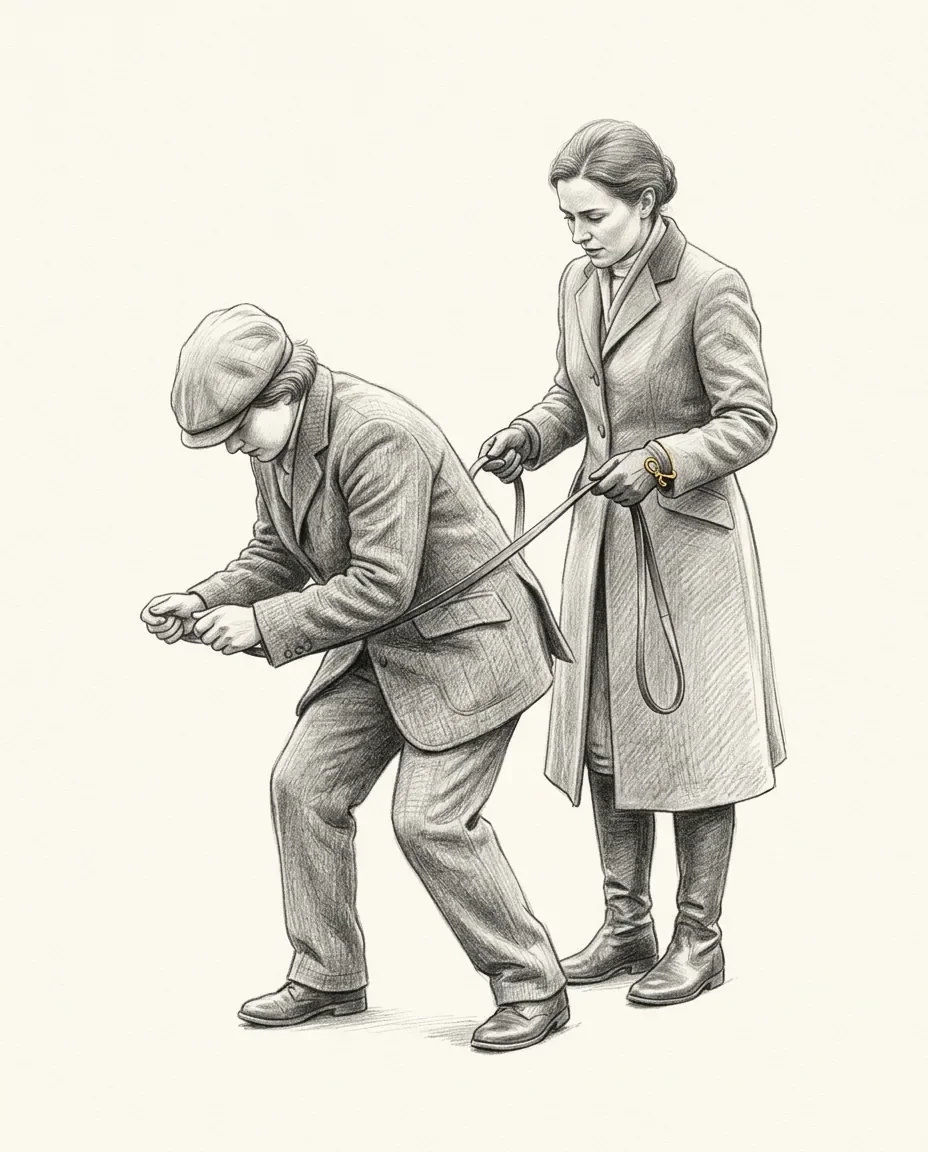
A consensual adult role-play in which one partner adopts the persona, posture, and movement of a horse while another acts as handler, trainer, or rider. It is a specialized branch of animal role-play emphasizing equestrian tack and trained behaviour.
- Prevalence
- Rare
- Category
- Power, Roles & Scenarios
- Domain
- Sexual interest
- Confidence
- Low confidence
- Status
- Consensual role-play, not a clinical paraphilia; benign variation of adult interest with no disorder implied.
- Also known as
- ponyplay, human pony, pony girl, pony boy, equine role-play, ponyplay (BDSM)
- Added
- 21 Jun 2026
- Updated
- 22 Aug 2026
Featured in
Overview
Pony-play (also written "ponyplay," and centred on the "human pony") is a form of consensual adult role-play in which a participant takes on the identity, posture, and mannerisms of a pony or horse while a partner plays a complementary handler, trainer, groom, or rider. It is classified as a subtype of animal role-play and pet-play, set apart by its focus on equine carriage, gait, and training routines rather than companion-animal behaviours. For many enthusiasts the craftsmanship of the tack and the meditative feeling of embodying an animal matter as much as any erotic charge. This article covers the documented lineage of the practice, how it is typically expressed, its proposed psychology, and its community presence.
Definition & scope
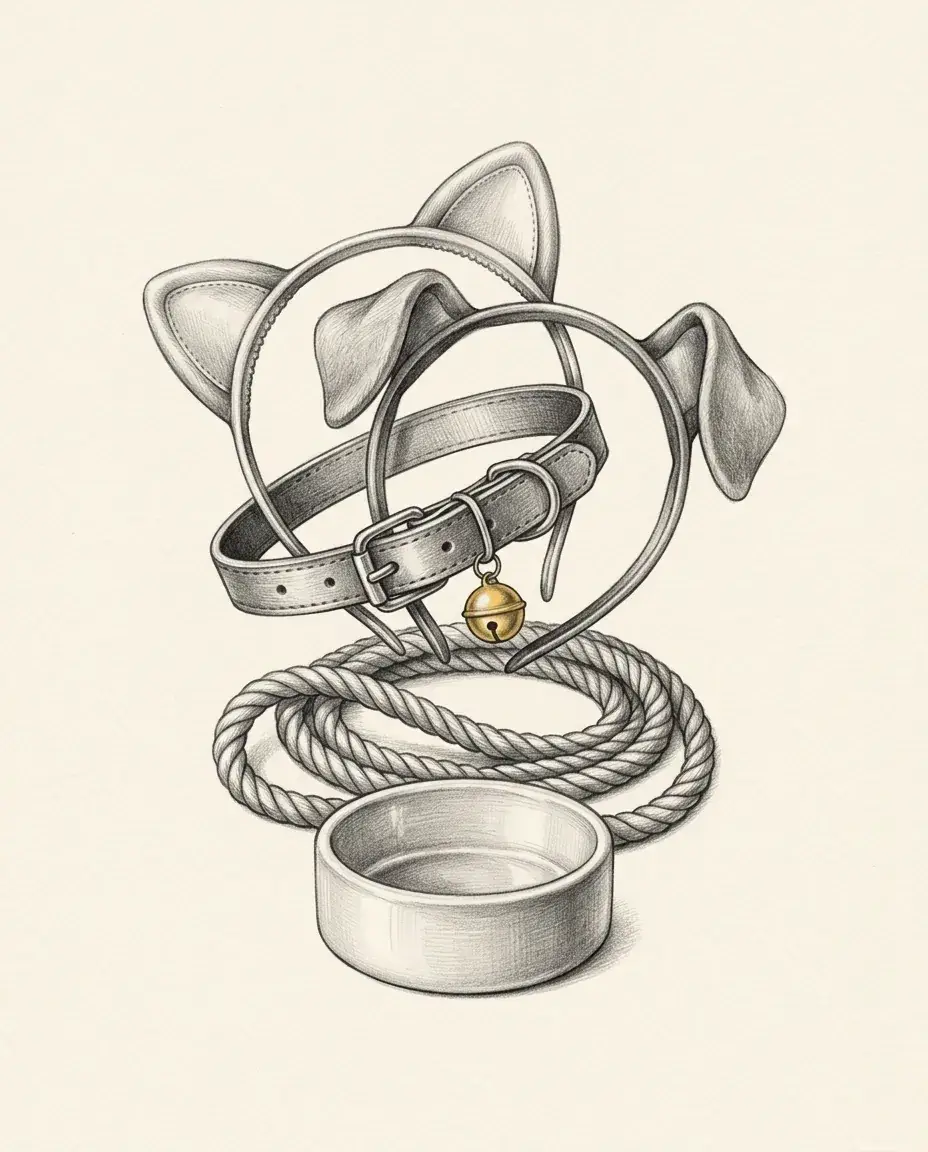
Pony-play differs from the companion-animal branches of pet play in the animal being embodied and, with it, the whole vocabulary of the scene: bridles and bits rather than collars and paws, gaits and dressage rather than fetch and cuddling, an equestrian rather than a companion-animal register. Communities usually sort players into three practical roles: the cart pony who pulls a sulky or light cart, the riding pony who bears a rider, and the show or dressage pony trained to perform stylised gaits and figures. Not all pony-play is sexual: some practitioners treat it as athletic performance, costume craft, or a relaxing headspace, while for others it is strongly erotic. It carries no separate clinical label.
Examples
What the term covers. Communities describe three practical specialisms, and most participants lean toward one. The cart pony is harnessed to a sulky or light cart and drilled on starts, turns and halts. The riding pony bears a partner's weight, generally on all fours or over a purpose-built frame and at walking pace. The show or dressage pony is trained in stylised gaits and figures and presented at a club event, where turnout, tack and precision are judged much as they would be in a real ring. Around all three sits the equipment culture: bridles and bits, harness, hoof-style boots, tails and plumes, a good deal of it hand-made and treated as craft in its own right. Plenty of enthusiasts never take the role beyond a costumed afternoon among friends.
What the term does not cover. It is not puppy play or kitten play, the companion-animal branches of the same family, which use collars, paws and affection rather than bits, harness and gaits. It is not furry fandom or fursuiting, which centre on an anthropomorphic character and its costume rather than on animal carriage under a handler. And it is not autozoophilia, an inward-directed erotic fantasy of being an animal, which is defined without any of pony play's equipment, training or partner roles.
How the word is used. "Pony-play," "ponyplay," "pony girl" and "pony boy" are community vernacular between consenting adults; a participant is a pony and the partner a handler, trainer or groom, borrowed wholesale from stable language. Neither the term nor the practice appears in DSM-5-TR or ICD-11.
History & origins
A long pre-history of "riding the philosopher"
The image of a person bridled and ridden as a horse long predates modern kink. The best-known antecedent is the medieval legend of Phyllis and Aristotle, in which the philosopher is persuaded to be saddled, bitted, and ridden by a woman. The story is known from the French Lai d'Aristote (manuscripts from the early 13th century) and was depicted by artists across medieval and Renaissance Europe as part of the "Power of Women" topos. For this reason pony-play is occasionally called, half in jest, the Aristotelian Perversion. These are cultural ancestors of the imagery rather than evidence of an organised practice.
20th-century fetish lineage
The modern visual vocabulary of pony-play took shape in mid-20th-century fetish media. As Wikipedia's animal role-play article records, some of the earliest published images of the genre appear in the work of the fetish artist John Willie (John Alexander Scott Coutts, 1902–1962), whose magazine Bizarre, which he began publishing in the mid-1940s (issues ran from 1946 to 1959), circulated "pony girl" imagery of bridles, harnesses, and tack alongside bondage and high-heel themes. From the post-war leather and BDSM subcultures onward, this aesthetic offered a ready vocabulary for negotiated power-exchange built around equestrian discipline.
Clinical and cultural framing
The precise coinage of the term "pony-play" is not well documented. Reference surveys such as Wikipedia's List of paraphilias describe it as a recognised animal-role-play subtype rather than a formal clinical category, and neither the DSM-5-TR (2022) nor the ICD-11 classifies consensual role-play of this kind as a disorder: both reserve diagnosis for cases involving distress, impairment, or non-consent. Visibility grew from the late 20th century through dedicated clubs, fetish photography, and kink conventions, and through documentary attention: the British pony-play club De Ferre produced Pony Passion (2003), and Elizabeth Elson's Born in a Barn (2005) followed several enthusiasts and their handlers.
In practice
Expression centres on costume and equipment (bridles, bits, harnesses, hoof-style boots, tails, and plumes) alongside activities adapted from equestrianism. Training often mirrors what a rider or groom would ask of a real horse: learning to walk, trot, and canter as modified for human limbs, to stand for grooming, or to move through dressage figures on command. The dynamic is usually a gentle power-exchange in which the "pony" surrenders ordinary speech and follows non-verbal cues, while the handler directs through reins, voice, and body language. Much of the activity is athletic and theatrical rather than overtly sexual, and enthusiasts frequently emphasise the workmanship of hand-made tack.
Psychology
The appeal is often linked to deep role immersion, a temporary freedom from human responsibility and speech, the comfort of structured guidance, sensory and restraint elements, and the aesthetic of fine tack and discipline. For some participants the interest is strongly erotic; for others it is primarily theatrical, athletic, or a relaxing, trance-like headspace sometimes likened to the "subspace" reported across power-exchange play. The shift from talking to non-verbal, embodied response is central to the experience many describe. As with most niche role-play, the dedicated evidence base is thin and accounts are largely qualitative and community-derived.
Prevalence & culture
Pony-play keeps a modest but visible community presence through dedicated clubs, conventions, and demonstrations within the wider kink scene, plus occasional appearances in art and fashion photography. No population survey isolates pony-play; it sits within the much larger field of role-play and power-exchange interests, which are themselves common. Large surveys such as Joyal & Carpentier (2017) found that masochism and related submissive interests exceed the threshold of statistical unusualness, though those figures cover broad categories rather than this specific niche. Mainstream lay coverage typically frames pony-play as a recognised but uncommon kink, as in Glamour's A–Z of kinks.
Safety, consent & law
The practice is consensual and legal between adults. As with other restraint- and equipment-based play, standard considerations apply: negotiated consent, safewords or agreed non-verbal signals (since a bitted "pony" may be unable to speak), attention to footing and circulation when using hoof boots or bits, and care to avoid overexertion, dehydration, or strain when pulling a cart. It is not a clinical paraphilia. Pony-play overlaps with structured role-play dynamics such as age-play and DDlg, and its tack and gear are frequently supplied by the leather fetish and boot fetish worlds.
Common questions
Is pony play a form of bestiality?
No, and the two have nothing in common beyond the word for the animal. Pony play involves consenting adult humans, one of whom performs the carriage and manner of a horse; no animal is present or involved. Bestiality is sexual contact with an actual animal, described clinically as zoophilia and criminal in most jurisdictions precisely because an animal cannot consent.
Is pony play always sexual?
No. A substantial part of the scene treats it as costume craft, athletic performance and a quiet non-verbal headspace, and club events built around cart-driving or dressage figures can run with no sexual content at all. For other participants it is strongly erotic, and both versions are common. What is constant is the role structure (a pony and a handler) rather than the presence of sex.
Can you do pony play on your own?
Yes. Solo practice is common in role-play generally, and here it usually means drilling gait and posture, wearing and maintaining tack, or simply spending time in the headspace with no handler present. It loses the direction and power exchange that partnered play is built around, so most enthusiasts treat it as rehearsal, or as its own quieter thing, rather than as a substitute.
How does a "pony" communicate while wearing a bit?
By agreement, settled before the bit goes in. Because speech may be impossible, partners set a non-verbal stop signal that survives stress and restraint: most often an object held in one hand and dropped, or a fixed number of stamps, taps or head shakes. The handler carries the matching duty to check in regularly and to read posture and breathing rather than waiting to be told something is wrong.
Is pony play a paraphilia or a mental disorder?
No. Neither DSM-5-TR nor ICD-11 classifies consensual adult role-play as a disorder; both reserve diagnosis for cases involving distress, impairment or a non-consenting person. Reference works list pony play as a recognised animal-role-play subtype, which is a descriptive classification rather than a clinical one. Enjoying it says nothing about a person's mental health.
Is pony play legal?
Between consenting adults in private, yes, anywhere that permits consensual BDSM generally. The complications are situational rather than sexual: harness, bits and hoof boots in a public place can attract attention under public-decency or public-order rules depending on how the participants are dressed, and drawing a cart on a public road raises the traffic questions any vehicle would. Club and convention events are held on private premises for these reasons.
- Age-Play49/100Power, Roles & ScenariosA consensual role-play between adults in which one or more partners adopt an age different from their own, often a younger persona, within a negotiated dynamic. An umbrella term for many caregiver, mentor, or peer scenarios; it never involves actual minors.49
- DDlg49/100Power, Roles & ScenariosA consensual caregiver/little relationship dynamic between adults that pairs a nurturing, authoritative caregiver with a dependent partner. That partner adopts a younger, "little" headspace. It is a specific, popular branch of age-play involving only consenting adults.49
- Leather Fetish65/100Leather fetishism · Objects & MaterialsAn erotic attraction to leather as a material: its look, smell, creak, shine, and feel when worn. It overlaps strongly with BDSM gear and is bound up with a recognised, organised leather subculture with its own bars, codes, and titles.65
- Boot Fetish52/100Clothing & GarmentsA sexual interest in boots, from knee-high and thigh-high fashion styles through riding, work, combat, and military boots. They are valued for their silhouette, materials, and connotations of authority. It overlaps with shoe, leather, and uniform fetishism.52
- Mindbreak34/100Power, Roles & ScenariosA fiction trope, chiefly in Japanese hentai manga, anime and games, in which a character is depicted losing rational thought and resistance. The loss comes under overwhelming, often coercive sexual pressure. It names a narrative device and doujin tag, not a real practice.34
- Service Top35/100Power, Roles & ScenariosA top who directs sensation, restraint or control during a scene but calibrates every action to the bottom's stated wants rather than their own agenda. The counterpart role to service submission, with the reward found in giving a partner exactly what they asked for.35
A plain-English descriptive compound: "pony" (a small horse, from Scots "powney," ultimately Old French "poulenet," a foal) plus "play," the standard kink-community word for negotiated role-play. There is no Greek- or Latin-derived clinical term; it is a vernacular label for an animal-role-play subtype.
animal role-play · pet-play subtype · equipment play
Prevalence is computed from the entry's cited population estimate. Rows marked ESTare indicative editorial estimates scored against a fixed anchor rubric, not measured quantities. Method & anchors: methodology.
Rare · ≈ 1 in 1,000
- 01List of paraphilias, Wikipediadefinition/existence of pony-play as an animal role-play subtype
- 02FetLife, kink community group sizes (community-size proxy)community-size proxy showing pony-play is a small, dedicated niche
- 03An A–Z of Kinks and Fetishes, Glamourmainstream lay framing of pony-play as a recognized but niche kink
- 04Animal roleplay, Wikipediapony-play as an animal-role-play subtype; John Willie as earliest published source; Pony Passion (2003) and Born in a Barn (2005) documentaries; Aristotelian Perversion nickname; training/gait practice
- 05John Willie, WikipediaJohn Alexander Scott Coutts (1902-1962), fetish artist who circulated early pony-girl imagery
- 06Bizarre (American fetish magazine), WikipediaWillie's fetish magazine Bizarre (debuted December 1945, ran through the mid-to-late 1950s) carrying bondage and pony imagery
- 07Phyllis and Aristotle, Wikipediamedieval legend (French Lai d'Aristote, early 13th century) of the philosopher bridled and ridden, cultural antecedent and source of the 'Aristotelian Perversion' nickname
- 08Born in a Barn (2005), IMDb2005 documentary directed by Elizabeth Elson following pony-play enthusiasts and their handlers; dates and cultural-visibility evidence
- 09List of paraphilias, Wikipediapony-play listed as an animal-role-play subtype rather than a formal clinical category
- 10Joyal & Carpentier (2017), The Prevalence of Paraphilic Interests and Behaviors in the General Population, J. Sex Research 54(2):161-171broad role-play / masochism interest is common in the population, the larger field this niche sits within
- 11DSM-5-TR, Paraphilic Disorders (American Psychiatric Association, 2022)consensual role-play not a disorder absent distress, impairment, or non-consent
- 12ICD-11, Paraphilic disorders (World Health Organization)consensual role-play not classified as a paraphilic disorder