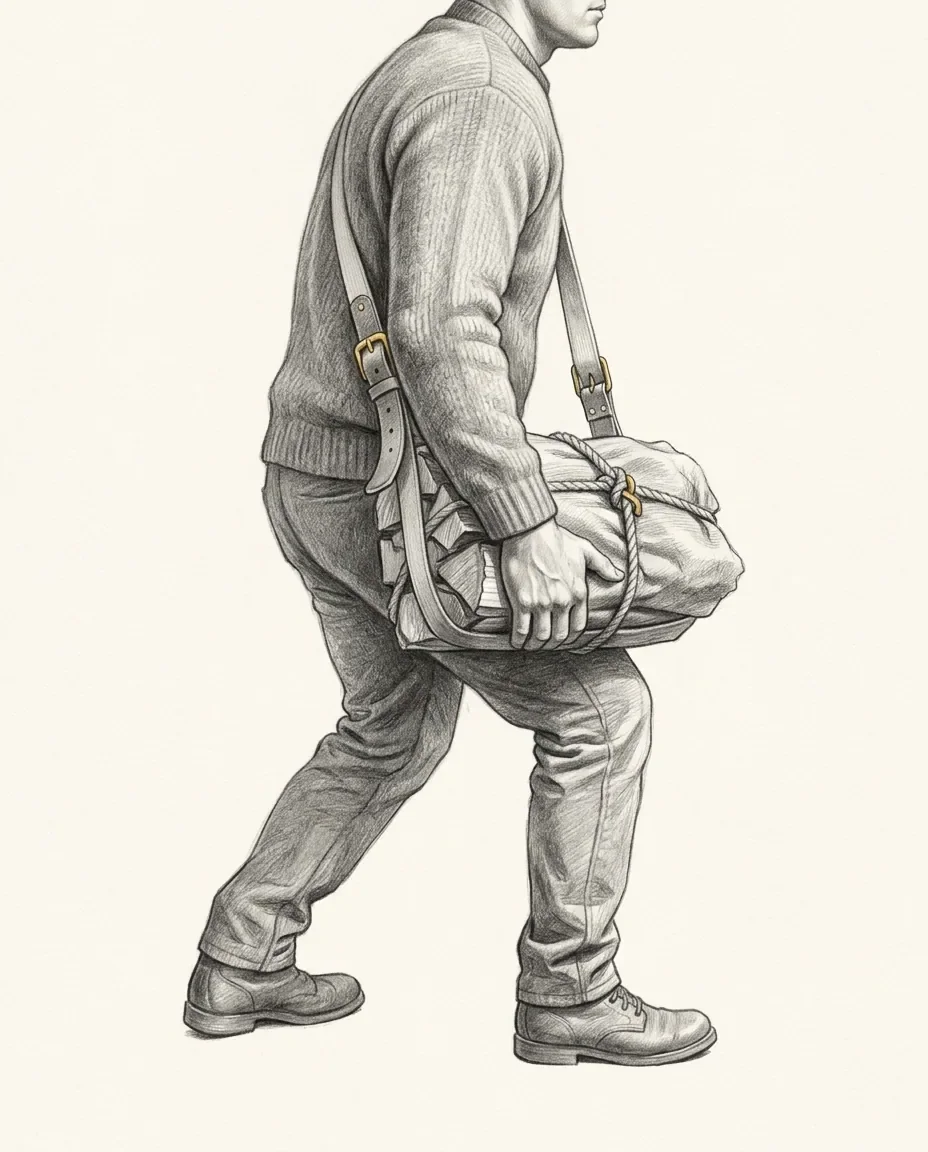
Lift and Carry (L&C)
Added 22 Jun 2026 · Updated 22 Aug 2026
An erotic or playful interest in one person physically lifting and carrying another, or in being lifted and carried. It centres on strength, weight contrast, and the dynamic of being supported or overpowered.
- Prevalence
- Uncommon
- Category
- Acts & Activities
- Domain
- Sexual interest
- Confidence
- Medium confidence
- Status
- Community kink, not a clinical disorder; regarded as a benign variation in sexual interest.
- Also known as
- lift and carry, L&C, lift & carry, lift-and-carry, carry fetish, lifting fetish
- Added
- 22 Jun 2026
- Updated
- 22 Aug 2026
Featured in
Overview
Lift and carry (commonly abbreviated L&C) is an erotic or playful interest in one person physically lifting and carrying another, or in being the one carried. The appeal can rest on a display of strength, on the contrast in size or weight between two people, or on the sensations of being supported, cradled, or safely overpowered. It is a named community kink rather than a clinical disorder, and it overlaps closely with muscle worship and with attraction to height or size differences. This article sets out where the interest came from, how it is expressed, and what its online communities suggest about how common it is.
Definition & scope
Lift and carry names the act, not a diagnosis. The interest can be sexual or purely playful, and a large share of its content stops at the lift itself. It shades into two adjacent preferences that do carry clinical-sounding labels: sthenolagnia (arousal at displays of strength) and macrophilia (attraction to large or tall partners), both of which the registered psychologist and sex therapist Dr. Jason Winters discusses alongside L&C.
Examples
What the term covers. A piggyback taken at a run; a cradle or "bridal" carry held long enough to become a display of stamina; a fireman's carry across the shoulders; an over-the-shoulder pick-up; a shoulder ride; a bear hug that takes both feet off the floor. Either direction counts (the interest can sit with the person lifting, the person being lifted, or the person watching), and a large share of the material is clothed, non-explicit and closer to a feat of strength than to a sex act. Paid sessions, in which a strong performer lifts a client, are a documented part of the scene.
What the term does not cover. Muscle worship is directed at the physique itself, whether or not it lifts anything. Size difference kink turns on the contrast between two bodies rather than on what one does with the other. Macrophilia and the giantess fantasy involve a scale no real person has, so the carry there is imagined rather than performed, and trampling uses body weight as pressure rather than as support. Partner acrobatics and cheerleading lifts are the same motions without the erotic or playful charge that defines the interest here.
How the words are used. "Lift and carry", almost always shortened to L&C, is a community label rather than a clinical one, coined by the people who practise it and used on their forums and video sites. No diagnostic manual names it; where clinicians write about it at all they reach for the adjacent terms sthenolagnia and macrophilia, neither of which appears in DSM-5-TR or ICD-11 either. Everything described here involves consenting adults.
History & origins
A community-defined, not clinical, interest
Lift and carry is best understood as a community-defined interest with a substantial online and commercial history rather than a clinical pedigree; there is no established medical -philia term for the act itself. Where clinicians touch it, they reach for adjacent labels. Winters notes that some women, "especially body builders or ex-body builders", provide paid session services in which displays of strength, including lift and carry, are performed on the client, and he frames the interest as a benign atypical preference rather than a disorder.
The internet era and the session scene
With the spread of the internet from the late 1990s onward, dedicated forums, photo and video sites, written stories, and paid "session" services emerged.
- Late 1990s to 2000s: niche websites and message boards consolidated a scattered interest into a recognisable subculture with its own vocabulary (piggyback, cradle, fireman's carry).
- Online hub: The Lift & Carry Forums, a representative community, reports membership on the order of tens of thousands of registered users and hundreds of thousands of posts, organised into non-explicit ("L&C Fun") and adult sections, gender-pairing subforums (F/F, F/M), media-type areas, and regional sections.
- Commercial scene: writing such as Marcie Simmons' discussion of lift-and-carry fetishism documents strong women, including athletes and bodybuilders, lifting and carrying paying clients, and catalogues the common techniques used in sessions.
In practice
Expressions are usually straightforward physical acts performed between consenting adults: piggyback rides, cradle (bridal) carries, fireman's carries, over-the-shoulder lifts, bear hugs, and shoulder rides. The carry may be the whole of the interest or part of broader strength play, role reversal, or dominance-and-submission dynamics. Much L&C content is non-explicit, focusing on the lift itself rather than on sexual activity.
Psychology
The interest draws on themes of strength, size contrast, protection, and surrendered control. For the person carried, appeal may lie in helplessness, being handled with ease, or feeling small and protected; for the lifter, in demonstrating capability and care. Where it centres on a strong female lifter and a male carried partner, it inverts conventional gender expectations, which is part of its draw for many participants. Clinicians who address it (again, Winters is representative) treat it as a benign atypical preference rather than a disorder, though some individuals report distress about an interest that can feel at odds with social norms. There are no dedicated studies of its mechanisms, so these accounts are descriptive rather than evidence-based.
Prevalence & culture
No formal prevalence studies isolate lift and carry, so estimates rely on the size and activity of its organised online communities. Those are sizeable for a niche, the main forum's membership and post counts serving as a reasonable community-size proxy, but small relative to mainstream interests. Cultural visibility is rising through fitness-creator videos and "strong woman carries man" clips, while academic attention remains very limited.
Variations & related interests
Lift and carry sits within a cluster of strength- and size-themed interests. It shades into muscle worship and sthenolagnia when the focus is the lifter's physique, into the size-difference kink when the weight or height contrast is central, and into giantess fantasy and macrophilia when scale is exaggerated or imagined.
Safety, consent & law
Lift and carry is lawful and harmless between consenting adults, but it carries genuine physical risk. Lifting another person can strain the back, neck, knees, or shoulders, and a dropped or unbalanced carry can cause falls and injury to either party. Sensible precautions include matching the activity to each person's strength, using good lifting technique, working over forgiving surfaces, and agreeing limits in advance.
Common questions
Is lift and carry actually a sexual fetish?
For some people yes, for others it is playful rather than erotic, and a great deal of the community's material stops at the lift with everyone fully clothed. The main forum reflects that split directly, keeping non-explicit and adult sections apart. Like most interests it runs along a spectrum, and someone who simply enjoys being picked up is not obliged to place themselves anywhere on it.
What is the difference between lift and carry and muscle worship?
Muscle worship is directed at the physique (its size, its definition, the sight of it under strain) and requires nobody to be picked up. Lift and carry is about the act: the lift, the hold, the walk. They overlap constantly, because the lifter is usually strong and the strength is usually the point, but one is admiration of a body and the other is something done with it.
Why do people enjoy being carried?
Reported appeal centres on being handled with ease: helplessness without danger, the sensation of being supported, feeling small or protected. From the other side it is about capability and care: demonstrating strength while keeping someone safe. Where a woman carries a man the interest also inverts a conventional expectation, which many participants name as a large part of the draw.
Is lift and carry dangerous?
It carries real physical risk, and that is the main thing to plan for. Lifting an adult can strain the back, neck, knees and shoulders, and a dropped or unbalanced carry can injure both people at once. Match the lift to the lifter's actual strength rather than their confidence, use sound lifting technique, work over a forgiving surface, and agree limits and a way to stop before starting.
What is sthenolagnia?
Arousal at displays of physical strength (flexing, feats of lifting, visible power) rather than at any particular act. It is one of the adjacent labels clinicians reach for when writing about lift and carry, alongside macrophilia, because the act itself has no clinical name of its own. Like those terms it is descriptive vocabulary rather than a diagnosis in any manual.
Is lift and carry a disorder?
No. The registered psychologist and sex therapist Dr. Jason Winters describes it as a benign atypical preference, and it appears in neither DSM-5-TR nor ICD-11. Some people do report distress about holding an interest that feels at odds with social norms, which is worth taking seriously in itself, but that distress comes from the stigma rather than from anything pathological in the interest.
- Muscle Worship45/100Sthenolagnia · Body Parts & PartialismAn erotic interest in muscular physique and displays of physical strength, encompassing admiration of developed musculature. For some, arousal is tied to demonstrations of power and the hands-on appreciation of a partner's muscles.45
- Giantess Fetish31/100Macrophilia · Identity & TransformationMacrophilia is an erotic or romantic fascination with giant or vastly oversized beings, most commonly a giant woman (giantess). The appeal centers on extreme size difference and the fantasy of being tiny in relation to a much larger figure.31
- Size Difference Kink55/100Body Parts & PartialismAn erotic interest in a marked contrast in physical scale (height, build, or weight) between partners, where the disparity itself is the focus of arousal. The closeness, vulnerability, or power dynamic it implies is part of the same appeal.55
- Feederism (Feeding & Weight Gain)39/100Acts & ActivitiesA kink centered on the act of feeding a partner and, often, on deliberate weight gain, structured as a feeder/feedee dynamic. Arousal can come from feeding, fullness, indulgence, body change, and the control exchanged between partners.39
- Bootblacking36/100Acts & ActivitiesThe ritual cleaning, conditioning, and shining of boots and leather gear as an act of service, with deep roots in the gay leather subculture. Bootblacking is both a genuine craft and an erotic exchange of attention, care, and authority.36
- Hotdogging36/100Coitus Interglutealis · Acts & ActivitiesA non-penetrative act in which the penis is moved along the cleft between a partner's buttocks. Catalogued as coitus interglutealis, it mimics the motion of anal sex without any penetration and is widely practised but sparsely documented.36
Not a clinical coinage. "Lift and carry" is a plain-English descriptive community label for the act it names; the abbreviation L&C is in common use within the online community.
strength play · carrying & lifting
Prevalence is computed from the entry's cited population estimate. Rows marked ESTare indicative editorial estimates scored against a fixed anchor rubric, not measured quantities. Method & anchors: methodology.
Uncommon · ≈ 1 in 100
- 01The Lift & Carry Forumsexistence, scale and structure of the L&C online community (tens of thousands of registered members, hundreds of thousands of posts; non-explicit and adult sections, gender-pairing and regional subforums), community-size proxy
- 02Dr. Jason Winters (Registered Psychologist & Sex Therapist), 'Lift and carry' (2013)clinical framing of L&C as a benign atypical sexual preference linked to macrophilia/sthenolagnia, and the existence of paid 'lift and carry' session services provided by female bodybuilders
- 03Marcie Simmons Discusses Lift and Carry Fetishism, Femuscleblog (2017)commercial session scene, common carry techniques (fireman's, piggyback, overhead lifts), and the strong-woman-carries-man role-reversal dynamic
- 04Fireman's carry, Wikipediadefinition of named carry techniques referenced in practice (fireman's carry) and their use in online lift-and-carry trends