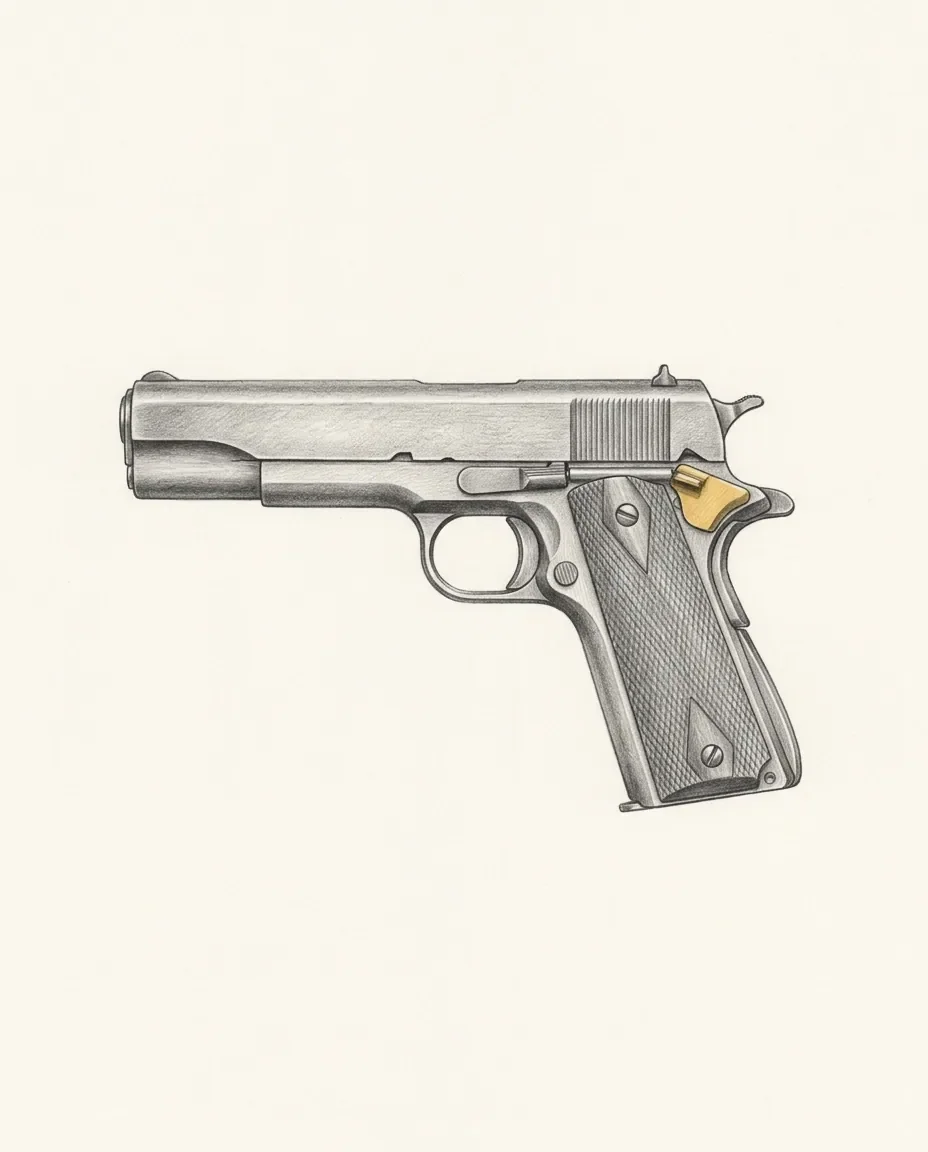
Gun Fetish
Added 21 Jun 2026 · Updated 22 Aug 2026
A strong, non-sexual enthusiasm for firearms: collecting, shooting sports, mechanical and historical interest, and participation in gun culture. Here "fetish" means intense object fascination, a hobby and subculture, not a sexual paraphilia.
- Prevalence
- Common
- Category
- Non-Sexual Fetishism
- Domain
- Non-sexual interest
- Confidence
- Medium confidence
- Status
- Not a clinical condition; a non-sexual hobby and subculture involving regulated objects.
- Also known as
- firearm enthusiasm, gun-culture fixation, firearm collecting, gun culture, gun enthusiast, weapon fetish
- Added
- 21 Jun 2026
- Updated
- 22 Aug 2026
Featured in
Overview
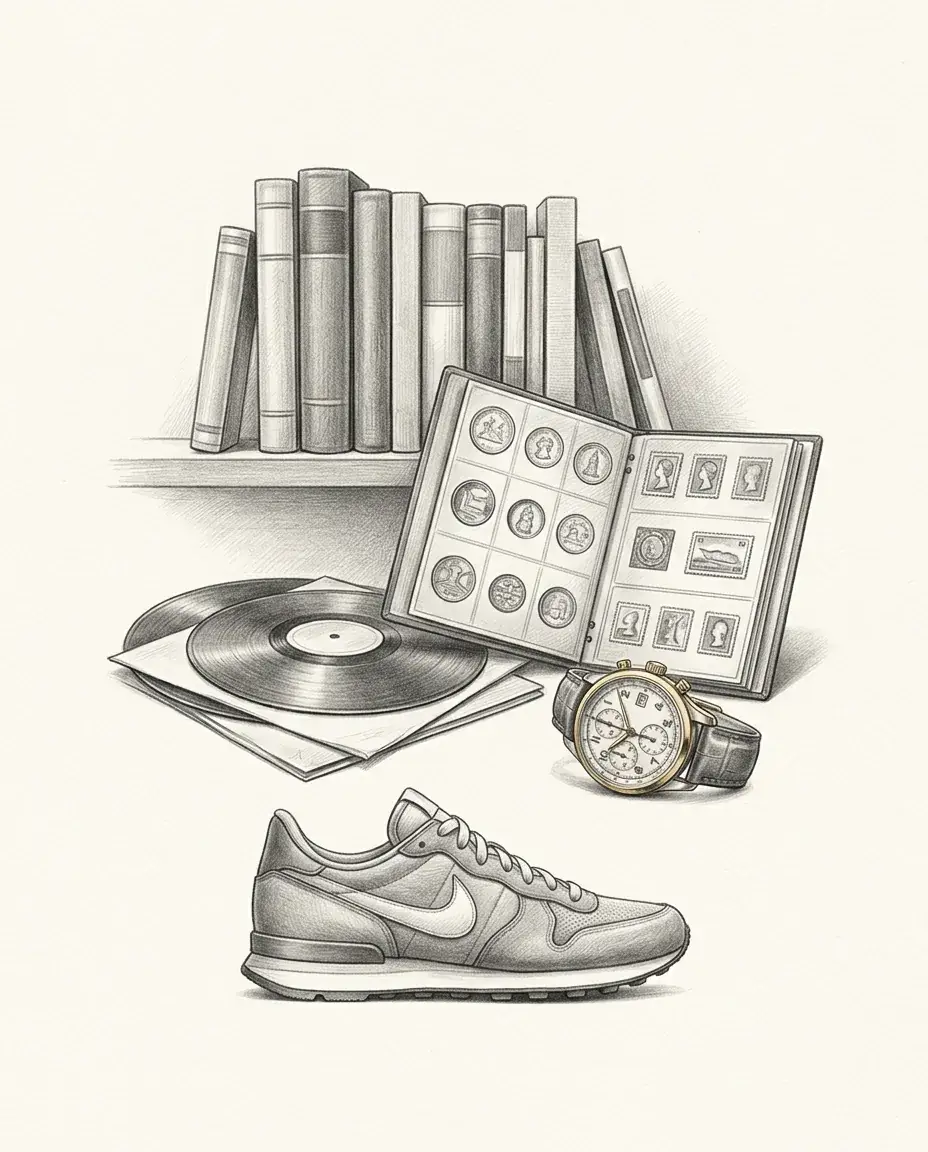
A gun fetish, in the everyday sense meant here, is a strong non-sexual enthusiasm for firearms as objects of engineering, history, sport, and identity. Enthusiasts collect, shoot competitively or recreationally, hunt, study mechanisms, and follow the military and design history of the field. The word fetish in this phrase carries its older meaning, an intense and almost reverential fascination with an object, not the clinical sense of a sexual paraphilia. This article covers the lawful collecting-and-sport hobby and the culture around it. It is separate from any use of weapons to threaten or harm, which is illegal and outside its scope.
Definition & scope
Two very different ideas share the word. The one described here is a collecting-and-sport enthusiasm: a hobbyist's fixation on the design, provenance, and use of firearms, comparable to a serious interest in cameras, watches, or vintage cars. That is distinct from the sexual sense of fetishism, and distinct again from any violent or unlawful use of weapons. Because the interest is non-sexual, it carries none of the diagnostic apparatus that applies to paraphilias; the two only share a word.
Examples
What the term covers. Collecting organised around make, era or provenance (service rifles, historic military arms, a single maker's output); competitive and recreational shooting, from clay targets to precision rifle; hunting; hand-loading ammunition and customising stocks, triggers and optics; and the club, range, gun-show, museum and forum life around all of it. The pull is mechanical and historical, and its nearest relatives here are other object enthusiasms: knife collecting, watch collecting, car enthusiasm, coin and stamp collecting, and collecting itself.
What it does not cover. It is not a sexual interest, which is the most common misreading of the phrase. A genuine erotic fixation on weapons is a separate and much rarer thing; where it exists it sits closer to knife play, fear play and the wider family of edge play, and where a real firearm is involved, closer still to autassassinophilia, because the charge then comes from genuine lethal risk rather than from the object. That distinction is not academic: a firearm in any intimate or role-play setting is a lethal-weapon safety matter, not a prop question, and the foundational rule of firearm safety (every weapon treated as loaded at all times) cannot be reconciled with using one as scene equipment. It also does not cover uniform or militaria interest, which attaches to insignia rather than mechanism, nor any use of a weapon to threaten or coerce, which is a crime whatever the holder's enthusiasm.
How the word is used. Lay English, and usually pejorative. Journalists and political commentators use "gun fetish" for an attachment they consider excessive, particularly in American argument over firearms policy; enthusiasts almost never apply it to themselves, preferring collector, shooter or enthusiast. The word fetish is doing its older duty here (an object of intense, almost reverential devotion) rather than the erotic sense Alfred Binet coined in 1887. Neither DSM-5-TR nor ICD-11 recognises firearm enthusiasm as anything at all.
History & origins
The two senses of "fetish"
The word fetish reached English through French fétiche and Portuguese feitiço ("charm"), from Latin facticius ("made by art"), and for centuries meant an object credited with special power or commanding intense devotion. The sexual meaning is a much later and separate development: the French psychologist Alfred Binet coined "erotic fetishism" in his 1887 essay Le fétichisme dans l'amour, a sense then popularised by Krafft-Ebing's Psychopathia Sexualis (1886 onward) and developed by Havelock Ellis. "Gun fetish" draws on the older, non-sexual sense of an object of fixation. Its precise origin as a phrase is not well documented; it is a lay coinage, not a clinical term.
The collecting and shooting culture
The gun as an object of devoted collecting and identity is tied to the broader history of firearms and the cultures around them. Organised civilian shooting and collecting expanded sharply in the nineteenth century. In the United States the National Rifle Association was chartered in 1871 by Union veterans William Conant Church and George Wingate "to promote and encourage rifle shooting on a scientific basis," and it acquired a Long Island range the following year. Comparable sporting and collecting bodies appeared across Europe over the same period. In the United States this grew into a distinct gun culture in which ownership intersects with identity, sport, and rights debates, a mix that gives the American strand of the hobby its unusually public and political character.
Clinical standing
Neither the DSM-5-TR nor the ICD-11 recognises firearm enthusiasm as a disorder, and it is not a sexual interest. Reference works such as Wikipedia's list of paraphilias treat weapon-focused fixation as a non-sexual object fascination rather than a paraphilia. It sits alongside other collecting hobbies such as knife collecting and watch collecting.
In practice
The interest is expressed through:
- Acquiring and maintaining firearms, with attention to make, era, and provenance.
- Range and competitive shooting, marksmanship, and hunting.
- Customisation and hand-loading of ammunition.
- Community participation in clubs, forums, museums, gun shows, and industry media.
Much of the appeal is mechanical and historical: the fit of a well-made action, the lineage of a particular design, the condition and story of a collectible piece. In the United States especially, it also carries a cultural and political dimension, where ownership is bound up with identity and constitutional debate.
Psychology
The appeal draws on mastery of a demanding skill, appreciation of mechanical design and history, collecting behaviour, a sense of self-reliance or security, and belonging to a community. Origins are usually cultural and familial rather than developmental, and the interest is widespread among lawful hobbyists. Because it is non-sexual, the sexological literature on fetishism does not apply to it; the term overlaps only by coincidence of vocabulary.
Prevalence & culture
In prevalence terms it is a large and highly visible interest in some regions and far smaller in others, reflecting differing laws and cultural norms: substantial in the United States and parts of Europe, marginal where private firearm ownership is tightly restricted. Online communities, industry media, museums, and organised shooting sports give it considerable cultural visibility relative to other collecting hobbies. Search-interest proxies reflect a sizeable, sustained hobby and collecting base, and lay references are careful to distinguish this non-sexual gun-culture fixation from a sexual fetish.
Safety, consent & law
The enthusiasm itself is lawful and non-sexual, but it involves inherently dangerous objects. Responsible ownership requires compliance with widely varying national and local laws on acquisition, licensing, storage, and carry, and strict adherence to firearm-safety practice. Secure storage (locked, unloaded, ammunition kept separately) is the single practice that most reduces the risk a collection poses to a household. Firearms also have no place in sexual or role-play settings: a real weapon in an intimate context is a lethal-risk scenario rather than an aesthetic one, and no amount of checking, unloading or negotiation converts it into a safe prop. This entry concerns lawful collecting and sport; using weapons to threaten or harm is illegal and falls outside its scope.
Common questions
Is a gun fetish sexual?
In the sense the phrase almost always carries, no. It describes intense non-sexual enthusiasm for firearms as objects of engineering, history and sport, using the older meaning of "fetish" as an object of devotion. A genuinely erotic fixation on weapons exists and is documented, but it is rare, clinically separate, and not what anyone usually means by the phrase. The two senses share a word and nothing else.
Is a gun fetish a mental disorder?
No. Neither DSM-5-TR nor ICD-11 recognises firearm enthusiasm as a disorder, a paraphilia, or a diagnosis of any kind, and there is no clinical literature treating it as one. It is a hobby and a subculture. Concern about a particular individual's access to firearms is a question for risk assessment and for law, not for psychiatric classification of the interest itself.
Is it safe to use a real gun during sex or role-play?
No, without qualification. Firearms are lethal at a distance, mechanical safeties are not a substitute for handling discipline, and the basic rules (treat every weapon as loaded, never point it at anything you are not willing to destroy) cannot be reconciled with using one as a prop. Arousal, alcohol and divided attention are precisely the conditions in which handling errors occur. People seeking the psychological charge of threat use fear play, or the negotiated conventions of knife play with a dulled blade, neither of which can discharge.
What is the difference between gun collecting and a gun fetish?
Mostly who is speaking. "Collecting" names the activity neutrally; "fetish" characterises the intensity of the attachment, usually from outside and usually critically. There is no threshold at which one becomes the other and no instrument that measures it. Knife collecting and watch collecting attract the same rhetorical move, a hobby recast as an obsession by someone who does not share it.
Is a gun fetish legal?
The interest is; the objects are heavily regulated. Acquisition, licensing, storage, transport and carry rules vary enormously between and within countries, and what is routine in one jurisdiction is a serious offence in another. Lawful enthusiasm means complying with whichever rules apply, secure storage included, which is where the legal question and the safety question meet. Using a firearm to threaten or harm is a crime everywhere.
Why is "gun fetish" used as an insult?
Because the older sense of "fetish" already implied irrational devotion to an object, and the phrase carries that charge straight into political argument. In American debate especially it is used to suggest an opponent's attachment to firearms is unreasoning rather than considered. That rhetorical use is why enthusiasts avoid the term, and why this entry treats it as a lay label rather than a description anyone claims for themselves.
How many people are firearm enthusiasts?
There is no clean figure, and a single global number would mislead. Participation tracks law and culture far more than taste: substantial in the United States and in parts of Europe with strong shooting-sport traditions, marginal where private ownership is tightly restricted. Ownership surveys count households holding firearms rather than people holding the enthusiasm, and those are not the same population.
- Knife Collecting34/100Non-Sexual FetishismA non-sexual enthusiasm for knives and other edged tools as objects of craftsmanship: steel, grind geometry, and handle materials. Lock mechanisms, maker heritage, and everyday-carry culture matter too. It is a hobby and collecting interest, not a clinical condition.34
- Watch Collecting41/100Horological Fixation · Non-Sexual FetishismAn intense, non-sexual fascination with mechanical timepieces and luxury watches, centered on craftsmanship, brand heritage, and the act of collecting. It is a hobby and consumer-culture interest rather than a clinical condition.41
- Cleaning Obsession47/100Non-Sexual FetishismA strong, non-sexual affinity for cleaning and keeping one's surroundings spotless, often experienced as satisfying, calming and in control. It is a lifestyle and domestic preference, distinct from the cleaning compulsions of OCD.47
- Oddly Satisfying50/100Non-Sexual FetishismA non-sexual sense of pleasure and calm derived from order, symmetry, smoothness, and neatly arranged or perfectly fitting objects. It is the core appeal of 'oddly satisfying' media. It is a common sensory and aesthetic affinity, not a disorder or paraphilia.50
- Tech Fetish50/100Non-Sexual FetishismA non-sexual fascination with gadgets, devices, and technology, marked by a drive to acquire, upgrade, and master the newest gear. Often called technophilia, its appeal lies in novelty, capability, and the identity of being an early adopter.50
- Brand Worship44/100Non-Sexual FetishismA non-sexual fixation on brands, logos, and designer labels, in which the brand itself becomes a source of identity, status, and emotional attachment. Branded goods are valued largely for their symbolic and signalling power rather than their function.44
Plain-English compound: "gun" (Middle English gunne, possibly from the woman's name Gunnhildr applied to early siege engines) plus "fetish," here in its older, non-sexual sense of an object of intense fixation: via French fétiche from Portuguese feitiço, "charm," from Latin facticius, "made by art." The sexual sense of "fetish" is a separate, later development coined by Alfred Binet in 1887.
collecting · hobby · subculture
Prevalence is computed from the entry's cited population estimate. Rows marked ESTare indicative editorial estimates scored against a fixed anchor rubric, not measured quantities. Method & anchors: methodology.
Common · ≈ 1 in 20
- 01List of paraphilias, Wikipediaexistence/definition of weapon-focused fixation as a non-sexual object fascination
- 02Google Trends, relative search interest (search-interest proxy)search-interest proxy for gun-culture/firearm enthusiasm reflecting a sizeable non-sexual hobby/collecting base
- 03An A–Z of Kinks and Fetishes, Glamourlay framing distinguishing non-sexual gun-culture fixation from a sexual fetish
- 04Gun culture in the United States, Wikipediahistory of organized civilian shooting and collecting, and the founding of marksmanship bodies
- 05Paraphilia, Wikipediadefinition of paraphilia, contrasted with the non-sexual object-fascination sense of 'fetish' used for firearm enthusiasm
- 06National Rifle Association, Wikipedia1871 chartering by Church and Wingate to promote rifle shooting on a scientific basis; early Long Island range
- 07Alfred Binet, WikipediaBinet coined the term 'erotic fetishism' in his 1887 essay Le fétichisme dans l'amour (the separate, later, sexual sense of 'fetish')
- 08Psychopathia Sexualis, WikipediaKrafft-Ebing's popularisation of the clinical/sexual sense of fetishism, contrasted with the non-sexual object sense used here
- 09DSM-5-TR, Paraphilic Disorders (American Psychiatric Association, 2022)firearm enthusiasm is not a recognized clinical disorder or paraphilia
- 10ICD-11, Paraphilic disorders (World Health Organization)firearm enthusiasm is not classified as a paraphilic disorder